
(Translated by Google) Very professional and very respectful (Original) Muy profesionar y muy respetuoso
a month ago
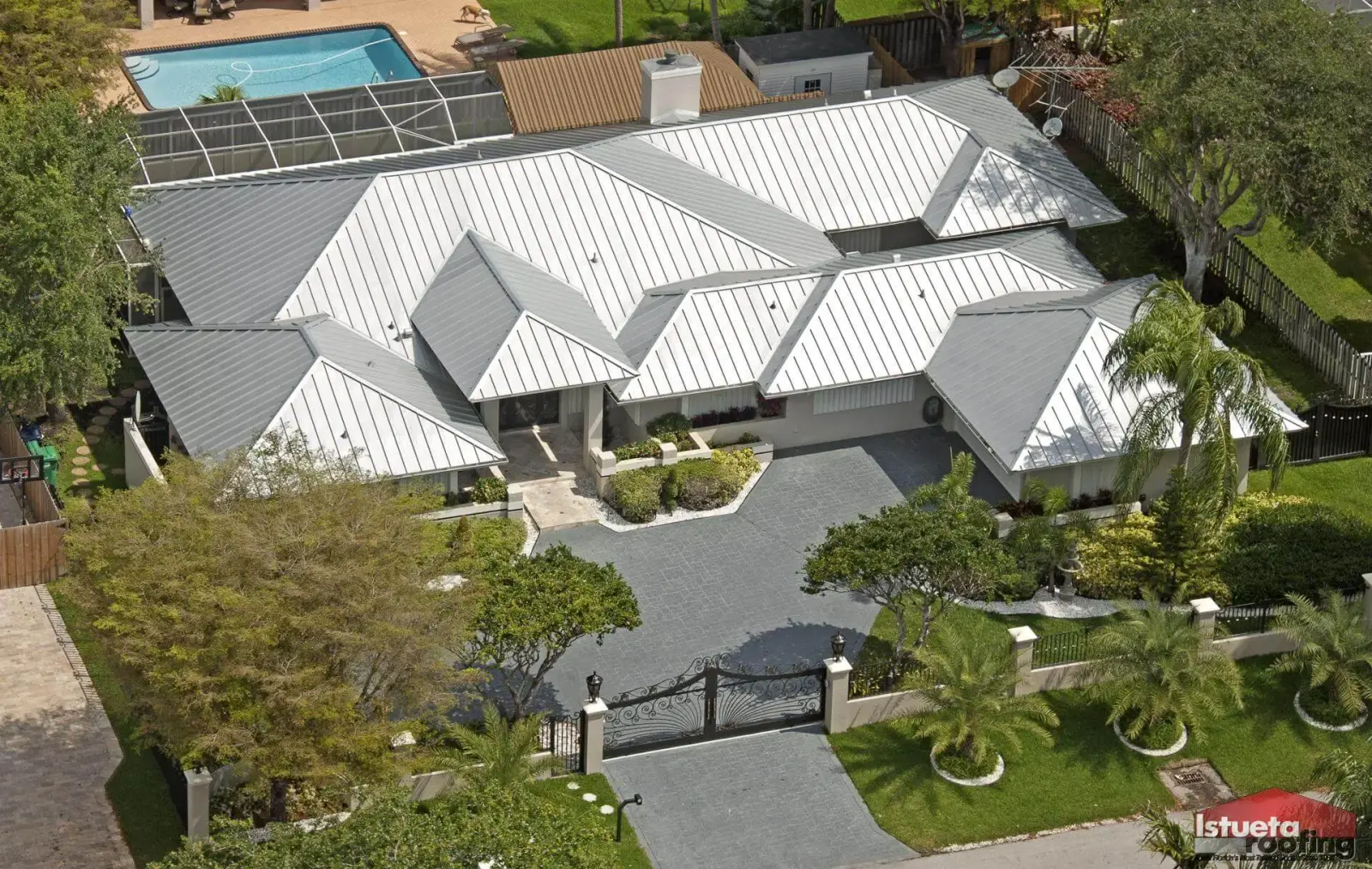
Galvalume roofing in South Miami typically reaches 30+ years of service, with 24-gauge standing-seam systems carrying 25 to 40 year manufacturer coating warranties roughly 8 miles inland from the Atlantic. The 55% aluminum, 43.4% zinc alloy coating resists chloride corrosion better than galvanized steel, and standing-seam profiles meet Miami-Dade HVHZ wind-uplift requirements. Installed correctly, galvalume delivers multi-decade performance with minimal upkeep.
Galvalume roofing in South Miami typically reaches 30+ years of reliable service when installed 8 miles inland from the Atlantic, with 24-gauge standing-seam systems carrying 25 to 40 year manufacturer coating warranties. The 55% aluminum, 43.4% zinc coating forms a protective barrier that resists chloride corrosion better than galvanized steel, and concealed-fastener seams extend lifespan by eliminating the exposed penetrations that accelerate coastal weathering.
South Miami sits in the Miami-Dade High-Velocity Hurricane Zone, which sets the strictest wind-uplift requirements in the country.
Galvalume roofing systems protect residential and commercial structures across South Miami. The material works on low-slope and steep-slope applications, from contemporary flat-roof designs to traditional pitched profiles.
Standing-seam galvalume is the most common residential installation. Panels run vertically from ridge to eave with raised seams that interlock and conceal fasteners. The system sheds water efficiently and meets Miami-Dade HVHZ wind-uplift standards.
Corrugated and ribbed galvalume profiles suit utility buildings, carports, and agricultural structures. These profiles use exposed fasteners and cost less than standing-seam systems. They perform well in non-coastal applications but require more frequent fastener maintenance near saltwater.
Galvalume also works as a substrate for stone-coated metal tiles. The steel core carries the galvalume coating, and a bonded stone layer provides texture and color. These systems combine metal durability with a tile-like appearance.
South Miami sits in the Miami-Dade High-Velocity Hurricane Zone, which sets the strictest wind-uplift requirements in the country. Galvalume standing-seam systems are engineered to meet these HVHZ uplift requirements when installed with approved clips and fastening schedules.
Salt air accelerates corrosion on unprotected metals. Galvalume's aluminum-zinc coating resists oxidation longer than galvanized steel, which relies on a zinc-only layer that degrades faster in coastal exposure.
Summer heat expands metal panels. Standing-seam systems accommodate thermal movement through floating clips that allow panels to expand and contract without buckling or fastener failure.
Neighborhoods including Coral Gables, Pinecrest, and Coconut Grove enforce architectural review standards that favor low-profile metal roofing over reflective finishes. Galvalume's matte gray appearance blends with Mediterranean and contemporary coastal architecture.
Galvalume installation begins with deck inspection and repair. Damaged sheathing, rotted fascia, and compromised structural members get replaced before underlayment goes down.
Synthetic underlayment or self-adhering modified bitumen covers the deck. HVHZ installations require underlayment rated for high-wind exposure and sealed at all seams.
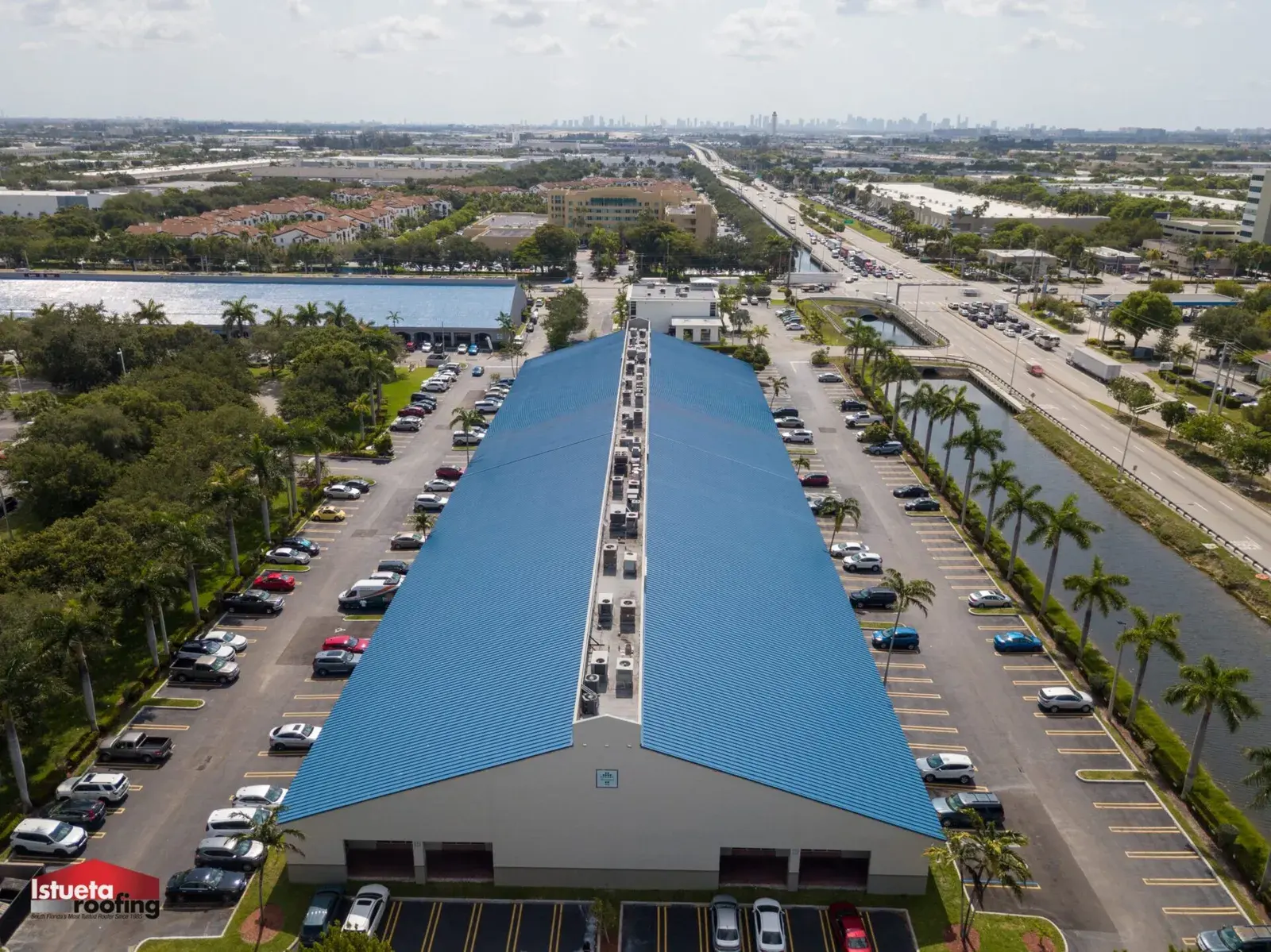
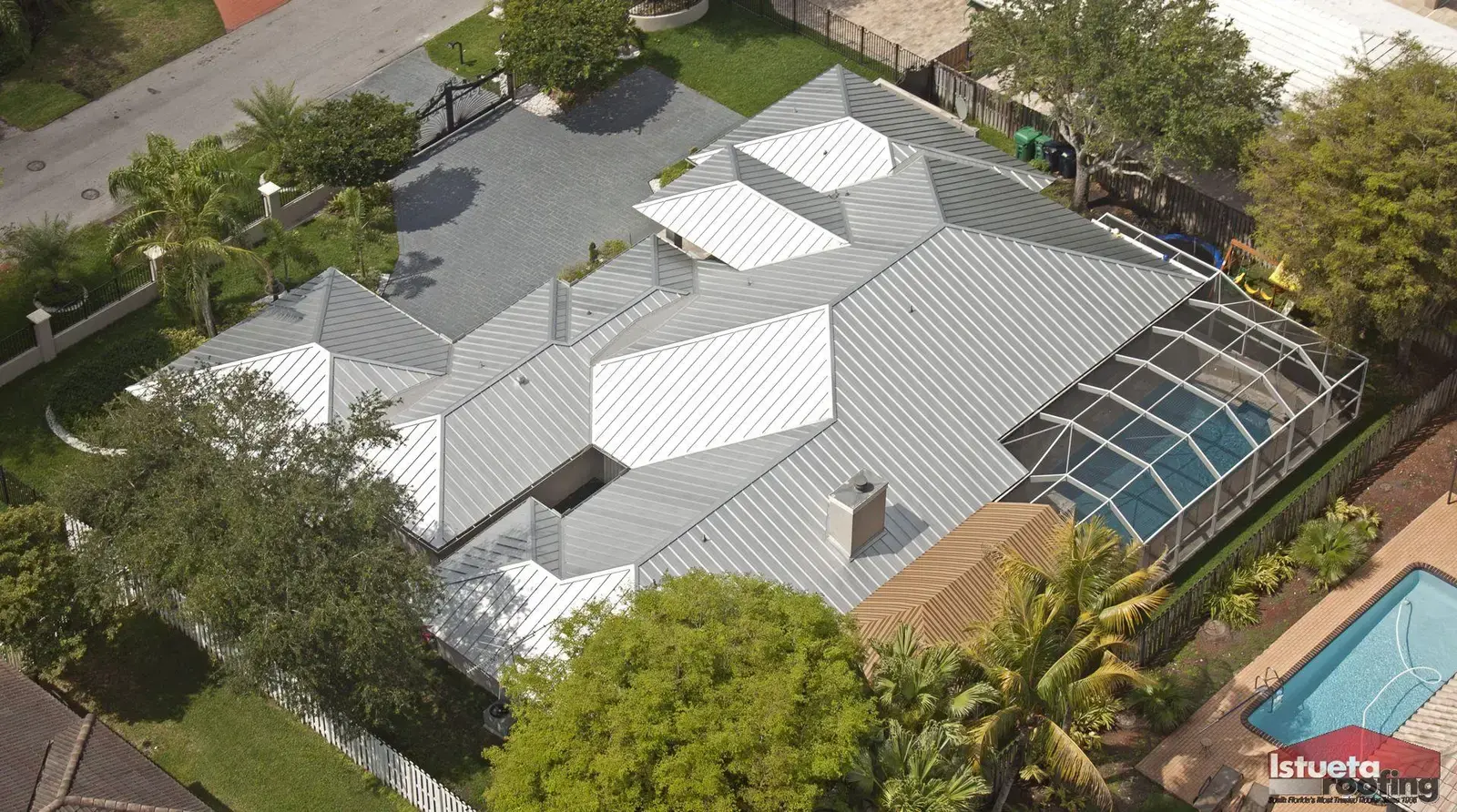
Galvalume standing-seam panels run from eave to ridge in continuous lengths when possible. Panels are measured, cut to length accounting for thermal expansion, and positioned with concealed clips spaced 12 to 24 inches on-center depending on wind-uplift requirements.
Each clip fastens to the deck with corrosion-resistant screws. The galvalume panel seam snaps over the clip, locking the panel in place without penetrating the panel surface. This concealed-fastener system eliminates exposed screw heads that can leak over time.
Flashing at eaves, rakes, ridges, valleys, and penetrations uses galvalume or compatible metal to prevent galvanic corrosion. Dissimilar metals in direct contact accelerate oxidation; galvalume flashing against galvalume panels avoids this.
Ridge caps cover the peak seam and allow ventilation when designed with raised profiles. Eave trim directs water into gutters and prevents wind-driven rain from entering at the roof edge.
| Characteristic | Galvalume | Aluminum | Galvanized Steel |
|---|---|---|---|
| Corrosion Resistance | Excellent in salt air | Superior (self-healing oxide) | Moderate (degrades faster near coast) |
| Weight | 1.0–1.5 psf | 0.4–0.7 psf | 1.5–2.0 psf |
| Relative Cost | Economical | Mid-range | Budget |
| Lifespan (South Miami) | 30+ years | 30+ years | 30+ years |
| Finish Durability | Kynar coating lasts 30+ years | Kynar coating lasts 30+ years | Paint fades faster, requires recoating |
| Thermal Expansion | Moderate | Higher (requires expansion joints) | Moderate |
| HVHZ Suitability | Excellent (meets NOA standards) | Excellent (meets NOA standards) | Good (requires heavier gauge) |
| Maintenance | Minimal (inspect fasteners annually) | Minimal (inspect seams annually) | Moderate (fastener corrosion common) |
Galvalume manufacturer warranties cover coating integrity and panel perforation. Berridge, PAC-CLAD, and Englert each offer warranties ranging from 25 to 40 years depending on panel profile and coating thickness.
Workmanship warranties cover installation defects including fastener failure, seam separation, and flashing leaks. Terms vary by project scope and are documented at contract signing.
Warranty claims require documentation. Roof conditions are photographed before installation, all flashing details are documented, and material certifications are provided at project completion. This documentation supports warranty claims if issues arise.
Financing is offered through third-party lenders, subject to credit approval. See terms for details.
Galvalume roofing projects qualify for financing through third-party lenders. Loan terms range from 12 to 120 months depending on project cost and borrower credit profile.
Some lenders offer deferred-interest promotions for qualified borrowers on galvalume installations. These programs allow 12 to 18 months of interest-free payments if the balance is paid in full before the promotional period ends.
Financing applications process within 24 to 48 hours. Approved borrowers receive funds at project completion, and monthly payments begin 30 days after the first disbursement.
Financing is subject to credit approval. See terms for details.
Galvalume panel gauge affects cost. 24-gauge panels cost more than 26-gauge but resist denting and oil-canning better on large roof planes. Panel profile also varies cost: standing-seam systems with concealed fasteners cost more than exposed-fastener ribbed panels.
Roof complexity adds labor. Simple gable roofs with few penetrations install faster than hip roofs with multiple valleys, dormers, and skylights. Each valley on a galvalume roof requires custom flashing and seam termination, which increases installation time.
Underlayment requirements vary by slope and HVHZ zone. Low-slope galvalume roofs need self-adhering modified bitumen underlayment, which costs more than synthetic felt. HVHZ installations require underlayment rated for high-wind exposure and sealed at all seams.
Removal and disposal of the existing roof adds cost. Single-layer tear-offs cost less than multi-layer removals. Disposal fees vary by landfill and material type.
Galvalume sits in the middle of the metal roofing price ladder for South Miami, priced below aluminum or copper but above asphalt shingle roofing in South Miami. Asphalt installations in coastal South Florida typically last 15+ years, while a galvalume roof carries 30+ years of service, so a second asphalt replacement often falls inside a single galvalume roof's lifetime. We lay out that upfront-cost-versus-service-life trade-off during the consultation when both options are on the table. On South Miami's tree-shaded lots, galvalume's aluminum-zinc coating also resists the moisture that collects under a dense canopy better than bare galvanized steel, which is why it holds up on the city's older interior streets as well as its open, sun-exposed blocks.
A typical South Miami galvalume installation runs five to nine days for a standard residential roof, depending on geometry and weather. The first day covers tear-off down to the deck, with inspectors and crews looking for soft sheathing, rotted fascia, and any compromised structural members that need replacement before the new system goes on. South Miami's tree canopy and the salt-air exposure together accelerate deck decay relative to drier inland markets, so we plan budget contingency for deck repair on roofs older than 20 years.
Day two installs synthetic high-temperature underlayment with self-adhered ice-and-water shield at eaves, valleys, and penetrations. HVHZ regulations require sealed underlayment seams and specific overlap dimensions documented on the permit drawings. Days three through six handle field panel installation working from rake to ridge. Standing-seam panels measure to roof length, allowing thermal movement at the eave through floating clips spaced 12 to 24 inches on center. The clip spacing tightens to roughly half the field-zone spacing in the perimeter and corner zones where wind-uplift pressures are 1.5 to 2 times higher.
The permitting timeline is typically 2 to 4 weeks from drawing submission to permit issuance for a straightforward South Miami galvalume re-roof. Drawings list the Notice of Acceptance assembly number for the specific panel profile, fastener pattern, and underlayment combination. Inspectors typically schedule dry-in, in-progress fastening, and final tie-in inspections in sequence with the install milestones, which adds 2 to 5 business days of scheduling buffer across the project. Istueta backs every galvalume install with a workmanship warranty of up to 12 years alongside the manufacturer's 25 to 40 year coating warranty.
Homeowners weighing alternative metal profiles often compare galvalume to the broader metal roofing in South Miami portfolio, where aluminum roofing in South Miami sits above galvalume on the price ladder with a self-healing oxide layer suited to homes closer to the coast, and copper roofing in South Miami offers the longest service life for premium architectural applications. The full neighborhood scope of materials and services we install is documented on Istueta's South Miami roofing services page.
For more information about galvalume roofing, see our galvalume roofing guide.
Schedule a no-pressure consultation. We walk your roof, review your options, and give you a detailed written proposal.