

Metal roof
Coconut Grove is Miami's oldest continuously inhabited neighborhood. The roofs here protect homes built across nearly two centuries, from The Barnacle Historic State Park (1891) to contemporary bay-front residences. Salt air, mature tree canopy, and the architectural diversity of this waterfront community shape every roofing decision we make here.
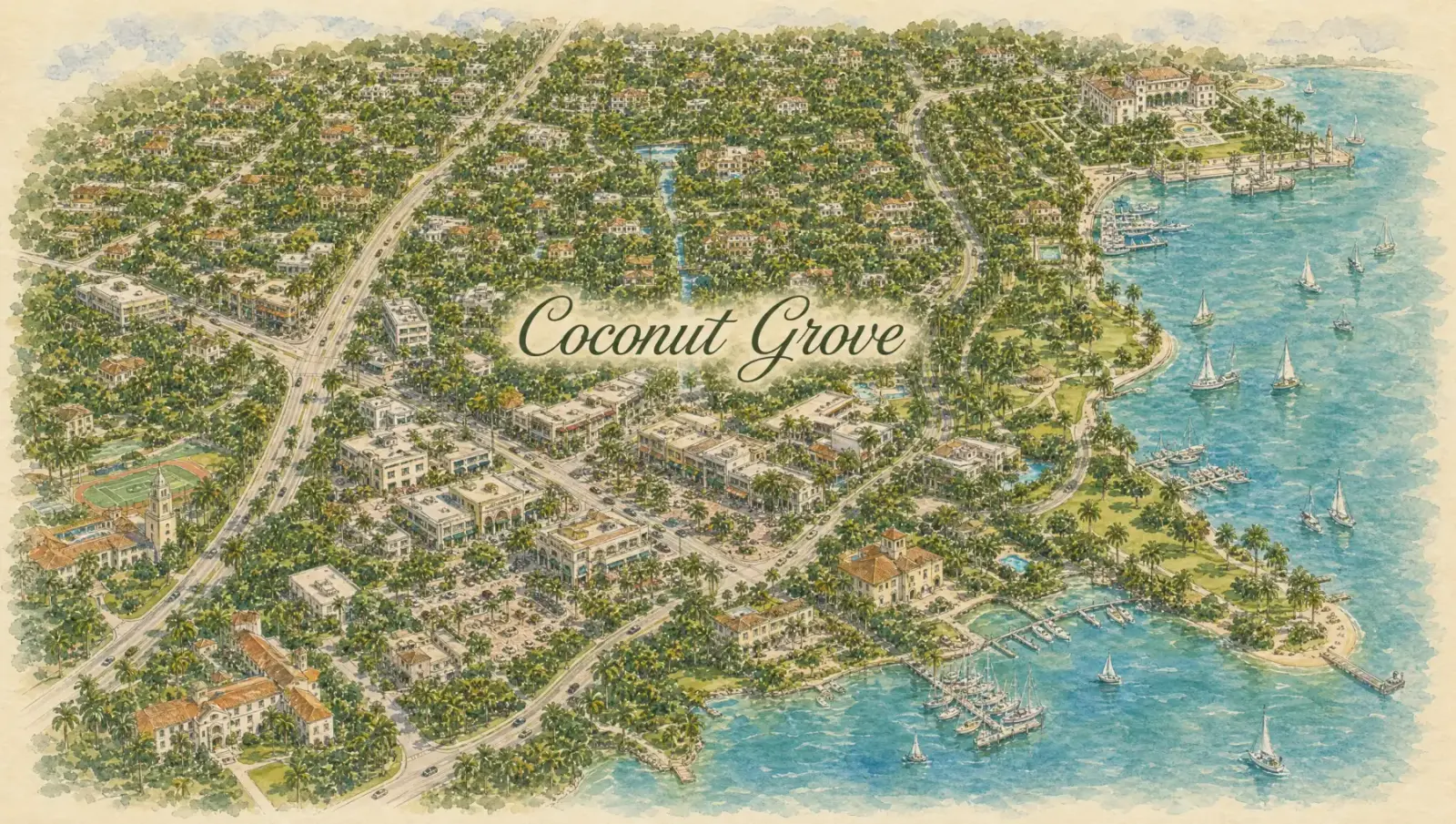
Coconut Grove sits on Biscayne Bay, bounded by the Rickenbacker Causeway to the north and extending south to North Prospect Drive. The neighborhood's building stock reflects its long history. Homes range from early 20th-century structures near The Barnacle Historic State Park to mid-century residences along the bay to contemporary construction inland.
Salt air from Biscayne Bay accelerates corrosion on metal components. Tree canopy from mature oaks and tropical plantings deposits organic debris year-round. Many properties sit within sight of the water, where wind-driven rain and humidity test every roof assembly.
The architectural register varies widely, from modest single-story homes to multi-story bay-front estates, each with different roofline complexity and material expectations.
A roof in Coconut Grove must handle salt, shade, and the structural demands of a neighborhood where building age spans two centuries.
How long does a roof last in Coconut Grove? Most residential roofs last 15+ years in this coastal environment. Tile and standing-seam metal commonly reach 30+ years when properly detailed for salt-air exposure and maintained through the tree-debris cycle. Asphalt shingles and flat membrane systems typically reach 15+ years, depending on substrate condition and ventilation.
See also service areas, Coral Gables, Pinecrest, South Miami, metal roofing aluminum, metal roofing copper, metal roofing galvalume, coconut grove asphalt shingles, coconut grove flat roofing, coconut grove metal roofing, and coconut grove tile roofing.
Tile, metal, asphalt, and flat. Each spoke links to the area-specific deep page. The right call depends on the architecture, the historic district status, and the structural carry.
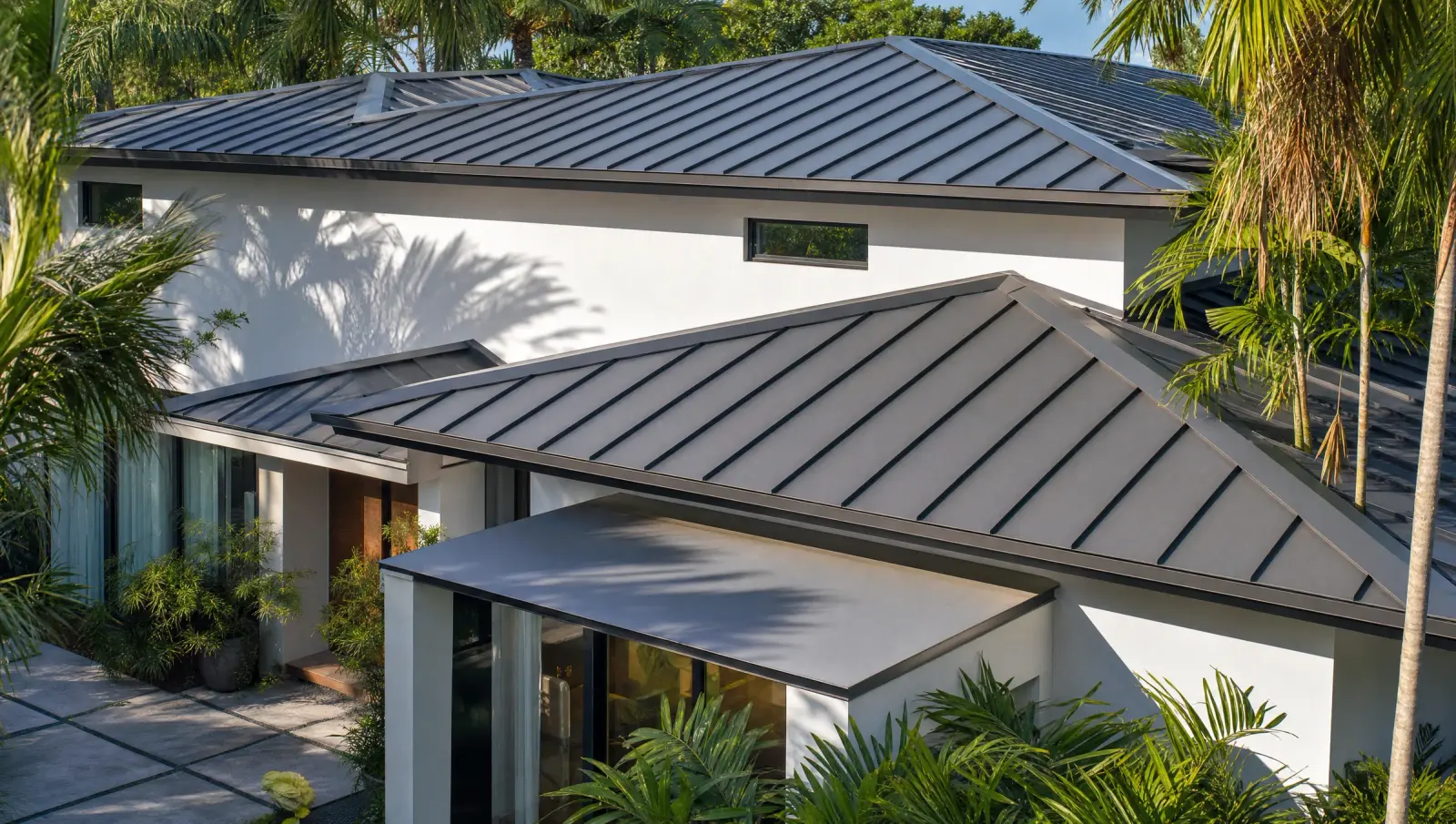
Standing-seam install: concealed clip, HVHZ fastener pattern, coastal-grade.
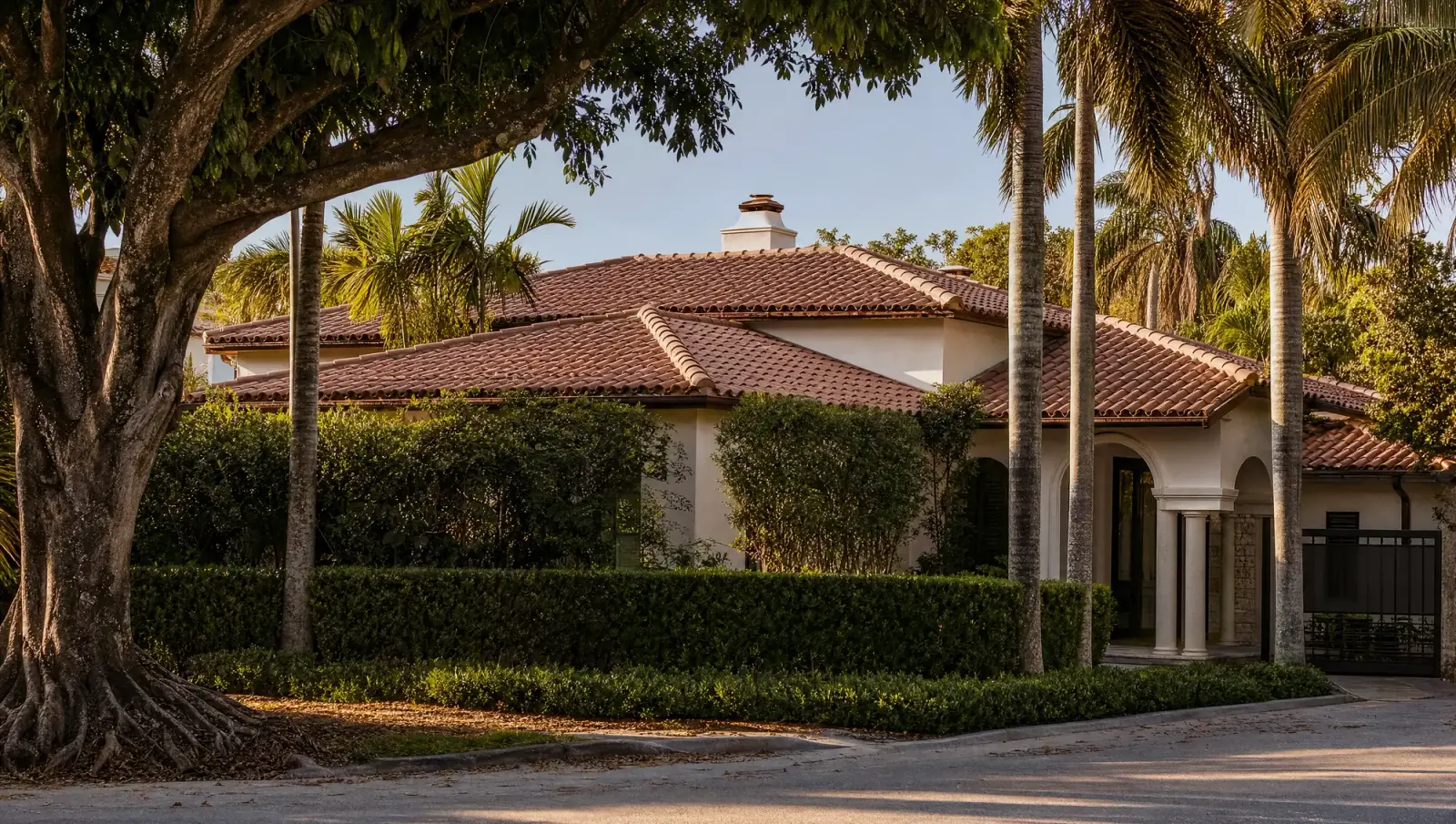
Clay and concrete tile install for Mediterranean Revival and historic-district homes.
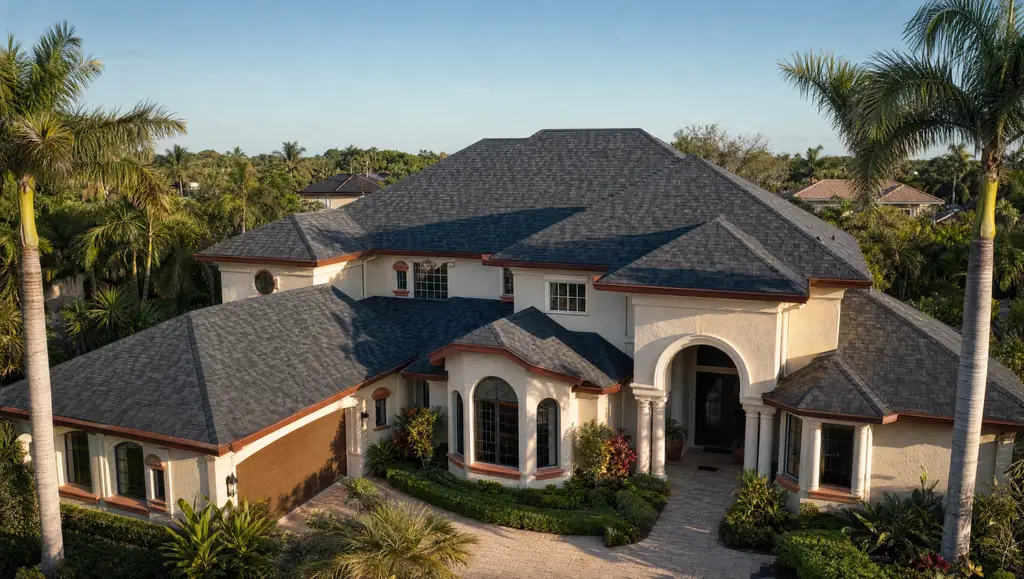
HVHZ-rated install with wind-warranted underlayment for non-historic homes.
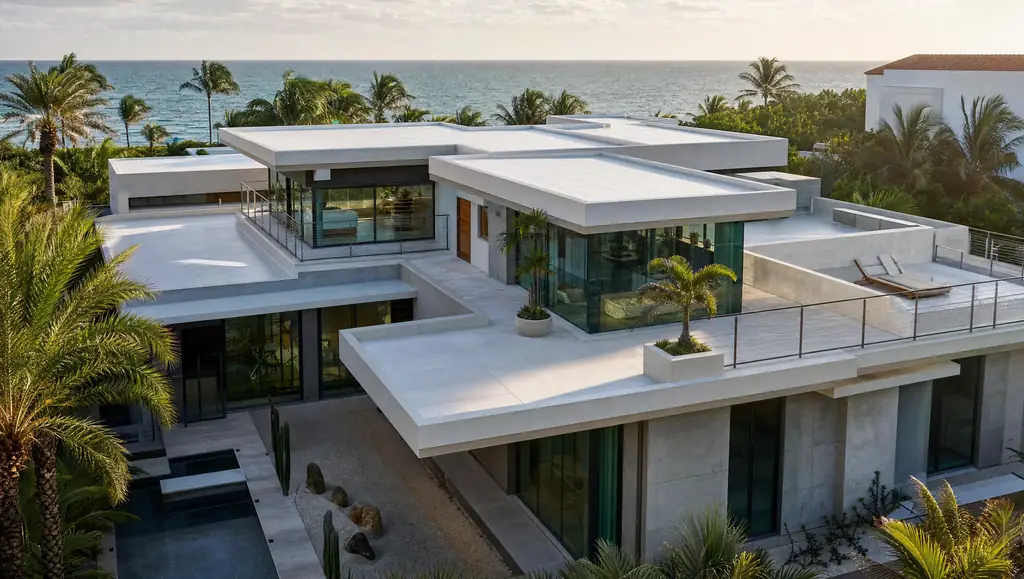
Modified-bitumen and TPO membranes for low-slope homes and additions.
Biscayne Bay sits on the eastern edge of the neighborhood. Homes within a half-mile of the water see accelerated corrosion on galvanized fasteners, aluminum trim, and any steel component not properly coated. We use stainless-steel fasteners and marine-grade sealants on bay-front projects. Aluminum and copper handle the exposure better than painted steel.
Mature oaks, ficus, and tropical plantings drop leaves, seed pods, and small branches year-round. Debris accumulates in valleys, behind chimneys, and along eave lines. Flat roofs and low-slope sections require more frequent clearing than inland properties. Tile roofs trap debris between rows. Standing-seam metal sheds debris cleanly but still needs annual gutter maintenance.
The neighborhood's building stock spans from the 1890s to new construction. Older homes often carry multiple roof layers, inadequate ventilation, and framing that was never designed for tile or heavy membrane systems. We verify deck condition and load capacity before specifying materials. Contemporary homes typically have engineered framing and can carry any system.
Many Coconut Grove properties sit on narrow lots with limited driveway access and mature landscaping close to the structure. Crane placement for material delivery requires coordination with neighbors. Scaffold setup often works around established trees. We walk the site before quoting to confirm truck and equipment access.
Our work from nearby South Florida neighborhoods.
Metal roof

Clay tile roof

Metal roof
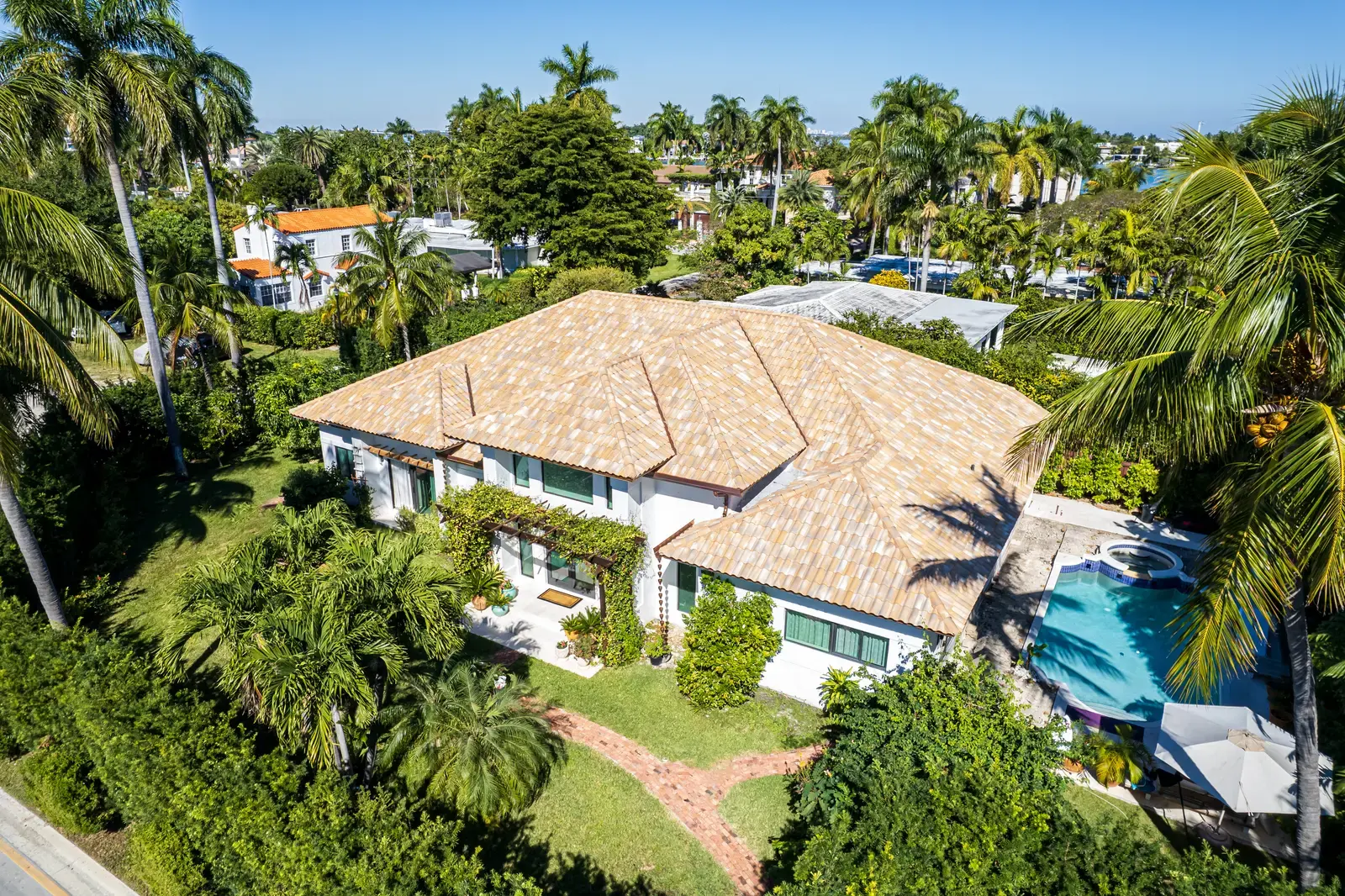
Clay tile roof
Salt air accelerates corrosion on metal components but does not directly damage tile, membrane, or shingle surfaces. The concern is fasteners, flashing, and trim. We use stainless-steel fasteners and marine-grade sealants on properties near the bay. Aluminum and copper roofing handle salt exposure better than painted steel or galvanized components.
Standing-seam metal sheds organic debris cleanly and does not trap leaves between rows. Tile roofs require more frequent debris clearing because leaves and seed pods collect between the rows and in valleys. Flat membrane roofs need annual clearing to prevent ponding and organic staining. Any material works under tree canopy if you commit to the maintenance cycle.
Older homes often carry multiple roof layers, inadequate ventilation, and framing that was not engineered for tile or heavy systems. We verify deck condition and load capacity before specifying materials. Contemporary homes typically have engineered framing and can support any system. The decision depends on what the structure can carry, not just what the architectural register suggests.
Yes. Standing-seam metal is compatible with most architectural styles when the profile and finish are chosen to complement the home's character. Copper develops a patina that suits historic properties. Aluminum and galvalume offer corrosion resistance in painted or mill finishes. The material choice depends on your budget, the home's structural capacity, and whether the design intent calls for a traditional or contemporary look.
We have worked in Coconut Grove since 1985. If you are evaluating materials, planning a replacement, or addressing a leak, we will walk the roof with you and explain what you are looking at. Call 305-233-4474 or use the contact form on this site.