
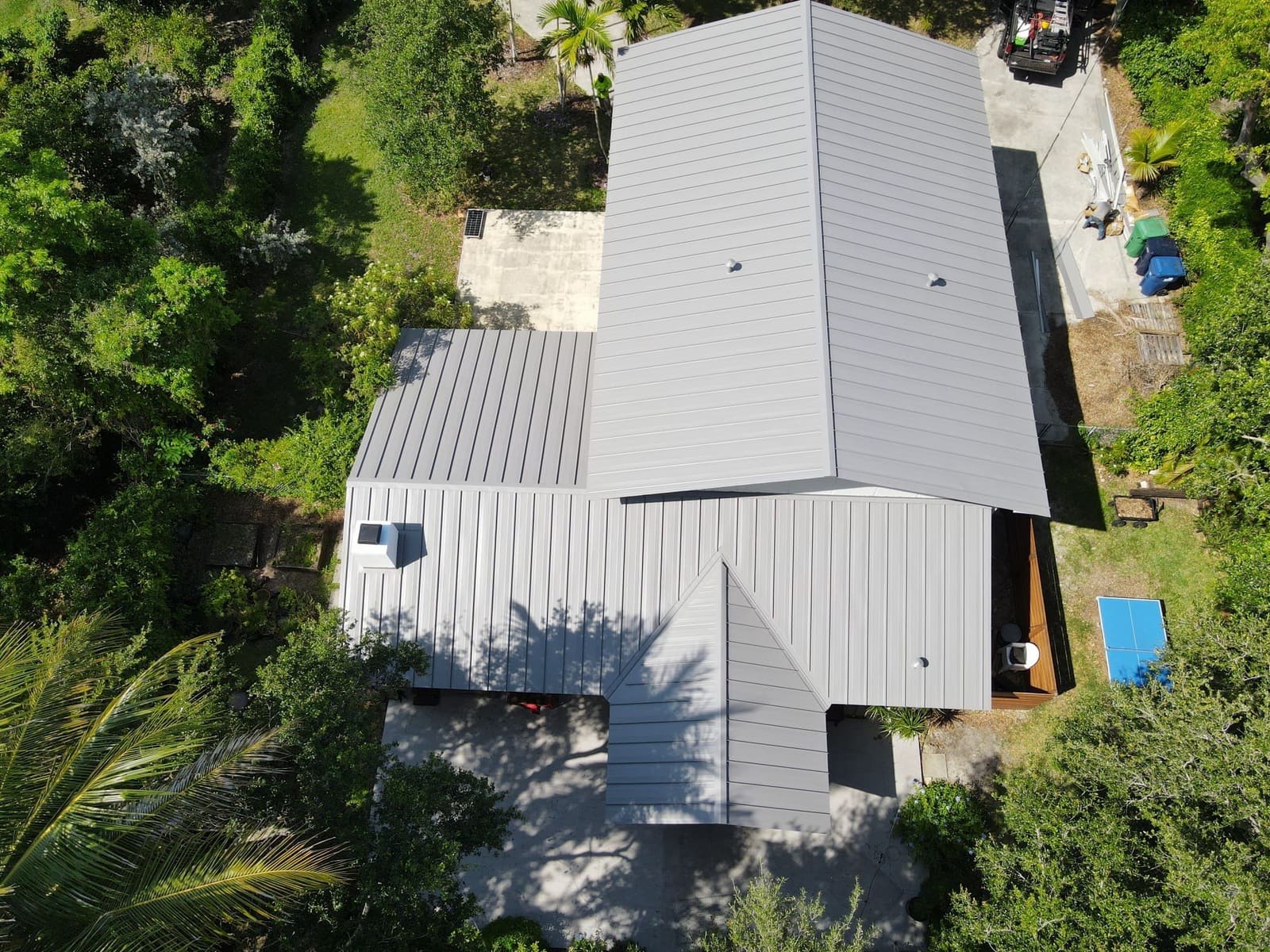
Just take a look at the roof, I'd give it a 10. I mean it speaks for itself, they really did a great job. I even mingled with the workers that were doing the roof and they all seemed very professional.
Aluminum Roofing for South Florida's coastal environment
Aluminum Roofing in Miami
Aluminum roofing forms a self-healing oxide layer that resists salt-air corrosion across Miami-Dade and Broward. Standing-seam systems meet Miami-Dade HVHZ wind-uplift requirements. Lighter than steel, copper, or tile, aluminum delivers multi-decade performance when properly detailed for coastal exposure.
THE 30-PLUS-YEAR METAL
How long does aluminum roofing last in South Florida?
Aluminum roofing lasts 30+ years in South Florida's coastal climate when installed with concealed-clip fastening and corrosion-resistant hardware. The material forms a self-healing oxide layer that resists salt-air corrosion, and standing-seam systems detailed for Miami-Dade HVHZ exposure deliver multi-decade performance without the weight of tile or the soldering requirements of copper.
Miami-Dade County enforces the Florida Building Code High Velocity Hurricane Zone (HVHZ) provisions.
What Aluminum Roofing Covers
Aluminum roofing encompasses standing-seam panel systems, corrugated profiles, and architectural-grade shingles. Standing-seam is the dominant residential application: concealed-clip fastening, continuous vertical seams, and panel widths from 12 to 18 inches. Corrugated aluminum serves utility structures and coastal outbuildings where weight and corrosion resistance matter more than architectural finish.
Architectural aluminum shingles mimic slate or wood-shake profiles at a fraction of the weight. These interlock via hidden clips and ship with factory-applied Kynar or PVDF coatings in matte or metallic finishes. The shingle format suits historic-district applications where standing-seam reads as too modern.
Aluminum also covers flat-roof edge trim, parapet caps, and gutter systems. The material's corrosion resistance makes it the default choice for coastal flashing details where galvanized steel would degrade. We specify aluminum drip edge, valley flashing, and chimney caps on projects across Coral Gables, Pinecrest, and Miami Beach.
Why Aluminum Matters in Miami
Miami-Dade County enforces the Florida Building Code High Velocity Hurricane Zone (HVHZ) provisions. Standing-seam aluminum systems tested to Miami-Dade NOA standards meet the 200+ mph uplift requirement when installed with the specified clip spacing and fastener schedule. The material's light weight (roughly one-third that of concrete tile) reduces structural load on older roof frames.
Salt air accelerates corrosion on ferrous metals. Aluminum's oxide layer is self-healing: when scratched, the exposed surface re-oxidizes within hours, restoring the protective barrier. This property extends service life in coastal neighborhoods like Key Biscayne, Golden Beach, and Gables Estates where ocean spray reaches roof surfaces year-round.
Historic districts in Coral Gables and Miami Beach impose design-review requirements. Aluminum shingles in slate-gray or weathered-copper finishes satisfy preservation boards while delivering wind resistance that clay tile cannot match at equivalent weight. For homes currently roofed with a tile roof system, aluminum standing-seam is the lightest direct replacement that meets HVHZ requirements without structural reinforcement. We have completed metal roof projects in Coral Gables and Coconut Grove where aluminum was the only material that met both the aesthetic standard and the structural constraint. The same lightweight standing-seam specification serves aluminum roofs in Pinecrest and South Miami.
How We Install Aluminum Roofing
Installation begins with deck inspection. We verify sheathing integrity, replace damaged sections, and confirm fastener schedules meet the Miami-Dade NOA for the specified panel system. Underlayment is a self-adhering modified-bitumen membrane rated for high-temperature exposure. Aluminum panels can reach 160°F under Miami sun, and underlayment degrades within five years. 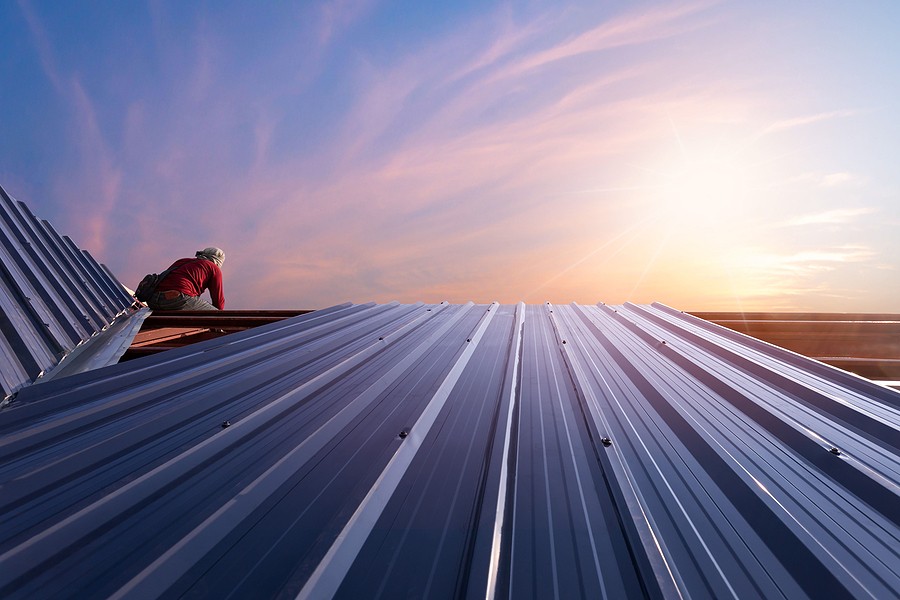
Panel Layout and Fastening
Standing-seam panels run from ridge to eave in continuous lengths. We measure each slope, order factory-cut panels to eliminate field seams, and stage them on-site the day before installation. Concealed clips fasten to the deck at 12-inch intervals; the panel edge snaps into the clip without penetrating the panel face. This eliminates the screw-through-face failure mode common on corrugated metal roofing. Seams are hand-crimped with a mechanical seamer. The tool folds the adjacent panel edges into a 180-degree interlock, creating a weathertight joint that flexes with thermal expansion. We do not use snap-lock seams on HVHZ projects. The mechanical crimp is the only seam geometry that meets the Miami-Dade uplift standard.
Trim and Flashing Details
Ridge caps, rake trim, and eave trim are fabricated from the same aluminum coil as the panels. We form these on-site with a portable brake to ensure color match and eliminate the galvanic corrosion that occurs when dissimilar metals contact. Valley flashing is a standing-seam panel laid flat and soldered at the seam. No exposed fasteners, no reliance on sealant. Chimney and skylight flashings are two-piece assemblies: a base flashing that integrates with the underlayment, and a counter-flashing that laps over the base and fastens to the vertical surface. We use stainless-steel fasteners throughout. Aluminum and stainless are galvanically compatible; aluminum and galvanized steel are not.
Aluminum vs Steel vs Copper
| Property | Aluminum | Galvalume Steel | Copper |
|---|---|---|---|
| Corrosion resistance | Self-healing oxide layer; resists salt air | Zinc-aluminum coating; degrades faster in coastal exposure | Forms protective copper patina; no rust |
| Weight | Lightest of the three; one-third the weight of tile | Heavier than aluminum; lighter than copper | Heaviest metal option; requires structural verification |
| Installation | Concealed-clip standing-seam; no soldering | Concealed-clip or exposed-fastener profiles | Soldered seams; specialized labor |
| Cost | Mid-range; lower than copper, higher than roof shingles | Lower than aluminum in exposed-fastener profiles; comparable in standing-seam | Highest upfront cost; long-term value in historic applications |
| Finish options | Kynar coatings in 30+ colors; matte or metallic | Kynar coatings; fewer color options than aluminum | Natural patina develops over 7-20 years; no coating |
| Lifespan | Multi-decade performance in coastal climates | Shorter lifespan than aluminum in salt-air exposure | Longest lifespan of any metal we install |
Warranty and Manufacturer Credentials
Istueta Roofing has been family-owned since 1985, serving Miami-Dade and Broward for 40 years. We hold membership in the National Roofing Contractors Association (NRCA), maintaining continuing-education requirements and industry-standard installation practices. Our metal roofing work earned recognition from the Metal Roofing Alliance, demonstrating craftsmanship that transfers across aluminum, metal roofing galvalume, and copper systems.
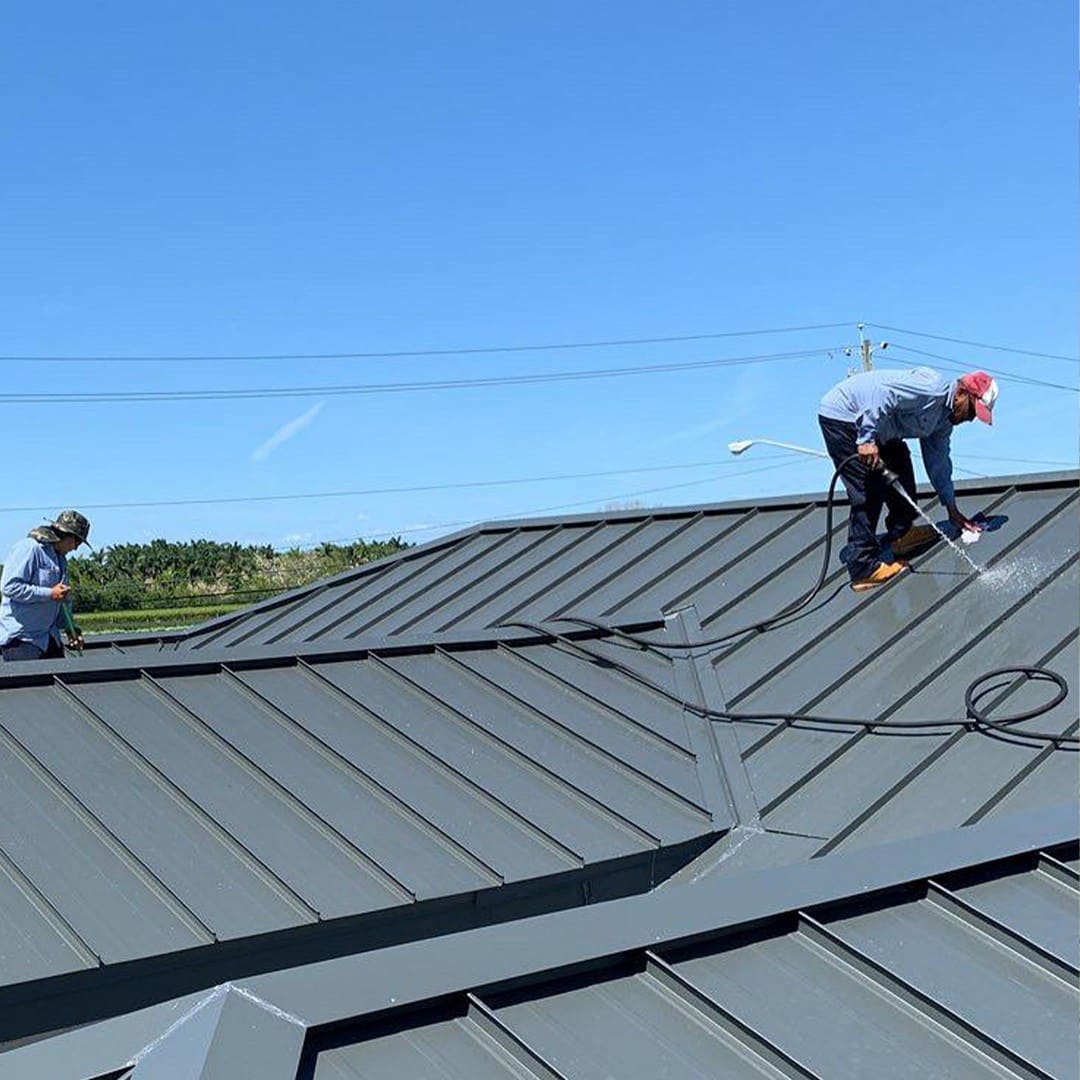
Two named manufacturer warranties back the aluminum system, paired with our installation warranty:
- McElroy Metal Kynar 500® (PVDF) finish/color warranty for the factory-applied PVDF coating, typically 30 years against fade and chalk.
- Sheffield Metals 40-Year Limited COOLR Paint Warranty, which covers AZ50 Galvalume, G90 Galvanized, or Aluminum substrates.
- Istueta 12-Year Workmanship Warranty on installation.
Together these form an Istueta Triple Warranty for the metal roof system: Workmanship + Substrate + Color. Specific coverage and exclusions are documented in your signed proposal and contract.
We have outlived our warranty commitment by more than 3x. 40 years in business versus a 12-year workmanship warranty demonstrates that we stand behind the work long after the contract closes. Financing subject to credit approval. See terms for details.
Financing Aluminum Roofing
We offer multiple financing options for aluminum roofing projects, including deferred-interest programs and monthly payment plans structured to fit your budget. Financing subject to credit approval. See terms for details.
Payment terms are outlined in your proposal. We do not require full payment upfront. Deposits and progress payments are scheduled around project milestones. The final payment is due upon completion and your written acceptance of the work.
What Determines Aluminum Roofing Cost
Aluminum roofing investment scales with panel profile, coating system, and the specifics of the underlayment and fastening schedule. Standing-seam systems with concealed clips and mechanical seams cost more than exposed-fastener corrugated profiles. Kynar coatings in custom colors add to the material cost; standard mill-finish aluminum is the baseline.
Roof complexity drives labor cost. A simple gable roof with no valleys or penetrations installs faster than a hip roof with multiple dormers, skylights, and chimney flashings. Tear-off and disposal of the existing roof add to the total when the project is a replacement rather than new construction.
We provide written proposals that itemize material, labor, and disposal costs. The proposal includes the panel specification, the underlayment system, the fastener schedule, and the warranty terms. No hidden gaps.
You know what you are paying for before we start.
See also epdm roofing.
Standing Seam Metal Roof
A standing seam metal roof is a panel system where the vertical seams connecting each panel are raised above the flat surface of the roof, rather than lying flush or overlapped like a shingle. Those raised seams lock or clip together, so there are no exposed fasteners running down the field of the roof for water to find. On an aluminum system specifically, that seam detail matters because aluminum won't rust at the fastener points the way a cut or scratched steel panel can over time.
The panels themselves come in a standard width and rib height, formed from sheet metal in a gauge thick enough to hold its shape under foot traffic and wind uplift without oil-canning excessively. Aluminum panels can be run in this profile the same as Galvalume steel, and the substrate choice changes the roof's behavior more than the seam style does. For a coastal or waterfront property, aluminum's resistance to salt corrosion is the reason it gets chosen over steel in a standing seam configuration in the first place.
Because the panel runs in long continuous lengths from eave to ridge, a standing seam roof has fewer horizontal joints than a shingle or shake profile, which is part of why the system is associated with a long service life when the substrate resists corrosion. Homeowners comparing panel styles side by side often want to see the metal substrate breakdown before deciding between metal roofing systems, and some end up comparing the raised-seam look against copper patina or even a tile roof profile before settling on aluminum.
| Feature | What it means on a standing seam roof |
|---|---|
| Seam type | Raised, interlocking seams, no exposed fasteners in the field |
| Panel material | Aluminum or Galvalume steel, formed to the same profile |
| Panel run | Continuous lengths from eave to ridge, fewer horizontal joints |
| Corrosion behavior | Aluminum resists salt-air corrosion better than exposed steel edges |
From clients
What homeowners say after the install.
I will say the job was delayed three days in starting because of rain, not your fault. And after that the crews came and worked very, very diligently for many days until the job was done. Overall I think it was a great job, the roof looks great, the gutters look great and I'm very satisfied with it.
You have peace of mind that quality is priceless. It really is. I feel very confident about this roof. I feel like this roof is going to outlast the two of us.
Frequently Asked Aluminum Roofing answers,
Aluminum Roofing answers,
before you ask.
Does aluminum roofing rust in salt air?
Aluminum does not rust. It forms a self-healing oxide layer that resists corrosion in coastal environments. When the surface is scratched, the exposed aluminum re-oxidizes within hours, restoring the protective barrier.
Can aluminum roofing withstand Miami hurricanes?
Standing-seam aluminum systems installed per Miami-Dade NOA standards meet HVHZ wind-uplift requirements. The concealed-clip fastening system and mechanical seam crimp create a continuous interlock that resists uplift forces.
Is aluminum roofing lighter than tile or steel?
Aluminum is lighter than steel, copper, and all tile profiles. The reduced weight matters on older homes where the roof frame was not designed for tile loads. Aluminum standing-seam can replace tile roof systems without structural reinforcement in most cases.
What is the difference between aluminum and galvalume?
Aluminum is a pure metal; galvalume is steel coated with a zinc-aluminum alloy. Aluminum resists salt-air corrosion better than galvalume. For coastal applications, aluminum is the better choice.
Does aluminum roofing need to be painted?
Factory-applied Kynar 500 or PVDF coatings eliminate the need for field painting. These coatings bond to the aluminum at the factory and carry 30-year fade and chalk warranties.
Can aluminum roofing be installed over existing shingles?
We do not install aluminum over existing roof shingles. The old shingles trap moisture, create an uneven substrate, and void the underlayment warranty. Proper installation requires tear-off to the deck.
What are aluminum roofing panels?
Aluminum roofing panels are metal roof sections formed from aluminum sheet, typically installed in standing seam or ribbed profiles that interlock or overlap to shed water. They're valued for being significantly lighter than steel or tile panels of the same size, which reduces stress on the roof structure and can make installation easier. Aluminum panels resist rust naturally, which is a key reason they're used in coastal and salt-air environments.
They usually come factory-finished with paint or coatings for color and added protection.
What are aluminum roofing shingles?
Aluminum roofing shingles are individual metal shingle units made from aluminum, shaped to resemble traditional shingle or shake profiles rather than the long panel look of standing seam metal roofing. Like aluminum panels, the shingles are lighter than steel or tile alternatives and don't rust, making them a fit for homes that want a shingle appearance with metal roofing's durability. They're installed piece by piece rather than in long panel runs, which changes the labor and layout compared to standing seam aluminum systems.
Aluminum Roofing built for the coast.
Schedule a no-pressure consultation. We walk your roof, review your options, and give you a detailed written proposal.
Or text us at (305) 671-9190