
Tile roofing in South Miami.
Hand-laid Ludowici and Verea profiles across South Miami's Mediterranean revival inventory and the UM-corridor residential blocks. Filed under the City of South Miami Building Department.
Schedule Your South Miami Tile Consultation →
What makes tile roofing the right choice for South Miami homes?
Tile is the right call on South Miami's Mediterranean revival single-family inventory and the UM-corridor residential blocks where the architecture asks for it. A hand-laid clay tile roof carries 180+ mph uplift, lasts 30+ years, and reads correctly under the city's mature tree canopy. On mid-century homes built for lighter materials, structural review confirms whether tile is appropriate.
The Mediterranean spec, at city scale.
South Miami's tile inventory is smaller-scale than Coral Gables or Pinecrest, but the architectural register is consistent: Mediterranean revival single-family homes from the 1920s through the 1950s, mid-century rebuilds with Mediterranean influence, and the UM-faculty residential pattern that overlaps with adjacent Coral Gables.
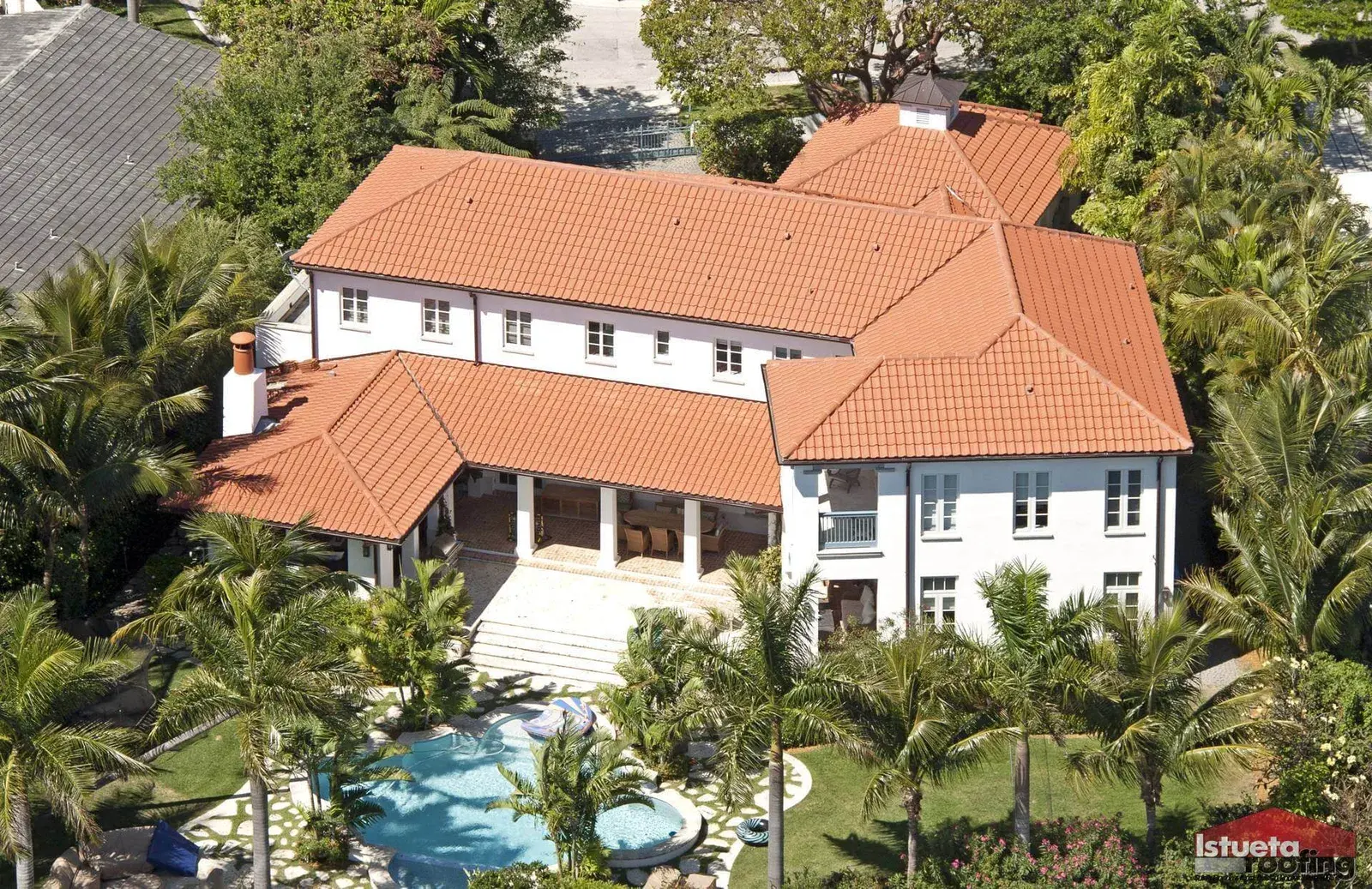
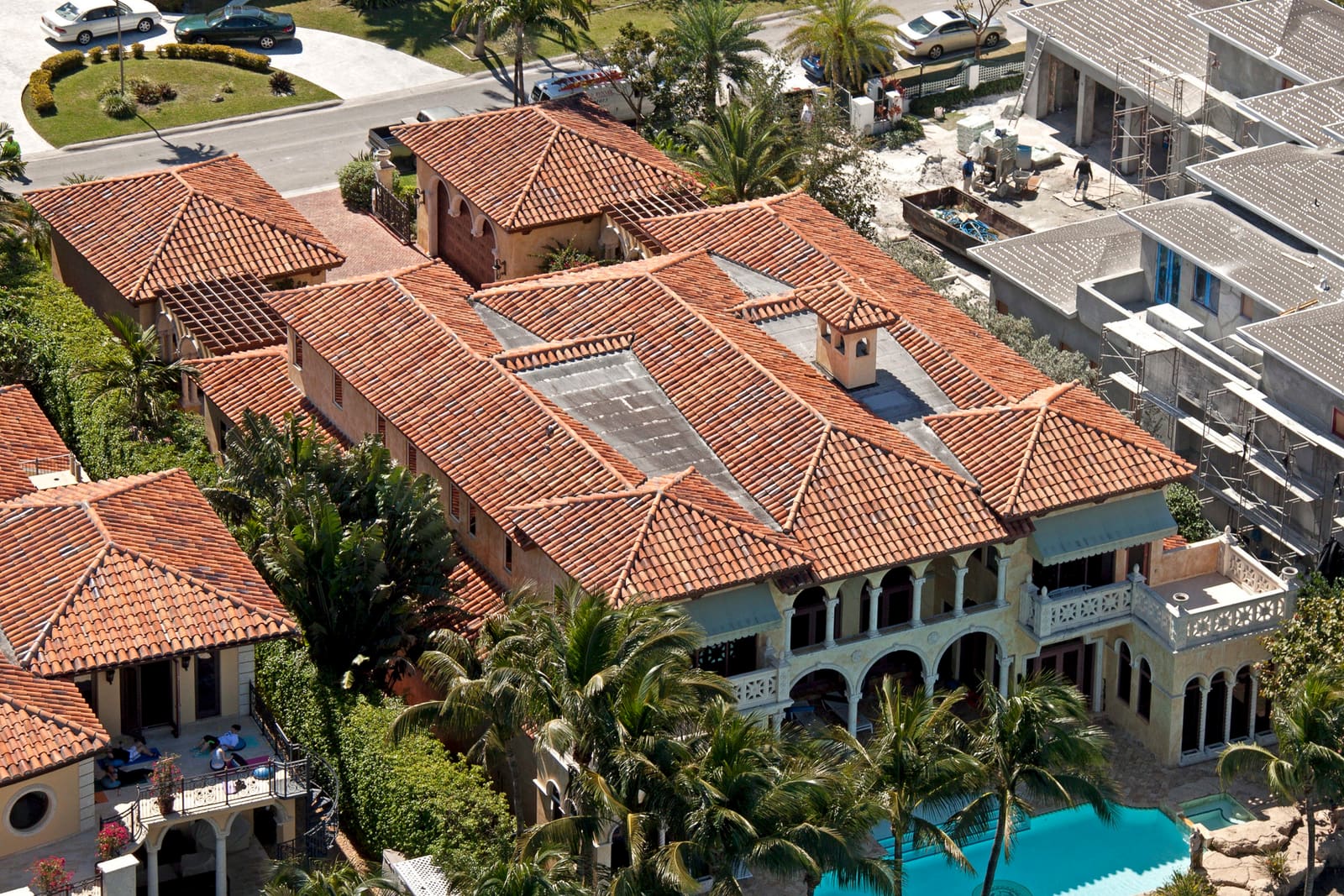
Two-piece Spanish barrel reads correctly on the original 1920s through 1940s Mediterranean revival inventory. S-tile (Mission profile) is the safe specification on smaller homes where the silhouette of two-piece barrel would read heavy. Flat architectural tile suits the post-war Mediterranean-influenced inventory and the modernist hybrid builds across the city.
What stays consistent across profiles is the installation discipline. Hand-laid two-piece barrel where the architecture asks for it, single-piece S-tile elsewhere, with 316 stainless screws and copper hurricane clips at every penetration. Polyglass SA-V peel-and-stick underlayment with a current Miami-Dade NOA, 16-oz hand-formed copper flashings at every valley and sidewall.
What gets installed,
and why.
The six numbers and credentials that define a South Miami tile install. Verified against current NOA filings and manufacturer documentation.
The clay itself is the longest-lived part of the system. The defining service interval is the peel-and-stick underlayment beneath, replaced once per generation (25 to 30 years on high-performance membranes).
Exceeds the Miami-Dade HVHZ 175 mph minimum. Every South Miami tile we install is mechanically clipped per current NOA specification.
The longest material warranty on any roofing product worldwide. Available only through Elite Crown installers; we have held that status since 2009.
Our installation craft warranty runs in parallel with the manufacturer warranty. Family-owned since 1985 means the warranty signature is the same family across generations.
Range reflects tile selection, profile, copper detailing, and structural complexity. South Miami projects tend toward smaller surface area than Coral Gables estates, which keeps total project cost moderate. Most full tile projects land within our $25,000 to $80,000 roof-replacement range.
Clay around 750 lbs per square; concrete around 900 lbs. Structural review confirms whether existing framing on UM-corridor 1940s and post-war homes can carry the spec.
The four things the city
asks of every tile install.
UM-corridor Mediterranean inventory
The streets immediately around the University of Miami carry a tile and Mediterranean revival pattern that overlaps with adjacent Coral Gables. We work this corridor regularly, with school-year quiet hours respected on the residential blocks.
Mid-century structural carry
Many South Miami homes built between 1945 and 1965 were not originally framed for tile load. A switch from existing asphalt or wood-shake to tile typically requires a structural review and may need rafter or decking reinforcement. We perform that review at no charge during the initial consultation.
Mature canopy and cleaning cadence
South Miami streetscape canopy is dense across most of the city. Shaded tile holds biological growth longer than open-roof areas, so a soft-wash cleaning every three to five years rather than every five to seven. Tile lifespan itself is unaffected.
City of South Miami permitting
South Miami operates its own Building Department separate from Coral Gables, Pinecrest, and unincorporated Miami-Dade. We file directly with the City. NOA letters and HVHZ wind specs are identical to county code; the cycle is generally shorter than historic-district review elsewhere.
Filed under City code, built to HVHZ.
Every South Miami tile install carries the standard Miami-Dade HVHZ wind permit from the City of South Miami Building Department, with the current Notice of Acceptance on the field tile, the underlayment, and the fastening pattern. The City adopts HVHZ without modification.
Some 33155 ZIP addresses fall under the adjacent City of Coral Gables jurisdiction, and the 33156 portion runs through the Village of Pinecrest. We confirm the permitting authority at the consultation and file the right paperwork on first submittal.
External references for verification:
- City of South Miami Building Department: permit, inspection, and code reference.
- Miami-Dade County Product Approval (NOA) Search, for verifying the active NOA on any product specified.
- Ludowici Roof Tile: manufacturer documentation, profile catalog, and Elite Crown installer directory.
South Miami tile, answered.
The wind specs are identical across all three: Miami-Dade HVHZ, 175 mph minimum uplift, current NOA documentation. The review process differs. Coral Gables historic districts trigger Board of Architects review on visible exterior changes. Pinecrest runs through the Village Building Division. South Miami runs through the City Building Department without an equivalent architectural review layer, so the cycle is generally shorter.
A mid-century South Miami home typically calls for flat architectural tile (Ludowici Americana, Verea Plana) rather than two-piece Spanish barrel. The flat profile reads as a clean update without forcing a Mediterranean revival vocabulary onto a 1950s ranch. S-tile (Mission profile) is the safe alternative when the architecture sits between mid-century and Mediterranean.
Sometimes. Homes built for tile have framing sized for the 750-lbs-per-square load and typically support a like-for-like clay re-tile without reinforcement. Homes built for asphalt or shake (lighter materials) may need rafter and decking upgrade before tile is appropriate. We pull existing structural drawings where available and verify capacity before any contract.
South Miami does not enforce a city palette in the way Coral Gables historic districts do, but architecturally appropriate Mediterranean tones (natural terracotta, blended terracotta with cream or weathered accents) read correctly against the city's mature canopy and stucco-and-tile context. We bring physical sample tiles to the consultation so the decision is made in daylight.
A properly installed clay tile roof in South Miami lasts 30+ years. The clay is the longest-lived part of the system; the underlayment beneath is the defining service interval, replaced once per generation (25 to 30 years on high-performance peel-and-stick membranes). The canopy increases the cleaning cadence but does not shorten tile lifespan itself.
On a smaller South Miami Mediterranean revival home, S-tile (Mission profile) is typically the right balance. Two-piece Spanish barrel reads heavier and works against the proportions of a 2,000 to 3,500 square foot home. Flat architectural tile suits the more transitional mid-century inventory. We bring all three sample profiles to the consultation.
A standard residential tile permit through the City of South Miami Building Department runs five to ten business days. Some 33155 ZIP addresses fall under the City of Coral Gables instead; we file there when applicable. The Village of Pinecrest permits the 33156 portions. We confirm jurisdiction at the consultation.
A South Miami tile roof,
filed under the City.
We will be on your roof within ten business days. Bring us the original house photos, the structural drawings if you have them, and the school-year calendar if you are in the UM corridor. We will handle the permit, the staging, and the work.