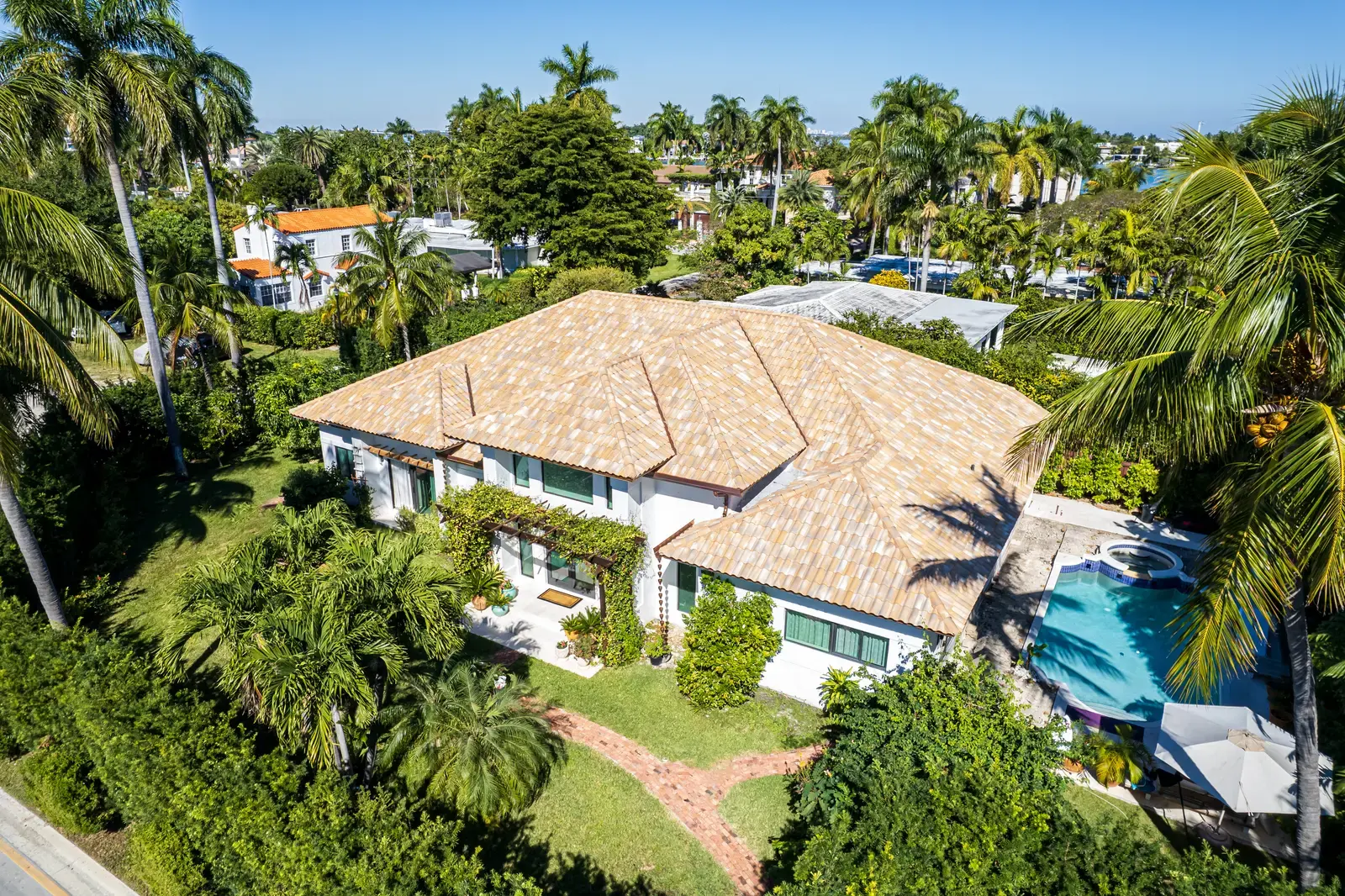
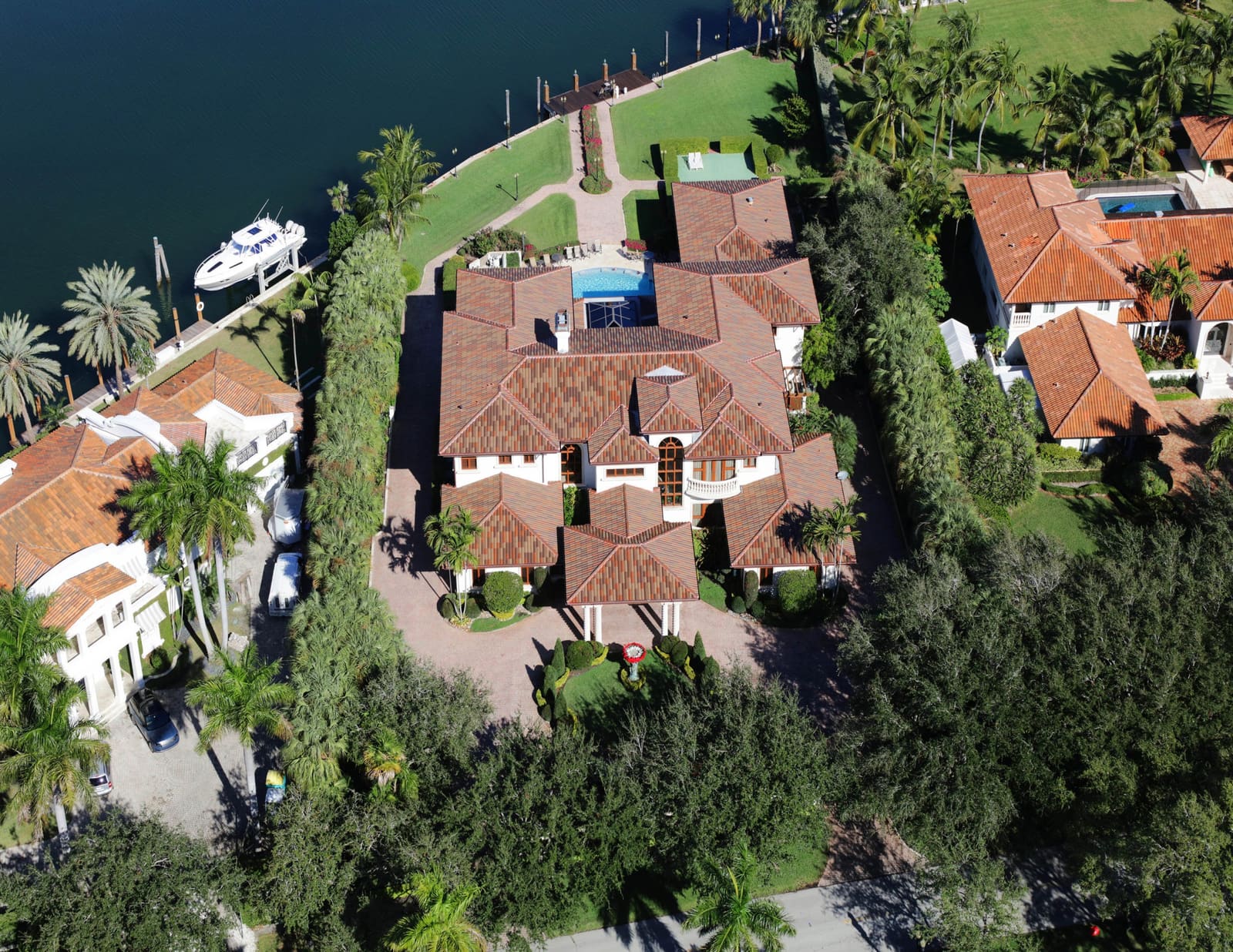
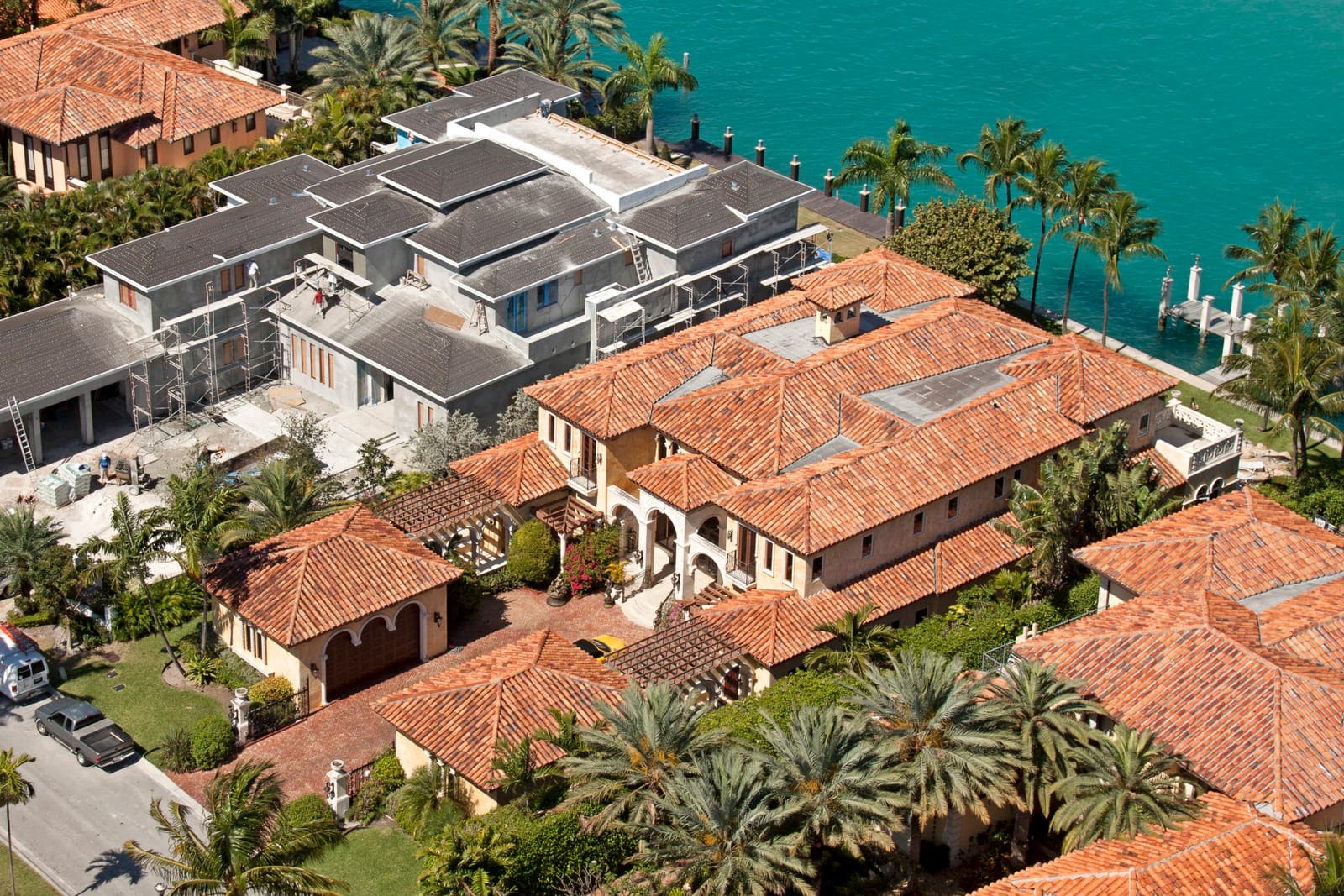
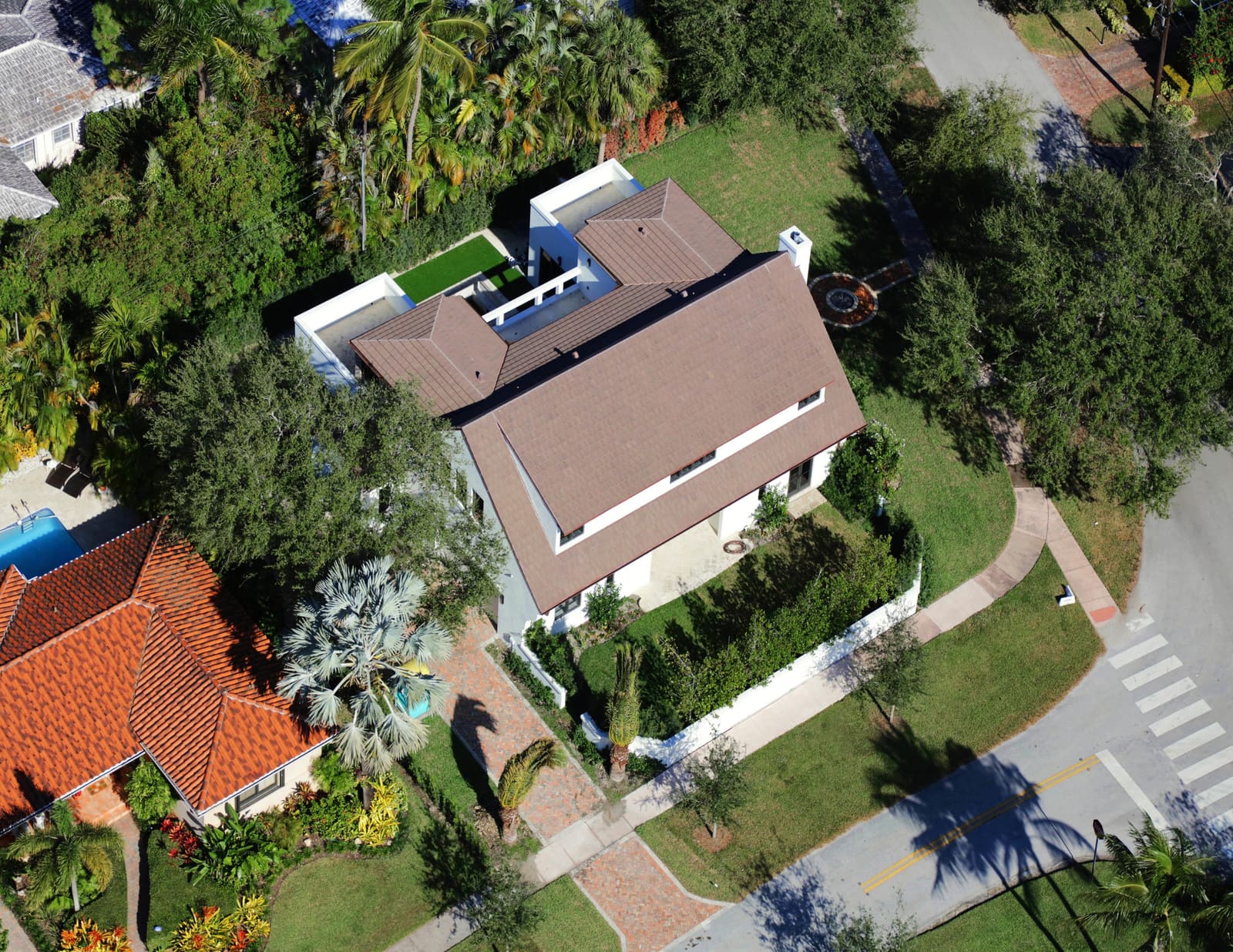
Clay tile

Tile Roofing in Miami
Typical tile roof lifespan in Miami: A tile roof lasts 30+ years in South Florida's coastal environment when properly installed and maintained. Both clay and concrete profiles resist salt-air corrosion and hurricane-force wind when fastened to the HVHZ code.
Tile roofing for South Florida luxury homes
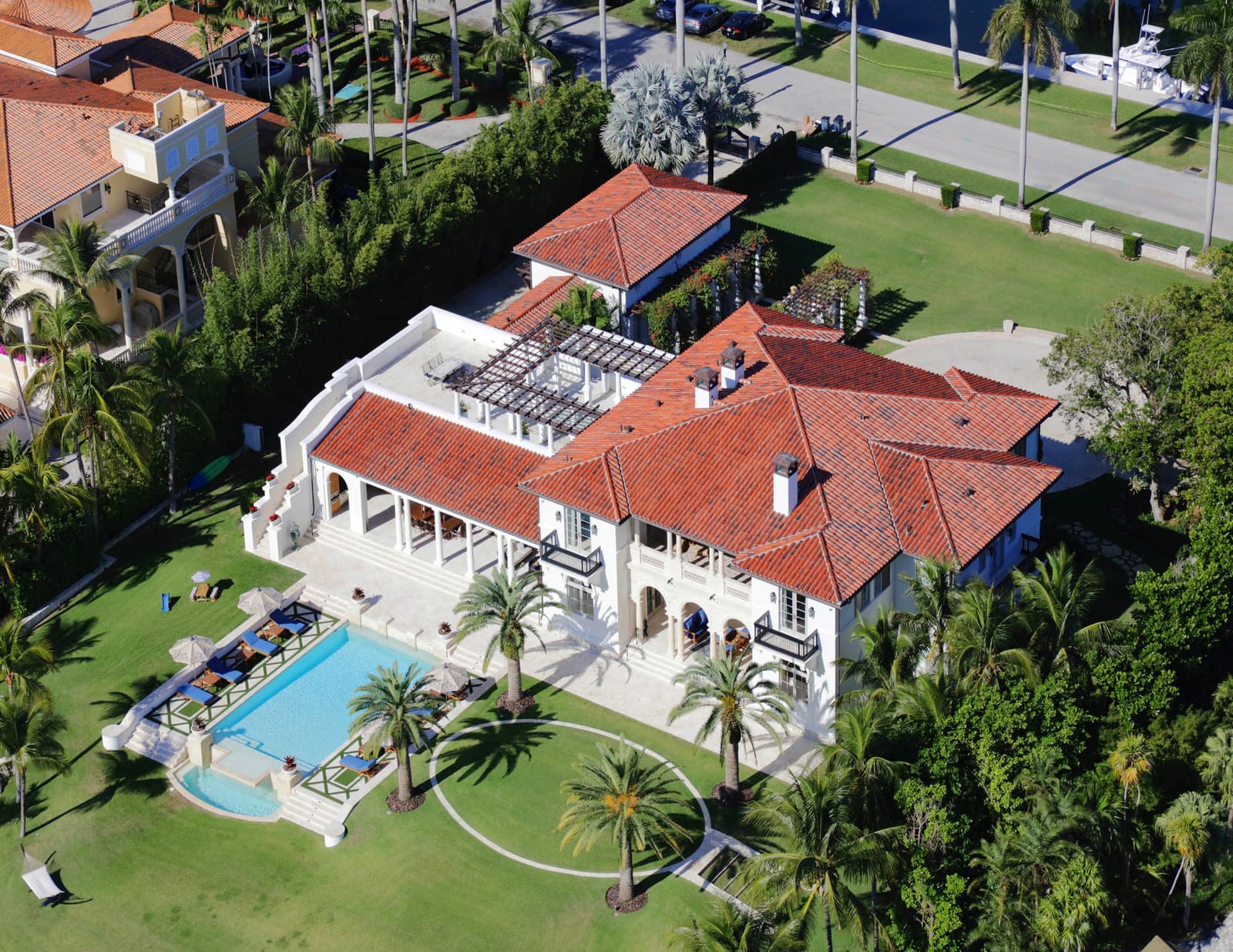
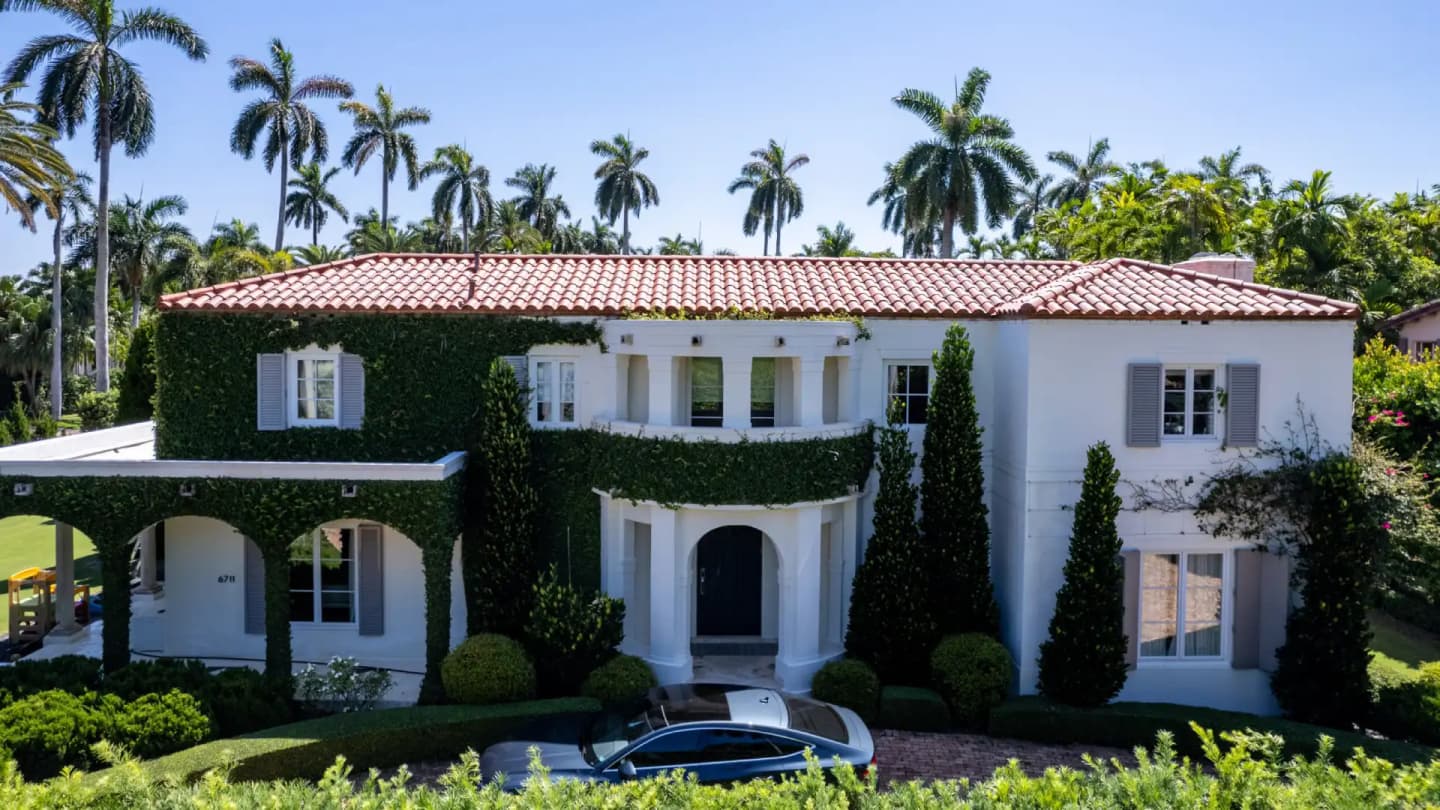
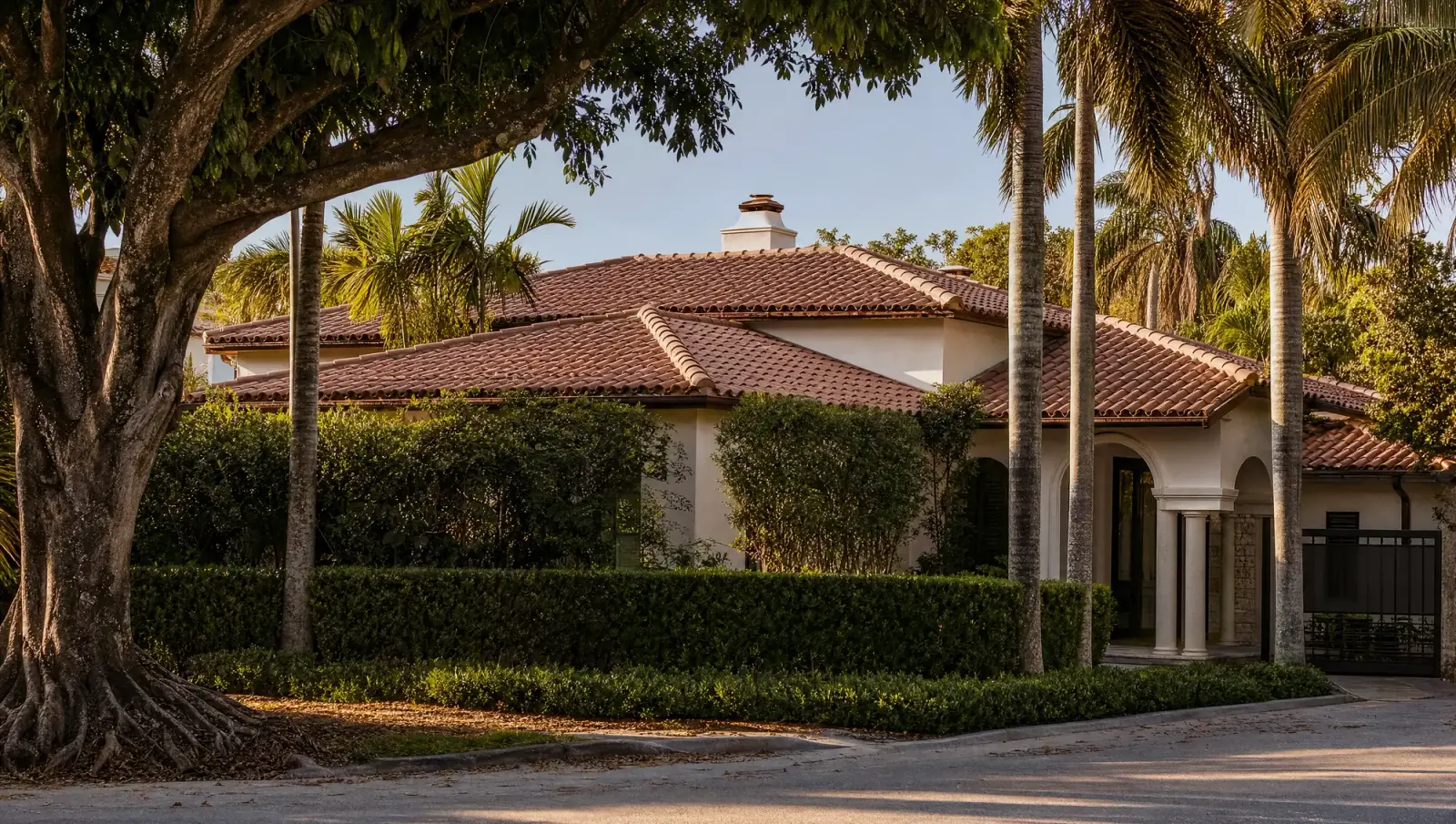
Tile roofing is the architectural default for luxury residential construction across Coral Gables, Coconut Grove, Pinecrest, and Miami Beach, and the broader Miami-Dade and Broward footprint we serve. The material resists salt-air corrosion, survives hurricane-force wind when properly fastened, and carries the visual weight Mediterranean-revival and contemporary coastal homes require.
We install two profiles (clay tile and concrete tile) each suited to a different architectural register and budget tier. Clay is the multi-generational material, the longest-lived tile we install under coastal exposure. Concrete shares the install discipline at a lower entry price, with proper underlayment maintenance.
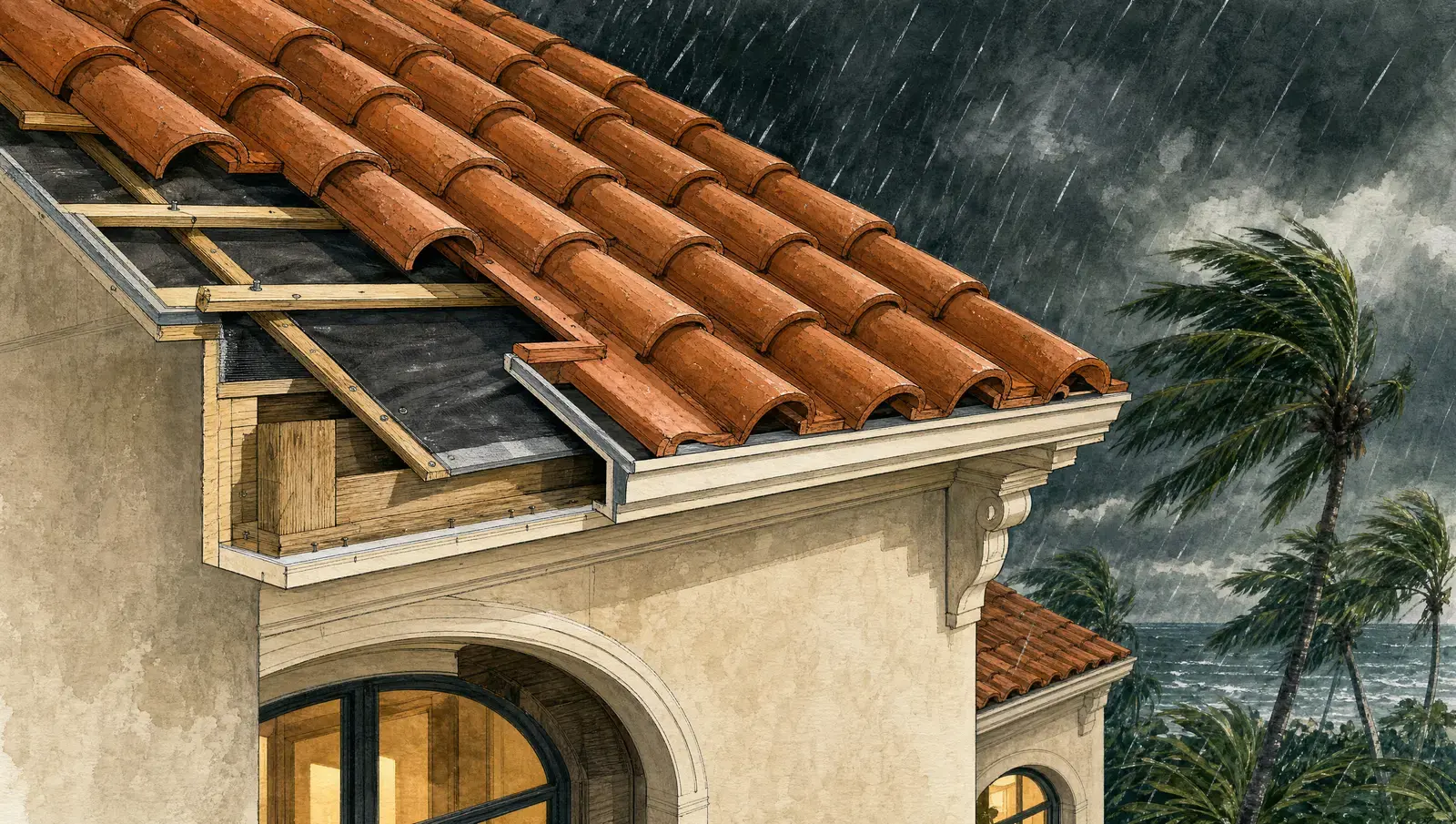
The assembly under the tile matters as much as the profile. We install with a wind-rated underlayment matched to the HVHZ code, and every fastener is concealed or mechanically anchored to the code uplift requirement.
Tile roofing at a glance:
- Lifespan: 30+ years for both profiles; clay outlasts concrete, which needs proper underlayment maintenance
- Dead load: Clay 6 to 10 psf; concrete 9.5 to 12 psf, depending on profile
- Wind rating: meets the Miami-Dade HVHZ uplift requirement
- HVHZ compliance: Detailed to the Miami-Dade and Broward High Velocity Hurricane Zone code on every install
- Installed cost: Clay carries the highest material and labor investment of the tile profiles; concrete is the value tier
Choose between clay and concrete tile roofing, each offering distinct architectural styles, performance characteristics, and investment levels.
How long does tile roofing last in Miami?
A properly installed tile roof can provide 30+ years of reliable performance. Its lifespan depends on the quality of the clay or concrete tile, the complete roofing system beneath it, the quality of the installation, and ongoing maintenance. Both clay and concrete tile offer exceptional resistance to South Florida's salt-air environment and are engineered to meet the demanding requirements of Miami-Dade's High Velocity Hurricane Zone (HVHZ), making them one of the most durable roofing systems available for South Florida homes.
Tile Materials Available
Choose between clay and concrete tile roofing, each offering distinct architectural styles, performance characteristics, and investment levels.
- Clay Tile Roofing: A premium roofing material valued for its timeless beauty, exceptional durability, and long-term performance. With quality materials, expert installation, and proper maintenance, your clay tile roof can provide decades of reliable protection while enhancing your home's architectural character.
- Concrete Tile Roofing: A versatile and cost-effective option that offers outstanding durability, design flexibility, and long-term performance. Available in a wide variety of profiles and colors, concrete tile delivers the appearance of traditional tile while providing exceptional value.
Choose from a wide selection of Spanish S, Barrel, Flat, Slate and Shake profiles from leading manufacturers, including Ludowici, Verea, Crown Roof Tiles, and Granada.
Visit our Miami showroom to compare tile materials, profiles, colors, textures, and finishes in person. Seeing the differences firsthand makes it easier to confidently choose the roofing system that best complements your home's architecture.

What makes tile a Florida-luxury default
Tile roofing resists salt-air corrosion better than any other residential material at the wind ratings the HVHZ code requires. The profile carries the visual weight Mediterranean-revival and contemporary coastal architecture demand. The material is non-combustible, dimensionally stable under UV exposure, and survives hurricane-force wind when properly fastened.
The assembly under the tile matters as much as the profile. We install with a wind-rated underlayment matched to the HVHZ code, and every fastener is concealed or mechanically anchored to resist uplift. Improperly detailed tile fails first at the fastener line or the underlayment seam.
Properly detailed tile lets you forget about the roof for decades.
Tile vs metal vs asphalt shingles
| Material | Lifespan (South Florida) | Dead Load | Wind Rating | Architectural Fit |
|---|---|---|---|---|
| Clay tile | 30+ years | 6–10 psf | HVHZ code uplift | Mediterranean-revival, luxury coastal |
| Concrete tile | 30+ years | 9.5–12 psf | HVHZ code uplift | Contemporary, budget-conscious luxury |
| Metal roofing | 30+ years | 1–2 psf | HVHZ code uplift (Miami-Dade NOA) | Modern coastal, standing-seam |
| Roof shingles | 15+ years | 2–3 psf | HVHZ code uplift | Traditional suburban, entry-level |
Tile carries the highest dead load and the longest lifespan. Metal roofing aluminum is the lightest material at the same wind rating. Roof shingles are the entry-level material for homes that do not require the architectural weight tile provides.
Manufacturer certifications for tile roofing
We hold Ludowici Elite Crown contractor status and Verea authorized applicator status, and we install across the full lineup: Ludowici, Verea, Crown Roof Tiles, and Granada. The Ludowici and Verea certifications require documented install discipline, ongoing training, and a proven installation track record on manufacturer-supplied material.
We are a Certified Applicator with the manufacturers we install and hold active membership in the National Roofing Contractors Association (NRCA).
HVHZ for tile roofing in Miami-Dade
Miami-Dade and Broward counties are High Velocity Hurricane Zones (HVHZ). Every tile roof we install is detailed to the HVHZ uplift requirement. The fastener pattern, the underlayment seam overlap, and the ridge-cap attachment are all governed by the Miami-Dade Notice of Acceptance (NOA) for the specific profile.
The HVHZ code requires a wind-rated underlayment under every tile roof. We install with a self-adhering underlayment or a mechanically-fastened synthetic underlayment matched to the profile's dead load and the roof's slope. The underlayment is the second line of defense when a tile cracks or displaces under wind load.
See also epdm roofing and copper patina.

Cost of Tile Roofing
Tile roofing costs more upfront than shingles or metal, and the price difference comes largely from weight and material. Heavier tile means more structural bracing on the roof deck, and the tile itself (clay or concrete) is a bigger material investment than asphalt. The two main tile types also carry different weight loads, which affects what a structure can support without extra reinforcement.
| Tile Type | Dead Load | What Drives Cost |
|---|---|---|
| Clay tile | 6 to 10 psf, depending on profile | Higher material cost, profile complexity, longer lifespan spreads cost over more years |
| Concrete tile | 9.5 to 12 psf, depending on profile | Lower material cost than clay, heavier load may require structural checks |
Because tile is a 30+ year system, the higher sticker price of tile is usually weighed against decades of service rather than compared dollar-for-dollar against shorter-lived materials. Homeowners comparing the investment often look at clay tile against concrete tile directly, or step back and compare tile against metal roofing or roof shingles before deciding what fits their budget and structure.
Choose your tile roofing profile
We install 2 tile roofing profiles, each suited to a different architectural register.
Tile Roofing answers,
before you ask.
What tile profiles work in South Florida?
Clay and concrete tile both work in South Florida's coastal environment. Both are 30+ year systems, and clay is the longer-lived of the two. Concrete needs proper underlayment maintenance.
Both profiles resist salt-air corrosion and hurricane-force wind when properly fastened.
How do tile and metal compare on weight?
Tile is the heaviest residential roofing material. Clay tile dead load is 6 to 10 psf depending on profile. Concrete tile dead load is 9.5 to 12 psf.
Metal roofing dead load is 1 to 2 psf. The structural frame must support the tile's dead load before you install.
What is the Ludowici Elite Crown certification?
Ludowici Elite Crown is a contractor certification for clay tile installation. It requires documented install discipline, ongoing training, and a proven installation track record on Ludowici-supplied material.
Istueta Roofing holds Elite Crown status.
Does Ludowici clay tile carry a color warranty?
Ludowici offers a manufacturer ColorFast warranty covering color stability under UV exposure on clay tile. The warranty is the manufacturer's, requires Elite Crown installation, and does not cover underlayment, fasteners, or flashing. Ask us for the current warranty term on the Ludowici profile you choose.
What is the difference between clay and concrete tile?
Clay tile is fired ceramic. Concrete tile is cast concrete. Clay lasts longer than concrete, and both are 30+ year systems.
Clay is lighter (6 to 10 psf vs 9.5 to 12 psf). Clay costs more than concrete, weighed against its longer service life. Both profiles resist salt-air corrosion and hurricane-force wind when properly fastened.
Do you install tile in Coral Gables and Pinecrest?
Yes. We install tile roofing across Miami-Dade and Broward counties, including Coral Gables, Pinecrest, Coconut Grove, South Miami, Miami Beach, and Key Biscayne. Every roof is detailed for the HVHZ wind code and the architectural-review requirements the neighborhood requires.
Can you coat tile roofing?
Yes, clay and concrete tile can be coated, though most homeowners do this to refresh color on aging concrete tile rather than clay, which holds its color through the body of the tile itself. Coating won't fix underlying problems like cracked tiles or failed underlayment, so a roof should be inspected first. For a full breakdown of coating options, prep work, and when coating makes sense versus replacement, see our roof coatings page.
Can you clean tile roofing?
Tile roofs can be cleaned to remove algae, moss, and dirt buildup, which is common in South Florida's humidity. Pressure washing at the wrong angle or setting can crack tiles or strip the surface finish off concrete tile, so cleaning method matters as much as the fact that it's being done. Clay tile is more forgiving since its color runs through the whole tile, but both types should be walked and cleaned carefully to avoid breaking tiles underfoot.
Routine cleaning also gives a chance to spot cracked or slipped tiles before they turn into leaks.
Can you paint tile roofing with a roller?
A roller can work on flat concrete tile sections, but tile's curved, grooved profile makes even roller coverage difficult at the ribs and overlaps, so most tile painting uses spray application, sometimes with a brush or roller for edges. Concrete tile can be coated without sanding as long as it is thoroughly cleaned and a bonding primer is used, since the tile texture gives the coating something to grip, and skipping proper cleaning is the most common reason coatings fail. Clay tile is rarely painted at all, because its color is fired into the material rather than applied to the surface.
How does standing seam roofing compare to tile roofing?
Standing seam metal panels run vertically with raised interlocking seams, while tile is laid in overlapping courses of individual clay or concrete pieces, and tile carries far more weight per square foot, which affects what the structure must support. On cost, both sit above asphalt shingles, but they are not priced the same way and tile's added weight can require structural reinforcement that standing seam typically does not. Tile profiles like barrel, flat, and S-tile also give a different look than metal's flat panel lines; see our standing seam roofing page and request a quote comparing both materials for your roof.
Can you seal tile roofing?
Yes. Sealing tile roofing protects the surface from water absorption, staining, and algae growth while helping the underlying color and finish hold up over time. This is separate from coating, which builds a protective film on the tile surface, and separate from painting, which changes the tile color.
Sealing works best as part of regular maintenance, especially on concrete tile, which is more porous than clay. Talk to us about which approach fits your roof's condition and tile type.
What is the cost of tile roofing?
Tile roofing costs more up front than an asphalt shingle roof, largely because of the weight of the material, the extra structural and installation work that comes with it, and the labor involved in setting individual tiles rather than rolling out sheets or panels. Clay tile, especially a product with a formal certification and color warranty like Ludowici, sits at the higher end of that range compared to concrete tile. The final number depends on the tile profile, the roof's pitch and complexity, and whether structural reinforcement is needed to carry the added weight.
We can walk through those variables and give you a project-specific figure.
What is the cost of tile roofing per square foot?
Per-square-foot pricing for tile roofing depends on the tile material (clay versus concrete), the profile you choose, roof complexity, and structural requirements tied to the weight of tile. Because those factors shift the number so much from one roof to the next, we don't quote a flat per-square-foot rate here. Contact us for an on-site assessment and a number based on your actual roof.
What is tile roofing?
Tile roofing is a roof covering made of individual clay or concrete tiles laid in overlapping rows, rather than the sheet or shingle systems used with asphalt or metal roofing. Tiles are shaped into different profiles, and the choice of profile affects both the look of the roof and how it sheds water. Tile is heavier than metal or asphalt roofing, which is a key factor in how a roof structure is designed and reinforced to carry it.
It's a common roofing choice in South Florida, where certain tile profiles are well suited to the local climate and architecture.
What materials are used for tile roofing?
Tile roofing is made from either clay or concrete, the two main materials used in the field. Clay tile is fired from natural clay and includes products like Ludowici, which carries an Elite Crown certification and a color warranty. Concrete tile is manufactured from cement, sand, and water and is generally less expensive than clay, though it differs in weight, porosity, and long-term appearance.
The right material for a given roof depends on the structure's load capacity, the architectural style of the home, and budget.
Can you install over tile roofing?
Tile is almost always removed rather than roofed over. Tile roofs rely on the underlayment and battens beneath the tiles to shed water, and that layer wears out long before the tiles themselves do, so a re-roof means pulling the tile, replacing the underlayment, and resetting the same tile or new tile on top. Tiles that survive removal in good condition can often be reused, which keeps costs down compared to buying an entirely new tile set.
Layering a new roof system directly over existing tile is not a practice we recommend or perform.
What is the lifespan of tile roofing?
Clay and concrete tile are built to outlast most other roofing materials, which is why tile is common on older South Florida homes that still have their original roof covering. The tiles themselves are durable, but the underlayment underneath them wears out well before the tile does, so a full re-roof usually means replacing that underlayment and resetting the tile rather than replacing the tile itself. How long a tile roof lasts also depends on the profile, the quality of the underlayment, and how well the roof has been maintained, cleaned, and sealed over time.
Who is a tile roofing contractor near me?
We install, repair, and maintain clay and concrete tile roofing across South Florida, including coating, cleaning, sealing, and full re-roofs. Our crews work with the tile profiles and installation details that hold up in this climate, from wind exposure to salt air. See our tile roofing services for the profiles we install and the areas we cover.
Tile Roofing built for the coast.
Schedule a no-pressure consultation. We walk your roof, review your options, and give you a detailed written proposal.