Metal Roofing in Miami, seamed by hand, engineered for the storm.
A residential metal roof is the strongest, most hurricane-resilient system we install. Three materials, three price points, one standard of installation. Below, the spoke pages walk through the trade-offs in detail.
Ludowici Elite Crown RooferMRA Q1 2023 Award Winner41+ Years of Trusted ServiceCertainTeed ShingleMaster PRO Roofer4.8★ Google RatingLudowici Elite Crown RooferMRA Q1 2023 Award Winner41+ Years of Trusted ServiceCertainTeed ShingleMaster PRO Roofer4.8★ Google Rating
Metal Roofing in Miami
Three metals. One discipline.
Istueta has been installing standing-seam metal roofs across Miami-Dade and Broward since 1985. What was once a barn-and-warehouse system is now the gold standard for South Florida hurricane-zone homes, and the system we recommend most often when a residence cannot carry the dead load of clay tile.
The short answer
What Is the Cost of Metal Roofing?
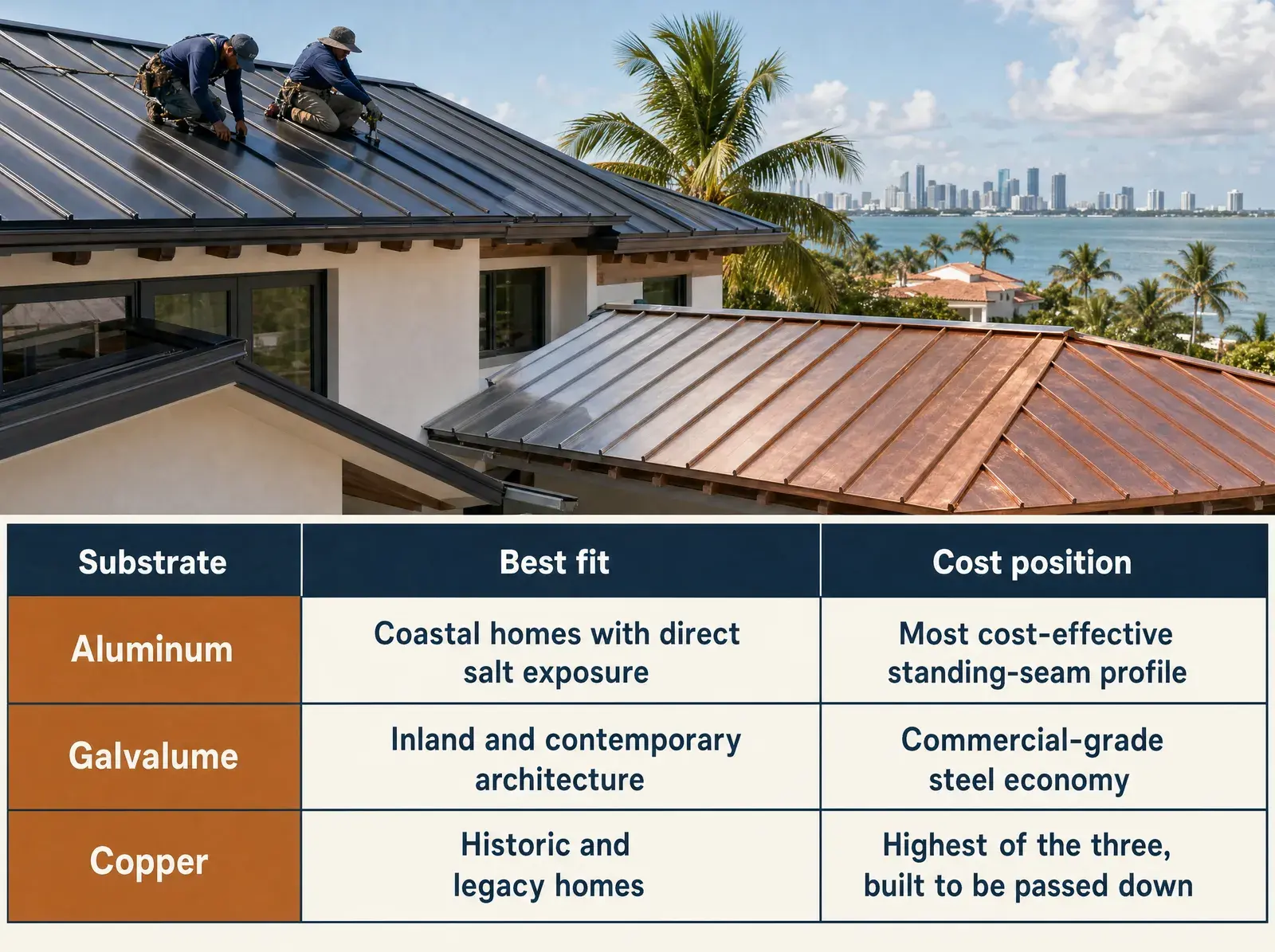
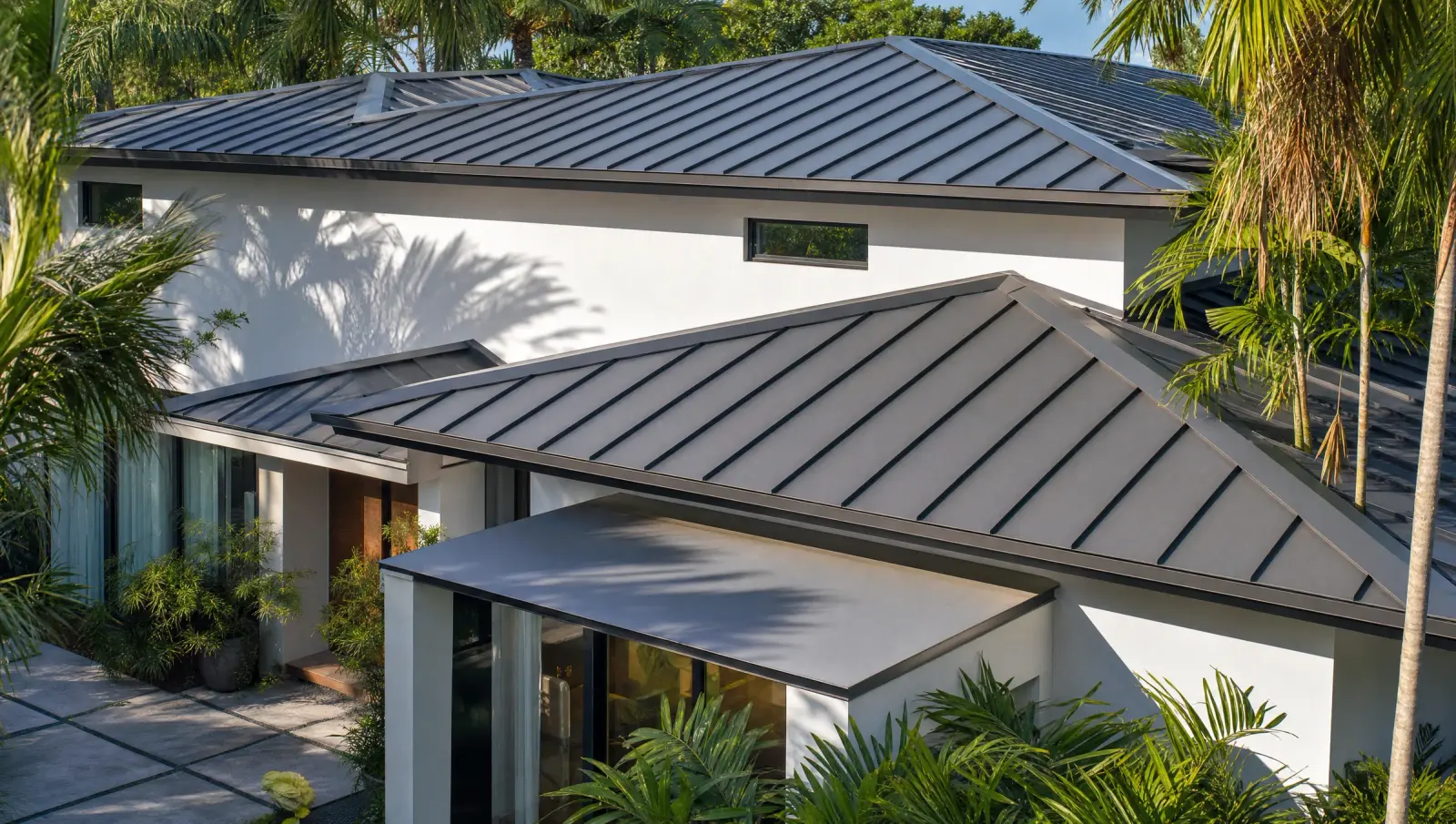
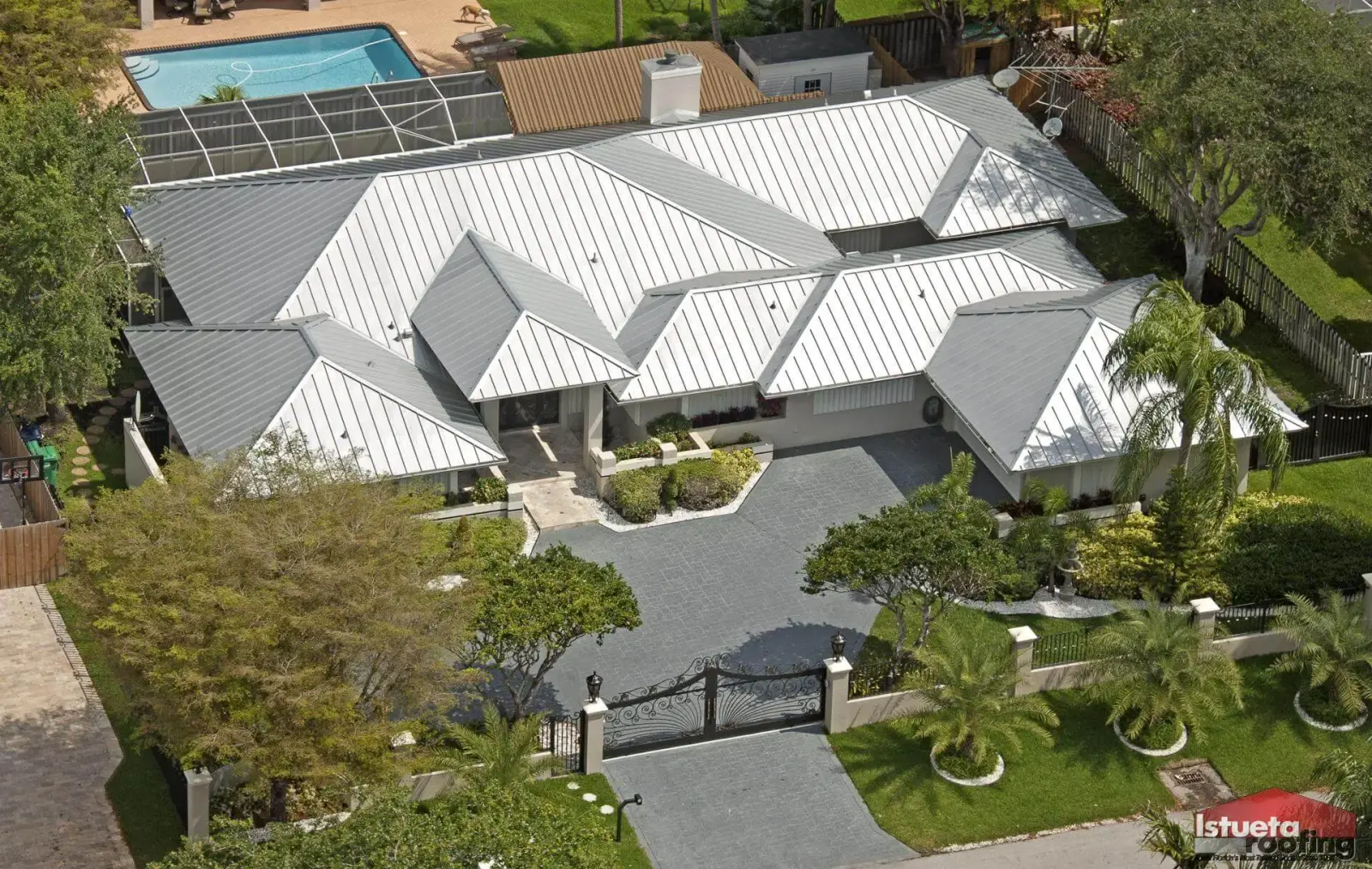
Metal roofing cost in Miami depends on the substrate, the panel profile, and the roof itself. Aluminum is the most cost-effective standing-seam option for coastal homes. Galvalume steel runs leaner for inland and contemporary projects.
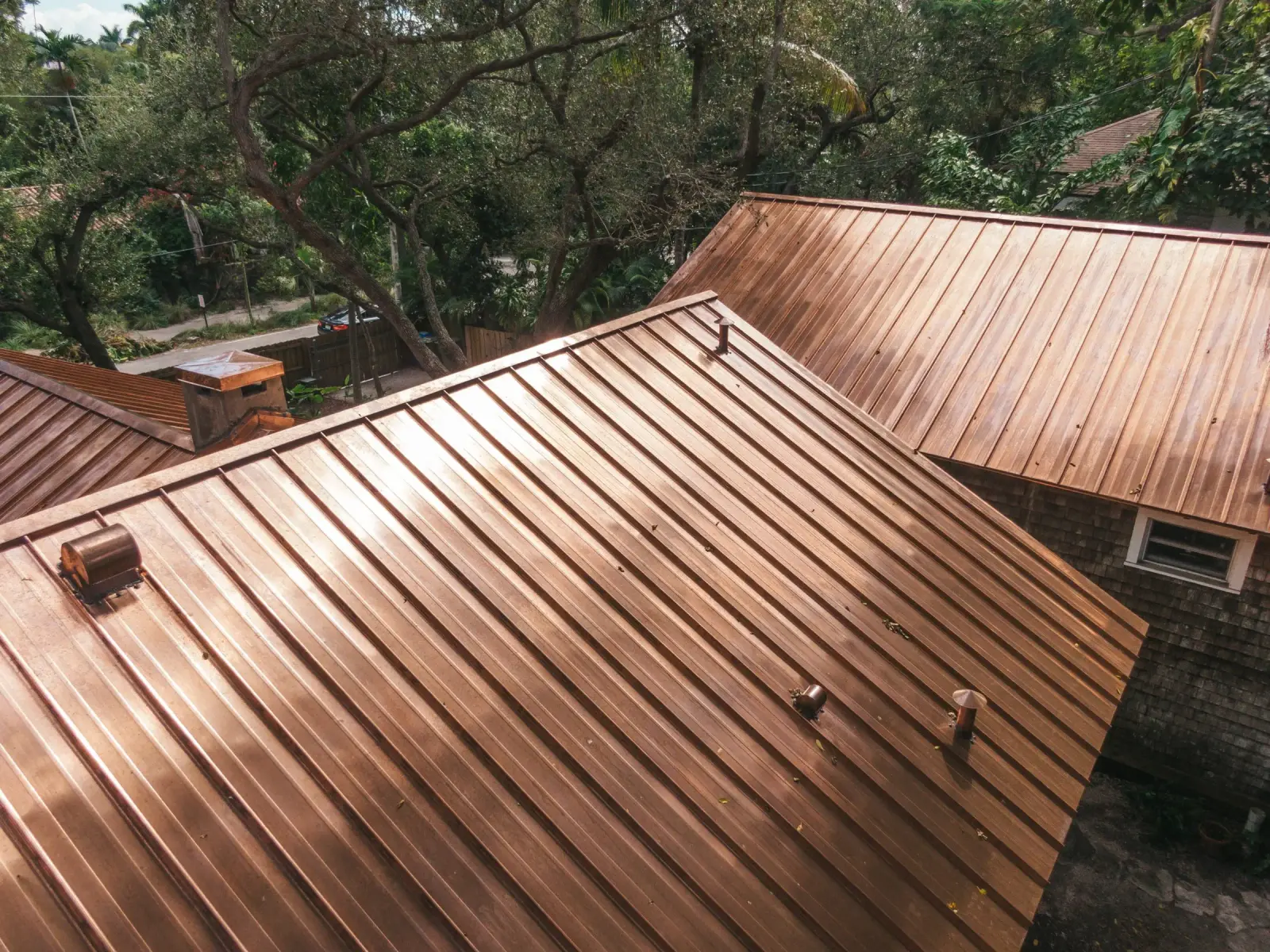
Copper costs the most of the three: an heirloom system specified for homes meant to be passed down. Roof geometry, deck condition, and Miami-Dade HVHZ engineering requirements move the number more than the metal itself, so a firm price starts with a site visit.
Beyond the metal itself, the panel spec moves the number. A 24-gauge panel is the common baseline, and a thicker gauge costs more per square. A Kynar 500 PVDF finish adds cost over a basic paint system, and custom profiles run higher than the standard 16-inch panel width.
Upfront cost runs higher than shingles, but the lifespan and lower maintenance needs shift the long-term math. Compare the three substrates below, or schedule a consultation for a quote on your roof.
Choose your metal
Three profiles for three kinds of home.
Each spoke is its own deep page: what the material is for, how it ages, what it costs, and how we install it for HVHZ.
The strongest roof you can specify, and the most hurricane-tested.
Three things make a metal roof an excellent choice for Miami-Dade homes. First is weight: at approximately 1 to 1.5 pounds per square foot, metal roofing places significantly less structural load on a home than heavier roofing materials such as tile. Second is wind performance. Standing seam metal roofing systems are engineered to meet the demanding requirements of Miami-Dade's High Velocity Hurricane Zone (HVHZ) and provide exceptional resistance to severe weather. Third is the absence of exposed fasteners in the water-shedding surface. A properly installed standing seam roof minimizes potential leak points while delivering long-term durability and reliable performance.
"Quality isn't expensive. It's priceless." That's why Istueta Roofing installs premium materials and complete roofing systems designed to deliver exceptional durability, long-term performance, and peace of mind.
Every panel is installed using a concealed-fastener standing seam system. Every penetration is flashed using the metal material as the roof, creating a clean, integrated finish.
Every penetration is flashed with 16-ounce copper. The roof is the assembly, not the panel, and on the spoke pages below, you can see how each material handles that assembly differently.
Featured work
Recent metal roofs across South Florida.
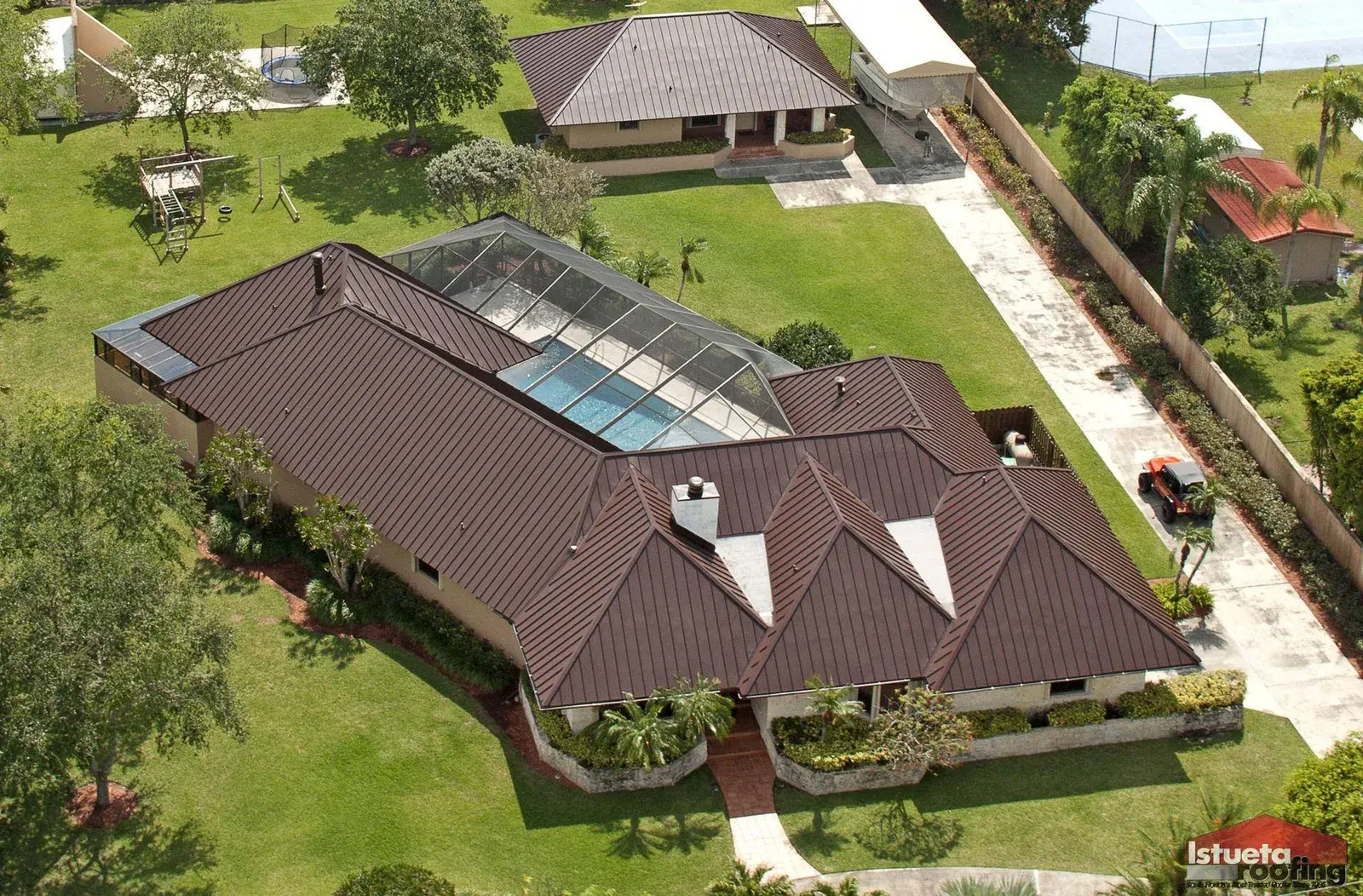
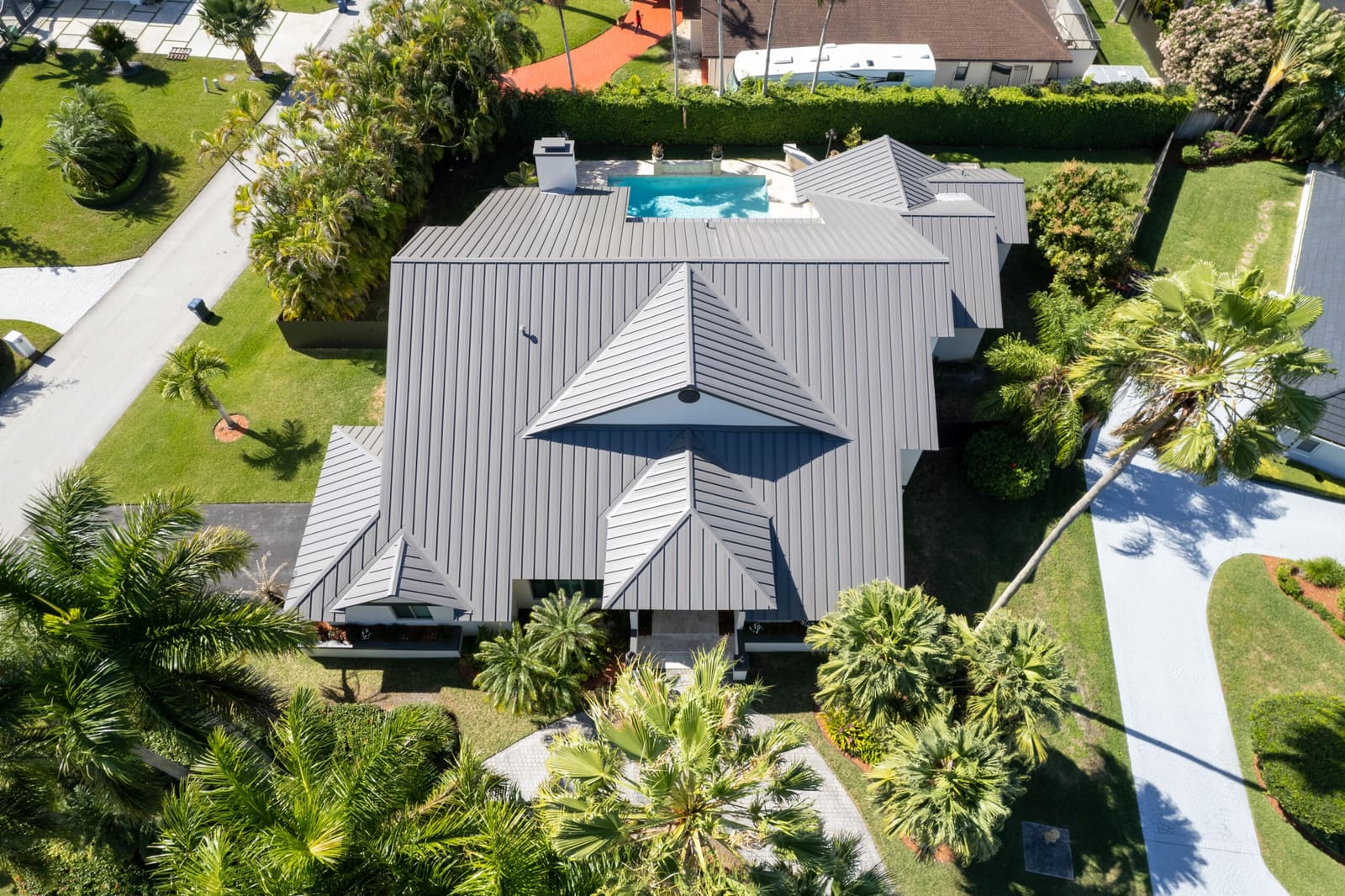
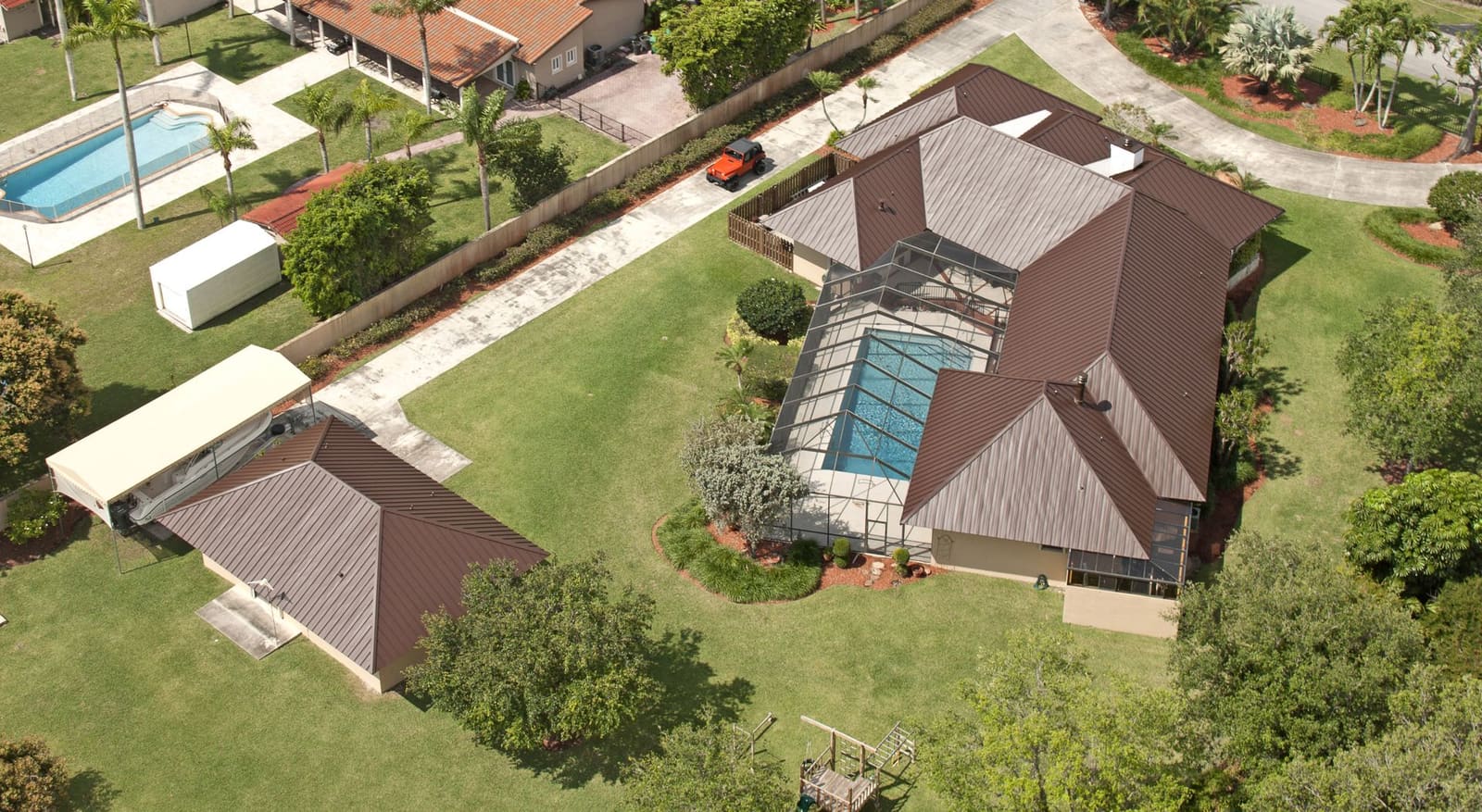
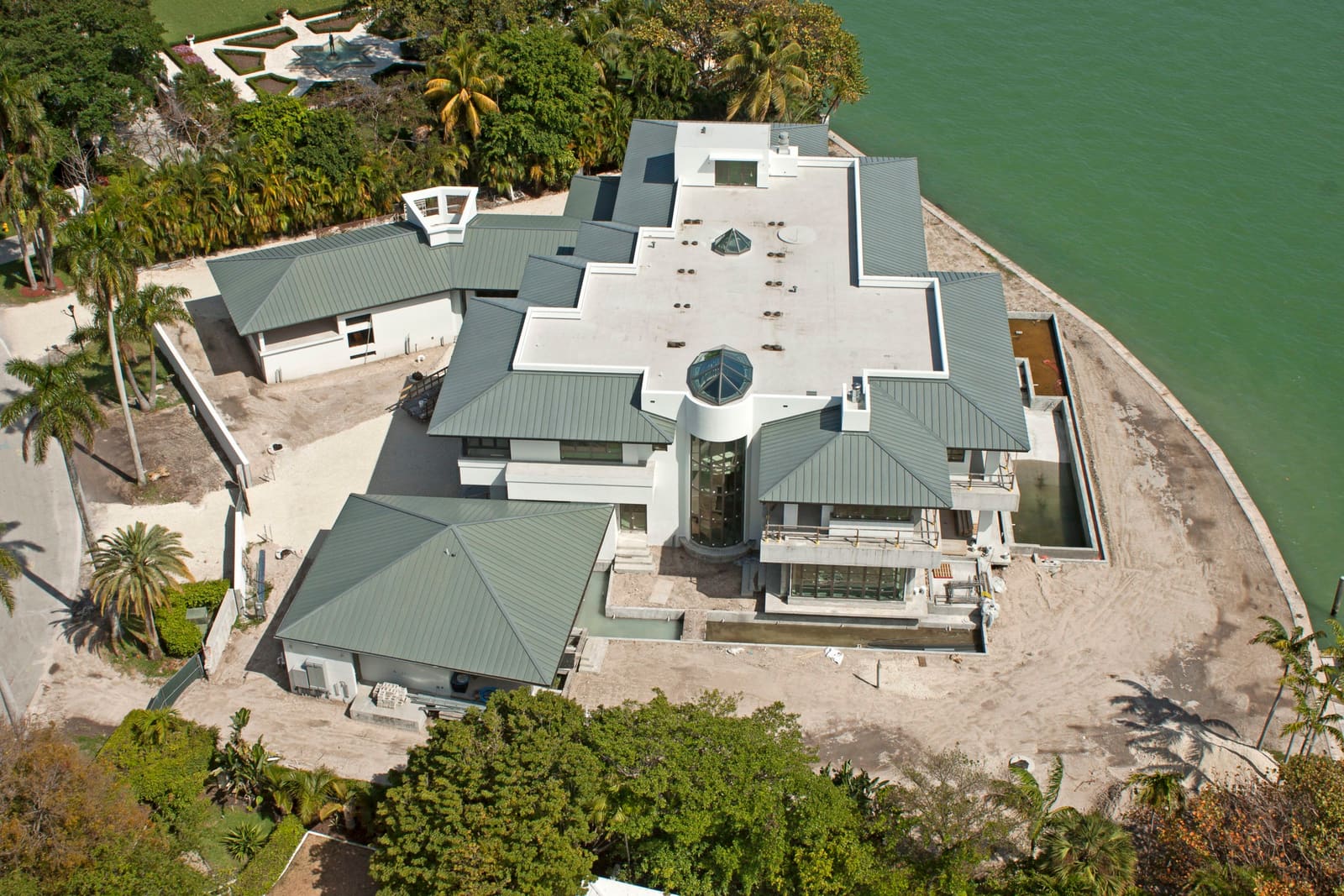
A genuine range of metal (galvalume, zinc, aluminum, and copper) across Palmetto Bay, Kendall, Miami Beach, and Coral Gables.
Istueta won the Metal Roofing Alliance's Best Residential Metal Roofing competition for the first quarter of 2023, for a 16-oz copper standing-seam installation on a Coral Gables residence. The award is granted by the MRA to one project per category, per quarter.
Every standing-seam panel and underlayment we specify carries a current Miami-Dade NOA on file at the building department. We document the NOA number, panel gauge, fastener pattern, and clip spacing on every set of construction documents.
Miami-Dade HVHZ
Built to the toughest code in the country.
Miami-Dade County's High Velocity Hurricane Zone (HVHZ) has some of the most demanding residential roofing standards in the country. Every component of an HVHZ roofing system, including fasteners, flashing, and underlayment, must meet Miami-Dade's Notice of Acceptance (NOA) requirements.
Our standing seam metal roofing systems are installed to comply with these stringent standards using premium materials, including Polyglass XFR fully bonded peel-and-stick underlayment. Penetrations, valleys, and transitions are flashed using matching metal for a clean, integrated finish. A high-performance roof is engineered as a complete roofing system, not simply a collection of individual products.
Flashings are 16-oz hand-formed copper at every valley, sidewall, and penetration. The roof is engineered as a system, not a stack of products.
Different Types of Roof Flashing
A metal roof relies on several distinct flashing types, each shaped for a different vulnerable spot on the roofline. Valley flashing sits in the V-shaped channel where two roof planes meet, one of the most exposed areas on any roof and a common leak point if the metal isn’t formed and lapped correctly. Drip edge runs along the eaves and rakes to direct water off the roof edge and into the gutter instead of behind the fascia. Step flashing and counter-flashing wrap chimneys and sidewalls, layered piece by piece so each course sheds water onto the one below it. Parapet flashing is its own category, built to cap and seal the low walls that rise above the roofline on many low-slope and commercial sections, where standing water and wind uplift put extra stress on the seams.
Penetration flashing, the boots and collars around vent pipes, skylights, and roof-mounted equipment, has to move with a metal panel’s thermal expansion without loosening. On a metal roof, all of these pieces are typically cut and bent from the same coil stock as the panels, so a Galvalume roof gets Galvalume flashing and a copper roof gets flashing that will develop the same copper patina as the field panels over time. That consistency in metal type matters more here than on other roofing systems, since mismatched metals at a flashing joint can drive galvanic corrosion. Homeowners comparing this level of flashing detail against a sloped alternative often look at our tile roof page, or at roof shingles if they want a lower-cost sloped option, before deciding which system’s flashing needs fit their home.
Roof-to-Wall Flashing
Roof-to-wall flashing is the metal strip installed where a metal roof plane meets a vertical wall, such as a dormer, a second-story addition, or a parapet on a low-slope section. Its job is to bridge the gap between two different surfaces so wind-driven rain cannot work its way in behind the siding or up under the panels. On a metal roof this detail carries more weight than it does on shingles, because metal panels expand and contract with temperature swings, and the flashing has to accommodate that movement while staying sealed at the wall line.
There are two pieces working together at this joint. Step flashing (or continuous flashing on longer straight runs) sits under the wall covering and laps over the top of each panel course, while a counter-flashing or reglet cut into the wall material overlaps the step flashing from above. This layered, overlapping approach keeps water moving down and out even during heavy, sideways rain, which matters in a market like South Florida. The flashing itself is typically cut from the same substrate as the roof system, whether that’s Galvalume, aluminum, or copper, so it expands at a similar rate to the panels and doesn’t telegraph a different weathering pattern over time.
Walls aren’t the only place a metal roof needs this kind of transition detail. Valleys, where two roof planes meet, and parapets on flat sections both call for their own flashing approach, and getting any one of these wrong is a common source of leaks that has nothing to do with the panels themselves. If you’re comparing how metal handles these junctions against other systems, our epdm roofing page covers how flat roofs handle parapets and wall transitions differently.
Frequently Asked
Answers, before you ask.
No. Our metal work is built around standing seam panel systems, which run in long vertical panels from ridge to eave with mechanically locked seams, rather than stamped shingle-style pieces. Standing seam has fewer seams and fastener penetrations across the roof, which matters most in South Florida where wind uplift and wind-driven rain are the main forces a roof has to resist. We install those panels across Galvalume-coated steel, aluminum, and copper substrates.
Twelve-foot panels are a standard long-panel length for standing seam roofing, and they are typically ordered through a roofing contractor rather than picked up at a home center, which usually stocks only shorter pre-cut panels. A contractor working directly with metal fabricators can order panels cut to the exact run length your roof needs, in the substrate and gauge that fit the project. When comparing quotes, ask which gauge is being priced: a lower gauge number means a thicker, sturdier panel, and two 12 ft panels can look identical while differing a lot in stiffness.
22 gauge is thicker than the standard 24 gauge panel, since gauge numbers run backward, and that extra thickness carries a higher material cost across steel, Galvalume, and aluminum systems. Copper sits above any of those on the panel side. There is no fixed number we can quote here because pricing depends on substrate, finish, and the size and complexity of the roof; valleys, penetrations, and flashing add labor on top of material. We price it in a written proposal after walking the roof.
Aluminum, Galvalume steel, and copper are the primary substrates used across South Florida roofs. Each behaves differently in coastal conditions, and the right choice depends on your building's exposure, budget, and the look you want. Our substrate comparison page breaks down the tradeoffs in detail.
A properly installed metal roof can provide decades of reliable performance. Its lifespan depends not only on the quality of the materials and installation, but also on regular inspections and maintenance. Keeping the roof clean, addressing minor issues early, and maintaining sealants and flashings can significantly extend its service life.
Metal performs well against wind, salt air, and UV exposure, which matters in a hurricane-prone metro like Miami. Upfront cost is higher than shingles, but the lifespan and lower maintenance needs shift the long-term math. See our cost guide for a fuller breakdown.
Yes. Since founding in 1985, our crews have installed aluminum, Galvalume, and copper systems across residential and commercial projects, including copper work recognized by the Metal Roofing Alliance in 2023.
It depends on your roof's pitch, exposure, and style goals. Explore the linked guides below for panel profiles, finishes, and substrate details specific to your project.
Yes, most metal roofs can be painted or re-coated once the surface is properly cleaned, primed, and prepped with a system made for exterior metal. Factory-finished panels with baked-on coatings rarely need paint during their service life, so field painting is mainly a refresh for older or bare panels that are chalking or fading.
Prep is what makes or breaks the job: wash the surface, address any failing coating, and use a metal-rated primer and paint. Substrates differ, too. Copper is never painted, since its patina is the finish, while aluminum and Galvalume take metal-specific coating systems well.
24 gauge is thicker and heavier than 26 gauge, so it holds up better against dents, hail, and foot traffic. 26 gauge costs less and is still a common choice for residential roofs where impact resistance is less of a concern. The right pick depends on your budget, roof pitch, and how much wear the roof will see, so it's worth talking through with a roofer who can look at your specific situation.
Standing seam roofing costs more up front than asphalt shingles, which is the biggest trade-off for most homeowners. It also requires installers familiar with seaming and flashing details, since a poorly installed panel system can leak at the seams or fasteners. Repairs to a single damaged panel can be more involved than swapping out a shingle, and matching an older panel's finish exactly can be difficult if it's been on the roof for years.
These downsides are usually weighed against the roof's long-term durability and low maintenance once it's properly installed.
Steel roofing costs more than basic asphalt shingles, which is the main hurdle for many homeowners. It can also be noisier during heavy rain or hail unless proper underlayment and decking are used underneath. Steel will show dents from large hail or heavy impact more readily than it shows wear from sun and weather.
And if the protective coating gets scratched down to bare metal and isn't touched up, rust can start at that spot over time.
From metal owners
What our clients say about metal.
When you're doing such a big investment in your home, it's important to do your research, and comparing Istueta to the other companies, there was no comparison. Once we signed the contract, things started right away: the permit, the project manager, and within days the crew was here. Our roof was complete within a week of when they started, and I was walked through the whole thing step by step. The house looks totally modernized, and now we sleep with peace of mind.
Begin
Experience the materials firsthand. Visit our showroom.
By appointment, in our Miami showroom. Bring your architect, your spouse, your reference photos. We will pull aluminum, copper, and galvalume samples in your specified profile.