
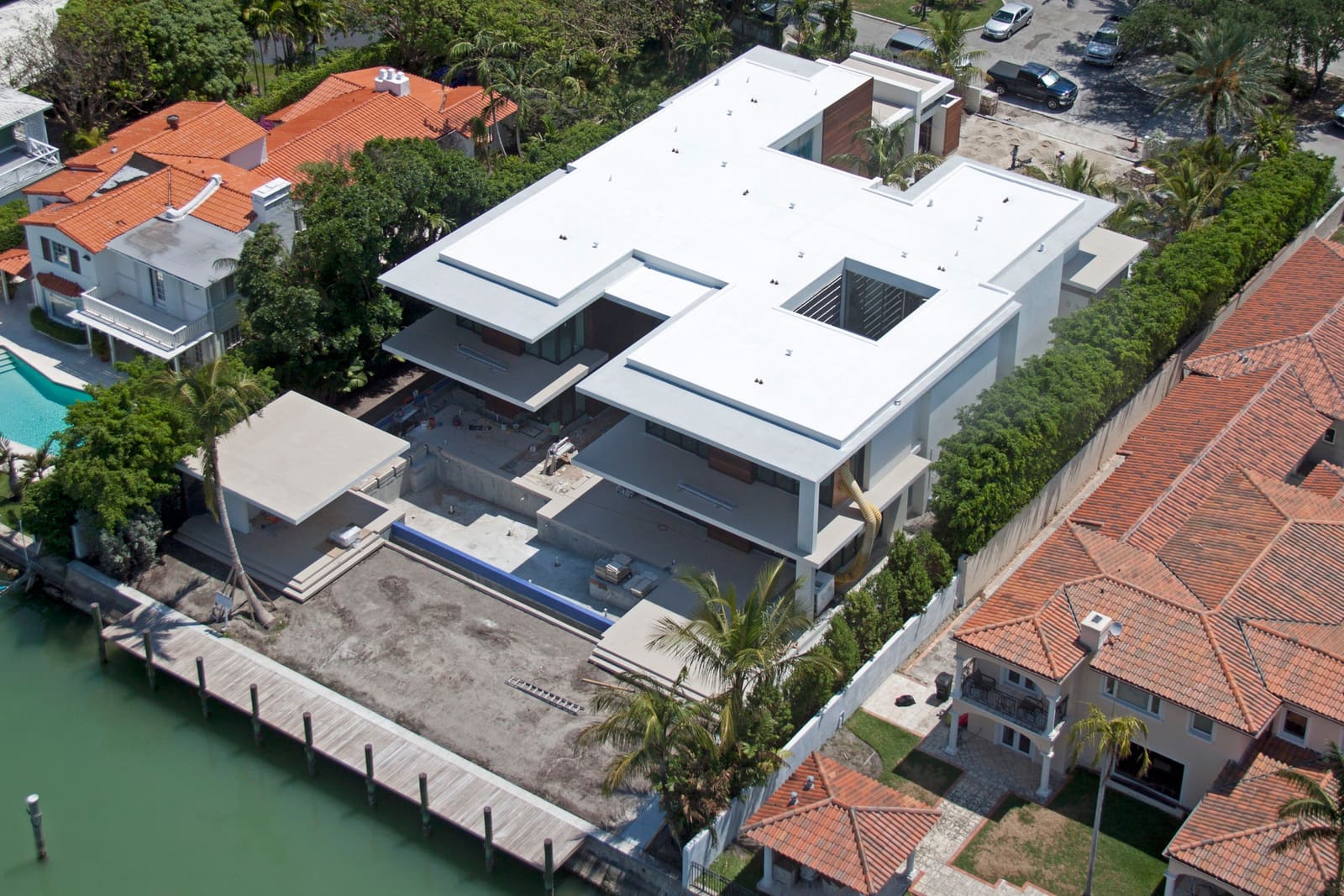
Flat roof
Miami's roofing environment is shaped by the Gulf Stream, salt air, and the Biscayne Aquifer just beneath the surface. We've worked here since 1985, installing roofs that hold up to what this city delivers.
Typical roof lifespan in Miami: Most residential roofs last 15+ years, with tile and standing-seam metal commonly reaching 30+ in this climate when properly maintained.
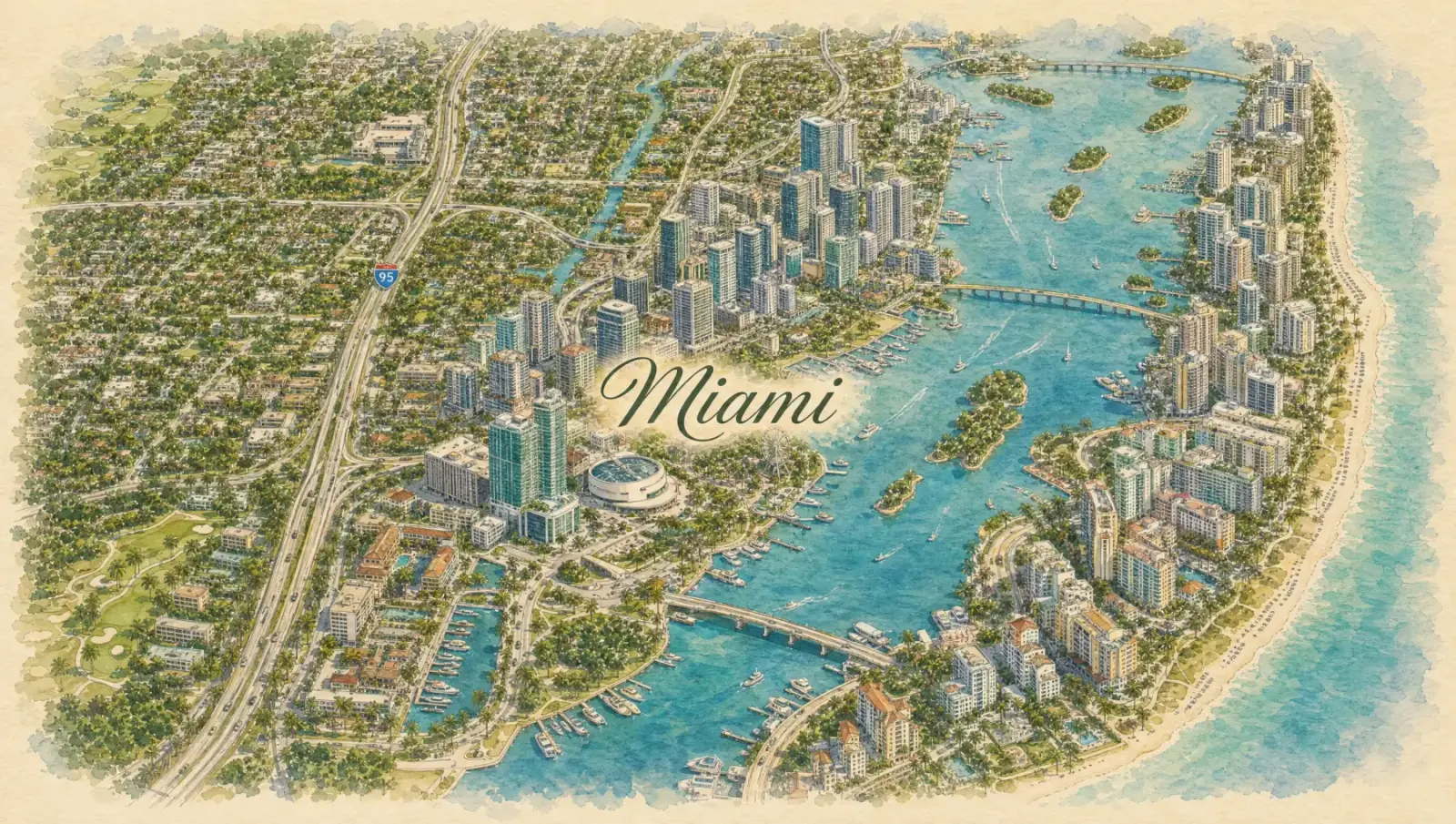
Miami sits on a broad plain between the Everglades to the west and Biscayne Bay to the east. The elevation averages around 6 feet above sea level in most neighborhoods. The Gulf Stream runs just 15 miles offshore, moderating temperatures but delivering salt air year-round.
The surface bedrock is Miami oolite, and beneath it lies the Biscayne Aquifer. A natural underground source of fresh water that comes closest to the surface around Miami Springs and Hialeah.
Roofs here face salt-air corrosion, UV exposure, and wind-uplift demands that exceed most of the country. The materials that work in Miami are the ones engineered for coastal exposure: tile with corrosion-resistant fasteners, standing-seam metal with concealed clips, and flat-membrane systems tested to Miami-Dade Notice of Acceptance standards. We install roofs across neighborhoods including Coral Gables, Coconut Grove, Pinecrest, and Miami Beach. Each with its own architectural register and roofing considerations.
Julia Tuttle convinced Henry Flagler to extend the Florida East Coast Railway to this region in the 1890s, and Miami was incorporated as a city in 1896 with just over 300 residents. The building stock reflects that history: pre-war Mediterranean Revival homes in Coral Gables, mid-century modern in South Miami, and contemporary high-rises along Brickell and Miami Beach.
See also service areas, Coral Gables, Pinecrest, and Coconut Grove.
The Gulf Stream runs 15 miles offshore, delivering salt air year-round. Fasteners, flashing, and metal panels must be specified for coastal exposure. Stainless-steel fasteners and corrosion-resistant coatings are standard, not optional.
Miami-Dade County is part of the High Velocity Hurricane Zone, requiring Miami-Dade Notice of Acceptance certification for roofing systems. Wind-uplift testing, fastener schedules, and edge-detail specifications are more stringent here than in most of the country.
Neighborhoods including Coral Gables and parts of Coconut Grove have architectural-review processes that govern material selection, color, and profile. Tile profiles and metal finishes must align with the neighborhood's architectural register.
At an average elevation of 6 feet above sea level, Miami's roofs must manage water quickly. Flat-roof drainage design and scupper sizing are critical. Standing water on a flat roof in Miami accelerates membrane degradation.
Our work from nearby South Florida neighborhoods.
Flat roof
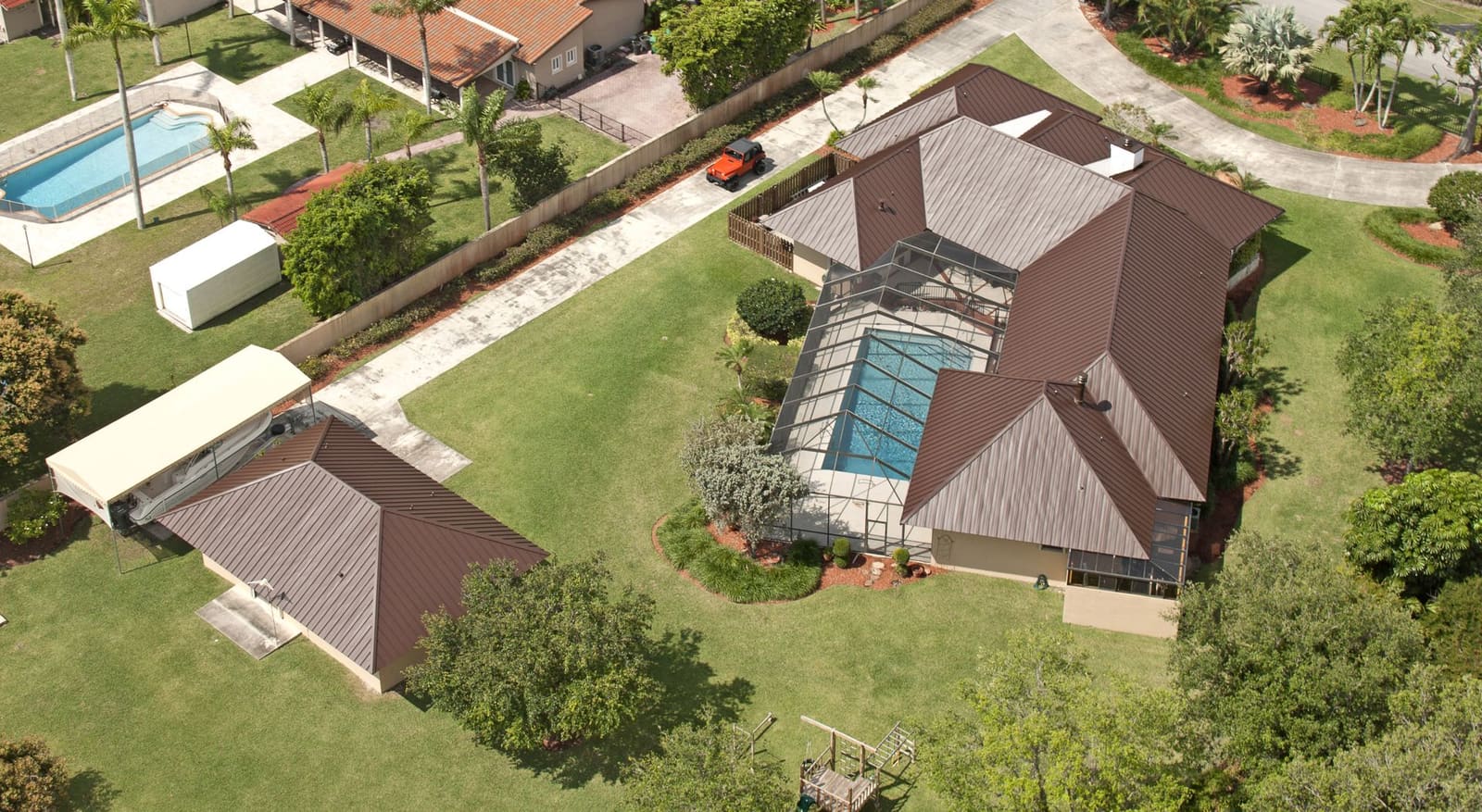
Metal roof

Asphalt shingle roof
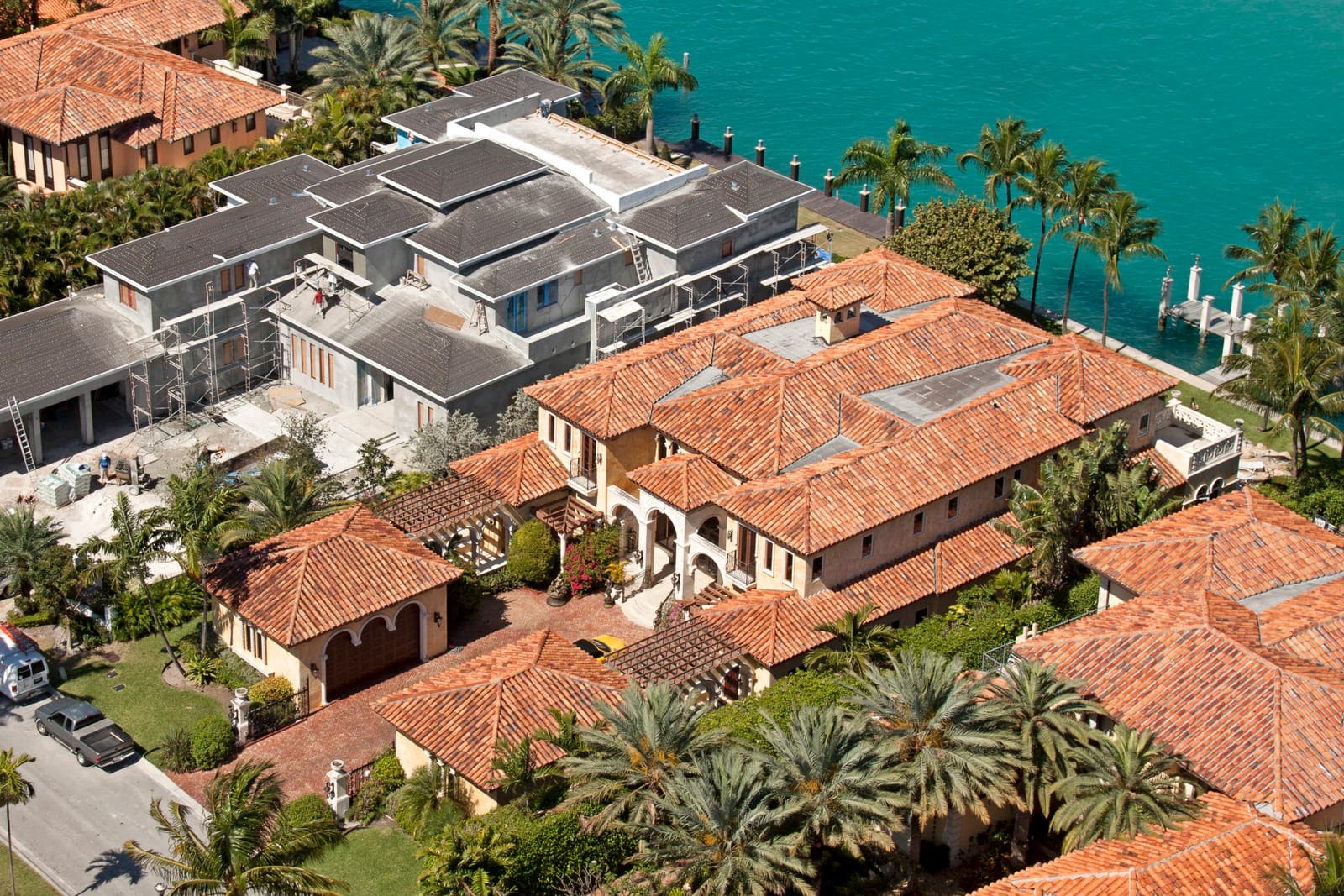
Clay tile roof
Yes. Miami-Dade County is part of the High Velocity Hurricane Zone. All roofing systems must carry a Miami-Dade Notice of Acceptance, which certifies wind-uplift performance and fastener schedules. The NOA is verified at permit.
Tile and standing-seam metal with corrosion-resistant fasteners typically last 30+ years in coastal exposure. Aluminum, copper, and galvalume standing-seam systems hold up well when properly detailed. Tile with stainless-steel fasteners is the longest-lived option in historic neighborhoods.
Some do. Coral Gables and parts of Coconut Grove have architectural-review processes that govern material, color, and profile. Tile profiles and metal finishes must align with the neighborhood's architectural register. We work with the local review boards regularly.
At an average elevation of 6 feet above sea level, Miami's flat roofs must manage water quickly. Scupper sizing, drain placement, and positive slope are critical. Standing water accelerates membrane degradation in this climate. We design drainage systems that move water off the roof within hours of a storm.
We've worked in Miami since 1985. If you're planning a roof replacement or need a second opinion on a proposal, call us at (305) 671-9190. We'll walk the roof with you and explain what you're looking at.