
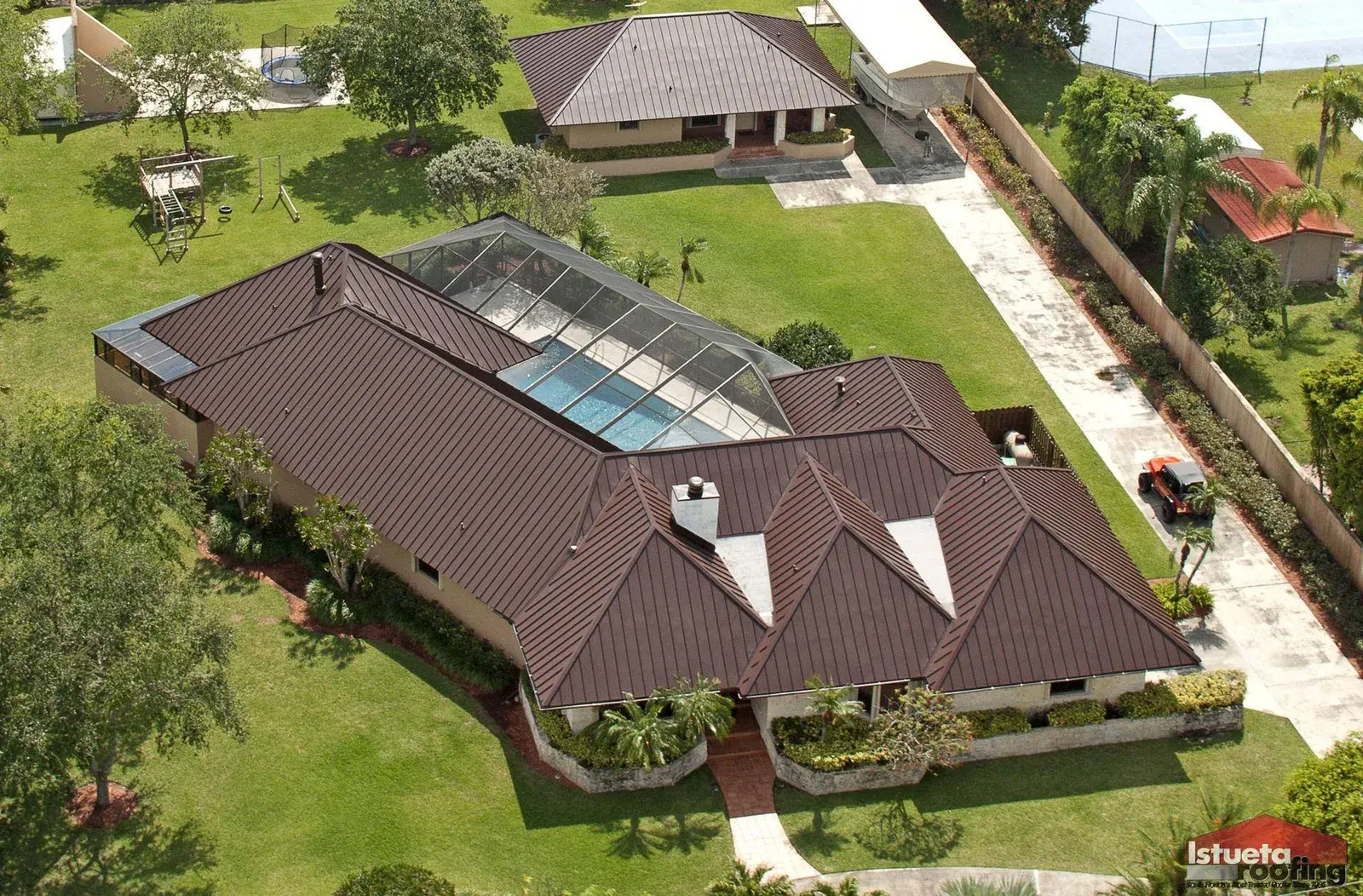
Contemporary • Standing-seam metal roof
Kendall Standing-Seam Mansard
Standing-seam mansard with hand-formed termination work, mid-brown finish on a contemporary South Florida residence.
Kendall sits 14 miles southwest of downtown Miami, bordered by Pinecrest to the east and the Homestead Extension of Florida's Turnpike to the west. The area's residential stock spans mid-century ranch homes, Mediterranean-influenced estates, and newer construction built after Hurricane Andrew reshaped the neighborhood in 1992. Roofing here means understanding subtropical exposure, tree-canopy debris from mature landscaping, and the permitting nuances of an unincorporated Miami-Dade County area.

Much of what is now Kendall was purchased from the State of Florida in 1883 by the Florida Land and Mortgage Company, named for Henry John Broughton Kendall, a company director who moved here in the 1900s to manage the land. The neighborhood developed gradually through the mid-20th century, then rebuilt rapidly after Hurricane Andrew in 1992.
That rebuilding wave means many Kendall roofs date to the 1990s and early 2000s, installed under post-Andrew code revisions that tightened wind-uplift and fastening requirements. Homes built before 1992 often carry original tile or asphalt shingle roofs now reaching end-of-service. Newer construction follows current High Velocity Hurricane Zone standards, with enhanced attachment schedules and material testing.
The area's tropical monsoon climate brings heavy summer rain, high humidity, and seasonal storm exposure. Tree canopy from mature landscaping deposits organic debris that accelerates algae growth on asphalt shingles and clogs valleys on tile roofs. Proper installation accounts for these pressures: sealed penetrations, adequate attic ventilation, and fastening patterns that meet Miami-Dade County's permitting requirements for unincorporated areas.
Typical roof lifespan in Kendall: Most residential roofs last 15+ years, with tile and standing-seam metal commonly reaching 30+ in this climate when properly maintained and detailed for subtropical exposure.
See also service areas, Coral Gables, Pinecrest, Coconut Grove, South Miami, and Palmetto Bay.
Many Kendall roofs were installed or replaced after 1992 under revised wind-uplift and fastening standards. Replacement projects must meet current Miami-Dade County permitting requirements for unincorporated areas, which differ slightly from municipal code in neighboring incorporated cities.
Mature landscaping throughout Kendall deposits leaves, seed pods, and organic material that clogs valleys, accelerates algae growth on asphalt shingles, and traps moisture against tile underlayment. Regular maintenance and proper valley detailing extend material lifespan.
Kendall's residential lot patterns vary from compact mid-century parcels to larger estate lots. Crane access, material staging, and dumpster placement require coordination with homeowners' associations and adjacent properties, particularly in denser subdivisions.
Heavy summer rain, high humidity, and seasonal storm exposure demand sealed penetrations, adequate attic ventilation, and fastening patterns that resist wind uplift. Material selection accounts for UV degradation and moisture cycling across multi-decade service life.
Recent Kendall projects shown first, alongside our work from nearby South Florida neighborhoods.
Contemporary • Standing-seam metal roof
Standing-seam mansard with hand-formed termination work, mid-brown finish on a contemporary South Florida residence.
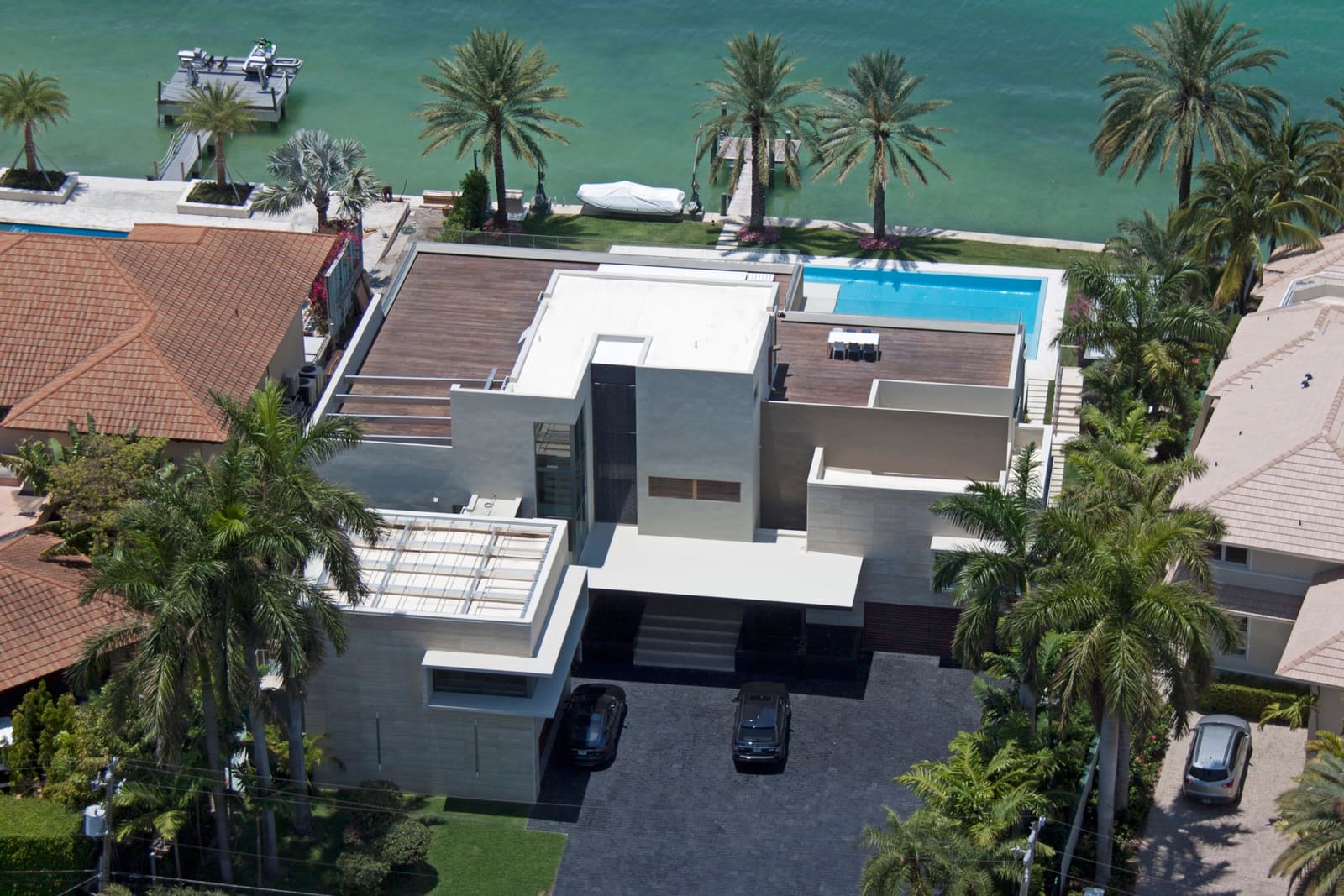
Flat roof · representative
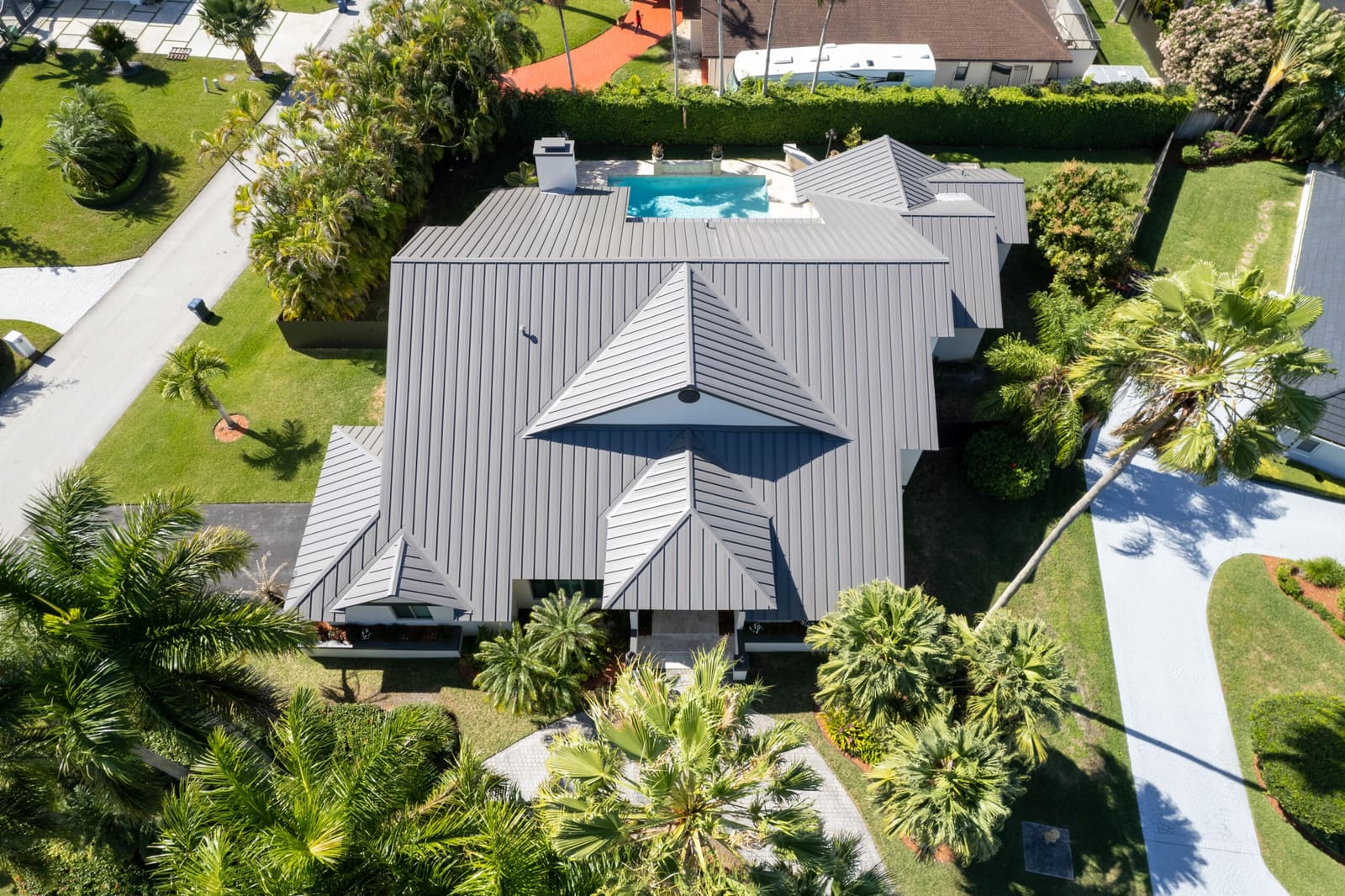
Metal roof · representative
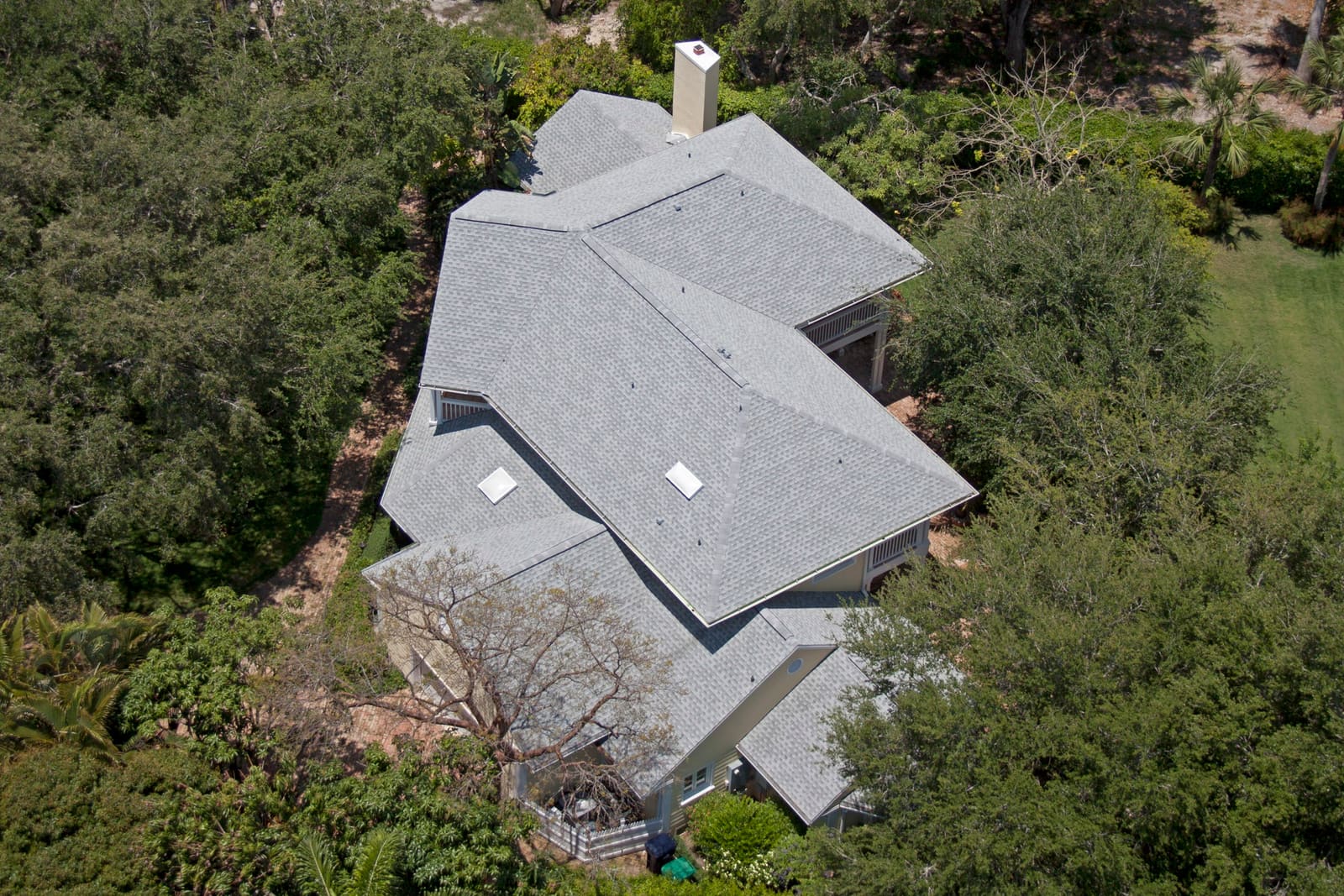
Asphalt shingle roof · representative
Kendall is an unincorporated area in Miami-Dade County, so roof replacement projects follow county permitting requirements rather than municipal code. This includes wind-uplift testing, fastening schedules, and inspection protocols specific to High Velocity Hurricane Zone standards.
Many Kendall homes rebuilt after 1992 use concrete tile or architectural asphalt shingles. Standing-seam metal suits mid-century and contemporary homes. Material choice depends on architectural register, existing structure, and performance requirements. We walk through options during the site visit.
Mature landscaping deposits organic debris that clogs valleys, accelerates algae growth on asphalt shingles, and traps moisture against tile underlayment. Regular maintenance and proper valley detailing extend material lifespan. We address debris load during installation with adequate slope and sealed penetrations.
Most residential roof replacements in Kendall take three to five days, depending on material, roof complexity, and weather. We coordinate permitting, material delivery, and inspection schedules to minimize disruption. Specific timelines are confirmed during the proposal phase based on your project scope.
We've worked in Kendall since 1985, installing tile, metal, flat membrane, and asphalt shingle roofs across the neighborhood's residential stock. If you're evaluating options for repair, replacement, or new construction, we'll walk you through material selection, permitting, and installation details specific to your home.