
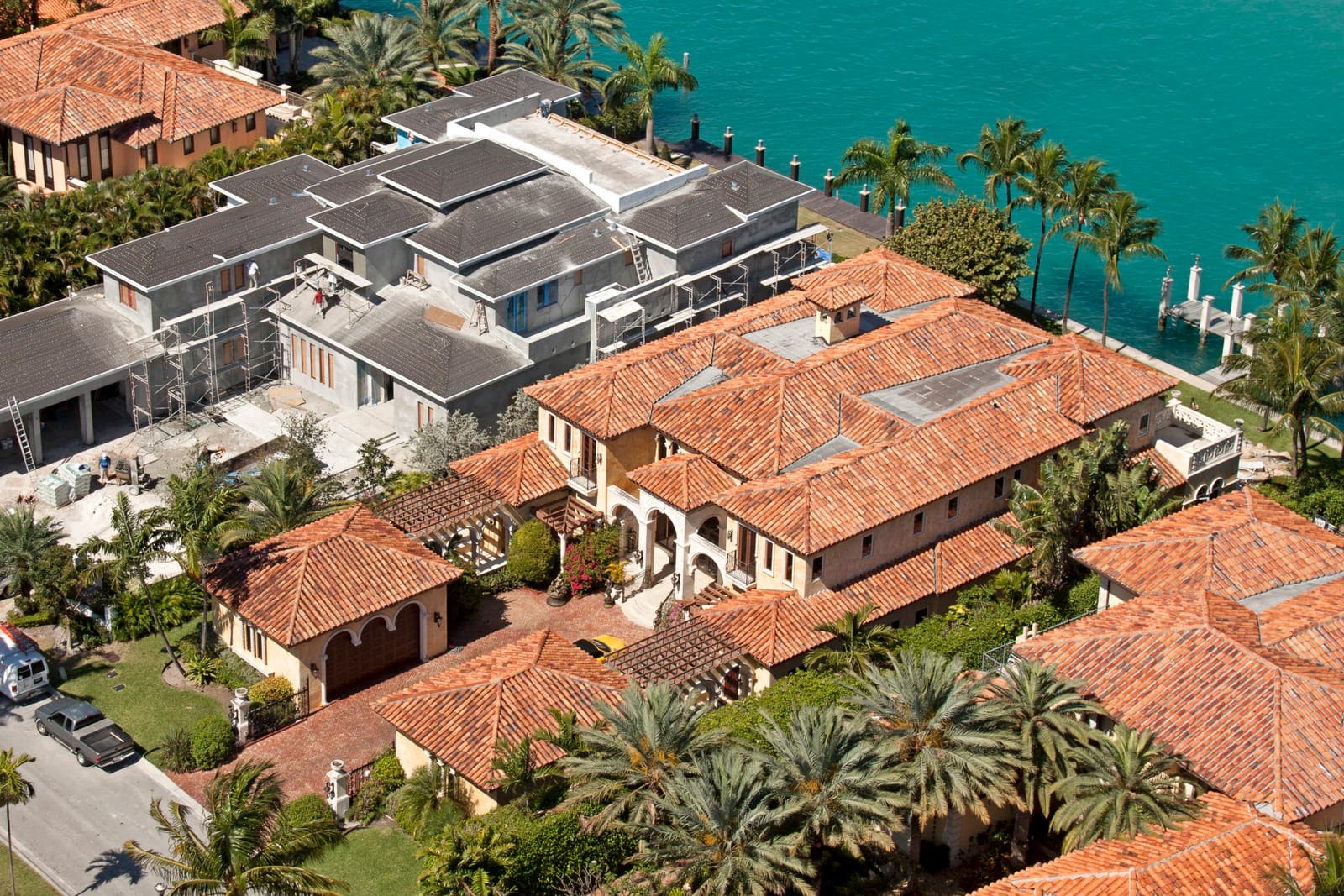
Clay tile roof
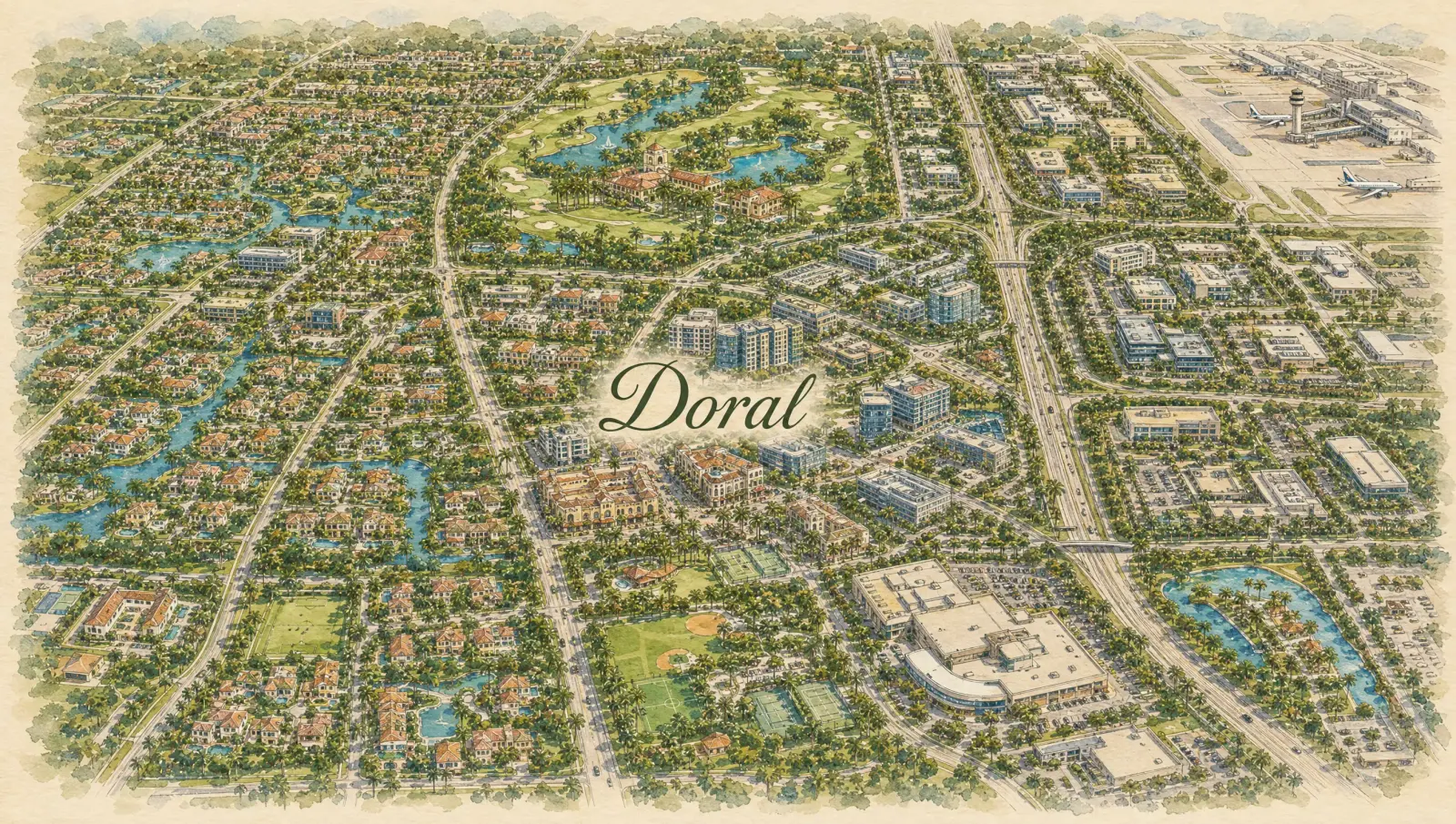
Doral sits inland in western Miami-Dade, next to the airport, with a residential inventory that went up largely from the 1990s onward. Roofing here is shaped by full sun and limited mature canopy rather than by coastal salt, and by a housing stock young enough that many original roofs are only now reaching the age where replacement becomes a question.
Typical roof lifespan in Doral: Most residential roofs last 15+ years in this climate, with tile and standing-seam metal commonly reaching 30+ when properly maintained.
Doral's residential inventory is young by Miami-Dade standards. Much of it went up from the 1990s onward, which puts a large share of the city's original roofs into the window where first replacement becomes a live question. That is a different situation from the older parts of the county, where roofs have often been replaced once already and the question is what went on last time.
The city sits inland, west of the airport, which changes the exposure picture meaningfully. Roofs here are not taking the direct salt-laden air that shortens fastener and flashing life on the coast. What they do take is full sun with limited mature tree canopy, so heat load and ultraviolet exposure do more of the ageing than salt does.
Newer construction across Miami-Dade follows Florida Building Code High Velocity Hurricane Zone requirements, with engineered fastening schedules and tested uplift ratings. A roof built to that standard is well specified from the outset, which means replacement is usually about service life rather than about correcting an under-built original.
See also service areas, Miami, Miami Gardens, and Kendall.
Across much of Doral the original roof is still the one up there. That usually makes replacement a planned decision about service life rather than a reaction to a failure, and it means the existing system was built to a relatively recent code standard.
No direct salt air means exposed fastenings and flashing are under less chemical stress than on a waterfront property. Heat and ultraviolet load take over as the dominant ageing factors.
Newer development patterns mean less mature tree cover than older neighbourhoods carry. Reflectivity and attic ventilation do more work here as a result.
Low-slope sections over additions, patios, and carports sit alongside pitched tile or metal frequently enough that a combined system is the default assumption rather than the exception.
Our work from nearby South Florida neighborhoods.
Clay tile roof
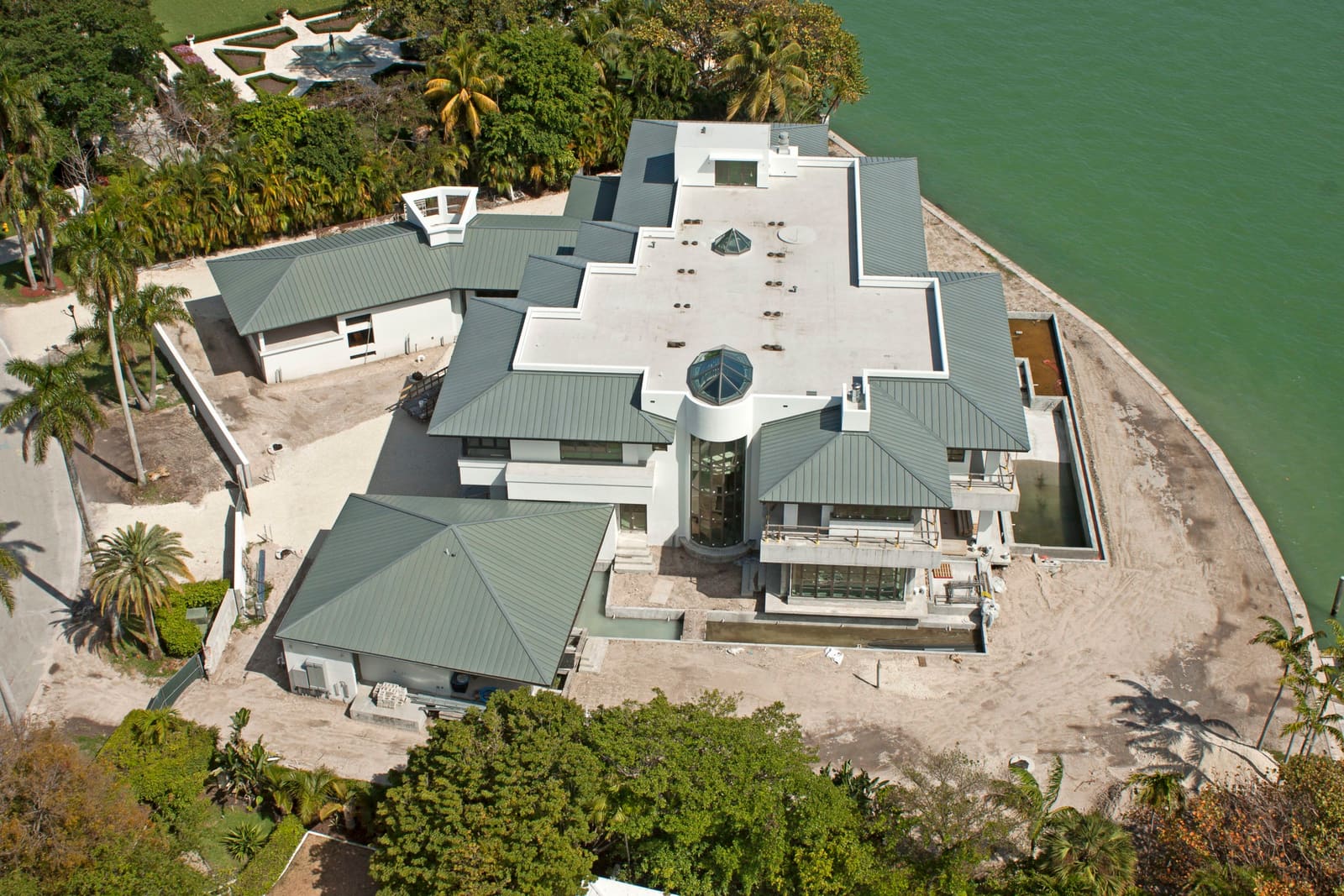
Metal roof

Asphalt shingle roof

Clay tile roof
A lot of Doral's residential stock went up from the 1990s onward, which means many original roofs are now in the window where replacement becomes a question rather than an emergency. Age alone does not decide it. What matters is the condition of the underlayment and deck, whether there is a repair history, and how the roof has held up through storm seasons. An inspection answers it properly; a build date only narrows it down.
Most residential roofs here last 15+ years, with tile and standing-seam metal commonly reaching 30+ when installed correctly and maintained. Doral sits inland, so roofs here avoid the direct salt exposure that shortens component life closer to the coast. Full sun and heat load are the dominant stresses instead.
It shifts the priorities. Without direct salt air, exposed fastenings and flashing are under less chemical stress than on a waterfront home, so material choice opens up somewhat. What matters more here is heat: reflectivity and ventilation carry more weight when a roof takes full sun through a South Florida summer without much shading.
Yes. Low-slope sections are common in newer Miami-Dade construction, and they often sit alongside a tile or metal main roof. We install torch-down and single-ply membrane systems and regularly work on roofs that combine both.
If your roof is the original one and the house dates from the 1990s or 2000s, the useful question is how much service life is left rather than whether anything is visibly wrong. We have been installing and repairing roofs across Miami-Dade since 1985, and we work to High Velocity Hurricane Zone requirements on every job.