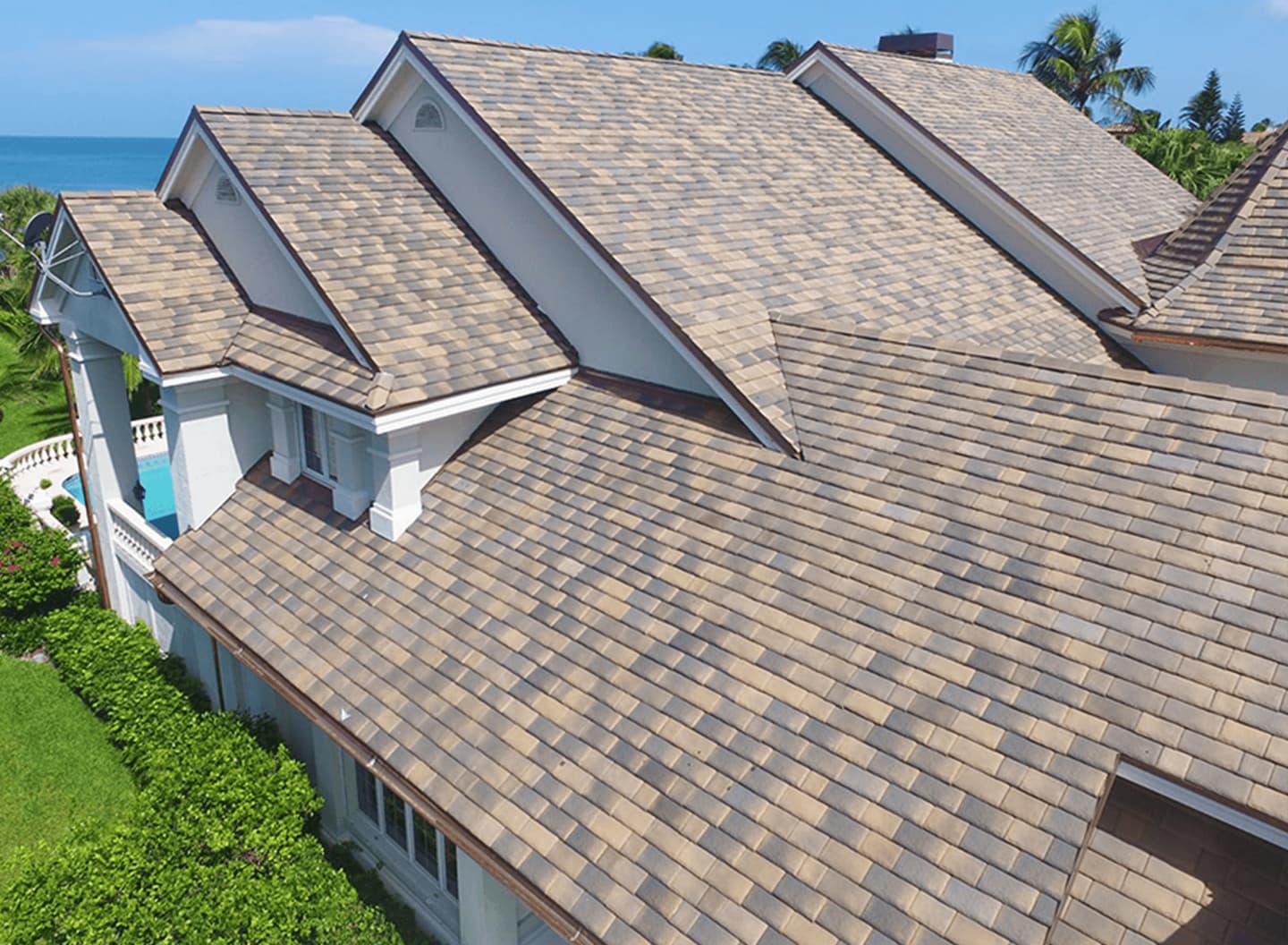
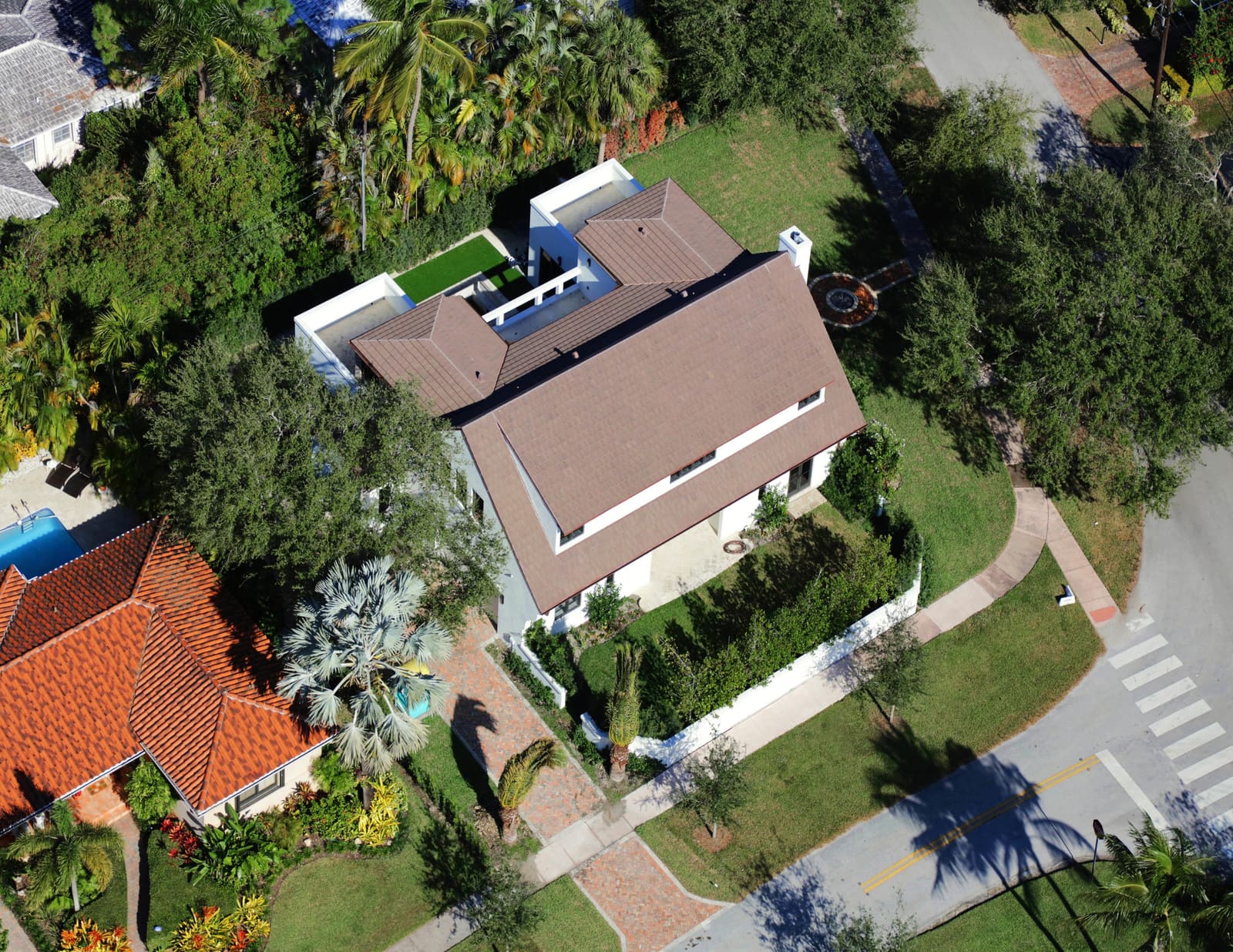
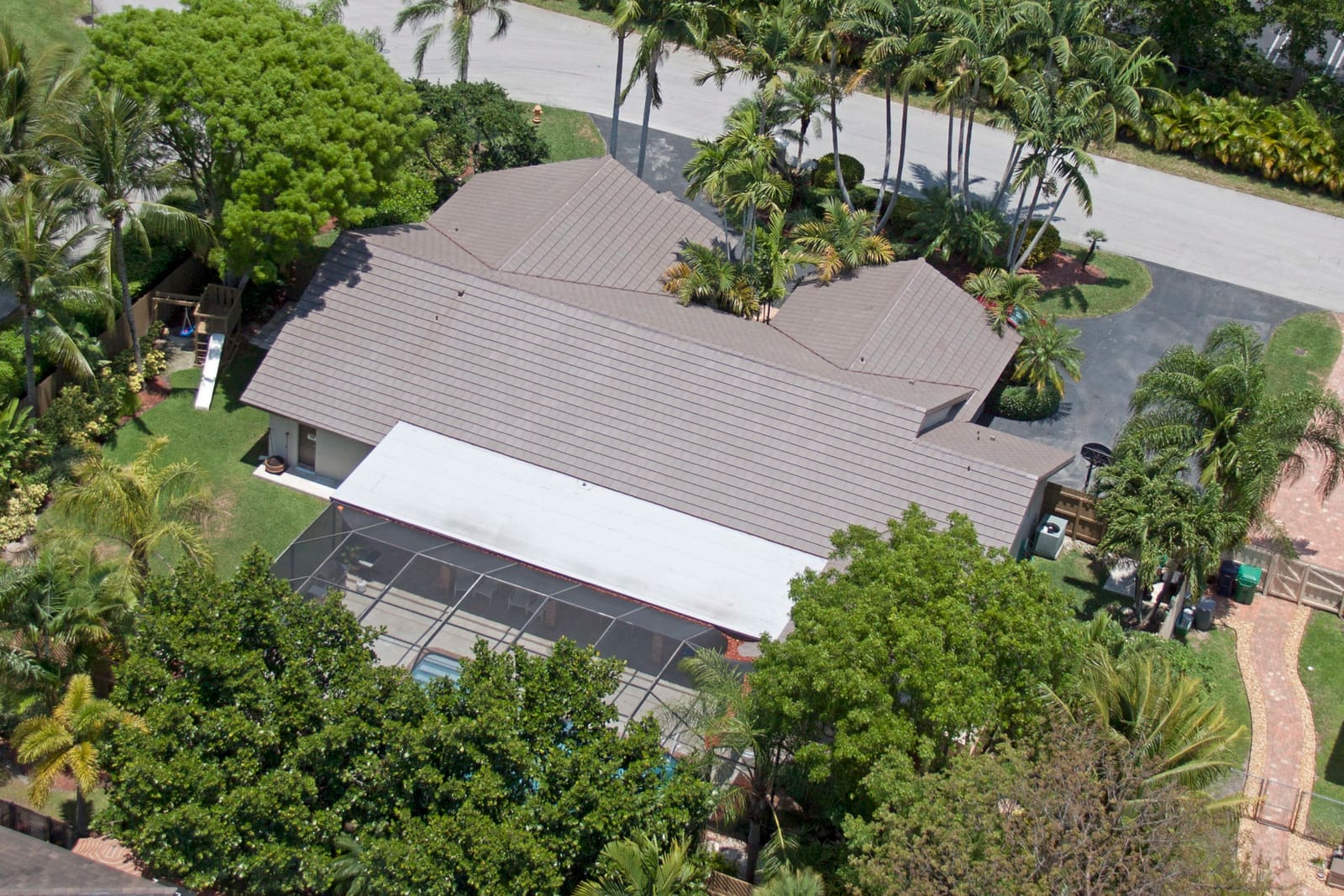
Concrete Tile Roofing for South Florida's coastal environment
Concrete Tile Roofing in Miami
Concrete tile delivers tile-roof aesthetics and Miami-Dade HVHZ-compliant attachment at a lower cost than clay. Crown-certified applicator installation, NOA-approved attachment, 30+ year lifespan. Concrete tile is the value tier of tile without sacrificing structural integrity or architectural fit.
Concrete tile is less expensive than clay tile installed, with a shorter service life. Color is a surface coating that fades over the first 10 to 20 years, whereas clay tile carries color in the body and doesn't fade. For South Florida homes where tile aesthetics matter but the clay tier isn't justified, concrete tile is the right answer.
Concrete tile profiles match the Mediterranean and Spanish-Revival architectural vocabulary common in South Florida.
What Concrete Tile Roofing Covers
Concrete tile installation includes Crown Roof Tiles profiles and Eagle Roofing Products profiles, NOA-approved attachment (screw-fastened or foam-adhered), peel-and-stick membrane underlayment, ridge cap installation, and full hip/valley flashing integration.
Tile roofing options include both clay tile (top tier) and concrete tile (value): same installation craft, same NOA compliance, different material economics.
Where tile isn't the right answer, see metal roofing in aluminum or copper for architectural-metal alternatives, or flat roofing for the low-slope sections of the same property.
Why Concrete Tile Works in Miami
Concrete tile profiles match the Mediterranean and Spanish-Revival architectural vocabulary common in South Florida. Mission profile, flat shake, and barrel options provide architectural review-board compliance for tile-mandated neighborhoods like Coral Gables, Coconut Grove, Pinecrest, and Miami Beach.
Coastal exposure handles concrete tile well. The material is dimensionally stable, resists salt-air corrosion of the cementitious body, and integrates with peel-and-stick underlayment systems rated for high-temperature exposure.
How We Install Concrete Tile
Deck preparation: structural inspection confirms rafter spacing and sheathing condition for the 9-12 pound per square foot tile load. Peel-and-stick underlayment seals the deck before tile installation begins.
Attachment follows Miami-Dade NOA: screw-fastened standard, or NOA-approved foam adhesive system on appropriate profiles. Field tile lays from eave to ridge with each tile mechanically secured per NOA fastener schedule.
Ridge cap, hip cap, valley flashing, and penetration flashings complete the system. Copper or galvanized flashings install at every termination and penetration.
Concrete Tile vs Clay Tile
Property
Concrete Tile
Clay Tile
Lifespan
30+ years
a longer service life
Color
Surface coating, fades
In body, no fade
Weight
9-12 psf
8-12 psf
Cost
Lower, value tier
Higher, top tier
Frequently Asked
Concrete Tile Roofing answers, before you ask.
How long does concrete tile last in South Florida?+
Concrete tile lasts 30+ years in South Florida exposure. The tile body is durable; surface color is a coating that fades over the first 10 to 20 years (faster than clay tile, which carries color in the body).
Does concrete tile work in Miami-Dade HVHZ?+
Yes. Concrete tile systems with NOA-approved attachment meet Miami-Dade HVHZ wind-uplift requirements. Screw-fastened and NOA-approved foam adhesive systems are both code-compliant.
How does concrete tile compare to clay?+
Concrete tile is less expensive than clay tile, with a shorter service life. Color is a surface coating that fades over time, whereas clay's color is in the body. Concrete is the value tier of tile.
Will concrete tile work on my home structure?+
Concrete tile averages 9 to 12 pounds per square foot. Most South Florida homes built for tile handle the load. Replacement from a lighter material (asphalt, metal) may require structural review.
What is the best sealer for a concrete tile roof?+
The right sealer depends on the tile's surface, age, and whether it's a color-through, slurry-coat, or granulated finish, so this is really a judgment call your roofer should make after inspecting the tiles up close. Applying the wrong product can trap moisture, change the tile's breathability, or leave a sheen that looks out of place on a concrete roof. If you're weighing whether to seal at all, or which product fits your specific tile, talk to us about your roof coating options.
What is a concrete tile roof?+
A concrete tile roof is made of tiles formed from a mixture of sand, cement, and water, then cured and often finished with a colored slurry or surface coating for appearance. The tiles are laid in overlapping courses over the roof deck and battens, similar to clay tile, and they rely on their weight and profile to shed water. Concrete tile is heavier than clay and comes in flat, low-profile, and barrel-style shapes, letting it mimic slate, wood shake, or traditional Spanish tile looks.
Because the tiles themselves are a durable, dense material, most of the long-term performance of the roof comes down to the underlayment, flashing, and installation details beneath them, which is where our crews focus attention on every concrete tile job.
(Translated by Google) I had a very good experience with Miss Sofia and I recommend her for your next project. Manuel Menendez Pou
(Original)
He tenido una muy buena experiencia con la Señorita Sofía y la recomiendo para su próximo techo. Manuel Menendez Pou
a month ago
alberto salgado
★★★★★
Ramon Alvarez did an amazing job, explained every detail clearly and professional.
High recommended this company.
Thanks for everything !!!
Alberto Salgado
a month ago
Ann Bornstein
★★★★★
Istuera totally stunned me with the quality of their work and the men who did the work. Prompt, polite doesn't even begin to describe them. One the the things that stunned my neighbors was how immaculate they left my place each time they worked. Not one speck of dirt, not one iota of construction debris left anywhere. I will never use any other company.
a month ago
Adeliana Mata
★★★★★
I had a great experience with Istueta Roofing. Sofia was extremely helpful, professional, and patient throughout the entire process.
2 months ago
edmina Morgan
★★★★★
Great experience with Sofia, talented and experienced in her job, great worker
4 weeks ago
Karanta LLC
★★★★★
(Translated by Google) I had a very good experience with Istueta. Sofia came to inspect my roof for repairs and was very kind, punctual, and took the time to check everything and explain the problem. Thank you!
(Original)
Tuve una muy buena experiencia con Istueta, Sofía vino para hacer una inspección para reparación en el techo y fue muy amable, puntual y se tomó el tiempo de revisar todo y explicarme cuál era el problema. Gracias!
5 days ago
Southpointboating
★★★★★
(Translated by Google) I'm just stopping by to recommend this company. Sofia gave us a super thorough and professional inspection, we're very satisfied and will be working with them again soon.
(Original)
Paso por aquí a recomendar esta empresa, Sofía nos dio una inspección súper completa y profesional, estamos muy satisfechos y pronto haremos el trabajo con ellos.
a month ago
Edgar
★★★★★
Supreme excellence. Other than rain delays work was greater than expected. Super grateful.
a month ago
Timothy shaw
★★★★★
Extremely friendly, professional and well spoken. Explained everything and went over all my questions.
a month ago
Roberto Ramos
★★★★★
(Translated by Google) Sofia provided excellent and very professional service.
(Original)
Muy buena atencion de Sofia y muy profesional.
a month ago
Manel Menendez-Pou
★★★★★
(Translated by Google) I had a very good experience with Miss Sofia and I recommend her for your next project. Manuel Menendez Pou
(Original)
He tenido una muy buena experiencia con la Señorita Sofía y la recomiendo para su próximo techo. Manuel Menendez Pou
a month ago
alberto salgado
★★★★★
Ramon Alvarez did an amazing job, explained every detail clearly and professional.
High recommended this company.
Thanks for everything !!!
Alberto Salgado
a month ago
Ann Bornstein
★★★★★
Istuera totally stunned me with the quality of their work and the men who did the work. Prompt, polite doesn't even begin to describe them. One the the things that stunned my neighbors was how immaculate they left my place each time they worked. Not one speck of dirt, not one iota of construction debris left anywhere. I will never use any other company.
a month ago
Adeliana Mata
★★★★★
I had a great experience with Istueta Roofing. Sofia was extremely helpful, professional, and patient throughout the entire process.
2 months ago
edmina Morgan
★★★★★
Great experience with Sofia, talented and experienced in her job, great worker
4 weeks ago
Karanta LLC
★★★★★
(Translated by Google) I had a very good experience with Istueta. Sofia came to inspect my roof for repairs and was very kind, punctual, and took the time to check everything and explain the problem. Thank you!
(Original)
Tuve una muy buena experiencia con Istueta, Sofía vino para hacer una inspección para reparación en el techo y fue muy amable, puntual y se tomó el tiempo de revisar todo y explicarme cuál era el problema. Gracias!
5 days ago
Southpointboating
★★★★★
(Translated by Google) I'm just stopping by to recommend this company. Sofia gave us a super thorough and professional inspection, we're very satisfied and will be working with them again soon.
(Original)
Paso por aquí a recomendar esta empresa, Sofía nos dio una inspección súper completa y profesional, estamos muy satisfechos y pronto haremos el trabajo con ellos.
a month ago
Edgar
★★★★★
Supreme excellence. Other than rain delays work was greater than expected. Super grateful.
a month ago
Timothy shaw
★★★★★
Extremely friendly, professional and well spoken. Explained everything and went over all my questions.
a month ago
Roberto Ramos
★★★★★
(Translated by Google) Sofia provided excellent and very professional service.
(Original)
Muy buena atencion de Sofia y muy profesional.
a month ago
Reviews sourced from Istueta Roofing's verified Google Business Profile.
· See them all →
Begin
Concrete Tile Roofing built for the coast.
Schedule a no-pressure consultation. We walk your roof, review your options, and give you a detailed written proposal.