

Metal roof
Key Biscayne sits between the Atlantic Ocean and Biscayne Bay, connected to Miami via the Rickenbacker Causeway. The island's coastal exposure and salt-air environment shape every roofing decision here. We've worked on this barrier island since 1985, installing roofs that hold up to the conditions the Atlantic delivers.
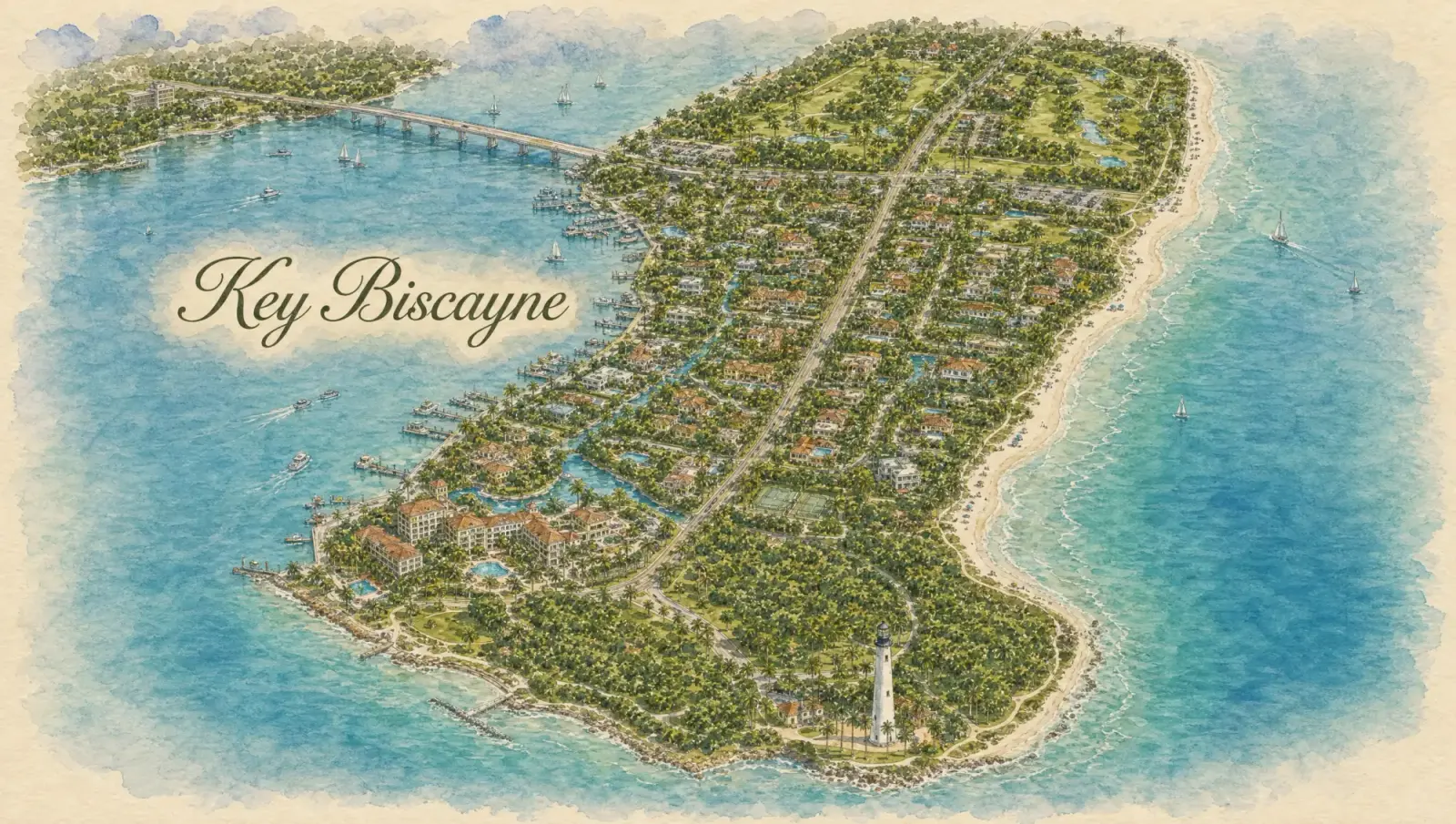
Key Biscayne is the southernmost of the barrier islands along the Atlantic coast of Florida. The island is approximately 5 miles long and 1 to 2 miles wide, composed of sand eroded from the Appalachian Mountains and carried south by coastal currents. The eastern edge sits on Key Largo Limestone, a fossilized ancient reef.
Geologists believe the island emerged around 2000 BCE as sea levels stabilized.
The northern portion is home to Crandon Park. The middle section is the incorporated Village of Key Biscayne. The southern part is protected as Bill Baggs Cape Florida State Park, adjacent to Biscayne National Park.
The Cape Florida lighthouse, built in 1825 and rebuilt in 1847 after a Seminole attack during the Second Seminole War, still stands at the southern tip.
This coastal setting demands roofing materials and installation methods that account for salt-air corrosion, wind uplift from Atlantic storms, and the humidity that comes with living on a barrier island. Hurricane Andrew scoured vegetation from the southern end in 1992. The roofs that survived were the ones detailed for this exact exposure.
Typical roof lifespan in Key Biscayne: Most residential roofs last 15+ years when properly maintained, with tile and standing-seam metal commonly reaching 30+ years in this climate when installed with corrosion-resistant fasteners and adequate ventilation.
See also service areas, Coral Gables, Pinecrest, Coconut Grove, Miami Beach, and South Miami.
The Atlantic Ocean sits on the eastern edge of the island. Biscayne Bay sits on the western edge. Every fastener, every flashing, every metal component must be specified for this exposure. Galvanized steel corrodes. Stainless steel and aluminum hold up.
The island is a barrier island with no windbreak between the roof and the ocean. HVHZ wind-uplift requirements apply. Fastener spacing, clip engagement, and seam welding are not optional.
Many homes on Key Biscayne sit on narrow lots with limited driveway access. Crane placement, material delivery, and debris removal require coordination with neighbors and the Village of Key Biscayne.
The island's humidity is constant. Attic ventilation and underlayment breathability matter more here than they do inland. A roof that traps moisture will fail early.
Our work from nearby South Florida neighborhoods.
Metal roof

Clay tile roof

Metal roof
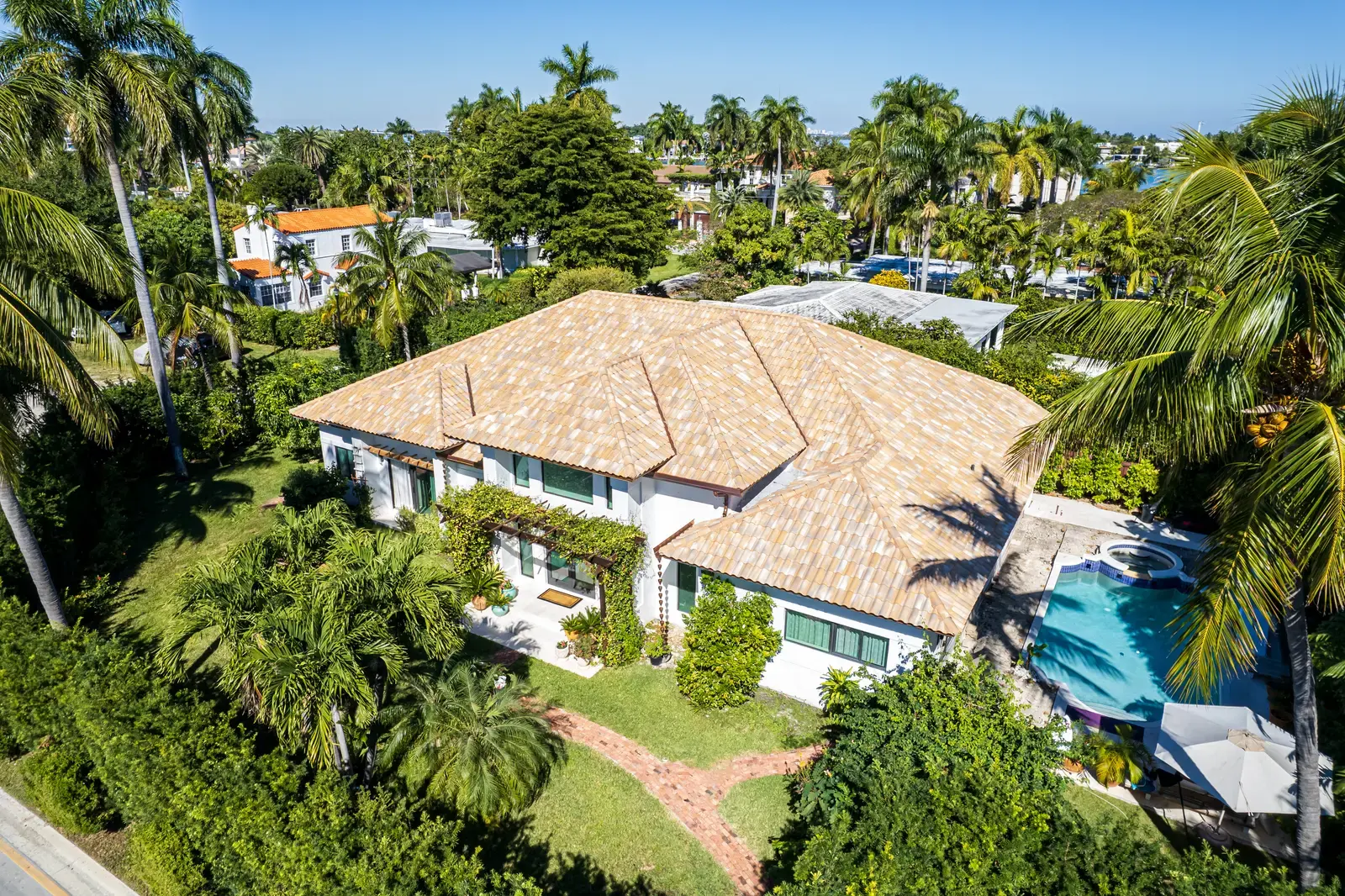
Clay tile roof
Yes. The island sits between the Atlantic Ocean and Biscayne Bay. Salt-air corrosion is constant. We use stainless-steel fasteners, aluminum or copper flashing, and corrosion-resistant clips. Galvanized steel corrodes quickly in this environment.
Most residential roofs last 15+ years when properly maintained. Tile and standing-seam metal commonly reach 30+ years when installed with corrosion-resistant fasteners and adequate ventilation. The barrier-island exposure accelerates wear on materials not detailed for coastal conditions.
Standing-seam aluminum and clay tile are the most common choices for homes near Crandon Park. Both resist salt-air corrosion and meet HVHZ wind-uplift requirements. Aluminum is lighter and easier to detail around complex rooflines. Tile is heavier and requires structural verification.
Yes. The Village of Key Biscayne requires a building permit for roof replacement. We handle the permit application, engineering drawings, and inspection coordination. HVHZ compliance is mandatory for all roofing work on the island.
We've been installing roofs on this barrier island since 1985. If you're planning a roof replacement, repair, or new construction project in Key Biscayne, we'll walk you through the material options and installation methods that fit your home and this coastal environment.