
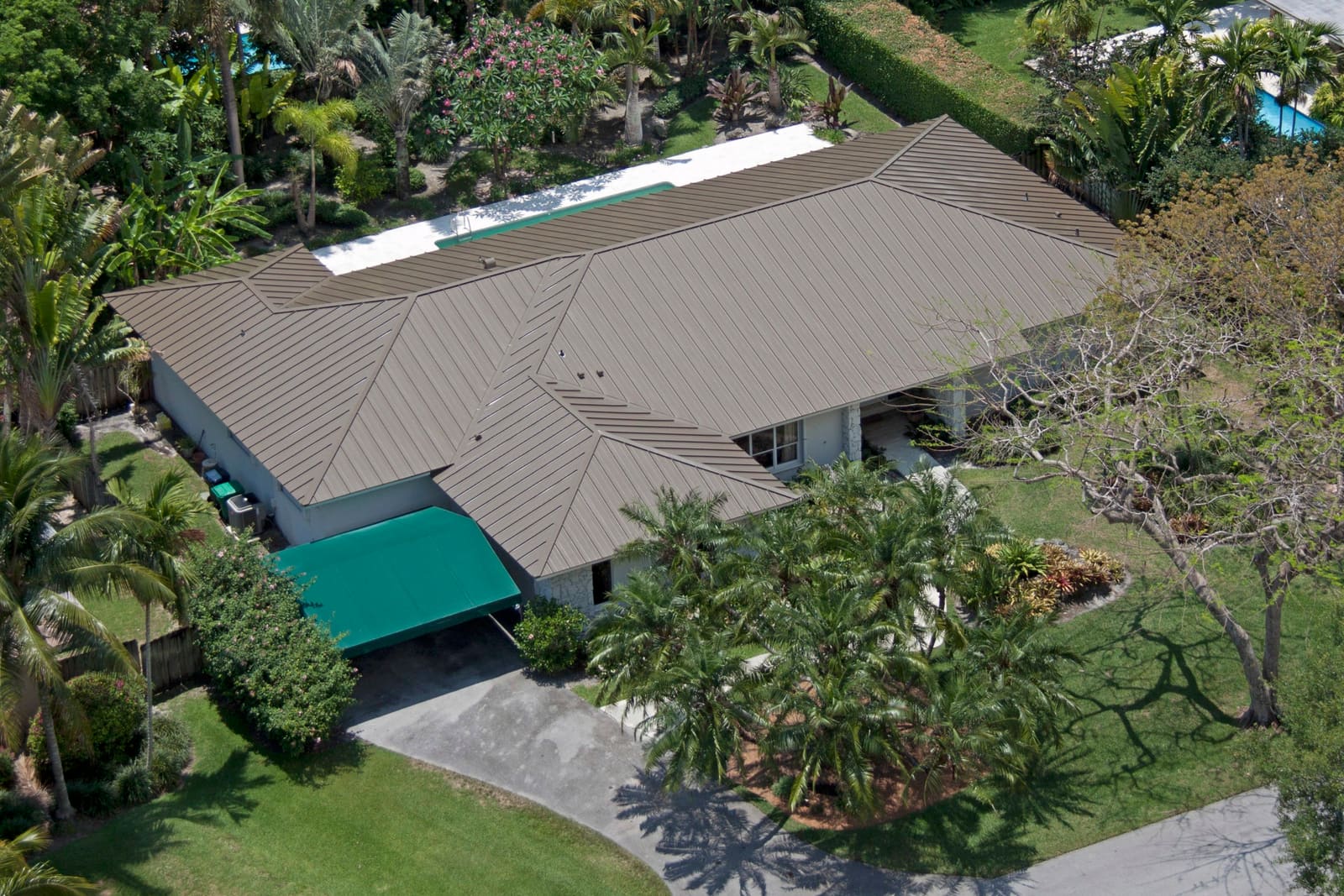
A solid performance. From start to finish we were kept up to date on what was happening and when. I felt very connected throughout the process. Day 1 was impressive. They did not stop until the first cover was installed.
a month ago
Galvalume roofing delivers multi-decade performance in South Florida's salt-air climate. The substrate forms a self-healing metallic layer that resists coastal corrosion, and standing-seam systems meet Miami-Dade HVHZ wind-uplift requirements. We install galvalume roofing across Miami-Dade and Broward with the same family-owned discipline we've held since 1985.
Galvalume roofing lasts 30+ years in South Florida's coastal environment when properly detailed. The AZ-55 substrate (steel coated with 55% aluminum, 43.4% zinc, and 1.6% silicon) forms a protective metallic layer that resists salt-air corrosion. Standing-seam systems with concealed-clip fastening and Kynar 500 or similar PVDF coatings extend material lifespan by eliminating screw-through-face penetrations and providing UV-stable color retention.
South Florida's coastal environment accelerates corrosion on ferrous metals.
Galvalume roofing is a steel-substrate metal roofing system coated with a metallic blend of aluminum, zinc, and silicon. The substrate is manufactured as AZ-55 or AZ-50 (0.55 oz or 0.50 oz of coating per square foot of sheet, both sides combined). The coating provides corrosion resistance superior to galvanized steel in coastal exposure.
We install galvalume in three primary profiles:
Standing-seam panels. Vertical-rib panels with concealed-clip fastening. The clips allow thermal movement without fastener stress, and the raised seams shed water without horizontal laps. Panel widths range from 12 to 18 inches; seam heights range from 1.5 to 3 inches.
Standing-seam galvalume is the dominant profile for residential and commercial low-slope applications in Miami-Dade and Broward.
Snap-lock panels. A standing-seam variant with interlocking panel edges that snap together without field seaming. Faster to install than mechanically seamed systems, but the snap-lock joint is less weather-tight under sustained wind-driven rain. We recommend snap-lock for covered structures or secondary buildings where the roof pitch exceeds 3:12.
Corrugated and R-panel. Exposed-fastener profiles with sinusoidal or trapezoidal ribs. Screw-through-face fastening introduces potential leak points, so we reserve corrugated galvalume for agricultural buildings, sheds, and utility structures where the lower installed cost justifies the reduced weather-tightness.
Galvalume roofing sits mid-tier in the metal roofing cost spectrum. Above metal roofing aluminum in substrate cost, below copper patina in total installed investment. The substrate is lighter than steel, heavier than aluminum, and requires no soldering or patina-development time.
Related material categories: roof shingles, epdm roofing, tile roof, clay tile, and concrete tile.
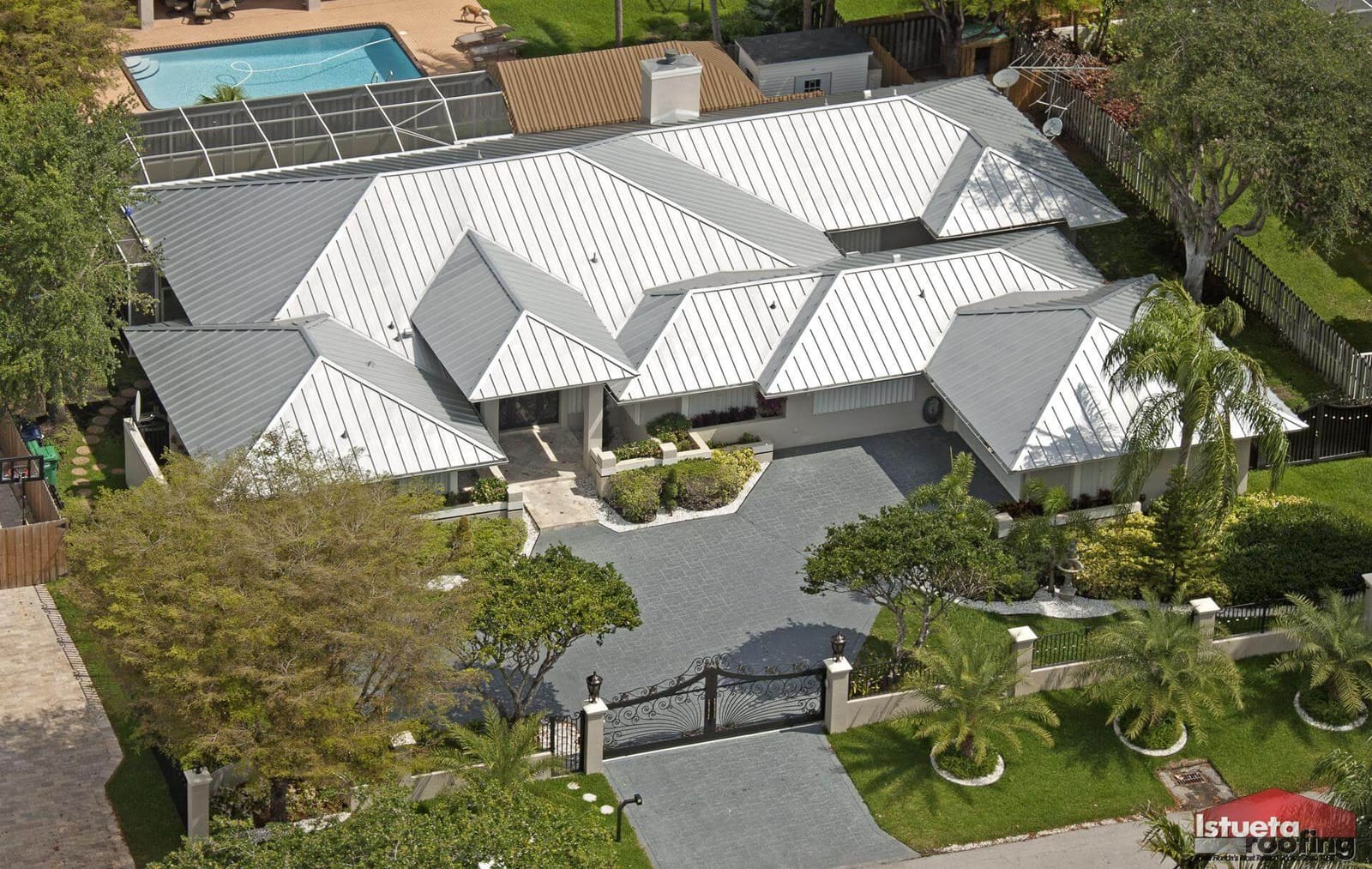
South Florida's coastal environment accelerates corrosion on ferrous metals. Salt spray, high humidity, and year-round UV exposure degrade unprotected steel within months. Galvalume's aluminum-zinc coating forms a barrier layer that self-heals when scratched. The aluminum component oxidizes to seal minor abrasions, and the zinc component provides galvanic protection to the underlying steel.
Miami-Dade County enforces the Florida Building Code High Velocity Hurricane Zone (HVHZ) provisions. Standing-seam galvalume systems with Miami-Dade NOA approval meet the 200+ mph uplift requirements when installed per the NOA specifications. The concealed-clip fastening distributes wind load across the panel width rather than concentrating stress at screw penetrations.
In Coral Gables, Coconut Grove, and Pinecrest, historic district review boards evaluate roof material compatibility with Mediterranean Revival and mid-century modern architecture. Galvalume accepts factory-applied Kynar 500 coatings in custom colors, allowing compliance with design guidelines while maintaining the substrate's corrosion resistance. We've installed galvalume roofing in neighborhoods including Coral Gables, Pinecrest, Coconut Grove, and Miami Beach, matching architectural character to material performance.
The substrate's thermal performance matters in Miami's cooling-dominated climate. Galvalume with a white or light-colored PVDF coating reflects 60 to 70% of solar radiation, reducing attic temperatures and lowering air-conditioning load. The material qualifies for Miami-Dade's cool-roof rebate programs when the coating meets the required Solar Reflectance Index (SRI) threshold.

Installation begins with deck inspection. We verify sheathing is sound, flat, and fastened to code. Warped or water-damaged sheathing is replaced before underlayment goes down.
The deck must be dry. Moisture trapped under metal roofing accelerates corrosion from the interior.
We install a high-temperature synthetic underlayment rated for metal roofing. Standard felt underlayment degrades under the heat buildup between metal panels and the deck. Synthetic underlayment resists UV exposure during the installation window and provides a secondary water barrier if a panel seam fails.
Ice-and-water shield goes at all valleys, eaves, and penetrations. Miami doesn't see ice dams, but wind-driven rain under hurricane conditions can force water upslope past the panel laps. The self-adhering membrane seals around fasteners and transitions.
Standing-seam panels run from ridge to eave in continuous lengths when the roof slope allows. Panels longer than 40 feet require expansion joints to accommodate thermal movement. Galvalume expands and contracts with temperature swings, and a rigidly fastened long panel will buckle or pull fasteners.
Concealed clips fasten to the deck at 12 to 24 inches on center, depending on the panel manufacturer's specifications and the Miami-Dade NOA requirements. The clip slides into the panel's seam channel, and the adjacent panel snaps or mechanically seams over the clip. The fastener never penetrates the panel face.
Mechanically seamed systems use a portable seaming tool to fold the two panel edges together in a double-lock seam. The seam is weather-tight without sealant. Snap-lock systems rely on the interlocking panel geometry; we apply a bead of sealant at the snap joint on roofs below 4:12 pitch to prevent wind-driven rain infiltration.
All trim (ridge caps, eave drip edges, rake edges, valley flashings) is fabricated from the same galvalume substrate as the panels or from a compatible metal (aluminum or stainless steel). Dissimilar metals in direct contact cause galvanic corrosion; we isolate incompatible metals with butyl tape or plastic separators.
Chimney and wall flashings are step-flashed and counter-flashed. The step flashing weaves under each panel course and laps up the vertical surface; the counter-flashing embeds into a reglet or surface-mounts over the step flashing with sealant. Penetrations (vents, pipes, HVAC curbs) receive custom-fabricated boots or curb flashings sealed with high-grade polyurethane or silicone.
We walk the roof end-to-end before the final invoice. Every seam is checked for alignment and lock engagement. Every fastener is checked for proper torque. Over-driven screws compress the clip and restrict thermal movement; under-driven screws allow panel lift.
Every transition is checked for sealant continuity and proper lap direction.
The installation meets NRCA standards and the manufacturer's published guidelines. We hold NRCA membership, and our crews are trained to the technical requirements that galvalume roofing demands in South Florida's wind and corrosion environment.
| Property | Galvalume | Aluminum | Galvanized Steel |
|---|---|---|---|
| Substrate | Steel + AZ-55 coating | Pure aluminum alloy | Steel + zinc coating |
| Corrosion resistance | Self-healing oxide layer; superior to galvanized steel in salt air | Self-healing oxide layer; does not rust | Zinc coating sacrifices to protect steel; degrades faster in coastal exposure |
| Weight | 1.0–1.5 lb/sf | 0.5–0.8 lb/sf | 1.5–2.0 lb/sf |
| Lifespan (coastal) | 30+ years | 30+ years | 15+ years |
| Installed cost | Mid-tier | Lower | Lower (but shorter lifespan) |
| Dent resistance | Moderate (24-gauge better than 26-gauge) | Lower (softer metal) | Higher (heavier gauge available) |
| Thermal expansion | Moderate | Higher (requires more expansion joints) | Moderate |
| Patina development | No patina; maintains coating color | No patina; maintains mill finish or coating | Rust staining when zinc depletes |
Galvalume sits between aluminum and steel in the performance-cost spectrum. It resists coastal corrosion better than galvanized steel, costs less than copper, and requires no soldering or patina-development time. For South Florida residential and commercial applications, galvalume delivers multi-decade performance at a mid-tier investment.
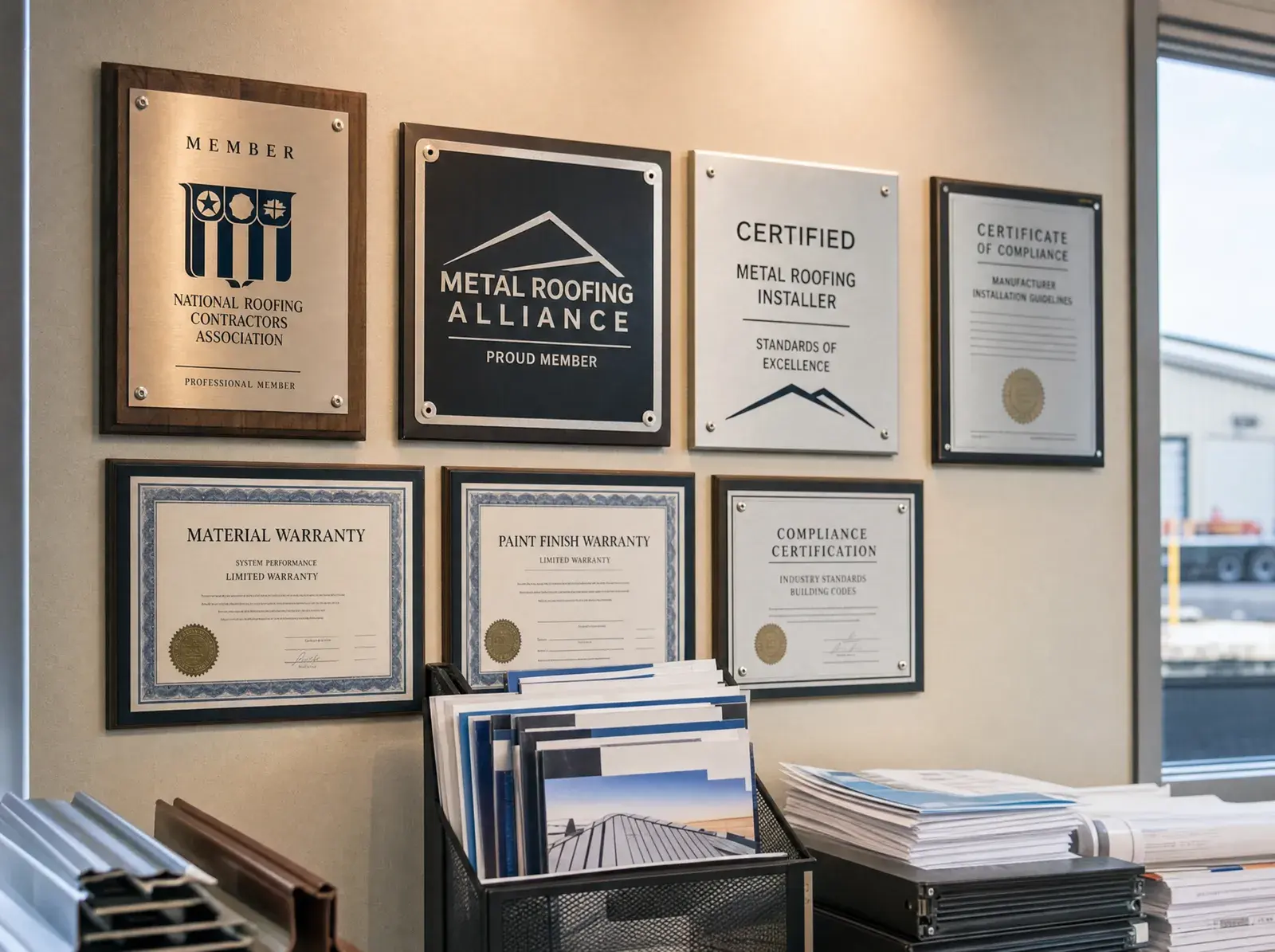
The Istueta galvalume system carries a Triple Warranty: Workmanship + Galvalume Substrate + Color. Three named warranties back the material, paired with our installation warranty:
Warranty coverage requires proper installation per the manufacturer's published guidelines and the Miami-Dade NOA specifications. Fastener over-torque, incompatible sealants, and dissimilar-metal contact void the warranty. We install to the manufacturer's requirements and document the installation with photos and material certifications.
Manufacturer warranties on materials per manufacturer terms. Specific coverage and exclusions documented in your signed proposal and contract.
We've held the same address in Miami since 1985, and we've installed metal roofing systems across South Florida for four decades. Our Metal Roofing Alliance recognition and NRCA membership anchor our technical credibility in the metal roofing category.
Galvalume roofing is a multi-decade investment. We offer financing options to spread the cost across manageable monthly payments. Financing subject to credit approval.
See terms for details.
The installed cost of a galvalume roof depends on panel profile, roof complexity, and the scope of trim and flashing work. Standing-seam systems with mechanically seamed joints cost more than snap-lock systems; custom-fabricated trim costs more than stock profiles. We provide a line-item proposal that breaks down material, labor, and permitting costs before you commit.
Financing allows you to move forward with the roof your home needs without depleting savings or deferring other maintenance. We work with multiple lenders to match your credit profile to available terms.
Galvalume roofing cost is determined by panel profile, roof complexity, material gauge, and coating system.
Panel profile. Standing-seam systems with concealed-clip fastening cost more than exposed-fastener corrugated panels. Mechanically seamed standing-seam costs more than snap-lock. The profile you choose depends on the roof pitch, the architectural character of the home, and the weather-tightness required.
Roof complexity. A simple gable roof with no valleys or penetrations installs faster than a hip roof with multiple dormers, chimneys, and skylights. Every transition requires custom flashing; every penetration requires a custom boot or curb. Labor hours scale with complexity.
Material gauge. 24-gauge galvalume panels are thicker and more dent-resistant than 26-gauge panels. The gauge you choose depends on the exposure (coastal wind-borne debris, overhanging tree branches) and the aesthetic preference (thicker panels read as more substantial).
Coating system. Kynar 500 PVDF coatings cost more than polyester coatings but carry longer fade warranties and better UV resistance. Custom colors cost more than stock colors. The coating you choose depends on the design guidelines (historic district requirements) and the long-term color-retention expectation.
We provide a detailed proposal that itemizes material, labor, permitting, and disposal costs. The proposal is valid for 30 days; material costs fluctuate with steel and aluminum commodity pricing.
Galvalume does not rust in the same way uncoated steel rusts. The AZ-55 coating (55% aluminum, 43.4% zinc, 1.6% silicon) forms a self-healing oxide layer that resists salt-air corrosion. When the coating is scratched, the aluminum component oxidizes to seal the abrasion, and the zinc component provides galvanic protection to the underlying steel. Galvalume resists coastal corrosion better than galvanized steel and performs comparably to aluminum in South Florida's salt-spray environment.
Galvalume is lighter, faster to install, and less expensive than clay tile or concrete tile. Tile roofs weigh 9 to 12 pounds per square foot and require structural reinforcement on many South Florida homes built after 1980. Galvalume weighs 1.0 to 1.5 pounds per square foot and installs on standard roof framing. Tile roofs and galvalume roofs both last 30+ years. The choice depends on architectural character, structural capacity, and budget.
Miami-Dade Building Code allows one layer of re-roofing over existing shingles under specific conditions. The existing shingles must be in sound condition (no curling, no missing tabs, no water damage). The deck must be inspected and verified sound. The new metal roofing must be fastened through the existing shingles into the deck with fasteners long enough to achieve code-required penetration. We evaluate the existing roof condition during the site visit and recommend tear-off when the existing shingles are degraded or when the deck condition is uncertain.
Metal roofing with Miami-Dade NOA approval qualifies for wind-mitigation insurance discounts when installed per the NOA specifications. The discount depends on the roof shape, the opening protection (impact-rated windows and doors), and the roof-to-wall connection (clips, straps, or toe-nails). We provide the NOA documentation and installation photos required for the wind-mitigation inspection. The insurance discount typically offsets 10 to 30% of the annual premium.
Galvalume roofing with a factory-applied Kynar 500 coating does not require painting or re-coating during its service life, since the PVDF coating resists UV degradation and holds color for 30+ years. Bare or acrylic-coated galvalume can be field-painted with a metal-roof-specific system, but it needs to weather for about a year after installation so the coating bonds, and the paint warranty is shorter than a factory PVDF warranty. We recommend factory-coated galvalume for residential applications in South Florida.
Galvalume roofing requires annual inspection and debris removal. Leaves, pine needles, and organic debris trap moisture against the panel surface and accelerate corrosion. We recommend clearing valleys and gutters twice per year and inspecting panel seams, fasteners, and flashing after major storms. Sealant at penetrations and transitions degrades over time and should be inspected every 5 years. Touch-up paint should be applied to scratches and abrasions within 6 months to prevent substrate exposure.
Both are steel coated for corrosion protection, but the coatings are different. Galvanized steel uses a zinc coating, while galvalume uses a coating that combines aluminum and zinc. That combination generally gives galvalume better resistance to corrosion than plain galvanized steel, particularly in humid or coastal environments where salt exposure is a bigger concern.
Galvanized steel can still be a reasonable choice for some applications, but galvalume is the more common pick for Miami-area roofing because of how it holds up in salt air over time.
Gauge refers to the thickness of the steel panel, and with gauge numbers a lower number means thicker metal. So 24 gauge is a heavier, thicker panel than 26 gauge. That extra thickness makes 24 gauge more resistant to denting from hail or foot traffic and gives it more rigidity across longer panel runs, which matters for wind uplift performance in a place like Miami.
The tradeoff is weight and cost, since 24 gauge panels use more raw material and cost more than 26 gauge. Many homeowners choose 26 gauge for standard residential roofs and reserve 24 gauge for larger panels, low-slope applications, or areas where extra impact resistance is a priority.
Schedule a no-pressure consultation. We walk your roof, review your options, and give you a detailed written proposal.