
As a returning customer, we are very happy with the customer service provided by Sofia.
a month ago
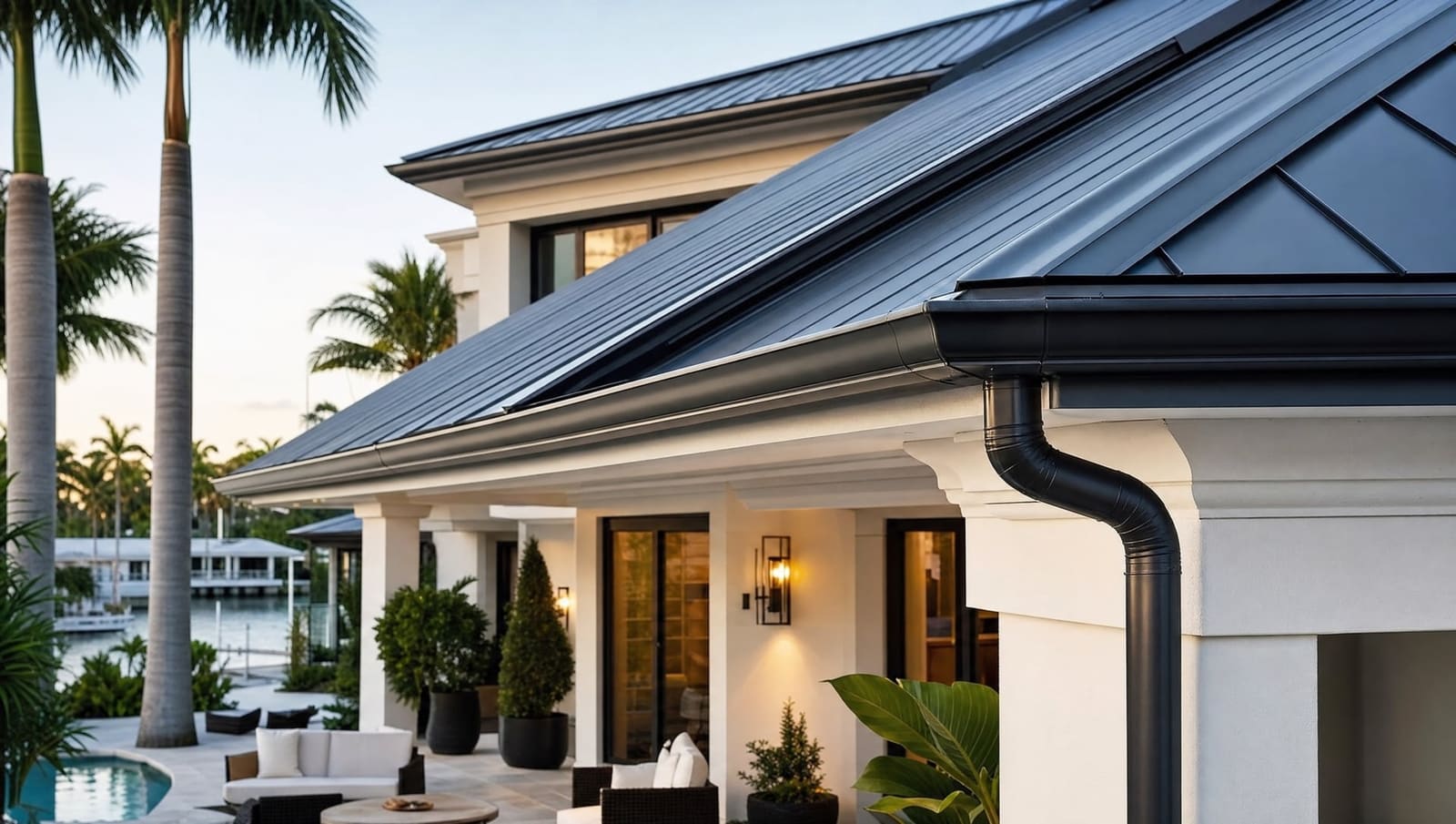
Gutters protect your home from water damage by directing rainwater away from the foundation, walls, and landscaping. In Miami's subtropical climate, a properly installed gutter system prevents erosion, reduces moisture intrusion, and extends the life of your roof and exterior surfaces. We install, replace, repair, and clean gutter systems across Miami-Dade and Broward counties, family-owned since 1985.
A residential gutter system collects rainwater from your roof and channels it through downspouts at least 6 feet away from your home's foundation and exterior walls. Properly sized 5-inch or 6-inch K-style gutters, pitched at a minimum 1/4 inch per 10 feet toward downspouts and hung with hidden hangers every 24 inches, prevent the 4 most common South Florida water failures: foundation soil erosion, stucco and siding moisture damage, landscape washout under concentrated flow, and fascia rot behind overflowing gutters. In Miami's heavy rainy-season pattern, the gutter system is your first line of defense against water-related structural issues.
This page covers all 4 gutter services we provide: new installation on existing or new-construction roofs, whole-system replacement when an aged gutter has reached end of useful life, targeted repair for localized failures like a single seam or detached downspout, and ongoing cleaning at the cadence your property's canopy and rainfall require.
Replacement is the right call when the failure pattern is system-wide rather than localized.
New gutter installation puts a system on a roof that has none today, on a new addition, or on new construction. Aluminum is the standard residential material; copper is the premium option where the gutter is part of the visible architectural register. Either way, we form the continuous run on site for a seamless install rather than working with pre-cut sectional joints that fail under thermal expansion.
Our 4-step installation process:
1. Site assessment and capacity sizing. We measure the roofline, calculate the roof area draining to each gutter run, and identify downspout placement that directs water at least 6 feet away from the foundation. Capacity is sized against the Miami-Dade maximum-intensity rainfall pattern (the summer thunderstorm peak), with safety margin built in. Under-sized gutters fail in routine storms; over-sized gutters waste material.
2. Material selection. Aluminum (0.027-inch or 0.032-inch thickness) for standard residential installations; copper (16-ounce or 20-ounce weight) for premium properties and visible architectural runs. K-style profile (contemporary, broad ogee) for most South Florida residential; half-round (curved, period-appropriate) for Mediterranean revival and historic-district properties. Color or finish chosen against physical samples at the consultation.
3. Fascia preparation. Before installation, we inspect the fascia board for rot, water damage, or structural weakness. Compromised fascia gets repaired or replaced so the gutter system mounts to solid backing. The gutter is only as good as what it attaches to; skipping this step is how installations sag and detach within a few years.
4. Seamless run-out and install. Continuous gutter formed on site to length, hung with hidden hangers every 24 inches (or hand-formed copper straps on premium copper work), pitched 1/4 inch per 10 feet toward downspouts, sealed at every joint and outlet with UV-rated gutter sealant. Downspouts routed to discharge per the drainage plan, secured to the wall with straps every 6 feet, extended at least 6 feet from the foundation via buried drainage line or splash block.
Most single-family residential installations complete in 1 to 2 days on site. Larger estates, copper installations with hand-formed trim, or installations requiring fascia repair take longer; we confirm the schedule at the consultation. New installation is the right service for: a new roof or addition, an older Miami-Dade property built without gutters where the original landscape handled runoff, gutter work coordinated with a roof replacement (the drip-edge detail is being touched anyway), or an architectural upgrade from aluminum to copper or K-style to half-round on a property without existing gutters.
Replacement is the right call when the failure pattern is system-wide rather than localized. Patching a system that has aged out is throwing good money after bad; a single replacement visit puts the next 20-30 years on solid footing.
Our 4-step replacement process:
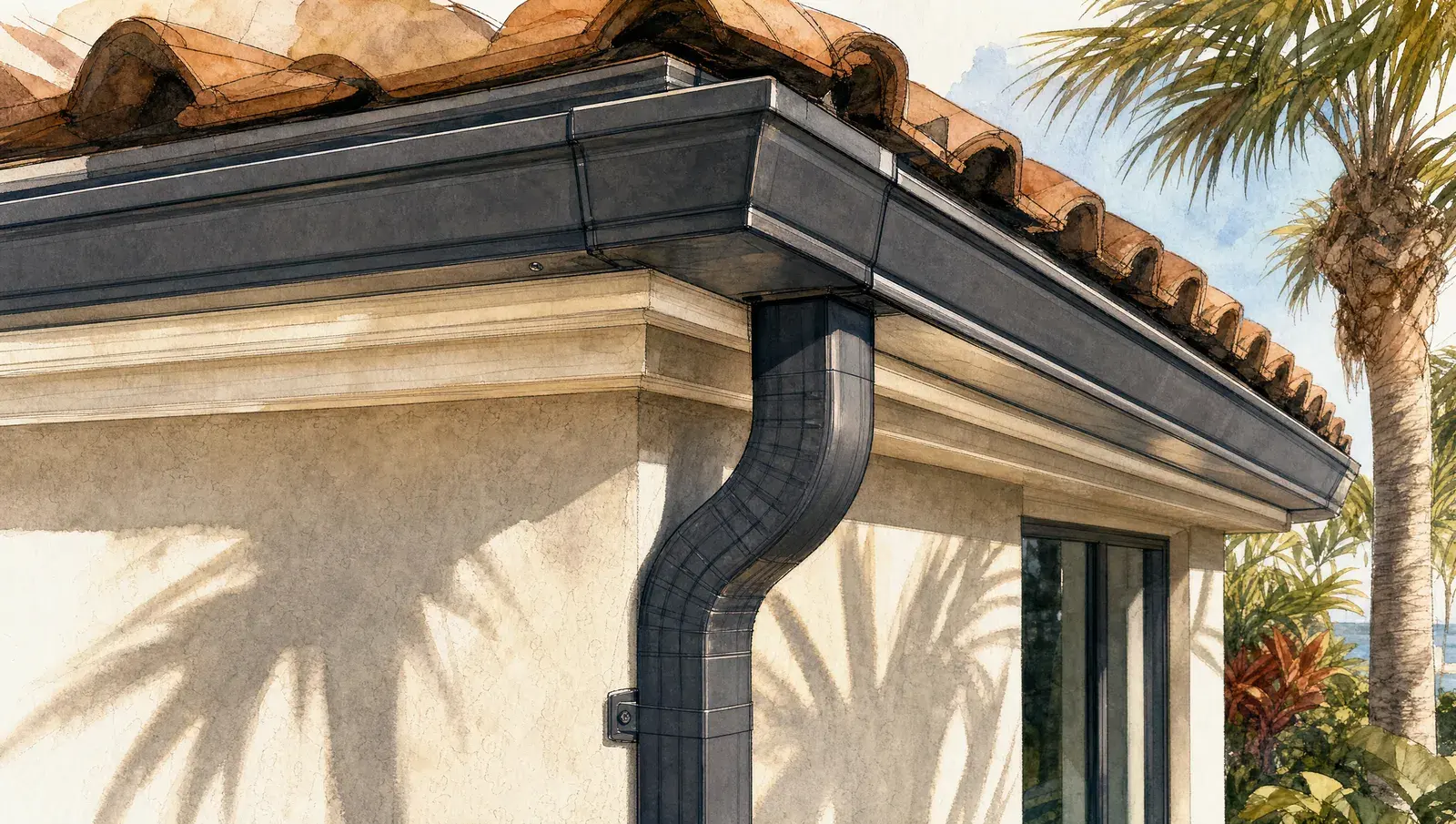
1. Whole-system assessment. We walk the full perimeter, inspect every run, every hanger, every outlet, and the fascia behind. The output is a written replacement scope distinguishing what has actually failed from what is cosmetically tired. Replacement is only the right answer when the system has run out of useful life.
2. Removal and fascia review. The existing gutter is removed in sections. With the gutter off, we inspect the fascia in full. Rotted board, failed flashing, or water-damaged trim is replaced before the new gutter goes up. Replacement is the chance to put the substrate right.
3. Re-spec and material choice. A replacement is the right moment to reconsider material and profile. Aluminum-to-aluminum is the standard like-for-like; aluminum-to-copper is a common upgrade where the gutter is part of the visible architectural register; K-style-to-half-round is the period-appropriate upgrade for Mediterranean revival homes.
4. Seamless install and tie-in. New continuous run formed on site, hung with hidden hangers or copper straps, sealed at every joint and outlet, downspouts tied into the existing or revised discharge plan. Old material hauled, site cleaned at close-out.
Most single-family residential replacements complete in 1 to 3 days on site. Replacement is the right call when you see 4 signal patterns: corrosion across the full run (system-wide rather than localized), multiple seam or joint failures on the same run, fascia damage behind the gutter from chronic overflow or back-flashing, or capacity/material upgrades driven by a roof addition or architectural register shift. Material aged out at the 20-30 year service window for aluminum is itself a replacement indicator; copper rarely reaches a replacement decision (it patinas rather than fails).
Targeted repair is the right call when the failure is localized: a single seam, a section of hanger, one damaged downspout. Most of our repair work is on gutters Istueta did not install; we assess the work in front of us against current code and manufacturer specifications regardless of installer history.
Common repair scopes:
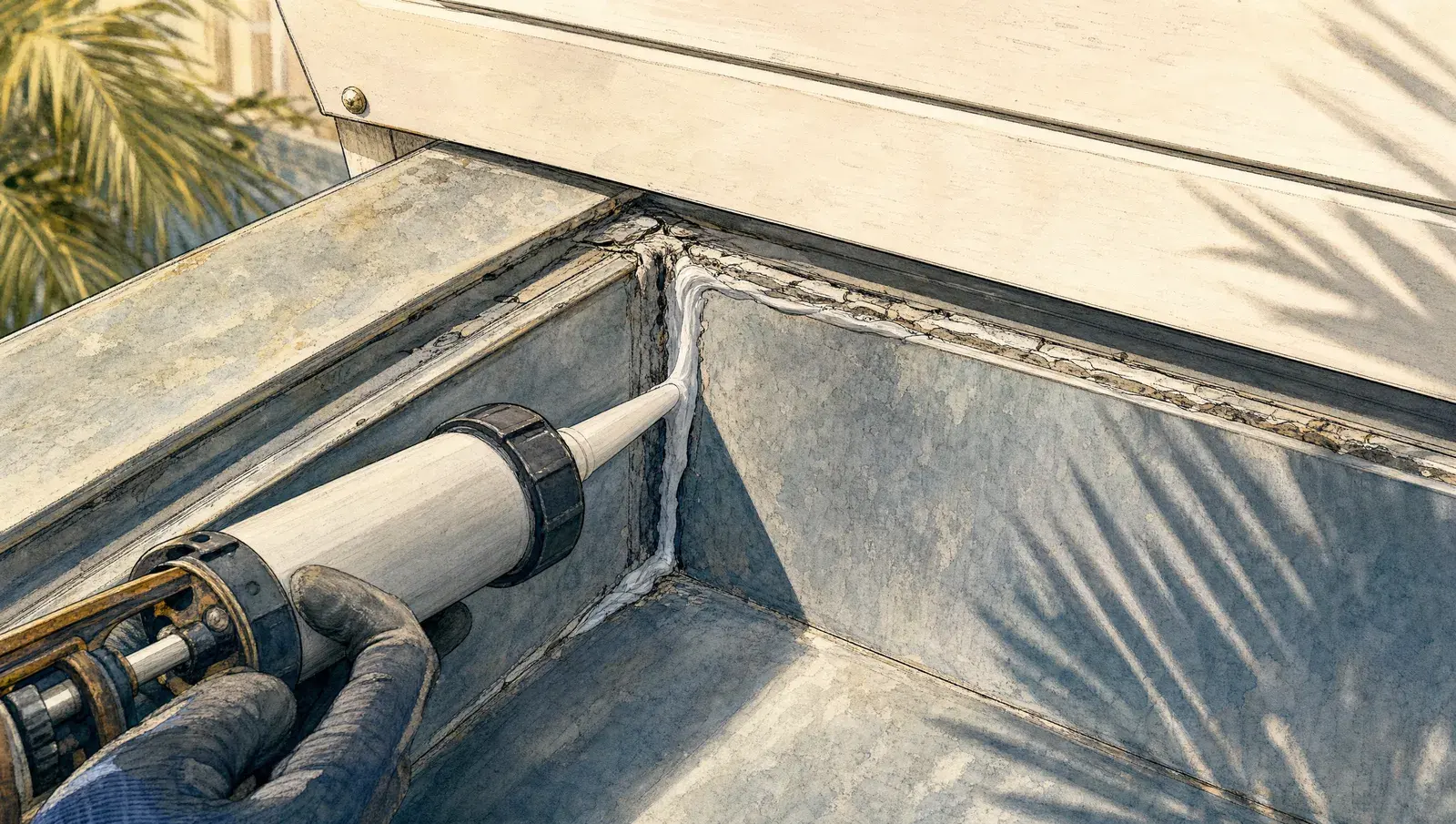
When to schedule a repair visit:
Active overflow during storms (water cascading over the gutter edge during rain usually points to a clog, capacity failure, or structural seam break: the repair scope follows the diagnosis). Visible sagging or detachment (a gutter section pulling away from the fascia or sagging under its own weight needs hanger replacement; catching this early prevents full detachment). Stained fascia behind the gutter (streaking on the fascia behind a gutter line means overflow water is reaching the wood: repair the gutter to stop the staining; the fascia may also need attention). After a major wind event (storms and hurricane-driven wind can lift, twist, or detach gutter sections; post-event repairs are common across the Miami-Dade summer season).
Most targeted repair visits complete in a single half-day on site. Larger scopes that include fascia work or hand-formed copper restoration may take longer; we confirm the schedule at the consultation.
Gutter cleaning is the cadence work that keeps an installed system functioning across its full service life. Twice per year is the baseline for Miami-Dade: once before the rainy season and once after. Properties under heavy banyan, oak, or royal poinciana canopy may need quarterly cleaning. We use a soft-wash methodology rather than pressure cleaning; pressure can damage the gutter finish, dislodge sealant at seams, and force debris under flashing details.
What a cleaning visit covers:
When to schedule a cleaning:
Before the rainy season (a pre-season cleaning ahead of the summer storm pattern catches accumulated dry-season debris before it has a chance to clog under heavy rain). After the rainy season (post-season cleaning clears storm-driven debris, falling fronds, and seed pods). Under dense canopy (properties under heavy banyan, oak, or royal poinciana canopy may need cleaning every 3 to 4 months rather than twice yearly: the cadence follows the canopy load). After visible overflow (a gutter that overflowed during a storm has clogged; schedule a cleaning visit, and if overflow persists after cleaning, the issue is structural and a repair visit follows).
Most residential cleaning visits complete in 1 to 3 hours on site. Larger estates and visits that include soft-wash treatment may take longer.
Twice per year is the baseline cadence for Miami-Dade: once before the rainy season and once after. Properties under dense banyan, oak, or royal poinciana canopy may need quarterly cleaning. The cadence follows the canopy load and the rainfall pattern, not the calendar.
Most residential homes use 5-inch K-style gutters. Larger roofs or homes with intense rainfall exposure may require 6-inch gutters to handle higher water volume. We calculate gutter size against the Miami-Dade maximum-intensity rainfall pattern (the summer thunderstorm peak), with safety margin built in.
Aluminum gutters typically last 20 to 30 years in South Florida exposure when cleaned on cadence. Copper gutters run 50-plus years and develop a protective patina that becomes the finish rather than failing. Copper is the longer-lifespan choice; aluminum is the cost-appropriate choice for most installations.
Repair is appropriate when the failure is localized: one failed seam, one detached hanger, one damaged downspout. Replacement is the right call when the failure pattern is system-wide: corrosion across multiple runs, multiple seam failures, fascia damage behind the gutter, or material past its 20-30 year service window. We assess the system before recommending either path and put the recommendation in writing.
Most residential gutter installation and replacement work in Miami-Dade does not require a separate permit when done independently of a roof project. When installed alongside a roof replacement, the gutter work is documented under the roof permit. Structural fascia repair or significant section replacement may trigger permitting; we confirm at the consultation.
Gutter guards reduce the frequency of cleaning by blocking leaves and large debris but do not eliminate maintenance. Fine sediment, pine needles, and roof granules still accumulate and require periodic flushing. We recommend gutter guards for properties with heavy banyan, oak, or royal poinciana canopy exposure.
Schedule a no-pressure consultation. We walk your roof, review your options, and give you a detailed written proposal.