(Translated by Google) VERY GOOD EXCELLENT SERVICE FROM AGENT SOFIA BENAVIDES (Original) VERY GOOD EXCELENTE SERVICIO CON LA.AGENTE SOFIA BENAVIDES
a week ago
Aluminum roofing works well for coastal homes in Coconut Grove. It's light, doesn't corrode in salt air, and holds up in hurricanes. We've been installing metal roofs across Miami-Dade and Broward since 1985, mostly for people who want to know what they're actually getting—how the material performs, what installation involves, what to expect long-term. Your roof keeps out heat, wind, and water. Picking the right material means understanding how it behaves in this specific climate.
Aluminum roofs in coastal South Florida last 50 years or more if you maintain them. The material forms an aluminum oxide layer that heals itself and protects against saltwater corrosion, which matters if you're near Biscayne Bay or the Atlantic. Standing-seam aluminum panels with Kynar 500 or PVDF coatings resist fading and chalking under heavy UV, so they keep their color and structure for decades.
Aluminum roofing installation in Coconut Grove starts with a full structural assessment.
Coconut Grove sits right on Biscayne Bay. A lot of homes are within a quarter-mile of saltwater. Aluminum's natural oxide layer resists the corrosion that eats through galvanized steel and other metals here. The material weighs about a third as much as clay tile or concrete, which helps on older homes built before modern wind-load codes.
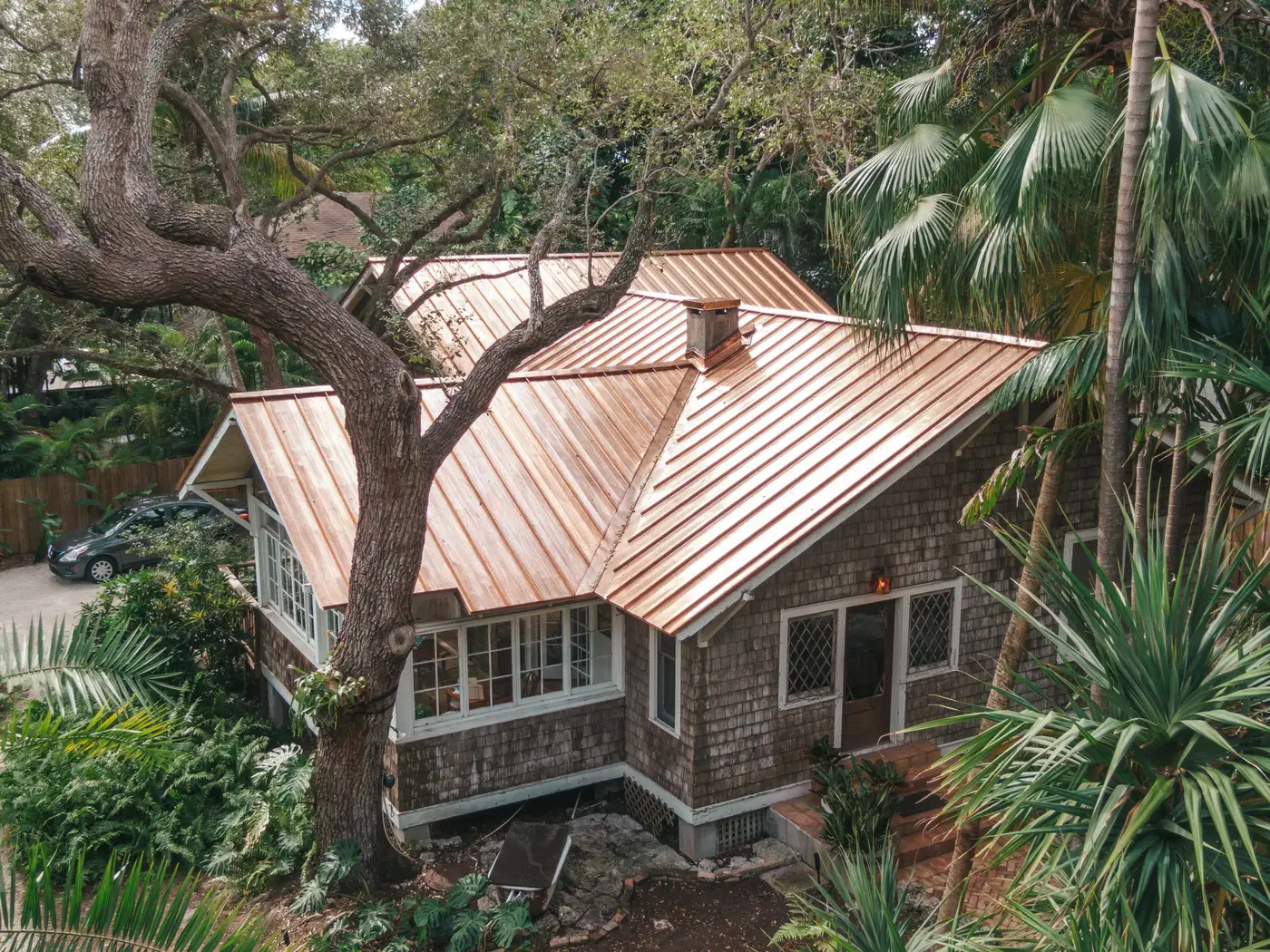
The neighborhood has Mediterranean revival, mid-century modern, and contemporary coastal architecture. Standing-seam aluminum panels fit clean-lined modern houses. Formed aluminum shingles can match traditional profiles on historic properties. The material takes factory finishes in colors that work with coral stone, stucco, and wood siding.

Coconut Grove falls under Miami-Dade County's High-Velocity Hurricane Zone building code. Aluminum roofing with proper fastening and underlayment meets HVHZ requirements for wind uplift and water infiltration. Standing-seam panels with concealed fasteners and continuous clips get NOA approvals for 200+ mph wind resistance when installed to spec.
Homeowners in Coconut Grove often compare aluminum to copper, galvalume, and galvanized steel. Each material has distinct performance characteristics in coastal environments.
| Material | Corrosion Resistance | Weight | Lifespan | Cost |
|---|---|---|---|---|
| Aluminum | Excellent (self-healing oxide) | Lightest | 50+ years | Moderate |
| Copper | Excellent (patina protection) | Heavy | 70+ years | High |
| Galvalume | Good (zinc-aluminum coating) | Moderate | 40-50 years | Moderate |
| Galvanized Steel | Fair (degrades in salt air) | Heavy | 25-35 years coastal | Low |
Aluminum has the best corrosion resistance relative to cost in saltwater environments. Copper outperforms aluminum in longevity but costs significantly more. Galvalume provides a middle option but requires more frequent inspection near the coast. Galvanized steel isn't recommended for homes within three miles of Biscayne Bay.
Aluminum roofing installation in Coconut Grove starts with a full structural assessment. We verify that the existing roof deck can support the new system and identify any areas requiring reinforcement. Older homes in the Grove often have original wood decking that needs repair or replacement before metal installation.
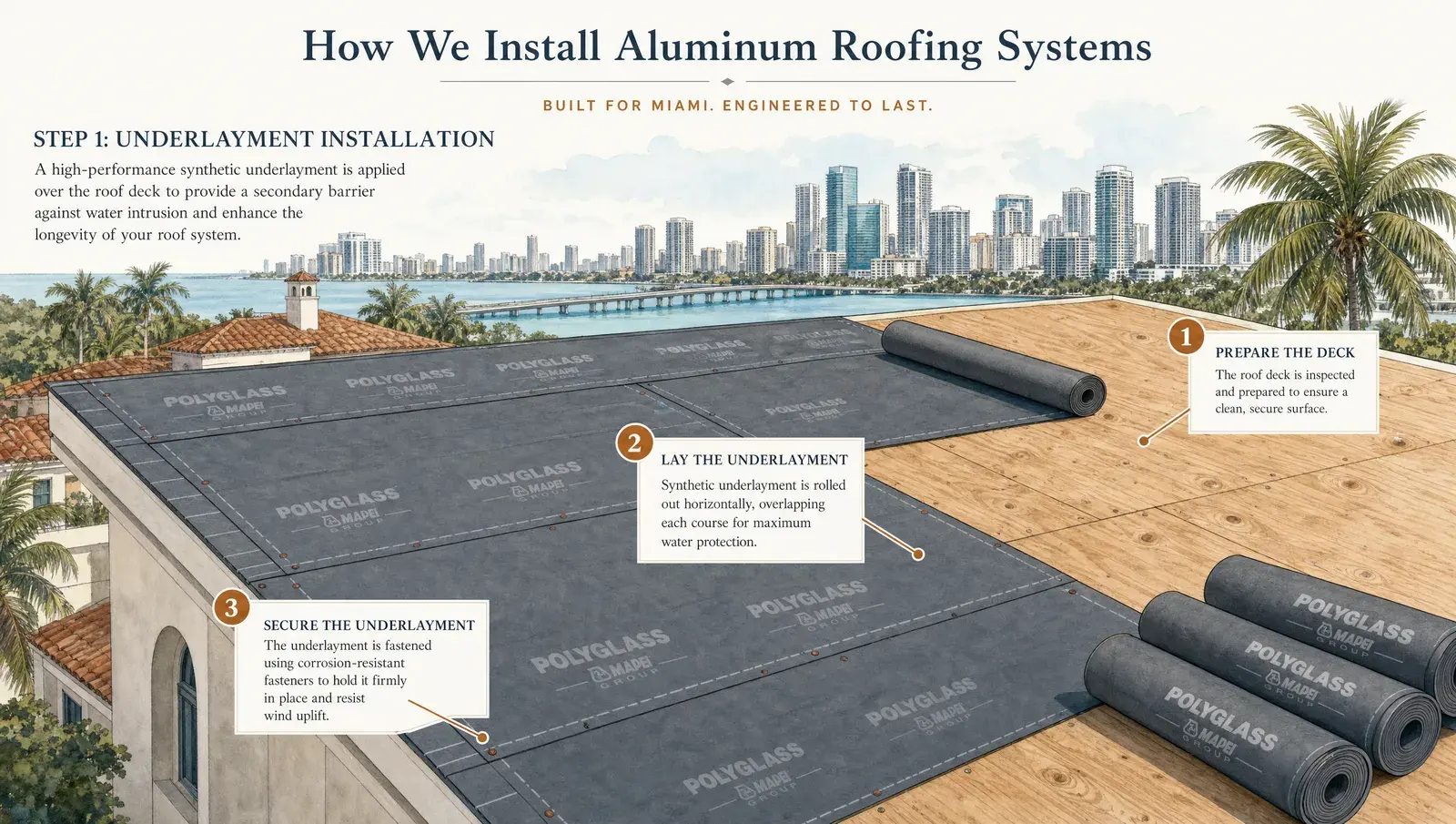
We install a high-temperature underlayment rated for metal roofing applications. This layer provides secondary water protection and prevents condensation from forming on the underside of the aluminum panels. In coastal applications, we use corrosion-resistant fasteners—stainless steel or coated screws—to prevent galvanic reaction between dissimilar metals.

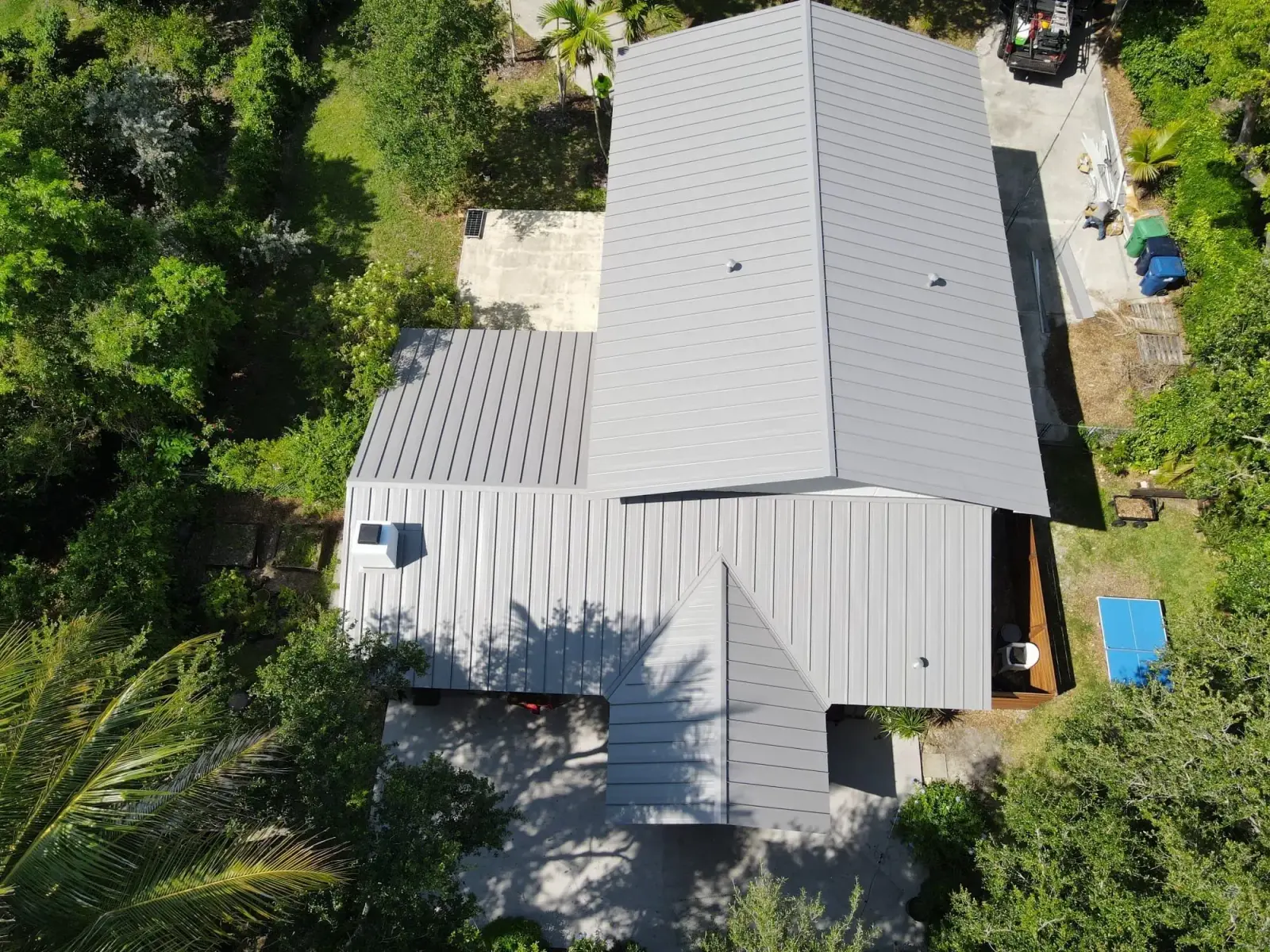
Standing-seam aluminum panels interlock along raised seams, creating a continuous weather barrier without exposed fasteners. The concealed fastener system reduces leak points and eliminates the thermal cycling stress that can loosen screws on exposed-fastener panels. We install thermal breaks at panel connections to minimize expansion and contraction noise during temperature swings.
Flashing details get particular attention in Coconut Grove installations. Saltwater exposure accelerates corrosion at transition points—valleys, chimneys, vent penetrations, and roof-to-wall intersections. We fabricate custom aluminum flashing for these areas rather than using pre-formed steel components that will corrode faster than the roof panels.
Coconut Grove falls under Miami-Dade County building jurisdiction and the Florida Building Code High-Velocity Hurricane Zone provisions. All metal roofing systems must carry a Miami-Dade Notice of Acceptance (NOA) for wind uplift resistance.
Standing-seam aluminum systems with NOA approval are rated for wind speeds exceeding 200 mph when properly installed. The NOA specifies fastener spacing, panel gauge, seam height, and attachment methods. Installations that deviate from NOA specifications void the wind rating and may not pass final inspection.
Permit applications require engineered drawings showing panel layout, fastener schedules, and flashing details. The county reviews these drawings for code compliance before issuing the permit. Inspections occur at the deck preparation stage, underlayment installation, and final completion.
We coordinate all permitting and inspection scheduling as part of the installation process.
Aluminum roofing requires minimal maintenance compared to tile or asphalt systems. The material doesn't crack, doesn't absorb water, and doesn't support organic growth. Annual inspections focus on fastener integrity, flashing condition, and debris removal.
Coconut Grove's tree canopy means roofs accumulate leaves, seed pods, and small branches. We recommend clearing debris twice yearly—after spring flowering and after fall leaf drop. Accumulated organic material can trap moisture against the roof surface and create staining, though it won't cause the material degradation that occurs with asphalt shingles.
Painted aluminum finishes may fade over time due to UV exposure. High-quality Kynar or PVDF coatings maintain color for 30 to 40 years before requiring recoating. Mill-finish aluminum develops a natural patina that doesn't require repainting.
Homeowners who prefer the original appearance can have the roof professionally cleaned and recoated, though this is an aesthetic choice rather than a structural necessity.
Aluminum roofing installation in Coconut Grove sits at the mid-range of the metal roofing market, with the final figure depending on panel profile, finish selection, roof complexity, and structural requirements. Standing-seam systems with concealed fasteners cost more than exposed-fastener panels but offer better wind resistance and longer service life.
Project costs include aluminum material, labor, permitting, structural reinforcement if needed, and disposal of the existing roof. Homes with multiple roof planes, steep pitches, or complex flashing details need more labor and material than simple gable roofs. The 50-year lifespan of aluminum systems means lower lifetime cost compared to materials that need replacement every 20 to 30 years.
Manufacturer warranties on aluminum panels typically cover material defects and finish performance. Installation workmanship warranties vary by contractor. We provide written warranty documentation that specifies coverage terms for both material and labor.
We've installed aluminum and other metal roofing systems across Miami-Dade and Broward since 1985, working with homeowners who need clarity about material options, installation processes, and long-term performance. Your roofing contractor should explain how different materials perform in coastal environments and help you make an informed decision based on your home's specific requirements.
The roofing contractor you choose should hold manufacturer certifications needed to install aluminum systems correctly and activate warranty coverage. We maintain certifications with major metal roofing manufacturers including those who produce aluminum standing-seam and formed-panel systems. Our installation crews follow manufacturer specs for fastener spacing, seam engagement, and flashing details that determine system performance.
We've completed metal roofing projects in Coconut Grove and throughout South Florida, from contemporary bay-front builds to the neighborhood's older Mediterranean revival homes. Each project gets the same attention to structural assessment, code compliance, and installation detail regardless of size or complexity.
Aluminum is one of several metal roofing options suitable for coastal South Florida. Copper roofing offers superior longevity and develops a distinctive patina over time, though it costs significantly more than aluminum. Galvalume roofing provides a zinc-aluminum coating that resists corrosion better than galvanized steel while costing less than pure aluminum.
Homeowners who prefer traditional roofing materials may consider tile roofing, which performs well in South Florida's climate and complements Mediterranean and Spanish revival architecture common in the Grove. Asphalt shingles offer a lower initial cost but require replacement every 15 to 20 years in coastal environments. Flat roofing systems serve low-slope applications on contemporary homes and covered outdoor spaces.
The right material depends on your home's architecture, your budget, and your priorities for longevity, maintenance, and appearance. We walk through these considerations during the consultation process so you can make the decision that fits your situation.
Coconut Grove's waterfront blocks along Bayshore Drive and the older streets fronting Biscayne Bay carry the highest salt-air exposure in our service area. Aluminum is the metal of choice here precisely because the self-healing oxide layer reforms whenever the surface is abraded, which means small dings from windblown debris or palm-frond contact do not progress into corrosion the way they would on galvanized or painted steel. We specify 0.032 inch or 0.040 inch panel gauge for waterfront installations rather than the lighter gauges sometimes used farther inland, which improves dent resistance during the install sequence and over the long service life.
The install sequence on a waterfront Coconut Grove home typically runs five to seven days for a straightforward gable or hip roof, longer for complex geometries with multiple valleys or skylights. Day one covers tear-off and deck inspection. Salt air and the tree canopy together create elevated decay risk on older roof decks, so we replace any soft sheathing before proceeding rather than spanning over compromised plywood with the new aluminum field. Day two installs synthetic high-temperature underlayment and self-adhered ice-and-water shield at eaves, valleys, and penetrations. Days three through five handle field panel installation working from rake to ridge, with each panel running ridge-to-eave in one continuous piece to eliminate horizontal seams.
Drip-edge and concealed-clip details receive specific attention on waterfront installs. We use aluminum drip edge fabricated from the same panel stock as the field rather than mill-finish galvanized, which prevents the galvanic corrosion that develops where dissimilar metals meet. Concealed clips are spaced on 12 to 24 inch centers per the manufacturer's NOA wind-uplift schedule, with closer spacing in the perimeter and corner zones where uplift pressures are 1.5 to 2 times the field zone pressure. Final inspection verifies seam engagement, clip count against the engineered fastener schedule, and flashing integration at every penetration before the project closes. Istueta backs every aluminum install with a workmanship warranty of up to 12 years in addition to the manufacturer's 30 to 40 year coating warranty on Kynar 500 or PVDF finishes.
For more information about aluminum roofing, see our aluminum roofing guide.

Schedule a no-pressure consultation. We walk your roof, review your options, and give you a detailed written proposal.