
Flat roofing in Coconut Grove.
TPO, PVC, and modified bitumen across the Grove's contemporary bayfront low-slopes, mid-century flat-roof restorations, and the modernist new builds north of US-1. Filed under the City of Miami with Historic Preservation experience where the Conservation overlay applies.
Schedule Your Coconut Grove Flat Consultation →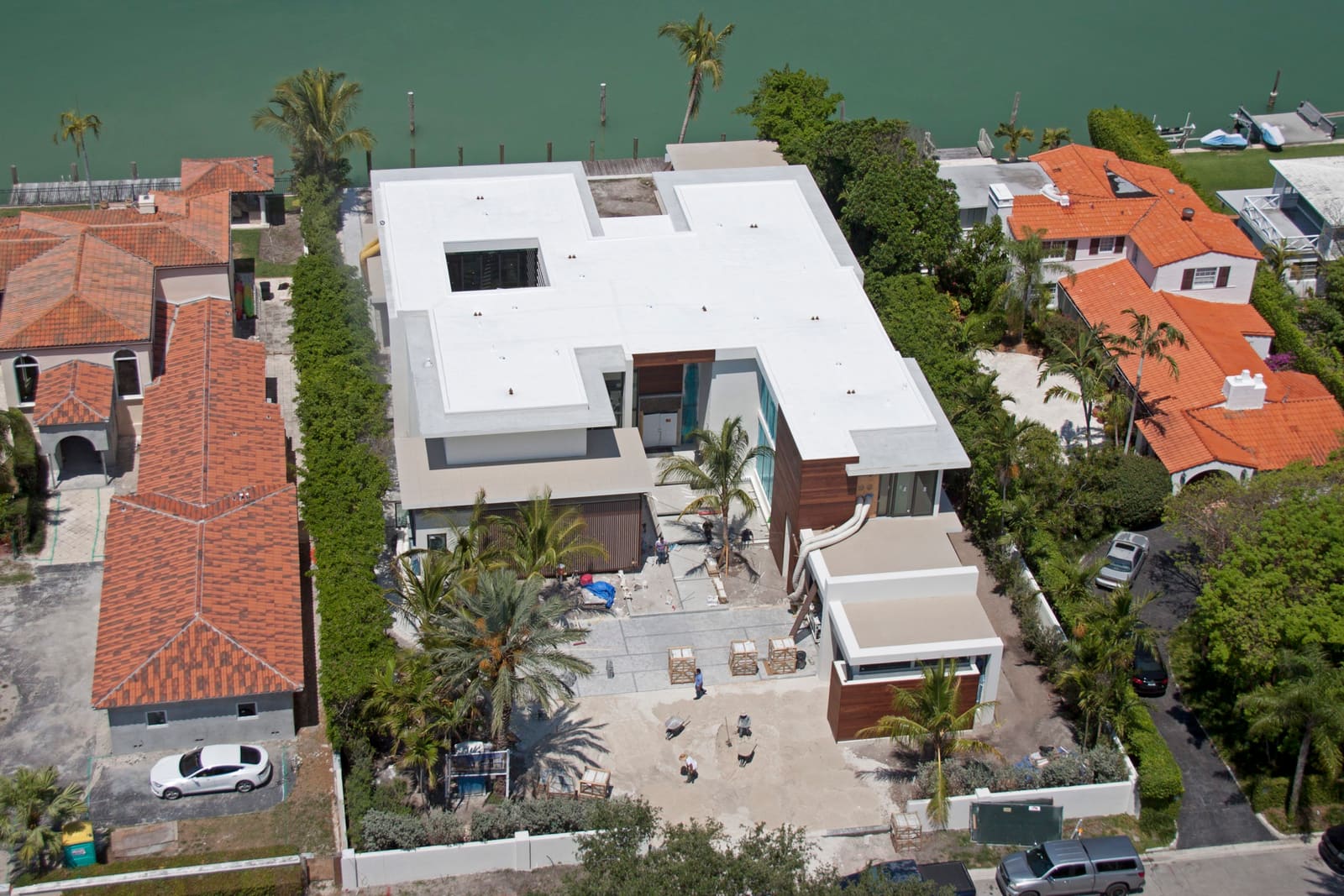
What makes flat membrane the right choice for Coconut Grove properties?
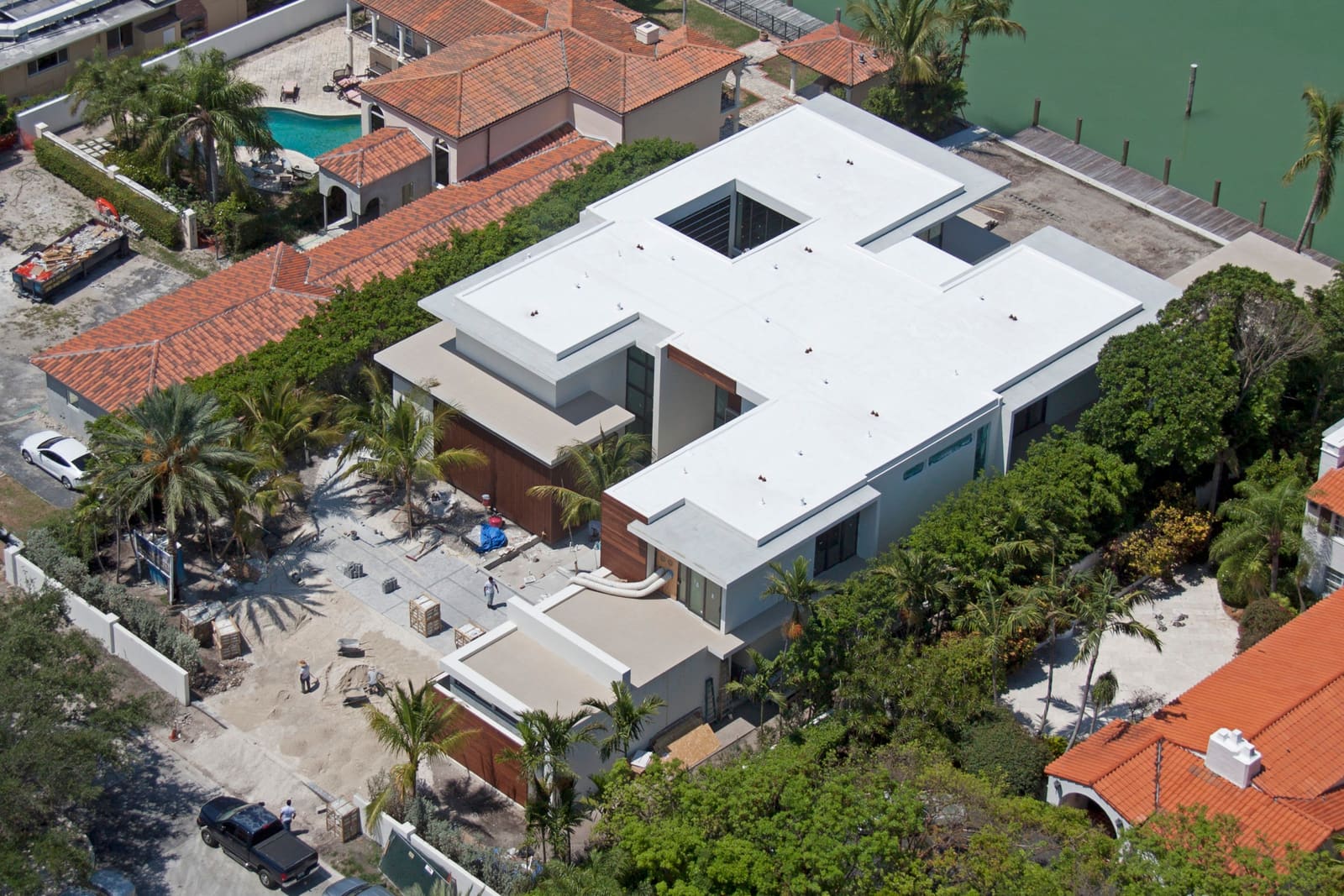
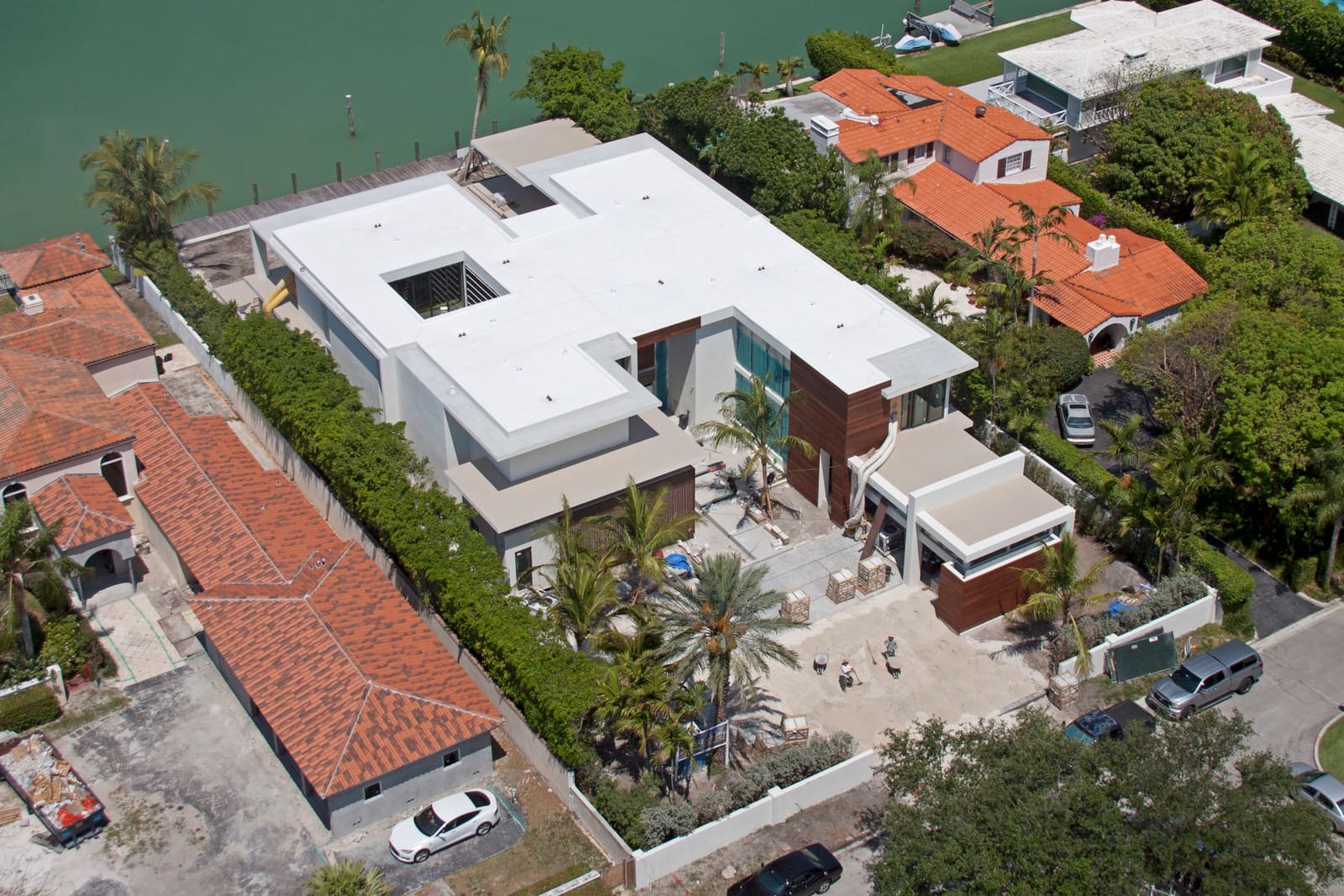
Flat membrane is the right call on Coconut Grove's contemporary bayfront homes with extensive low-slope surface, on the modernist new builds north of US-1 where large flat sections are a defining architectural feature, and on the mid-century flat-roof additions across the Grove's older inventory. Hot-air-welded TPO or PVC at the right thickness handles the canopy debris load, the bayfront wind exposure, and the City of Miami Historic Preservation review where applicable.
Three registers, one material category.
Coconut Grove flat work splits into three registers. Bayfront contemporary properties along S Bayshore Drive carry significant low-slope surface area on terraces, decks, and architectural roof sections.
The modernist new construction north of US-1 carries large flat-roof surface area as a defining feature. The Old Grove cottages and mid-century homes carry flat-roof additions and rear elevations that often need preservation-compatible specification.
The dominant contemporary spec is TPO, a thermoplastic polyolefin membrane with hot-air-welded seams. PVC is the longer-lifespan alternative on rooftop terraces with foot traffic. Modified bitumen is the preservation-compatible spec for Old Grove and mid-century work where a multi-ply assembly is the era-appropriate choice.
What stays consistent across systems is the seam discipline. Every seam hot-air-welded, every termination probe-tested at install, every penetration flashed in metal rather than caulked.
The Grove's dense banyan canopy drops more leaf and sap onto flat surfaces than open-roof areas, which is why we size drainage one increment up from minimum and build in secondary overflow on every install.
What gets installed,
and why.
The six numbers and credentials that define a Coconut Grove flat install. Verified against current NOA filings and manufacturer documentation.
TPO is the contemporary spec across modernist Grove new builds. PVC suits bayfront terraces with foot traffic and rooftop deck membrane. Modified bitumen suits Old Grove and mid-century preservation work where a multi-ply assembly is era-appropriate.
60-mil is the workhorse Grove spec. 80-mil delivers longer service life on rooftop decks and bayfront terraces with mechanical units or foot traffic. PVC at comparable thickness for the highest-traffic applications.
Properly installed 60-mil TPO runs 15+ years in inland Grove exposure, and 80-mil or PVC buys additional margin on bayfront terraces. Seams and terminations are the defining failure points; we hot-air-weld every seam and probe-test at install.
Mechanically fastened assemblies exceed the Miami-Dade HVHZ 175 mph minimum field rating with the correct fastener pattern. Bayfront properties carry the same baseline; CCCL is generally not in play this far from the open coast.
Membrane systems from our certified manufacturers carry material warranties per manufacturer terms; Istueta backs every replacement with an up-to-12-year workmanship warranty when installed with the correct fastener pattern and seam-weld documentation.
White TPO reflects the majority of incident solar radiation. On Grove modernist new builds with large flat sections, the cool-roof rating measurably drops AC load through the summer.
The four things the Grove
asks of every flat install.
Bayfront contemporary inventory
The contemporary properties along S Bayshore Drive and the bayfront blocks carry significant flat-membrane surface area on terraces, decks, and architectural roof sections. We hot-air-weld every seam, probe-test, and document the assembly for the bayfront wind exposure.
Old Grove and mid-century preservation
Old Grove cottages with original flat-roof additions and mid-century homes with low-slope rear elevations often route through Historic Preservation review. Modified bitumen is the era-appropriate spec for these properties; we file the package with the preservation office.
Modernist new builds north of US-1
The modernist new construction north of US-1 carries large flat-roof surface areas as a defining architectural feature. We spec 80-mil TPO or PVC on these projects for the longer rated lifespan, with white membrane for the cool-roof energy benefit.
Drainage and the banyan canopy
The Grove's dense banyan canopy drops leaf and sap onto flat surfaces at higher rates than open-roof areas. We size scuppers and internal drains generously, with secondary overflow built in, so seasonal debris cannot block the primary drainage path.
Two reviews, parapet detail in focus.
Every Coconut Grove flat install carries the standard Miami-Dade HVHZ wind permit from the City of Miami Building Department, with the current Notice of Acceptance on the membrane, the fasteners, and the seam-weld protocol. Properties in the designated Conservation overlays route through the City of Miami Historic Preservation Office for any visible parapet, scupper, or coping change before the building permit clears.
What the preservation office typically reviews on a flat-roof project is the visible parapet detail rather than the membrane itself, which is rarely seen from the street. We file the package with parapet cap samples, coping detail drawings, and any visible roof-structure plans (HVAC screens, deck guards).
External references for verification:
- City of Miami Building Department: permit, inspection, and HVHZ wind code reference.
- Miami-Dade County Product Approval (NOA) Search, for verifying the active NOA on any product specified.
- manufacturer TPO membrane: manufacturer documentation, warranty terms, and certified installer directory.
Coconut Grove flat, answered.
TPO is the contemporary spec and what we install on modernist new builds and most contemporary flat-roof replacements. Modified bitumen (SBS or APP, torch-applied or self-adhered) is the right call when the Historic Preservation Office favors a multi-ply assembly for Old Grove or mid-century preservation work. We bring both samples to the preservation hearing where applicable.
Bayfront Grove flat roofs carry the same Miami-Dade HVHZ wind rating as inland properties (175 mph minimum field uplift). Wind-driven rain exposure is meaningfully higher near the water, which is why we hot-air-weld every seam and probe-test at install. The membrane itself handles the exposure; the seams and terminations are where most failures happen, and we document both at close-out.
Visible flat-roof changes in the Grove's designated Conservation areas route through the City of Miami Historic Preservation Office before the building permit clears. What the office reviews is typically the parapet cap, scupper detail, and any visible coping, not the membrane itself. We file the package with material samples and detail drawings for the visible elements.
Properly installed 60-mil TPO runs 15+ years, and 80-mil or PVC adds margin on the hardest-working sections. Inland Grove exposure is friendly to flat membrane: less UV than the open coast, less wind-driven rain than the Beach, and the banyan canopy actually shades the surface and slows UV degradation.
The Florida Building Code requires primary drainage sized to the roof area plus secondary overflow that activates if the primary is blocked. We size both generously on Grove properties because the banyan canopy drops more debris than open-roof areas. Scuppers, internal drains, and overflow scuppers all sized one size up from minimum is our standard spec.
Insurers price Miami-Dade windstorm premiums against documented wind-uplift rating and the wind mitigation report at close-out, not against material category. A current Miami-Dade NOA assembly with proper fastening pattern documented at install is what your insurer looks for. We provide the wind mitigation report on every Coconut Grove flat install.
For an Old Grove contemporary rebuild, 80-mil TPO is the recommendation. The extra mil thickness delivers a meaningfully longer service life under canopy shade and traffic, and the white surface drops the AC load on a contemporary home with large glass exposure. Where the property is in a Conservation area, the parapet detail still routes through preservation review.
A Coconut Grove flat roof,
built for the parapet.
We will be on your roof within ten business days. Bring us the parapet detail, the Conservation overlay status, and the drainage plan if you have one. We will handle the permit, the preservation review, and the work.