
Ricardo did a great overall job explaining everything to us. Honest and straight forward.
2 months ago
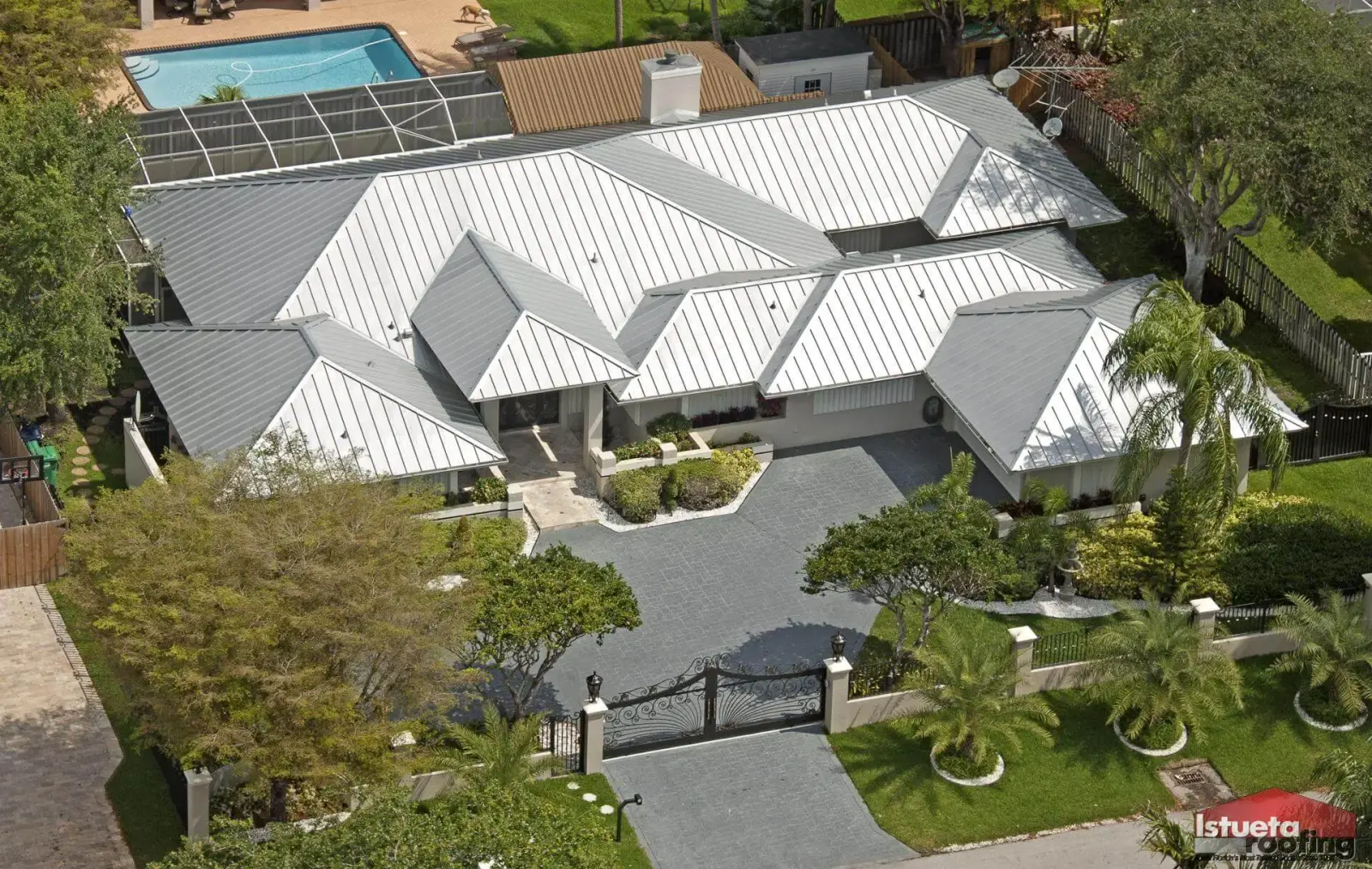
Galvalume roofing in Coconut Grove combines the corrosion resistance of aluminum with the strength of steel. The material's zinc-aluminum coating forms a protective barrier against salt air and subtropical weather. We've installed metal roofing systems across South Florida since 1985, working with homeowners who need long-term performance in coastal conditions.
Galvalume roofing performs well in Coconut Grove because the zinc-aluminum coating resists the corrosion that affects uncoated steel in salt air. The material weighs less than tile, which matters on older homes with limited structural capacity. Standing-seam profiles shed water quickly under the tree canopy that covers much of the neighborhood.
The zinc-aluminum coating outperforms pure zinc (galvanized) in salt air.
Coconut Grove sits between the bay and the interior neighborhoods. Salt air moves inland from the water. The tree canopy holds moisture. Galvalume's coating protects the steel substrate from both.
The neighborhood includes Mediterranean revival homes from the 1920s, mid-century modern structures, and contemporary builds. Galvalume profiles range from standing-seam panels to corrugated sheets. The material adapts to different architectural registers without looking out of place.
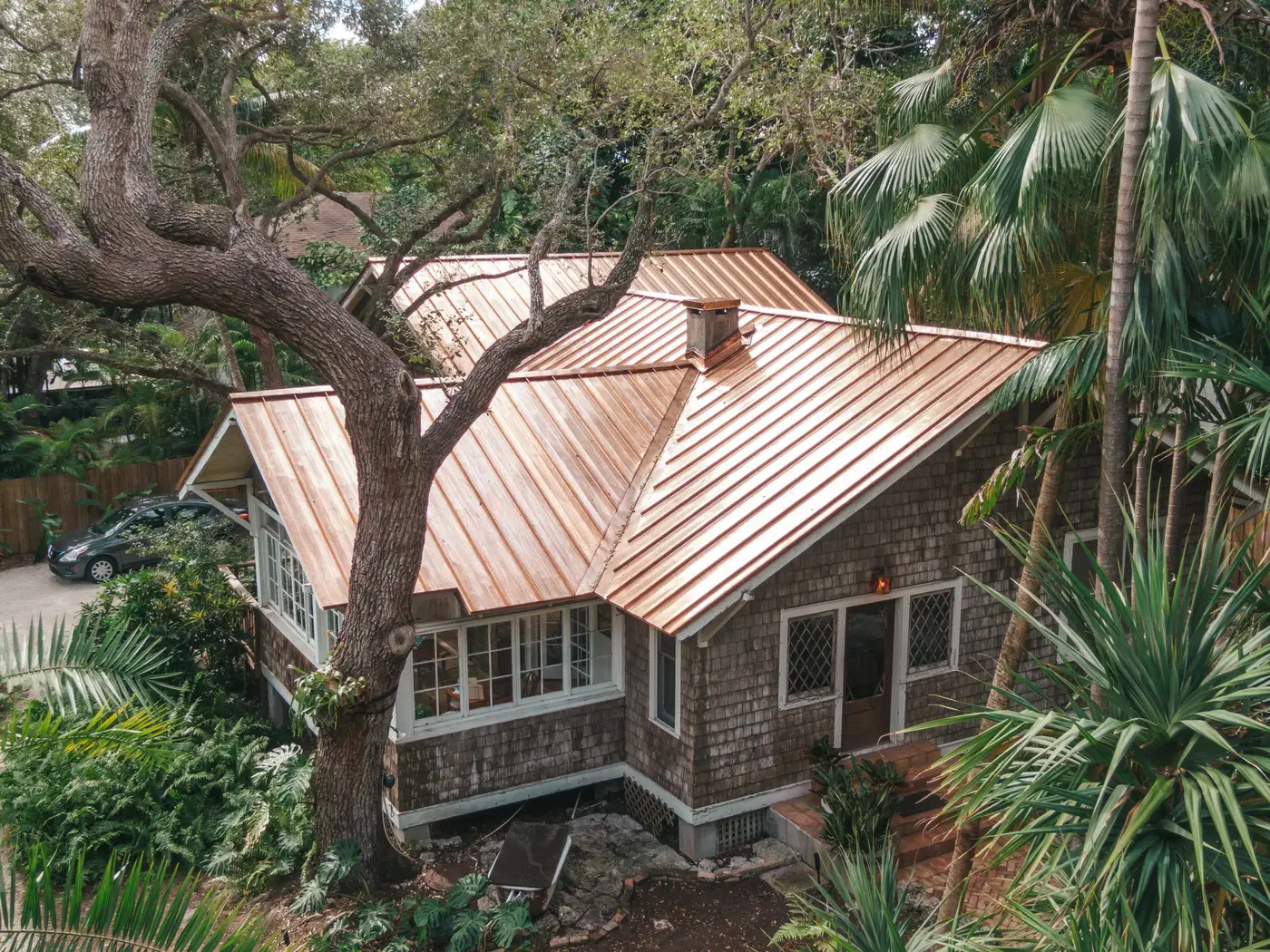
Many Coconut Grove homes were built before modern structural codes. Galvalume weighs roughly 1.5 pounds per square foot in standing-seam form. Concrete tile weighs 9 to 12 pounds per square foot. The weight difference matters when replacing a roof on a home with limited rafter capacity.
The zinc-aluminum coating on galvalume forms a barrier layer. When the coating is scratched, the zinc component sacrifices itself to protect the steel underneath. This self-healing property extends the material's service life in coastal exposure.
Coconut Grove is Miami's oldest continuously inhabited neighborhood, and its older homes bring a ventilation problem galvalume installers have to respect. Framing from the 1890s through mid-century was rarely detailed for the airflow a metal roof wants, and trapped attic moisture corrodes galvalume from the underside as surely as salt air attacks it from above. We confirm the deck is dry and the attic breathes before any panel goes down, because a coating that self-heals on the surface cannot fix moisture working from within.
The bay on the neighborhood's eastern edge makes dissimilar-metal contact the other thing to watch. On Grove roofs within a half-mile of the water, we isolate the galvalume from any incompatible metal at flashings and fasteners, because salt air turns a careless copper-to-galvalume or bare-steel junction into a corrosion cell quickly. Held to compatible metals, the AZ-55 coating carries its own defense, with the aluminum sealing scratches while the zinc protects the steel galvanically.
Galvalume also pays back under the Grove's heat and insurance math. A white or light PVDF finish reflects roughly 60 to 70 percent of solar radiation, which eases the cooling load on homes shaded unevenly by the canopy, and a standing-seam assembly holding Miami-Dade NOA approval supports the wind-mitigation credit that lowers the annual insurance cost. On a bay-front lot open to the water, that wind rating is not a formality.
| Material | Corrosion resistance | Weight (psf) | Cost range | Patina / finish change |
|---|---|---|---|---|
| Galvalume | High (zinc-aluminum coating) | 1.3–1.8 | $$ | Minimal (painted finishes stable) |
| Aluminum | Very high (self-healing oxide) | 0.5–0.7 | $$$ | Minimal (painted finishes stable) |
| Copper | Excellent (forms protective patina) | 1.5–2.0 | $$$$ | Yes (green verdigris over time) |
| Galvanized steel | Moderate (zinc coating only) | 1.5–2.0 | $ | Coating degrades faster in salt air |
Galvalume sits between galvanized steel and aluminum in cost. The zinc-aluminum coating outperforms pure zinc (galvanized) in salt air. Aluminum is lighter and more corrosion-resistant but costs more per square foot. Copper develops a patina that some homeowners want and others avoid.
Standing-seam galvalume uses concealed clip fasteners. Clips attach to the roof deck; panels snap or slide into the clips. This avoids penetrating the panel face, which reduces leak points.
We measure the roof plane and order panels cut to length. Factory-cut panels eliminate horizontal seams on most residential roof slopes. Fewer seams mean fewer potential leak paths.
Underlayment goes down first. We use synthetic underlayment rated for high-temperature exposure. Metal roofs can reach 150°F in direct sun. The underlayment has to handle that heat without degrading.
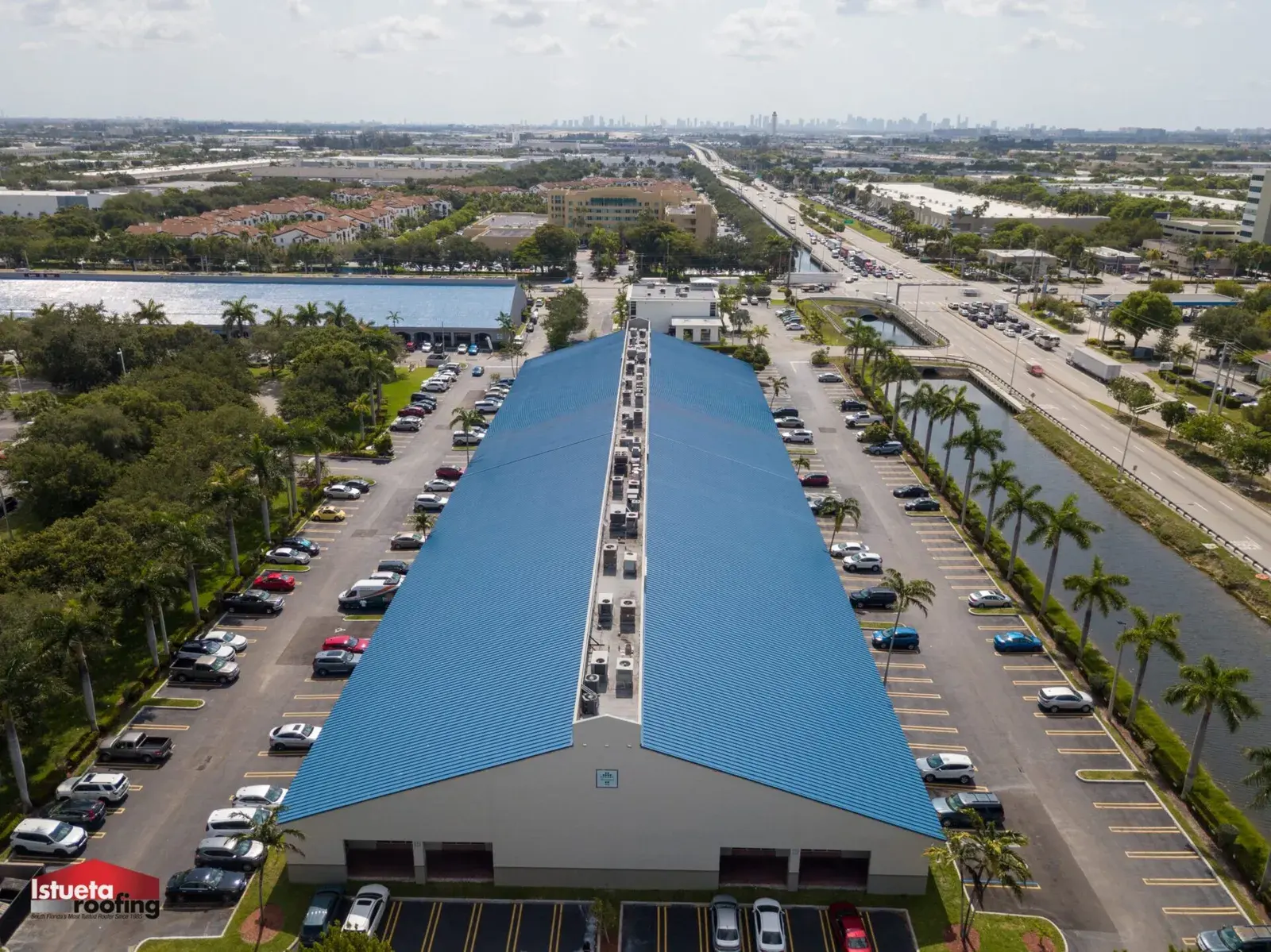
Self-adhering ice-and-water shield goes down at the valleys, eaves, and every penetration before the field underlayment. Miami sees no ice, but the membrane matters here for the reverse reason: it seals around fasteners and transitions against the wind-driven rain that a bay-front storm can force upslope past a panel lap.
Panel length is the other Grove-specific variable. Standing-seam galvalume expands and contracts enough that runs past 40 feet get engineered expansion joints, because a long panel locked rigidly at both ends will oil-can or pull its clips as it moves. We size the runs and the joints to the roof plane, then set the clips to the manufacturer's torque so they hold the seam without pinching off the thermal movement the panel depends on.
Clips fasten to the deck at 24-inch intervals along each panel seam. The clip spacing is specified in the manufacturer's installation manual and the Miami-Dade NOA. Deviating from the spacing voids the wind-uplift rating.
Panels interlock at the seam. The male leg of one panel slides into the female leg of the adjacent panel. A seaming tool crimps the seam closed. The crimped seam is weathertight and mechanically locked.
Flashing details matter. Valleys, ridges, rakes, and eaves require custom-formed trim. We fabricate trim on-site using a brake. The trim matches the panel profile and overlaps the panel edge by at least two inches.
Penetrations (vents, pipes, chimneys) get individual flashing boots. The boot base slides under the upslope panel and over the downslope panel. Sealant goes at the boot-to-panel interface. We avoid relying on sealant alone; mechanical overlap is the primary seal.
Galvalume roofing needs periodic inspection but minimal hands-on maintenance. The coating protects the steel; the homeowner's job is to keep debris off the roof and check fasteners and trim.
Annual inspections catch issues early. We look for loose trim, caulk failure at penetrations, and debris accumulation in valleys. Tree branches that rub against panels can wear through the coating. Trimming overhanging branches prevents that wear.
Under the Grove's oak and ficus canopy, that debris cadence runs closer to twice a year than once. Leaves and seed pods packed in valleys hold moisture against the coating, so we clear valleys and gutters on that rhythm and touch up any scratch that reaches bare steel within a few months, before salt air can start a corrosion spot the coating would otherwise have sealed on its own.
Painted galvalume finishes (Kynar 500 / PVDF) resist fading and chalking. The finish warranty typically runs 25 to 40 years depending on the manufacturer. Mill-finish galvalume (bare metal) develops a matte gray patina over time. The patina is stable and doesn't indicate failure.
Those numbers carry manufacturer names on the systems we install. The McElroy Metal Galvalume Limited Warranty covers the AZ-55 substrate against perforation, the McElroy Metal Kynar 500 PVDF warranty covers the factory finish against fade, chalk, and peel, and the Sheffield Metals 40-Year Limited COOLR paint warranty applies on the AZ50 substrate option. Our own workmanship warranty backs the installation, so a Grove homeowner ends up with workmanship, substrate, and color coverage rather than a single line.
Fastener maintenance applies to exposed-fastener profiles (corrugated, R-panel). Screws can back out over time due to thermal expansion and contraction. We check fastener tightness during inspections and replace any that have pulled loose or show rust staining.
We offer a maintenance program for galvalume and other metal roofing installations. The program includes annual inspections, minor repairs (trim reattachment, sealant touch-up), and documentation of the roof's condition over time. Documented maintenance supports warranty claims and provides a record for future buyers.
Galvalume roofing costs more upfront than asphalt shingles but less than copper or high-end tile. The investment scales with panel profile, finish type, and roof complexity. Standing-seam systems with painted finishes cost more than corrugated mill-finish panels.
We provide financing options for roofing projects. Financing terms depend on the lender, the project cost, and the applicant's credit profile. Rates and approval criteria vary. Contact us to discuss current financing programs and application requirements.
The long-term value calculation includes the material's service life. Galvalume roofing can last 30+ years with proper installation and maintenance, while asphalt shingles typically last 15+ years in South Florida. A single galvalume roof can therefore outlast two or three asphalt roofs installed over the same span, which is the trade-off homeowners weigh against galvalume's higher upfront cost.
Energy performance affects operating cost. Metal roofs with reflective coatings reduce cooling load. The reduction depends on the roof's color, the attic ventilation, and the home's insulation. Light-colored galvalume reflects more solar radiation than dark asphalt.
Coconut Grove falls under Miami-Dade County building jurisdiction. Roof replacements require a building permit. The permit application includes structural calculations, product approvals, and installation drawings.
Metal roofing products must carry a Miami-Dade Notice of Acceptance (NOA) for use in the High-Velocity Hurricane Zone. The NOA specifies the panel profile, fastener type, fastener spacing, and deck attachment requirements. Installers must follow the NOA to the letter. Deviations void the approval.
We handle the permit application and coordinate inspections. The building department inspects the roof deck, the underlayment, and the completed installation. Inspections typically occur at three stages: deck prep, underlayment, and final.
Historic designation affects some Coconut Grove properties. Homes in local historic districts may require design review before a roof replacement. The review board evaluates the proposed material's visual compatibility with the home's architectural style. Metal roofing is often approved when the profile and color match the original roof or fit the home's design intent.
Bayshore Drive and the older Coconut Grove waterfront blocks frequently fall within overlay districts that add a second review layer for any roof scope visible from the right-of-way. Design submissions usually need a panel sample, a finish chip, and a roof-plane diagram showing seam direction. Approvals typically take 3 to 6 weeks depending on review-board calendar.
Coconut Grove's mature tree canopy also shapes the install sequence. Standing-seam galvalume panels arrive in lengths up to 40 feet, which means staging frequently requires temporary canopy clearance or rooftop crane positioning to avoid damaging mature live oaks and gumbo limbos. We walk every site before delivery, mark protected trees, and coordinate panel staging with the homeowner so the salt-air-resistant aluminum-zinc coating reaches the deck without scratches from branch contact during hoist. Project timelines from permit submission through final inspection typically run 4 to 8 weeks depending on department backlog, with a 5 to 7 day install window once panels and trim are on-site.
For more information about galvalume roofing, see our galvalume roofing guide.
Schedule a no-pressure consultation. We walk your roof, review your options, and give you a detailed written proposal.