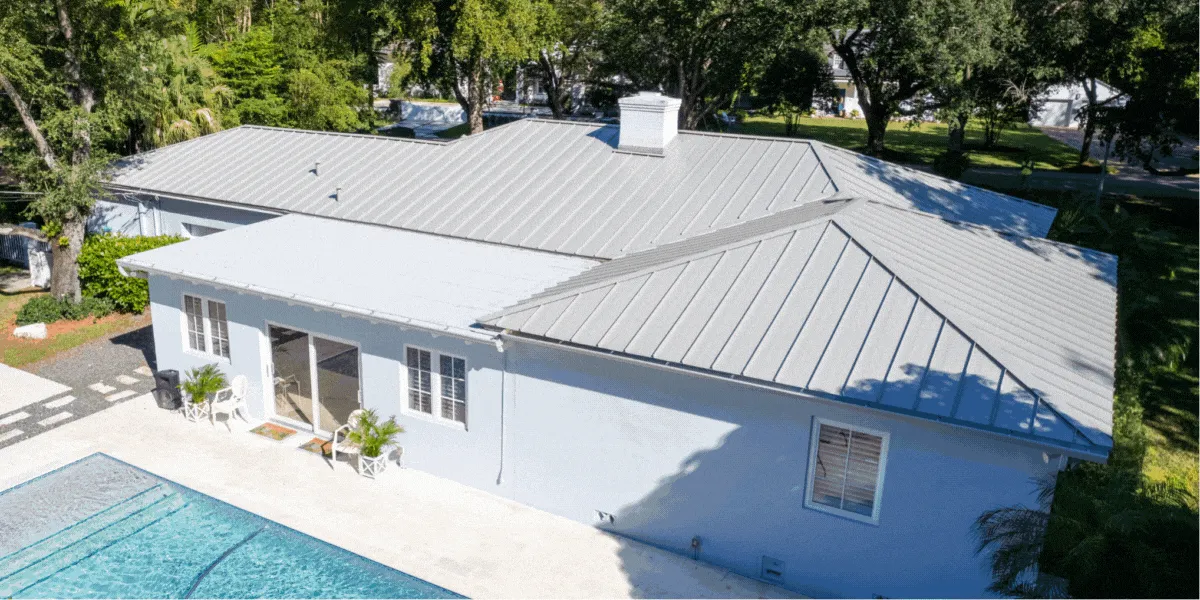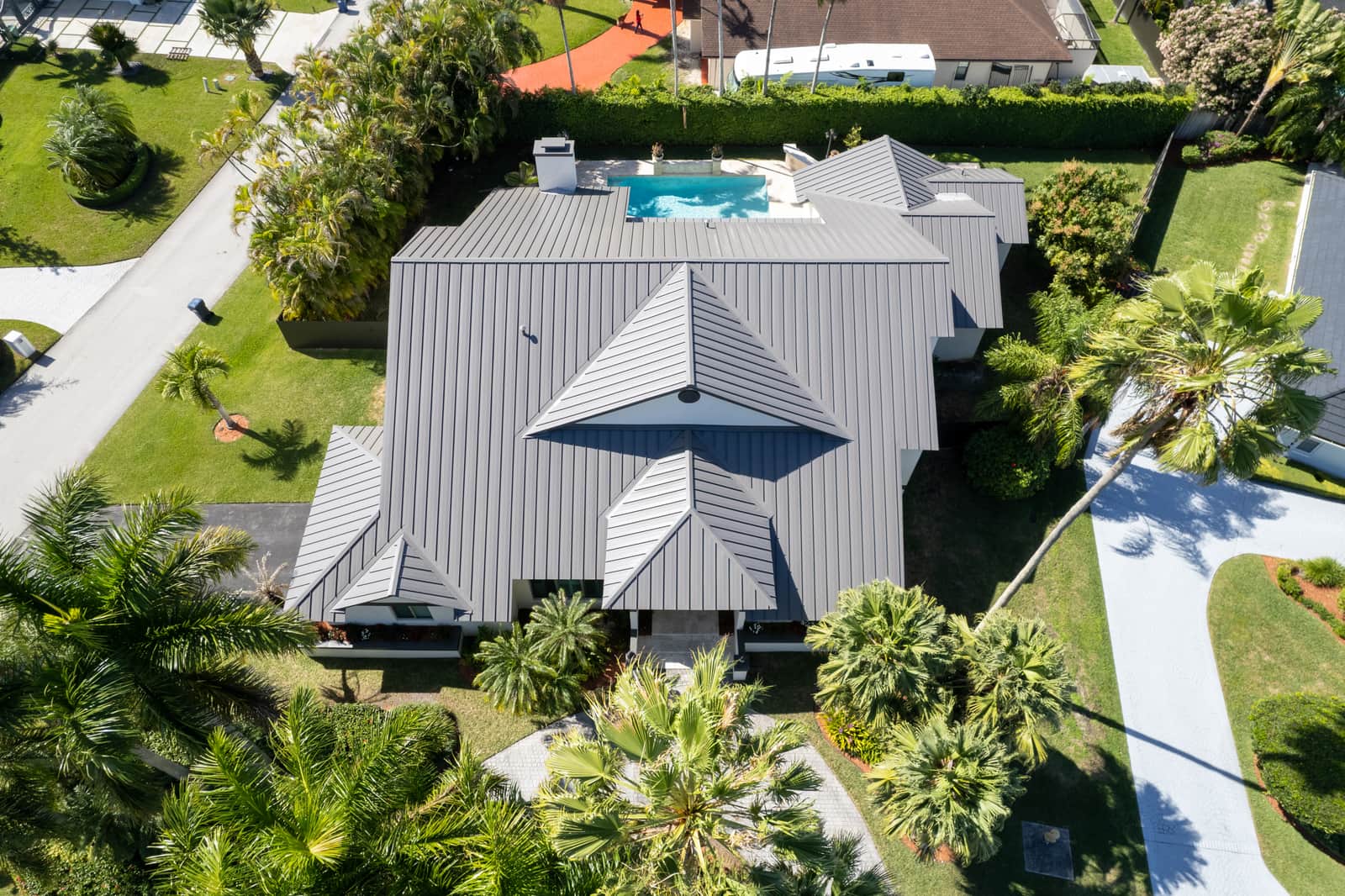
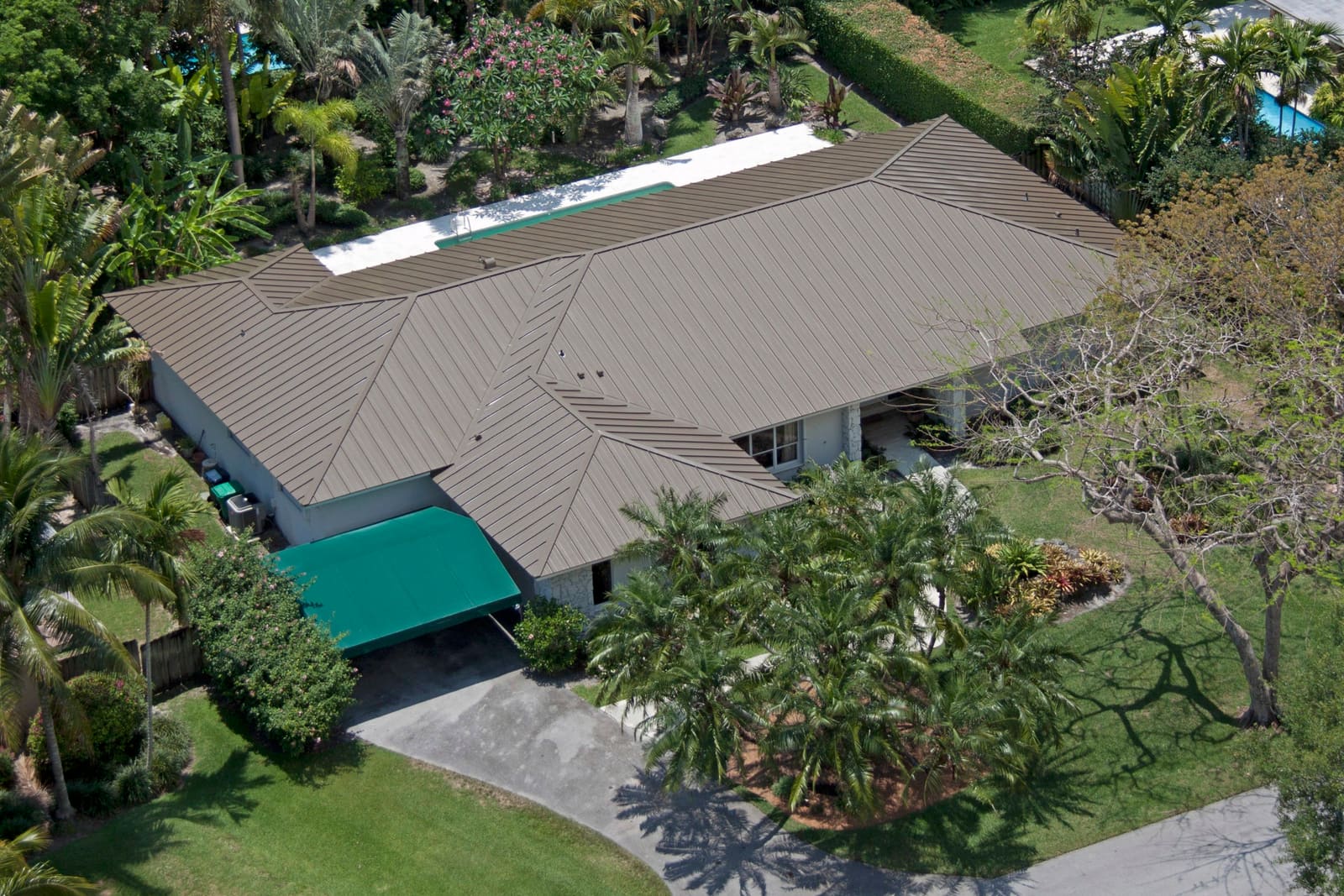
A homeowner comparing roofing quotes in South Florida will eventually hit a term that shows up on almost every proposal for a durable, storm-rated roof: standing seam metal. The name describes a specific panel system, not just "a metal roof" in general, and the difference matters when you're weighing cost, wind performance, and how the roof will hold up under Miami's sun and hurricane season. This post explains what standing seam construction actually is, how its panels and seams work, how it compares to shingles and other metal profiles, and what to consider before choosing it for a home in this climate.
Quick answer
A standing seam metal roof is a metal roofing system made of vertical panels joined by raised seams that lock together above the roof surface, rather than overlapping flat like shingles. Panels typically run about 16 inches wide with a raised profile near 1.5 inches, and the fasteners sit hidden beneath the seam, so no exposed screw heads are left to loosen or leak over time. This construction sheds water fast, handles wind uplift well, and holds up under the sun and salt air common to South Florida.
For homeowners comparing roofing options, it's the metal system most associated with long service life and low maintenance. Actual performance depends on correct installation and the panel gauge and finish chosen for the project.
What you should know
A standing seam metal roof is defined by its concealed fastening system. Individual metal panels run vertically from ridge to eave, and each panel's edges fold upward into raised seams that interlock with the panel next to it. The fasteners that hold the roof down sit under those seams, not exposed to sun and rain.
That is the main structural difference between this system and exposed-fastener metal roofing, where screws penetrate the panel face and sit under a washer.
Panel dimensions and profile shape matter more than most homeowners expect. A common configuration uses panels roughly 16 inches wide with a seam profile that stands about 1.5 inches above the panel surface. The width determines how many seams run across a given roof area, and the seam height affects how well the panel sheds water during wind-driven rain, a relevant factor in South Florida storm conditions.
Wider panels mean fewer seams and fewer potential water paths, but narrower panels with more seams can handle thermal expansion and contraction more evenly across large roof planes.
The metal itself is typically aluminum, steel, or occasionally copper, coated or finished to resist corrosion. Panels are installed with clips that allow the metal to expand and contract with temperature changes without buckling or pulling loose. This is part of why the fastener concealment matters for long-term performance rather than just appearance.
Not every installer works with every panel system or manufacturer specification, and correct installation depends on matching panel profile, clip spacing, and fastening pattern to the manufacturer's engineering. That detail becomes more important once you compare standing seam against other roofing options, covered in the next section.
How it works
A standing seam metal roof gets its name from the way adjacent panels join. Each panel has a raised vertical leg on both edges, and installers fasten those legs together with a mechanical seam that stands up above the flat surface of the panel, rather than lying flush like a screw-down metal roof. That raised seam is the entire point: it keeps every fastener hidden under the interlocking joint, so no exposed screw heads sit on the roof surface where water can pool or seals can wear out.
Installers cut and fabricate panels to run the full length of a roof slope wherever possible, so a single panel spans from ridge to eave without a horizontal joint. Fewer joints mean fewer places for water to find a way in.

Fastening method changes depending on the panel and clip system a manufacturer specifies. Concealed clips allow panels to expand and contract with temperature swings without buckling, which matters in a climate that moves from humid summer heat into cooler, drier winter nights. Underlayment, flashing details around penetrations such as vents, skylights, and chimneys, and edge metal at eaves and rakes all get specified to match the panel system, since a standing seam roof performs as an assembly rather than a single product.
What changes from one job to another is mostly panel gauge, finish, and clip spacing, chosen based on wind exposure, roof pitch, and the manufacturer's engineering requirements for the specific installation.
How it compares
| Feature | Standing seam metal | Architectural shingles | Tile (concrete/clay) |
|---|---|---|---|
| Fastener exposure | Concealed clips, no exposed fasteners | Nailed, exposed to weathering | Exposed or mortar-set |
| Panel/unit size | Panels roughly 16 inches wide with a raised seam profile (about 1.5 inches) | Shingles roughly 12 x 36 inches | Varies by profile |
| Wind/water performance in HVHZ | Interlocking seams shed water without relying on adhesive strips | Depends on sealant-strip bonding, which degrades over time | Rigid but heavy; vulnerable if fasteners or mortar fail |
| Typical lifespan | Longest-lived of the three when installed correctly | Shortest among the three | Long-lived but brittle under impact |
| Maintenance | Minimal; seams and fasteners are protected | Periodic granule loss, seal-strip inspection | Cracked tile replacement, mortar upkeep |
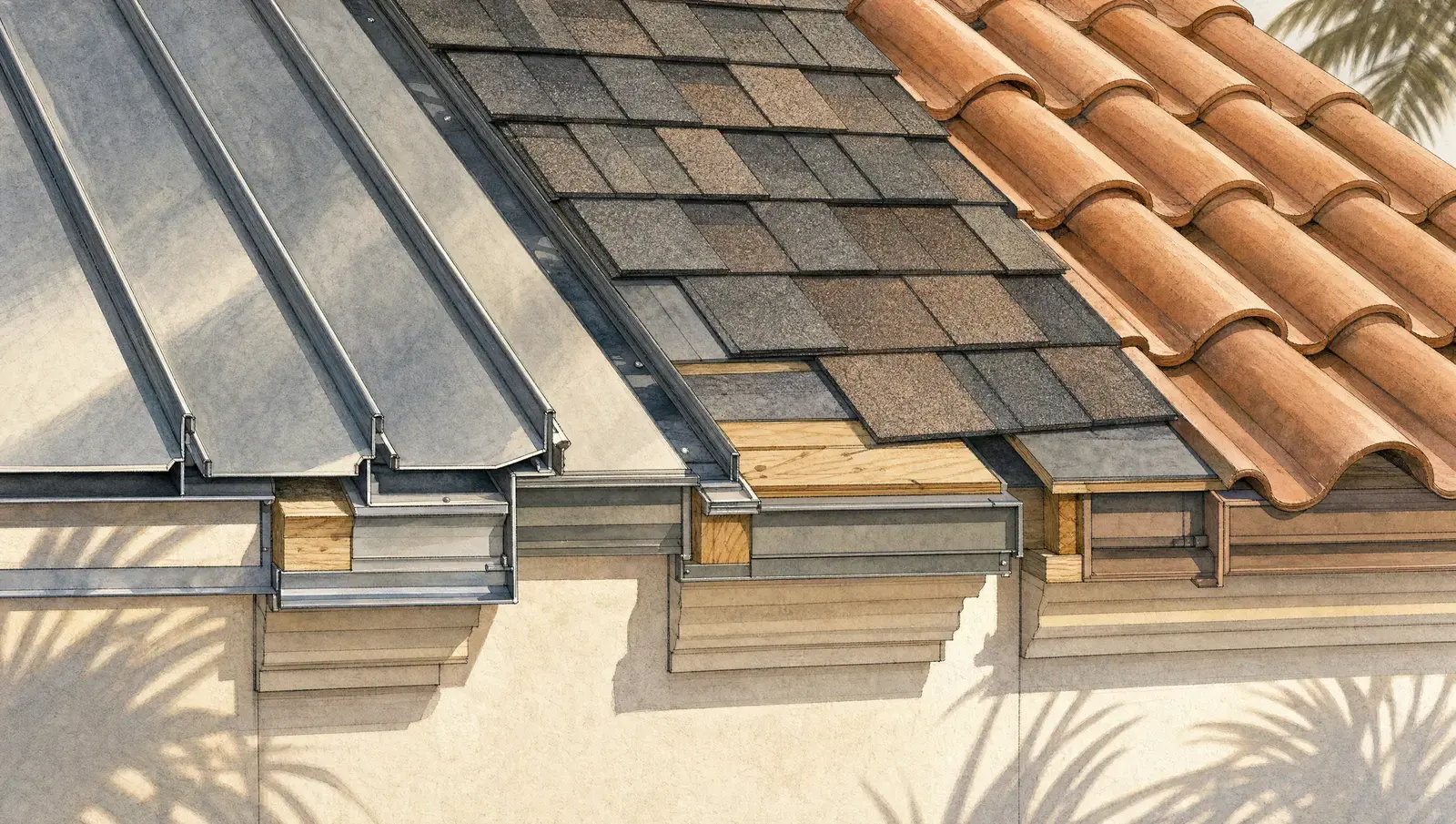
The right choice depends on budget, roof slope, and how long the homeowner plans to own the property.
How to decide
Choosing a standing seam metal roof comes down to matching the right contractor to the right installation details, since the panel material itself performs consistently across reputable manufacturers. Start by asking direct questions. Who manufactures the panels, and is the contractor a certified applicator for that manufacturer?
Istueta Roofing, for example, holds certified applicator status with Berridge, PAC-CLAD, and Englert, which means the installation methods are reviewed against the manufacturer's own standards rather than left to guesswork. Ask what panel width and profile height the crew intends to use, and why. A 16-inch panel width with a 1.5-inch seam profile is common for a reason: it balances thermal movement, wind resistance, and clean sightlines, but a contractor should be able to explain the choice rather than default to it without comment.
Watch for failure modes tied to shortcuts: panels fastened with exposed screws instead of concealed clips, seams hand-crimped inconsistently, or flashing details treated as an afterthought around penetrations and edges. These are the points where metal roofs actually fail, not in the field of the panel itself.
Some judgments are yours to make. You know your budget, how long you plan to own the property, and whether the roofline's appearance matters to you. Defer to a professional on load calculations, fastening patterns, underlayment selection, and code compliance, since these carry real consequences if miscalculated.
A contractor who welcomes scrutiny of licensing, manufacturer certification, and warranty terms (workmanship warranties up to 12 years, subject to installation and manufacturer terms) is signaling confidence in their own work. One who deflects those questions is telling you something too.
In South Florida specifically
Miami sits inside the High Velocity Hurricane Zone (HVHZ), a designation covering Miami-Dade and Broward counties where the building code imposes stricter wind and impact standards than most of the country. Roofing products used here need a Miami-Dade Notice of Acceptance (NOA), which documents that a specific panel profile and installation method have been tested and approved for use in these conditions. A standing seam system installed without matching NOA documentation on file is a liability for the homeowner, not just a paperwork gap, since it can complicate insurance claims and resale inspections.
Coastal exposure adds a second layer to the decision. Salt-laden air accelerates corrosion on fasteners and lower-grade metals, which is why panel material and finish matter as much as the seam profile itself. Homes closer to the water line face more aggressive weathering than those further inland, even within the same county.

Wind uplift is the other local variable. Standing seam's continuous panel run and concealed fastening give it an aerodynamic advantage over exposed-fastener systems during hurricane-force gusts, provided the panel width and profile match what the NOA specifies for the site's wind exposure category.
Permitting in Miami-Dade and Broward follows this same HVHZ framework, so plan review typically checks the NOA number against the submitted panel spec before issuing approval. Working with an installer who holds current manufacturer certification for the products being specified, among them Berridge, PAC-CLAD, and Englert, reduces the back-and-forth during that review and keeps the paperwork aligned with what code officials expect to see.
Related reading: 9 considerations to keep in mind when buying a metal roof and 3 warning signs roof replacement.