Tile Roofing · City of Miami Beach · ZIP 33109, 33139, 33140, 33141
Tile roofing on Miami Beach.
Hand-laid Ludowici and Verea clay on the private estate islands (Star, Palm, Hibiscus, Sunset) and the Faena District. Filed under the City of Miami Beach with 316 stainless fastener metallurgy and CCCL documentation where the property is oceanfront.
What makes tile roofing the right choice for Miami Beach estates?
Tile is the right call on Mediterranean revival estates across the private islands and the Faena District, where the architecture asks for hand-laid clay and the property warrants a generational roof. The tile itself lasts 30+ years and is inert to salt exposure; the technical work on the Beach is fastener metallurgy and CCCL documentation, where we spec 316 stainless and copper throughout.
Why tile on Miami Beach
The estate spec, on a barrier island.
Miami Beach tile is concentrated on the private estate islands: Star Island, Palm Island, Hibiscus Island, and the Sunset Islands. The Faena District contributes additional prominent single-family estates. The bayfront blocks along the rest of the island carry a smaller volume of Mediterranean revival tile inventory.
The dominant spec is hand-laid Ludowici Elite Crown clay in Spanish barrel or S-tile profile. Verea Authorized Installer profiles serve the secondary inventory. Roof complexity is typically higher than inland tile work because Beach estates carry more architectural detail and more visible roof surface area.
What separates Beach tile work from inland tile work is fastener metallurgy and CCCL documentation. Direct ocean and bay salt exposure corrodes galvanized fasteners within a few years.
We spec 316 stainless steel screws, copper hurricane clips, and 16-oz hand-formed copper flashings throughout the windward elevations on every Beach tile project. Oceanfront properties at or seaward of the Coastal Construction Control Line carry additional state-level specifications we file alongside the HVHZ documentation.
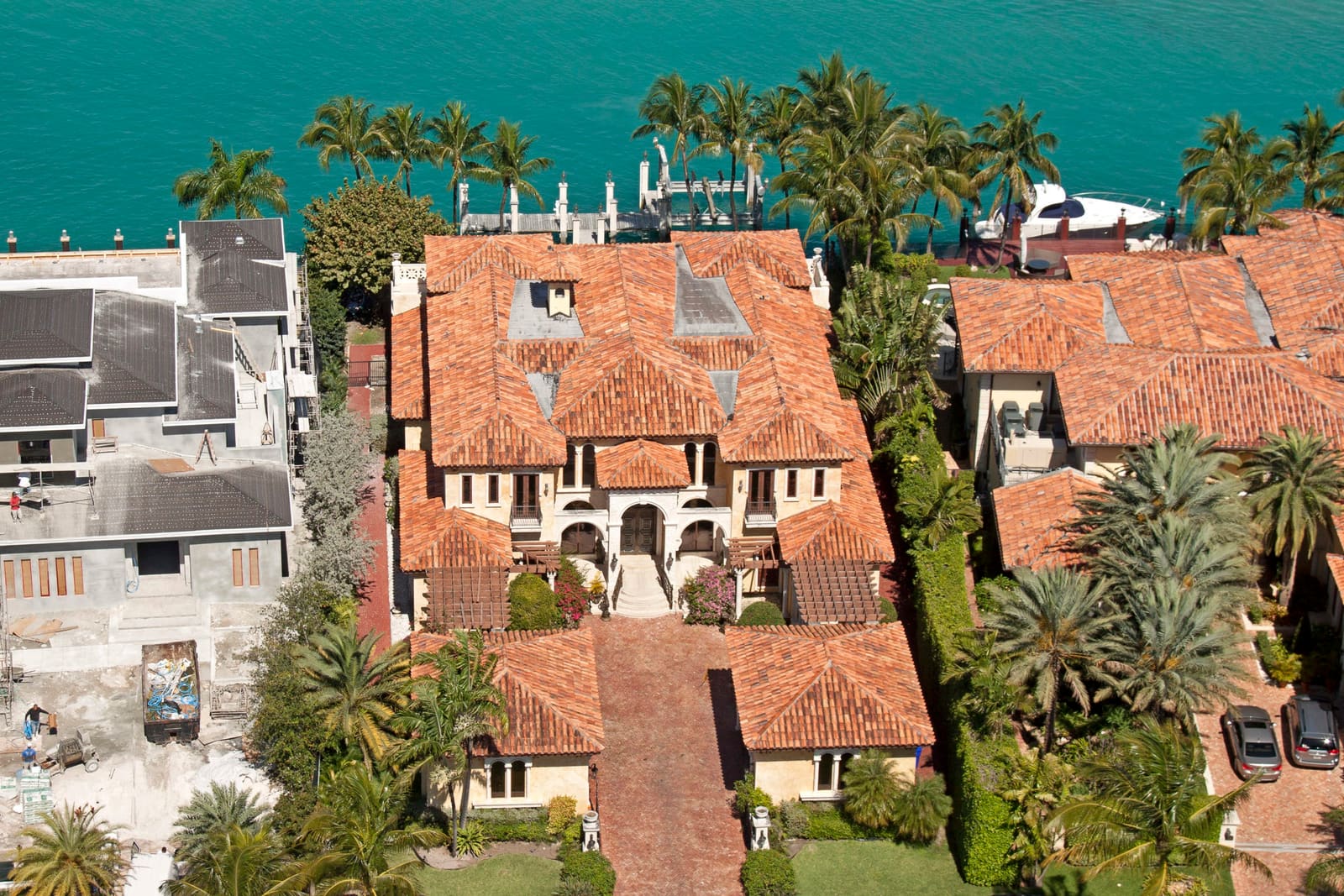
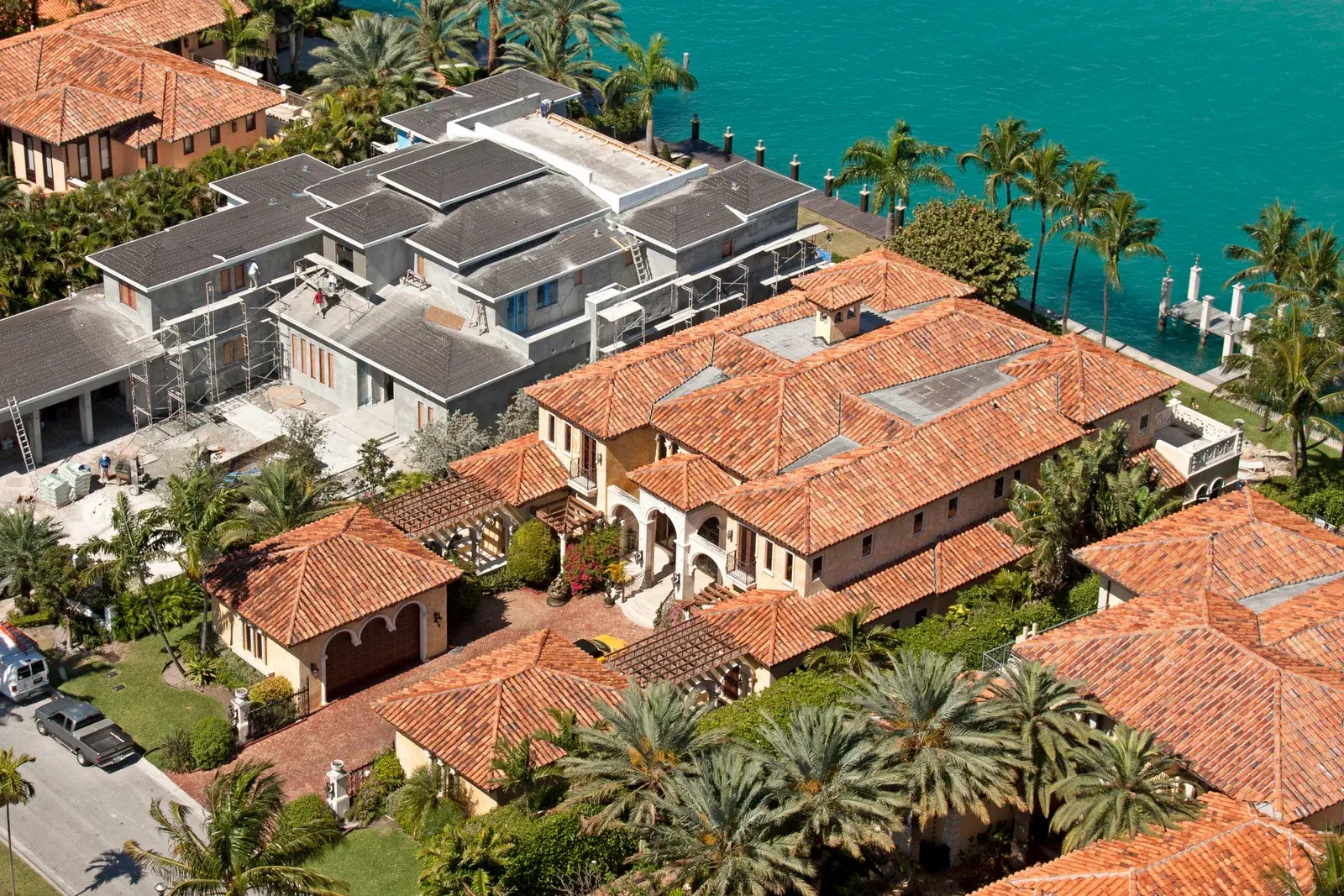
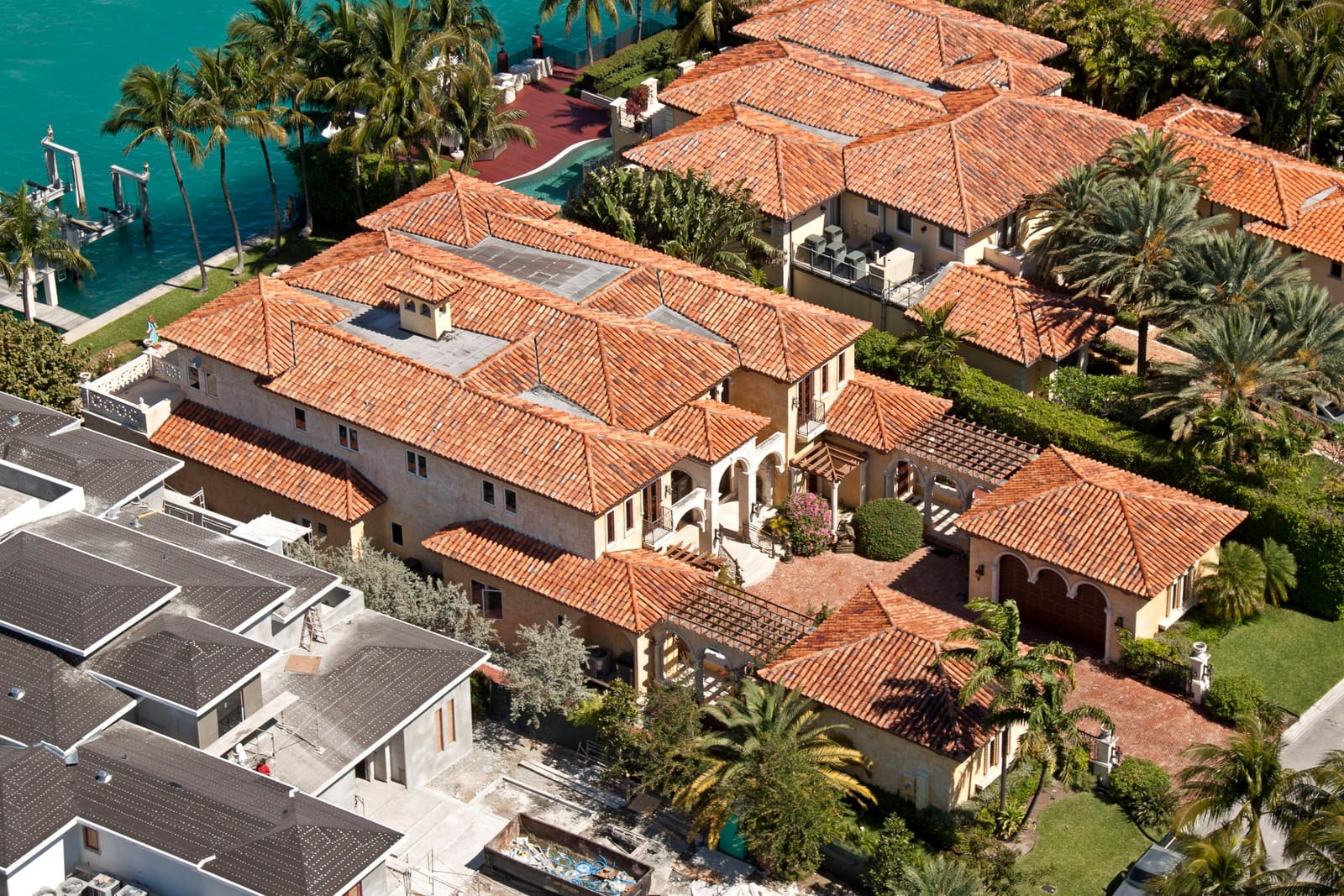
Hand-laid terracotta barrel tile across a row of waterfront estates.
Two-piece Spanish barrel clay tile on a waterfront estate, with hand-formed copper valleys and 316 stainless fasteners on the windward elevations.
Miami Beach Tile Specifications
What gets installed, and why.
The six numbers and credentials that define a Miami Beach tile install. Verified against current NOA filings and manufacturer documentation.
Lifespan
30+ years
The clay itself is the longest-lived part of the system. The defining service interval is the peel-and-stick underlayment beneath, replaced once per generation. Direct salt exposure does not shorten clay tile lifespan; the accessories carry the corrosion.
Wind rating
180+ mph uplift
Exceeds the Miami-Dade HVHZ 175 mph minimum. CCCL-affected oceanfront properties carry additional state-level uplift specifications we file alongside the standard HVHZ documentation.
Fastener spec
316 stainless + copper accessories
Direct salt exposure on the windward elevations corrodes galvanized fasteners within a few years. 316 stainless steel screws, copper hurricane clips, and 16-oz hand-formed copper flashings throughout. The line item shows up in the estimate; we will not hide it.
Material warranty
70-year Ludowici ColorFast warranty
The longest material warranty on any roofing product worldwide. Available only through Elite Crown installers; we have held that status since 2009.
Workmanship
12-year workmanship
Our installation craft warranty runs in parallel with the manufacturer warranty. Family-owned since 1985 means the warranty signature is the same family across generations.
Investment
Scoped by tile and roof complexity
Range reflects tile selection, profile, copper detailing, and the salt-air accessory metallurgy that bayfront and oceanfront work requires. Estate-scale island projects run toward the higher end simply because the surface area is larger. Most full tile projects land within our $25,000 to $80,000 roof-replacement range.
What's Different About Miami Beach Tile
The four things only the coast asks of tile.
Local note 1
Island estate territory
Star Island, Palm Island, Hibiscus Island, and the Sunset Islands carry the densest concentration of Mediterranean revival clay tile on the Beach. Bal Harbour-adjacent estates and the Faena District contribute additional inventory. These are the prominent tile projects on the barrier island.
Local note 2
Salt-air metallurgy is not optional
Direct ocean and bay exposure corrodes galvanized fasteners within a few years. 316 stainless steel screws and 16-oz hand-formed copper accessories are the difference between a roof that fails early and one that delivers its full 30+ year service life. We carry the spec on every Beach tile project and document it at install.
Local note 3
CCCL on oceanfront properties
Properties at or seaward of the Florida Coastal Construction Control Line carry additional state-level wind uplift and debris protection specifications. We file the CCCL package alongside the standard HVHZ documentation; the architectural review (Historic Preservation or Art Deco district where applicable) runs in parallel.
Local note 4
Historic Preservation review
Tile installations in the South Beach Art Deco district and the MiMo Mid Beach blocks route through Historic Preservation review for the visible elements. We file the package with tile profile samples, color swatches, NOA letters, and a preservation compatibility argument.
Permitting and Coastal Code
Two reviews, sometimes three.
Every Miami Beach tile install carries the standard Miami-Dade HVHZ wind permit from the City of Miami Beach Building Department, with the current Notice of Acceptance on the field tile, the underlayment, and the fastening pattern. Oceanfront properties at or seaward of the Florida Coastal Construction Control Line carry additional state-level specifications.
Historic Preservation review applies to tile installations in the South Beach Art Deco district and the MiMo Mid Beach blocks. HOA architectural committee review applies on most multi-family and tower work. We compile a single package covering all applicable reviews so the owner sees one project plan.
I cannot recommend East Wedding Roofing enough. These guys were professional, they were thoughtful, they were respectful of the fact that there was a family living in our house. We were just blown away by the level of professionalism and competence of this team.
Other Materials on Miami Beach
If tile isn't the right call.
Tile carries the island estates and the Faena District. Flat membrane is the dominant Beach material on Art Deco parapets and contemporary towers; metal is the contemporary alternative; asphalt is selective on North Beach.
A defensible and increasingly common specification on the private estate islands. Hand-laid Ludowici Elite Crown two-piece barrel or S-tile on the field roof, 16-oz hand-formed copper at every valley and flashing, 316 stainless fasteners throughout the windward elevations. The tile lasts 30+ years; the accessories handle the salt.
Clay tile itself is essentially inert to salt exposure; the fired clay does not corrode and the glazed surface does not weather meaningfully under direct ocean conditions. What salt air affects is fastener and flashing metallurgy. We spec 316 stainless steel screws and copper accessories on every Beach tile install; without that spec, the accessory metal fails decades before the tile.
Properties at or seaward of the Florida Coastal Construction Control Line carry additional state-level uplift, debris protection, and panel attachment specifications beyond HVHZ. Clay tile assemblies meet CCCL with the correct mechanical clip pattern and documented test data. We file the CCCL package alongside the City permit and the Historic Preservation review where applicable.
Most island estates and prominent single-family Beach homes were originally framed for tile (around 750 to 900 lbs per square). A like-for-like re-tile typically requires no reinforcement. A switch from existing asphalt or metal to tile needs a structural review; we perform that review at no charge during the consultation and report capacity before any contract.
South Beach Art Deco and MiMo Mid Beach properties with visible tile route through Historic Preservation review before the City permit clears. The review covers tile profile, color, and visible flashing detail. We file the package with physical samples and route the approved selection through the City Building Department.
The Historic Preservation Office and HOA architectural committees on the Beach generally favor authentic Mediterranean revival palettes for tile work: natural terracotta, blended terracotta with cream or weathered accents, certain glazed finishes consistent with the original architectural era. We bring physical sample tiles and route the chosen color through the appropriate review.
A properly installed clay tile roof on Miami Beach lasts 30+ years, with the underlayment beneath replaced once per generation (25 to 30 years on high-performance peel-and-stick membranes). The salt exposure does not shorten tile lifespan; what shortens lifespan on the Beach is fastener and flashing metallurgy, which is why we run 316 stainless and copper.
Begin
A Miami Beach tile roof, built for the salt.
We will be on your roof within ten business days. Bring us the elevation photos, the HOA review schedule, and the CCCL status if oceanfront. We will handle the permit, the preservation review, and the work.