
Flat roofing on Miami Beach.
TPO, PVC, and modified bitumen across South Beach Art Deco parapets, MiMo low-slopes, and the contemporary tower terraces of Mid and North Beach. Filed under the City of Miami Beach with HVHZ and CCCL documentation throughout.
Schedule Your Miami Beach Flat Consultation →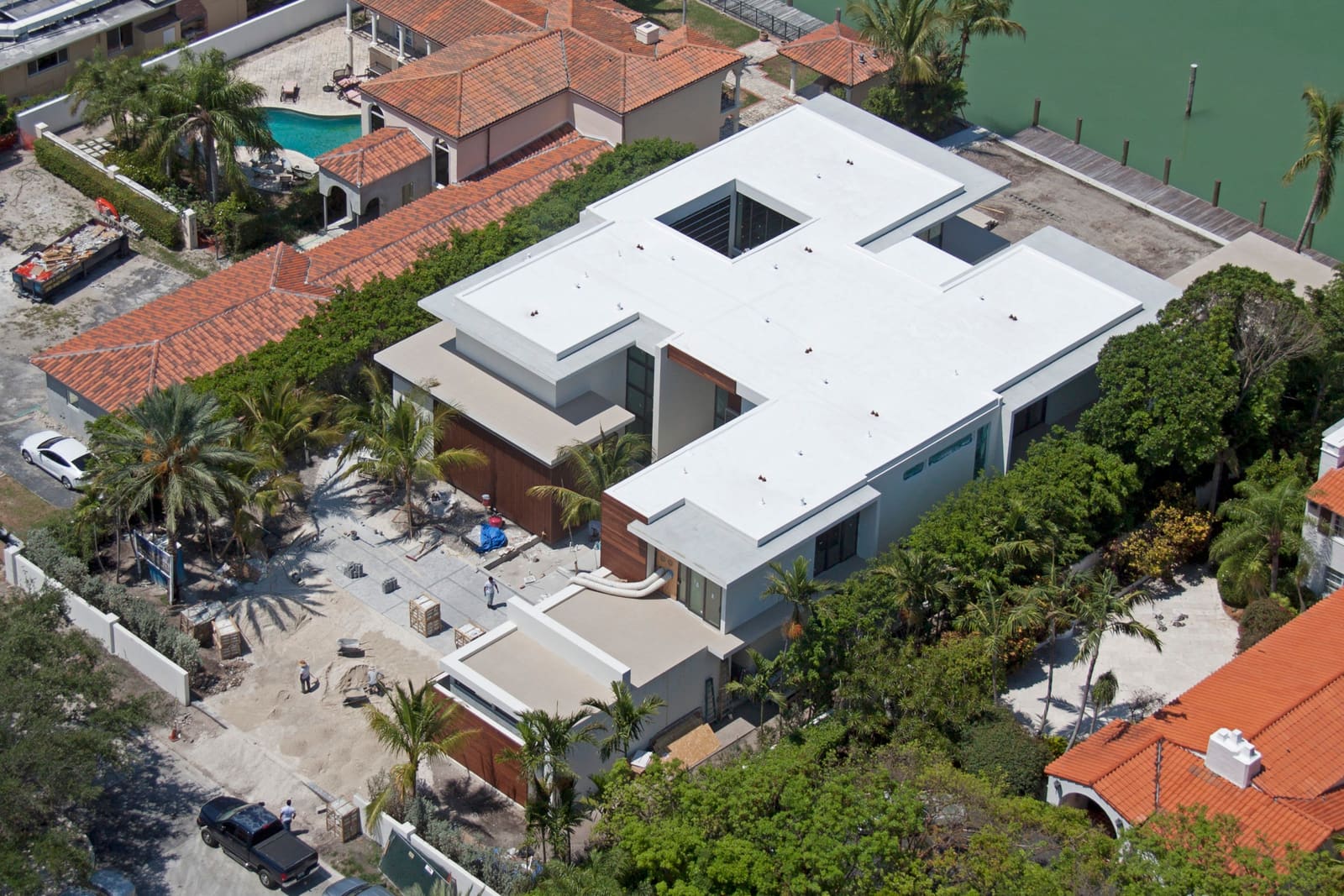
What makes flat membrane the right choice for Miami Beach properties?
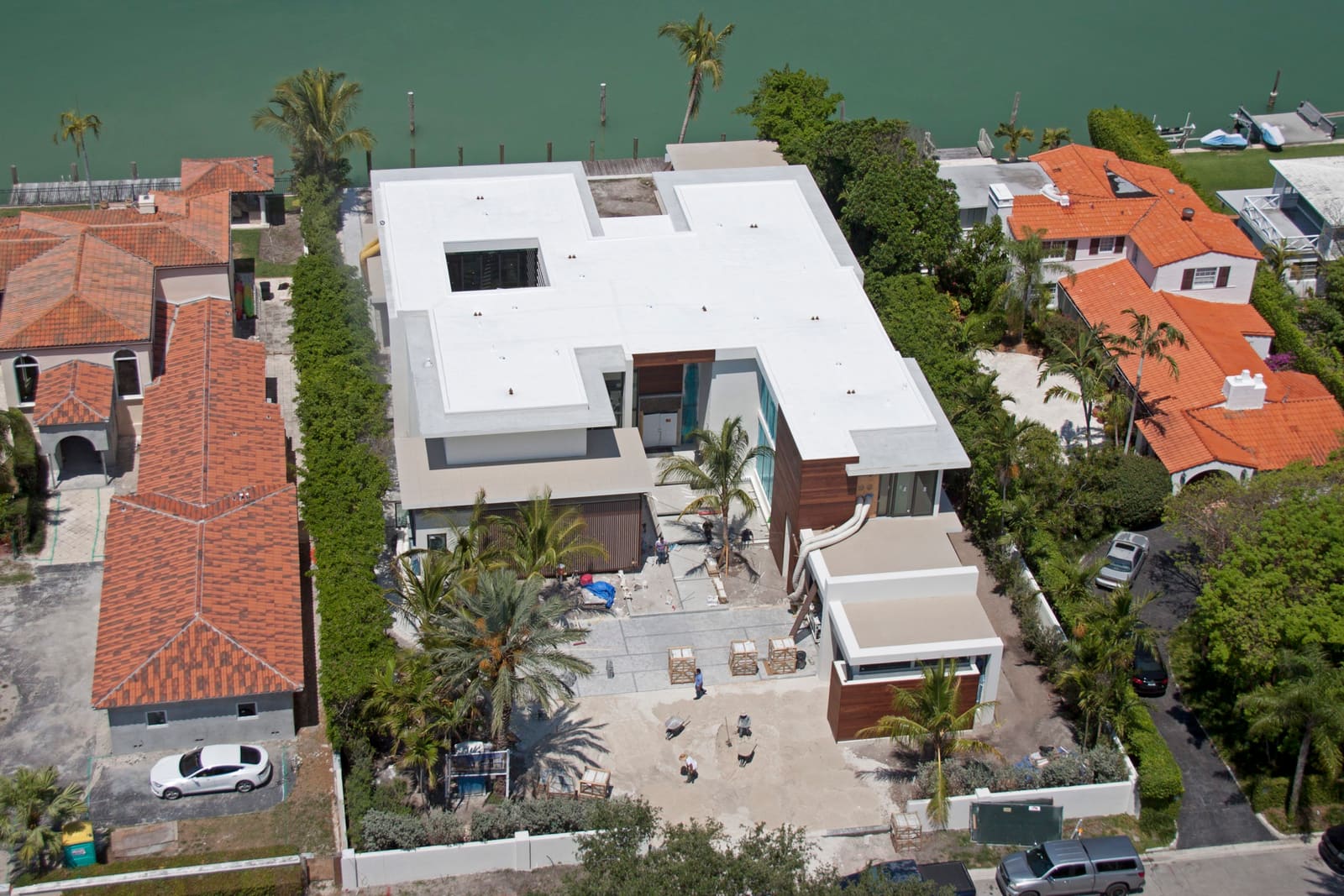
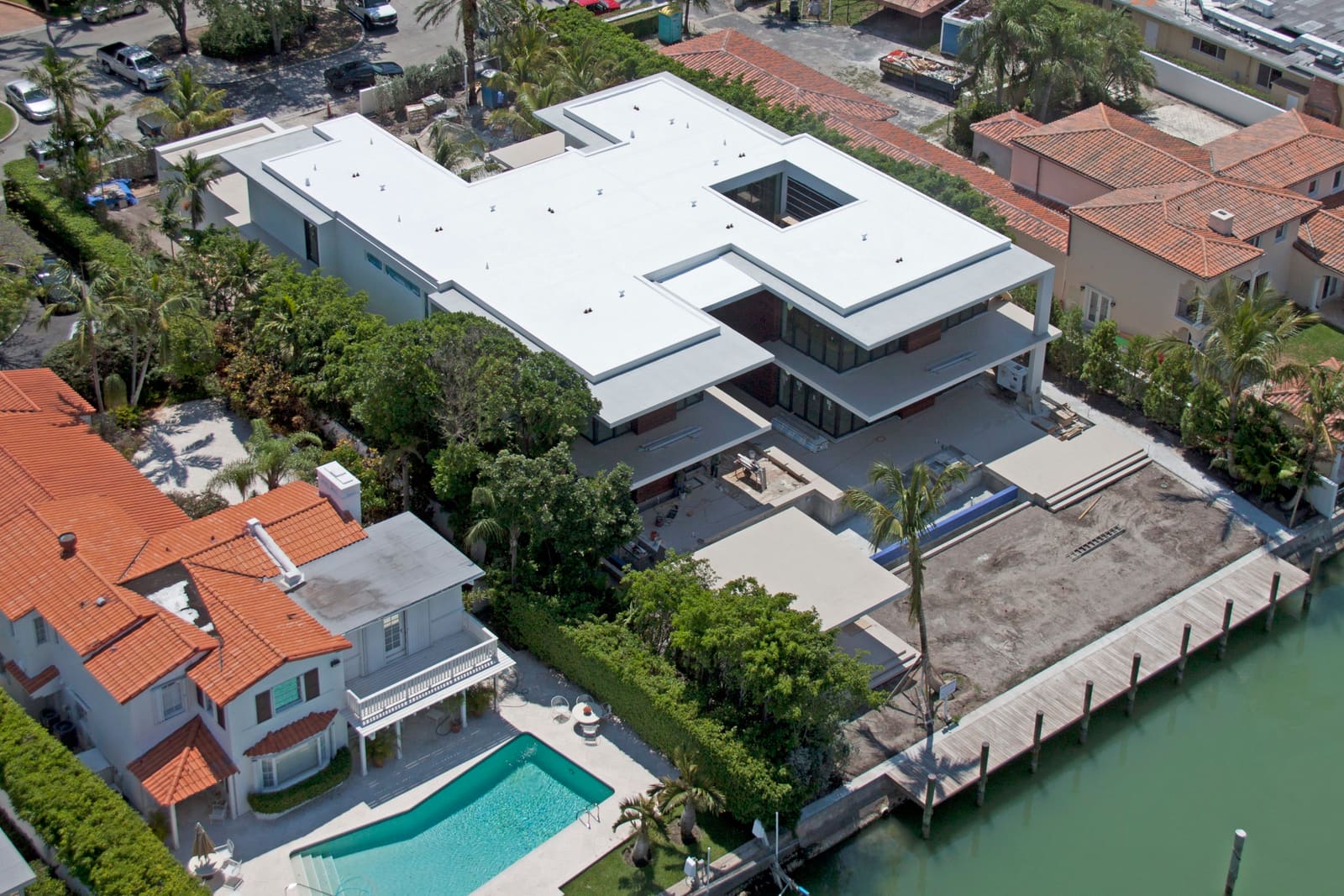
Flat membrane is the right call across most of Miami Beach because the architecture asks for it: Art Deco parapet roofs and MiMo low-slopes carry the city's visible roof inventory, and contemporary towers across Mid Beach and the islands run flat across every terrace and crown. A properly installed TPO or PVC system carries HVHZ wind uplift, CCCL specifications where applicable, and the 70-percent solar reflectance that drops AC load through the summer.
The dominant surface, on a barrier island.
Flat is the dominant material category on Miami Beach. The 1930s Art Deco hotels along Ocean Drive and Collins Avenue, the post-war MiMo blocks across Mid Beach, the contemporary towers from Faena north through Sunny Isles: all carry parapet or terrace flat roofs as their primary visible surface.
The contemporary spec across most of these flat roofing projects is TPO, a thermoplastic polyolefin membrane with hot-air-welded seams. PVC is the longer-lifespan alternative on terraces with foot traffic or mechanical equipment. Modified bitumen suits Historic Preservation Office contexts where a multi-ply assembly is the era-appropriate spec.
What distinguishes Beach flat work from inland flat work is fastener metallurgy and CCCL documentation. Direct salt exposure shortens the life of any unprotected ferrous fastener, so we spec 316 stainless on the windward elevations. Oceanfront properties at or seaward of the Coastal Construction Control Line carry additional state-level uplift and debris specifications we file alongside the standard HVHZ documentation.
What gets installed,
and why.
The six numbers and credentials that define a Miami Beach flat install. Verified against current NOA filings and manufacturer documentation.
TPO is the workhorse contemporary spec across South Beach and Mid Beach. PVC suits longer-lifespan demands on terraces with foot traffic. Modified bitumen suits Art Deco preservation work where multi-ply assemblies are appropriate.
60-mil is the workhorse Beach spec. 80-mil delivers a meaningfully longer service life on parapet roofs and tower terraces with mechanical units or rooftop foot traffic.
Properly installed TPO at 60-mil reliably runs 15+ years in direct Beach exposure, and 80-mil or PVC buys additional margin on parapet roofs and terraces. Seams and terminations are the defining failure points; we hot-air-weld and probe-test every install.
Mechanically fastened assemblies exceed the Miami-Dade HVHZ 175 mph minimum field rating with the correct fastener pattern. CCCL-affected oceanfront properties carry additional state-level specifications.
Membrane systems from our certified manufacturers carry material warranties per manufacturer terms; Istueta backs every replacement with an up-to-12-year workmanship warranty when installed with the correct fastener pattern and probe-tested seam-weld documentation.
Bright white TPO reflects roughly 70 to 80 percent of incident solar radiation. On a Miami Beach tower terrace, the cool-roof rating measurably drops the AC load through the summer.
The four things only the island
asks for.
Art Deco parapet preservation
The South Beach Art Deco district carries the city's densest parapet-roof inventory. Visible parapet finish and edge-detail changes route through Historic Preservation review before the City permit clears. We file the package with finish samples and the proposed system spec.
HOA and condo board coordination
Most tower and multi-family work routes through the HOA or condo association architectural committee before the City of Miami Beach Building Department permit. We compile the package, attend the meeting, and route the approval into the building permit application.
CCCL on oceanfront properties
Properties at or seaward of the Florida Coastal Construction Control Line carry additional state-level wind uplift and debris-protection specifications. We file the CCCL package alongside the standard HVHZ documentation.
Insurance-cost leverage
Miami Beach windstorm insurance costs are tied directly to roof condition and wind rating. A current Miami-Dade NOA assembly with documented wind-uplift testing is what your insurer looks for at policy renewal. We provide the wind-mitigation report at close-out.
Two reviews, sometimes three.
Every Miami Beach flat install carries the standard Miami-Dade HVHZ wind permit from the City of Miami Beach Building Department, with the current Notice of Acceptance on the membrane assembly, the fasteners, and the seam-weld protocol. Properties in Historic Preservation districts and CCCL-affected oceanfront properties trigger additional review layers we handle directly.
HOA and condo board architectural review runs in parallel with the City permit on multi-family and tower work. We compile a single package that covers all three reviews where applicable, so the owner sees one project plan rather than three separate paper trails.
External references for verification:
- City of Miami Beach Building Department: permit, inspection, and historic preservation reference.
- Miami-Dade County Product Approval (NOA) Search, for verifying the active NOA on any product specified.
- Florida DEP Coastal Construction Control Line: state CCCL designation and oceanfront construction requirements.
- manufacturer TPO membrane: manufacturer documentation, warranty terms, and certified installer directory.
Miami Beach flat, answered.
TPO is the contemporary spec and is what we install on most non-historic flat sections. Modified bitumen (SBS or APP, torch-applied or self-adhered) is the right call when the historic preservation review favors a multi-ply assembly visually consistent with the original Art Deco era. We bring both samples to the Historic Preservation hearing and let the office choose.
The Florida Coastal Construction Control Line applies to construction at or seaward of a state-mapped line on barrier islands. Oceanfront Miami Beach properties typically meet both HVHZ and CCCL. CCCL adds wind uplift, debris protection, and roof-attachment specifications beyond the HVHZ baseline. We file the CCCL documentation alongside the City permit.
Every flat roof we install on Miami Beach meets the Miami-Dade HVHZ 175 mph minimum on the field-of-membrane test. CCCL-affected oceanfront properties carry additional state-level uplift requirements that vary by property elevation and exposure. TPO and PVC assemblies are documented to meet both with the correct fastener pattern.
For tower and multi-family work, the HOA or condo board architectural committee reviews the proposed system before the City permit application. The typical review cycle runs two to four weeks. We compile and present the package (finish samples, NOA letters, manufacturer documentation, our installation specification). Most committees approve on the first cycle.
Insurers price Miami Beach windstorm coverage against roof condition and documented wind-uplift rating, not against material category specifically. What matters is that the assembly carries a current Miami-Dade NOA and that the wind-mitigation report at close-out documents the field-of-membrane uplift. We provide both at every install.
A properly installed 60-mil TPO membrane runs 15+ years in direct Beach exposure, and 80-mil or PVC adds margin on the highest-exposure sections. Sun exposure on the Beach is high; the white TPO surface reflects most of it. The defining failure point is rarely the membrane itself; it is seams and edge terminations, which is why we hot-air-weld every seam.
Visible parapet edges, scuppers, and crown details are the architectural signature on Art Deco and MiMo buildings; the membrane itself is rarely seen from the street. What the Historic Preservation Office reviews is the edge-detail finish and any visible roof structures (HVAC screens, parapet caps). We coordinate metal coping and parapet caps with the membrane install so the visible details remain era-appropriate.
A Miami Beach flat roof,
built for the parapet.
We will be on your roof within ten business days. Bring us the building elevation, the HOA review schedule, and the CCCL status if oceanfront. We will handle the permit, the historic review where applicable, and the work.