Metal Roofing · City of Miami Beach · ZIP 33109, 33139, 33140, 33141
Metal roofing on Miami Beach.
Standing-seam aluminum and 16-oz copper on the private estate islands, contemporary tower crowns through Mid Beach, and the Faena District. Filed under City of Miami Beach review with 316 stainless fastener metallurgy throughout.
What makes metal roofing the right choice for Miami Beach properties?
Metal is the right call on Miami Beach when the property faces direct salt exposure, when the architecture calls for a generational roof, or when the structural carry favors a lighter panel system over tile. Properly specified standing-seam aluminum or 16-oz copper lasts 30-plus years in coastal service, meets HVHZ and CCCL wind uplift requirements, and reads correctly across the island estate and contemporary tower contexts.
Why metal on Miami Beach
The generational spec, in salt air.
Flat membrane carries the visible roof inventory across most of Miami Beach. Metal carries the architecturally significant properties: the private estate islands (Star, Palm, Hibiscus, Sunset), the contemporary tower crowns through Mid Beach, the Faena District, and the modernist new builds across the North Beach blocks.
The dominant spec is standing-seam aluminum in PVDF Kynar matte finish. The panel runs 30-plus years in direct coastal service, and the Kynar finish holds color across that window without chalking.
For the most prominent properties, 16-oz copper is the right call: it develops a patina that becomes the warranty rather than a finish that fails.
What separates Beach metal work from inland metal work is fastener metallurgy and CCCL documentation. Direct salt corrodes any unprotected ferrous metal within a few years, so we spec 316 stainless steel on every windward fastener and copper accessories at every flashing detail. The CCCL filings for oceanfront properties stack on top of the standard HVHZ documentation.
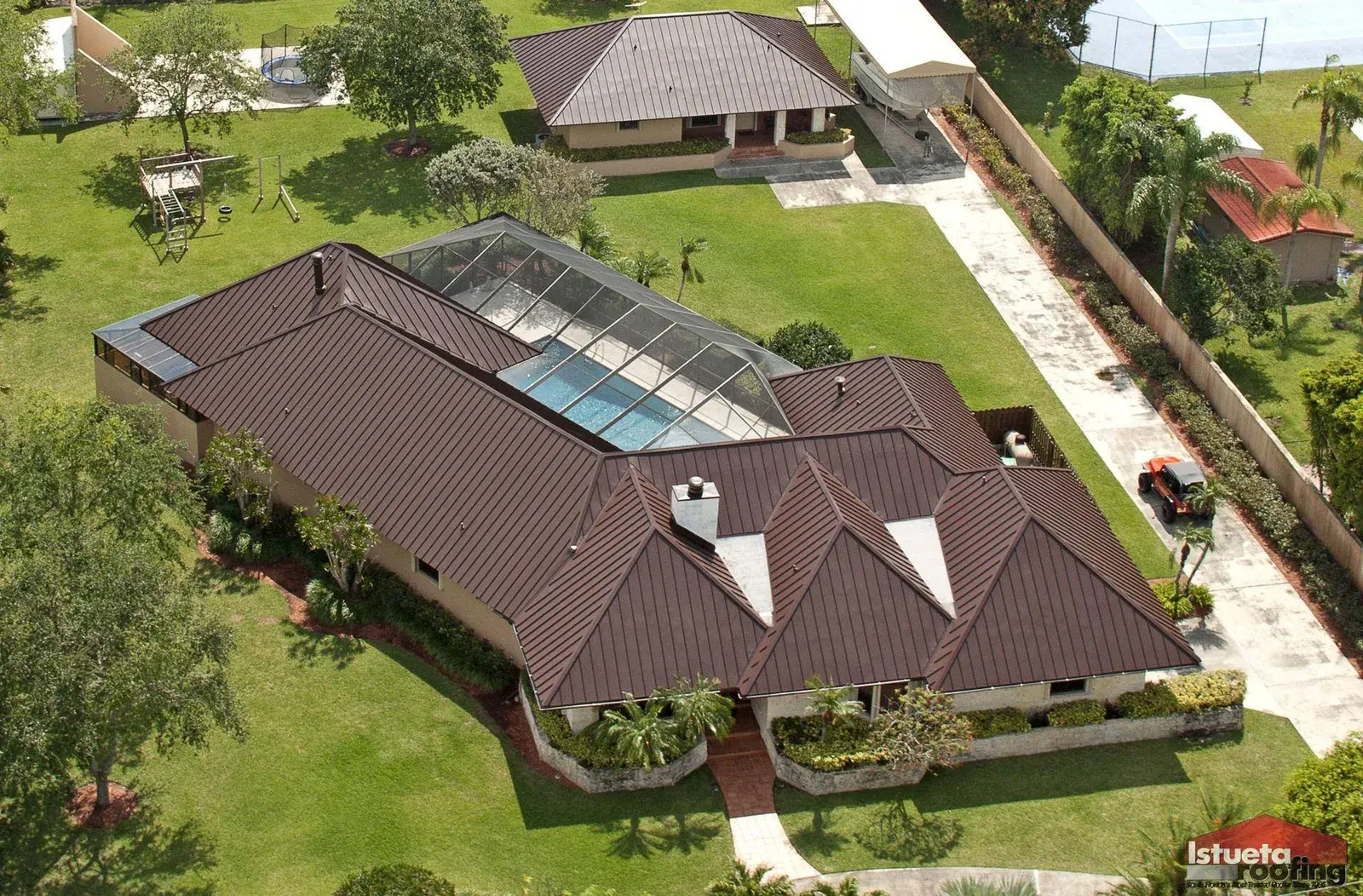
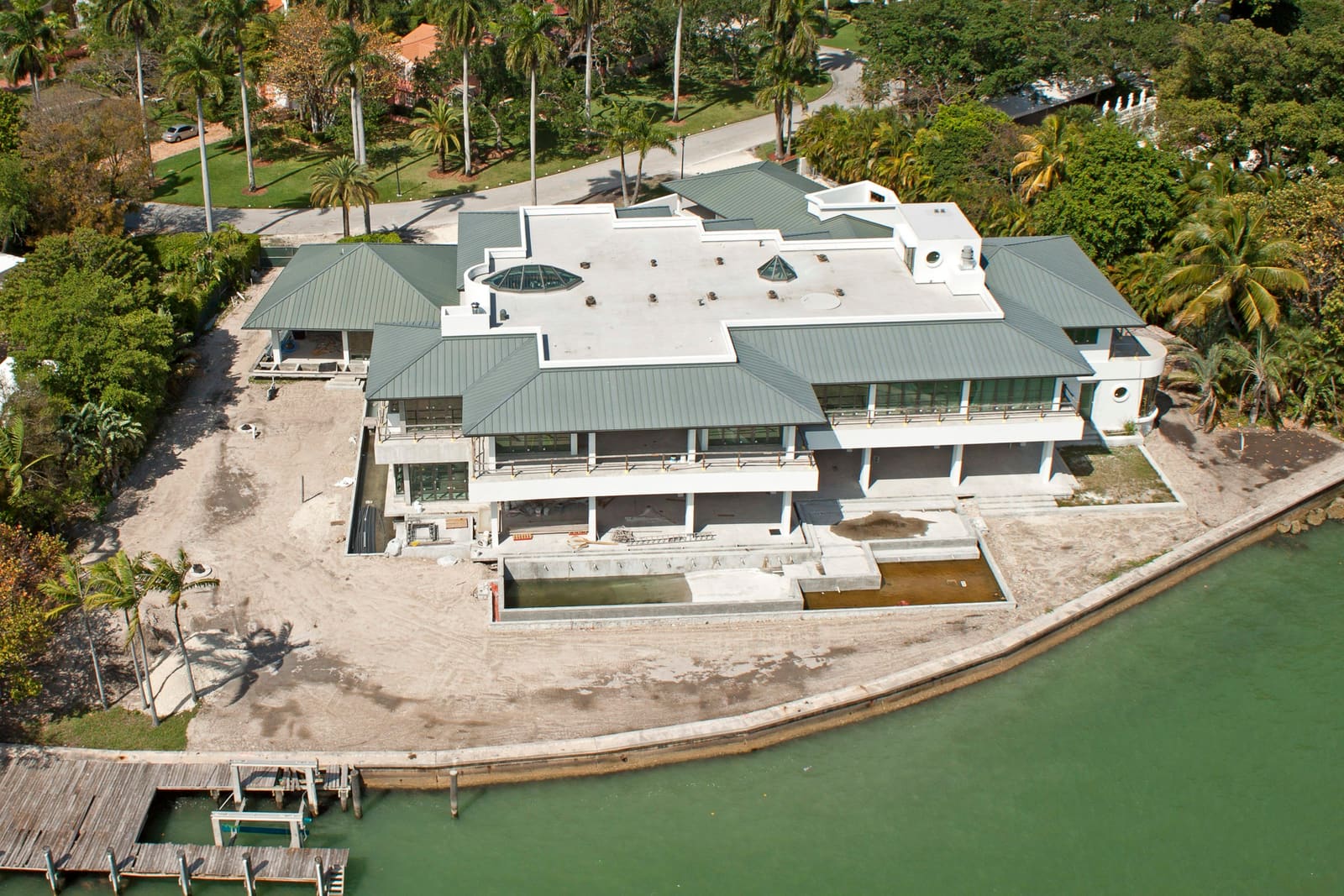
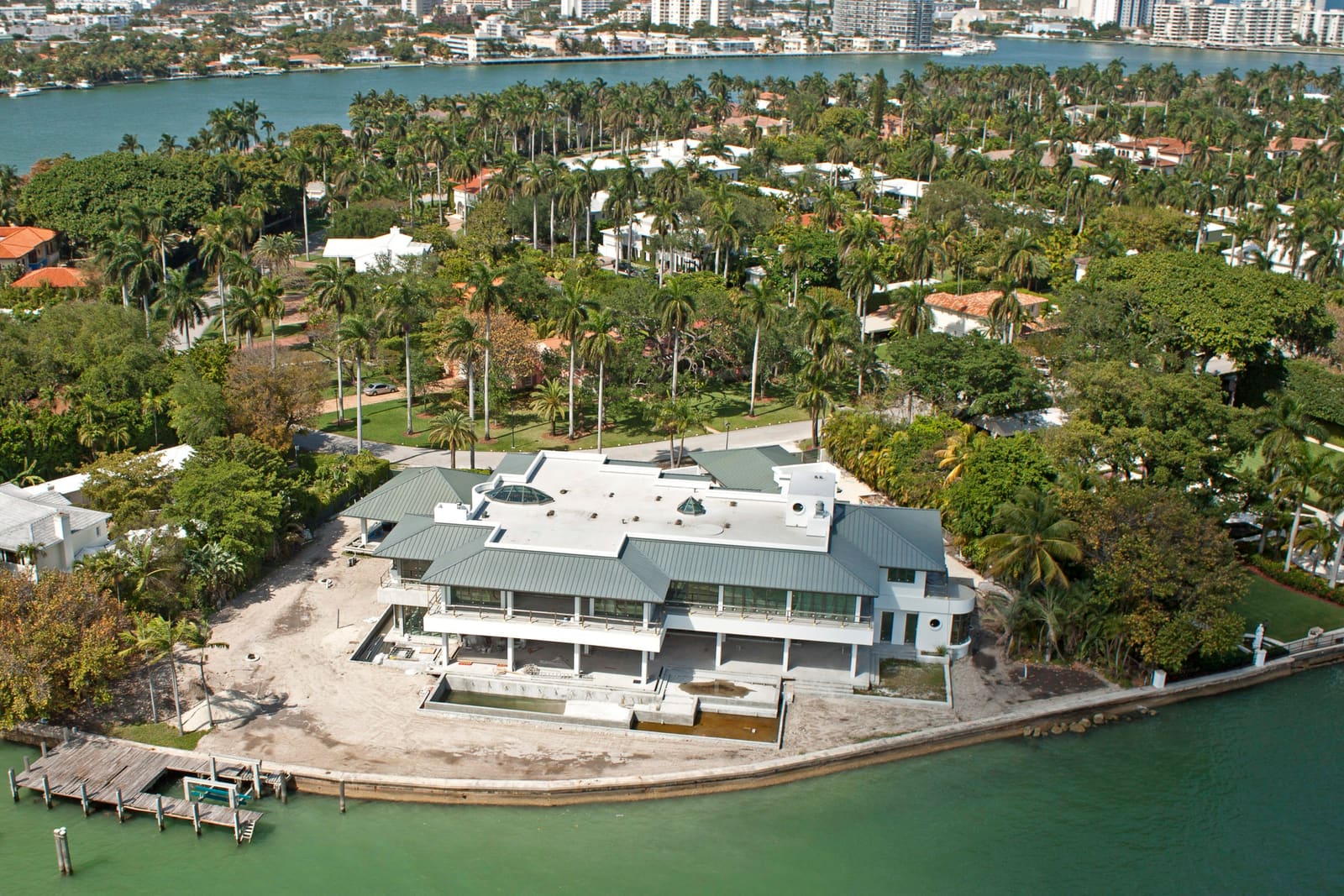
Standing-seam metal over the hip elevations of a contemporary Miami Beach bayfront estate, with a low-slope membrane center section and salt-air-resistant fastener metallurgy.
Hand-formed standing-seam panels and metal flashings on a Miami Beach waterfront property, specified for direct salt exposure.
Miami Beach Metal Specifications
What gets installed, and why.
The six numbers and credentials that define a Miami Beach metal install. Verified against current NOA filings and manufacturer documentation.
Material
Aluminum (Kynar), 16-oz copper, galvalume
Aluminum in PVDF Kynar finish carries 80 percent of Beach metal volume; copper at 16 ounces is the right call on prominent estate islands. Galvalume on contemporary towers where silver patina reads modern.
Fastener spec
316 stainless steel, copper accessories
Direct salt exposure corrodes galvanized steel within a few years. 316 stainless on every windward fastener, copper at every flashing detail. The line item shows up in the estimate; we will not hide it.
Lifespan
50+ years
Aluminum and copper exceed 30 years in direct coastal exposure when the fastener metallurgy matches. The panel itself does not corrode; what fails first is rarely the metal, it is the fastener detail.
Beach HOAs and the Historic Preservation Office on the South Beach historic blocks ask for matte rather than gloss finishes. PVDF Kynar holds color and chalk-resistance across decades of UV exposure.
Investment
Scoped by material and profile
Aluminum standing-seam anchors the lower end of the range; 16-oz copper runs higher, justified on prominent estates where the panel is meant to be passed down with the home. Most full metal projects land within our $25,000 to $80,000 roof-replacement range.
What's Different About Miami Beach Metal
The four things only the coast asks for.
Local note 1
Salt air and fastener metallurgy
Beach metal roof lifespan is decided by the fastener, not the panel. 316 stainless steel on every windward fastener and copper accessories at every flashing detail are the difference between a roof that corrodes early and one that delivers its full 30+ year service life. We do not substitute.
Local note 2
Estate island work
Star, Palm, Hibiscus, and Sunset Islands carry the Beach's most prominent metal installs. 16-oz copper standing-seam on the architecturally significant homes, hand-formed copper trim at every flashing, full-life patina warranty rather than a finish coat.
Local note 3
CCCL on oceanfront properties
Properties at or seaward of the Florida Coastal Construction Control Line carry additional state-level wind uplift, debris protection, and panel attachment specifications. We file the CCCL package alongside the HVHZ documentation.
Local note 4
HOA and board review
Tower and multi-family work routes through the HOA architectural committee before the City permit. We compile the package with panel samples, finish swatches, and the manufacturer NOA. Matte finishes typically clear; high-gloss treatments get pushback.
Permitting and Coastal Code
Two reviews, sometimes three.
Every Miami Beach metal install carries the standard Miami-Dade HVHZ wind permit from the City of Miami Beach Building Department, with the current Notice of Acceptance on the panel system, the clip attachment pattern, and the underlayment. Oceanfront properties at or seaward of the Florida Coastal Construction Control Line carry additional state-level specifications.
HOA architectural committee review runs in parallel on multi-family and tower work. The committee typically asks for matte PVDF Kynar in muted earth tones; we route the chosen finish through them before the panel order ships.
If you're looking for a company that is very reliable, they're going to come and do the job when they say they are and the way they say they are. If you're looking for something that will be fairly easy to fit into your life, because roofing, you don't want it to be a major hassle, you will enjoy working with the Stuetta and the result when you're done will be a very, very beautiful roof.
The workmanship on our house was exemplary. Cleanup was extraordinary. My wife was especially happy. I really had nothing but great, great comments to say about Easter Weta.
Other Materials on Miami Beach
If metal isn't the right call.
Metal carries the estate islands and the tower crowns, while flat membrane is the dominant Beach material category for Art Deco and contemporary inventory. Tile is the Mediterranean estate spec; asphalt is selective.
Both work for 30+ years on a Beach oceanfront estate; the decision is architectural and budgetary. Aluminum in PVDF Kynar finish is the workhorse spec at roughly half the installed cost of copper. Copper at 16 ounces develops a patina across decades and reads as a generational roof. We spec the right material to the architecture, not the spreadsheet.
The panel itself is largely unaffected. Aluminum oxidizes superficially and stops; copper develops a patina that becomes the warranty. What salt air does affect is fastener metallurgy. Galvanized steel fasteners corrode within a few years in direct coastal exposure; 316 stainless steel does not. We will not substitute.
316 stainless steel on every windward fastener and exposed clip. Copper accessories at every flashing detail. The Florida Building Code does not mandate stainless on flat-rated installations, but the realistic lifespan in direct salt exposure depends on it. We carry the spec on every Beach project and note it as a line item.
The Florida Coastal Construction Control Line adds wind uplift, debris protection, and panel attachment specifications beyond HVHZ for properties at or seaward of the mapped line. Standing-seam metal typically meets CCCL with the correct clip attachment pattern; we document the assembly and file the CCCL package alongside the City of Miami Beach permit.
Almost always. 16-oz copper runs roughly 120 lbs per square, a fraction of the tile or membrane weight already designed into a tower terrace structure. We verify clip-attachment substrate and existing parapet detail at the consultation. Structural carry is rarely the limiting factor; the limiting factors are HOA approval and CCCL documentation.
Beach HOA architectural committees typically approve matte PVDF Kynar finishes in muted earth tones or neutral patina colors on first review. High-gloss finishes and bright modern colors get pushback. We bring physical sample panels to the consultation and route the chosen finish through the committee before the panel order ships.
A standing-seam metal roof on Miami Beach requires almost no scheduled maintenance through its service life. We recommend a soft-wash cleaning every three to five years to remove salt deposits on the windward elevations, an annual visual inspection of flashings and fastener heads, and prompt attention to any storm-driven debris. That is the entire cadence.
Begin
A Miami Beach metal roof, built for the salt.
We will be on your roof within ten business days. Bring us the elevation photos, the HOA review schedule, and the CCCL status if oceanfront. We will handle the permit, the panel finish approval, and the work.