⭐⭐⭐⭐⭐ Great experience with Sofia on my roof replacement. She knew her product, explained pricing and options clearly, and was never pushy. Smooth process from quote to follow-up. Highly recommend asking for her.
a month ago
Aluminum roofing holds up to salt air and heat. We've been installing it in Coral Gables since 1985, working through the city's architectural review and permitting process. The material forms a self-healing oxide layer and weighs less than tile, which matters for older homes near the coast.
Aluminum resists saltwater corrosion through an oxide layer that reforms when scratched. You don't get rust like you do with steel or the green patina that develops on copper. The material weighs less than tile or slate, which reduces load on older structures while lasting 30-plus years in coastal conditions.
We've worked with Coral Gables' permitting and architectural review for four decades.
Coral Gables runs strict architectural standards through its Board of Architects and Appeals. Aluminum roofing projects need design review when visible from the street, especially in historic districts. The building department coordinates permit approval, structural calculations, wind-load analysis, and NOA documentation before installation starts.
The Mediterranean Revival and Spanish Colonial homes common here often have tile roofs that have reached the end of their service life. Aluminum standing-seam systems weigh about one-third what clay tile does, which reduces stress on homes built in the 1920s and 1930s. The Kynar or PVDF coating resists UV degradation and holds color in South Florida sun.
Salt air from Biscayne Bay accelerates corrosion on ferrous metals. Aluminum's oxide layer provides passive protection without galvanized coatings or regular maintenance. Homes within two miles of the coast see the most benefit from aluminum's corrosion resistance compared to steel-based systems.
The Mediterranean Revival look here is not a trend; it was written into the original city plan, and most homes went up with Miami Limestone walls under coral-colored Ludowici tile. That history is why the Board of Architects weighs a roof's profile and color so closely, and why aluminum has to earn its place rather than assume it. Architectural aluminum shingles that carry a slate or shake profile often clear review on homes where a flat standing-seam plane would read as too modern for the street.
The rooflines themselves shape the install. Coral Gables homes tend toward hipped roofs with multiple valleys and decorative parapets, so an aluminum job here lives or dies on the valley and parapet detailing rather than the field panels. We form valley flashing as a standing-seam pan laid flat and soldered at the seam, which keeps the most failure-prone part of these complex roofs off exposed fasteners and sealant.
The canopy that George Merrick planted a century ago is still dropping debris onto those valleys year-round, which is the other reason the detailing matters more here than on an open lot. Aluminum sheds leaves and seed pods cleanly and takes no corrosion where a scratch exposes bare metal, because the oxide layer re-forms within hours. Kept clear at the valleys, a Gables aluminum roof carries that debris load without the staining or rust a coated-steel panel would show.
We've worked with Coral Gables' permitting and architectural review for four decades. Our team handles the structural calculations, wind-load documentation, and NOA submissions the city requires before installation starts. We coordinate with the Board of Architects when projects need design approval.
Our manufacturer certifications with PAC-CLAD, Englert, and Berridge Manufacturing keep warranty coverage intact and technical support available throughout the project. These certifications mean your aluminum roofing system qualifies for manufacturer material warranties, which typically run 30 to 50 years depending on the coating system.
We've handled aluminum installations on Mediterranean Revival homes where the existing tile roof exceeded the structure's load capacity. The transition from tile to aluminum standing-seam requires careful flashing details at parapets, valleys, and roof-to-wall transitions to maintain the home's weather envelope.
Installation starts with a structural assessment to confirm the existing deck can support the aluminum roofing system and meet current code. Older homes in Coral Gables sometimes need deck reinforcement or replacement before the new aluminum panels go down.
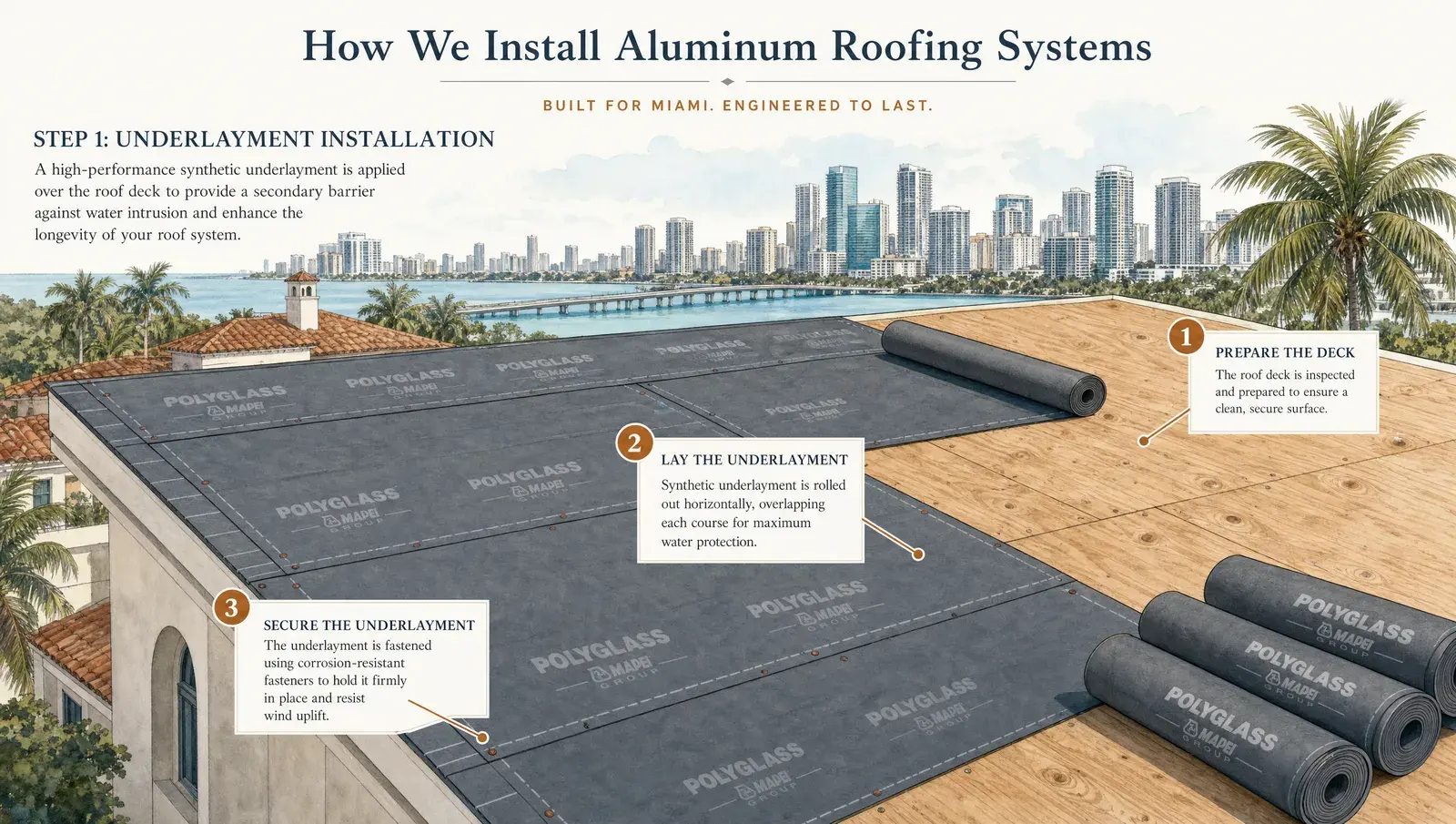
Underlayment selection depends on roof pitch, exposure, and whether the project is a re-roof or new construction. We use high-temperature synthetic underlayment rated for aluminum's thermal expansion. Standing-seam aluminum systems need underlayment that won't degrade from panel movement during temperature swings. Aluminum panels can reach about 160°F under full Miami sun, and a lesser underlayment breaks down within a few years at that temperature, so the rating on this layer is not a detail to value-engineer away.
Aluminum panel installation follows manufacturer specs for clip spacing, fastener type, and seam engagement. Standing-seam systems use concealed clips that let the panels expand and contract without stressing the fasteners. The clips attach to the deck at specified intervals, typically 12 to 24 inches depending on wind-load requirements and panel profile.
Flashing details at roof penetrations, valleys, and eaves require careful attention. Aluminum flashing must be compatible with the panel coating to prevent galvanic corrosion. We use aluminum or coated steel fasteners rather than bare steel to avoid corrosion at connection points.
Ridge caps, hip caps, and rake trim are formed from the same material and finish as the field panels to maintain visual consistency.
| Material | Weight (psf) | Coastal Corrosion Resistance | Typical Lifespan | Relative Cost |
|---|---|---|---|---|
| Aluminum | 0.4 to 0.7 | Excellent (self-healing oxide) | 30+ years | Moderate |
| Copper | 1.0 to 1.3 | Excellent (patina formation) | 30+ years | High |
| Galvalume | 0.5 to 0.8 | Good (zinc-aluminum coating) | 30+ years | Lower |
| Steel (painted) | 1.0 to 1.5 | Fair (coating-dependent) | 30+ years | Lower |
We've replaced clay tile roofs on Mediterranean Revival homes where the tile had reached the end of its service life. The transition from a 10 to 12 pounds-per-square-foot tile system to a 0.5 to 0.7 pounds-per-square-foot aluminum system reduces structural load by about 90 percent, which matters on homes built before modern load-bearing standards.
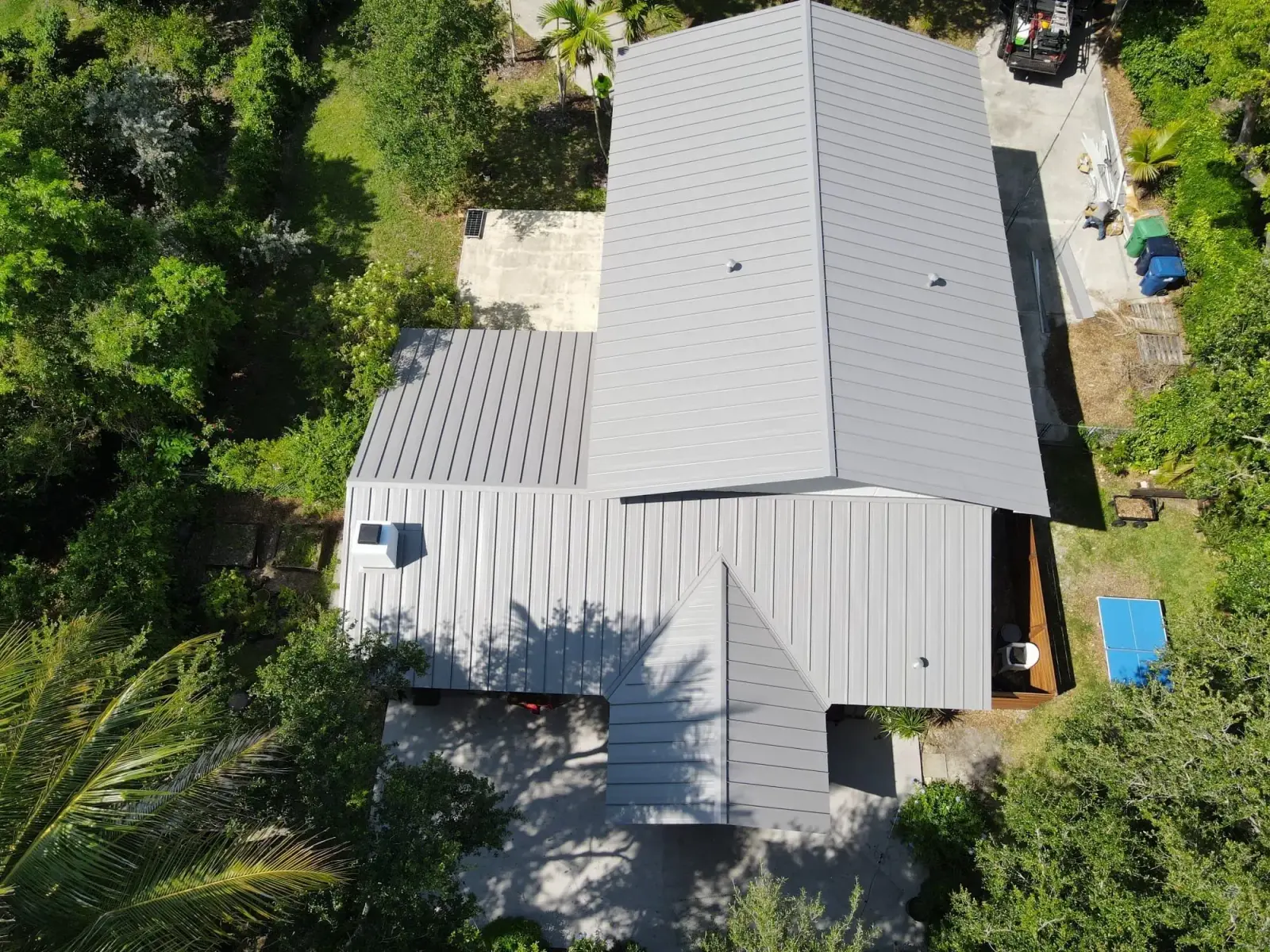
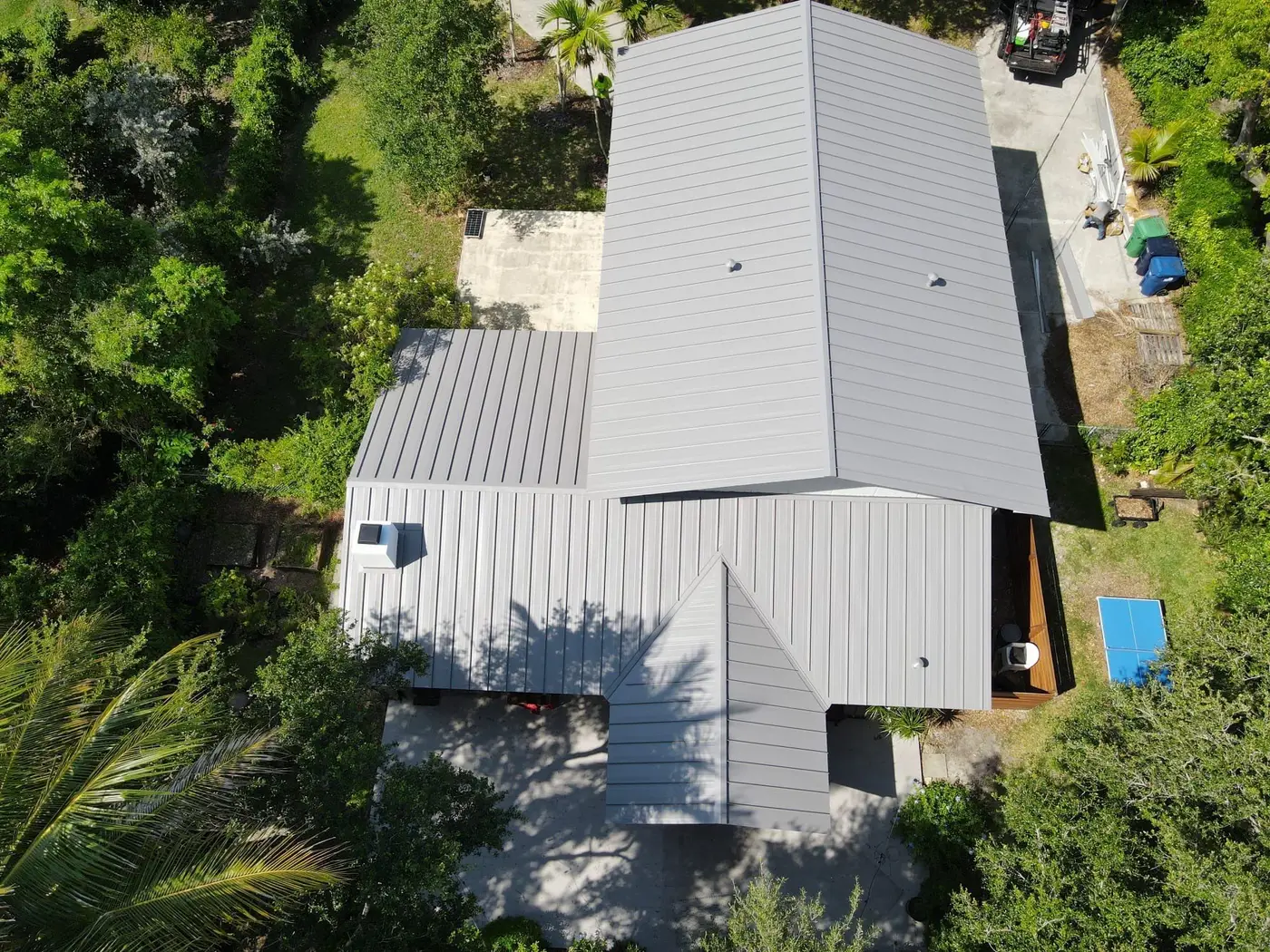
Our recent Coral Gables aluminum work includes a Mediterranean-style residence finished in standing-seam aluminum, laid up with a clean panel rhythm and concealed-clip attachment so no fasteners break the field. The standing-seam profile follows the home's architectural lines while removing the upkeep the previous tile roof required. Because roofing visible from the street falls under design review here, the panel profile and finish color were carried through the Coral Gables Board of Architects, which sets those standards citywide.
Beyond aluminum, we install tile, copper, galvalume, and flat roofing systems across Coral Gables. Tile roofing remains common on Mediterranean Revival and Spanish Colonial homes where the architectural style calls for clay or concrete profiles. We work with Ludowici, Verea, and other manufacturers to source profiles that match existing installations or meet design review requirements.
Copper roofing works for homes where longevity and patina development align with the owner's aesthetic preferences. Copper requires soldered seams and specialized flashing details, particularly at valleys and roof-to-wall transitions. The material's cost and installation complexity make it appropriate for homes where the investment matches the property's overall finish level.
Galvalume standing-seam systems offer a lower-cost alternative to aluminum with similar weight and good coastal performance. The zinc-aluminum coating provides corrosion resistance, though not at the same level as aluminum's self-healing oxide layer. Galvalume works well for homes where budget constraints make aluminum less practical.
Flat roofing systems work for contemporary homes, additions, and low-slope sections of traditional homes. We install modified bitumen, TPO, and EPDM systems depending on the application, exposure, and performance requirements. Flat roof installations in Coral Gables require careful attention to drainage, flashing, and penetration details to prevent water intrusion.
Aluminum standing-seam frequently pairs with flat roof replacement in Coral Gables when a home mixes a steep main roof with low-slope porches, additions, or rear elevations. The tie-in between the aluminum field panels and the flat membrane requires a custom transition flashing fabricated to handle differential thermal movement and direct water from the steep slope into the membrane drainage plane. Specifying both systems in a single project keeps responsibility for the transition detail with one contractor, which simplifies warranty coverage at the most common leak point on mixed-slope roofs.
Aluminum roofing costs vary based on panel profile, coating system, roof complexity, and existing conditions. Standing-seam aluminum typically runs higher than galvalume but lower than copper. The material's longevity and low maintenance offset the initial investment over the roof's service life.
We offer financing for roofing projects. Financing terms and approval depend on the lender's credit requirements and the specific program. Contact us to discuss current financing availability and program details.
The investment in aluminum roofing includes material cost, labor, underlayment, flashing, and any necessary deck repairs or reinforcement. Homes with complex roof geometries, multiple penetrations, or extensive flashing requirements cost more to install than simple gable or hip roofs.
Aluminum roofing systems carry both workmanship warranties and manufacturer material warranties. Our workmanship warranty covers installation quality and labor for up to 10 years. Manufacturer warranties on aluminum panels and coatings typically run 30 to 50 years depending on the coating system.
On the aluminum systems we install in the Gables, that manufacturer coverage has names. The McElroy Metal Kynar 500 PVDF warranty covers the factory finish against fade and chalk, and the Sheffield Metals 40-Year Limited COOLR paint warranty backs the coating on the aluminum substrate. Those pair with our workmanship warranty on the installation, so the coverage spans workmanship, substrate, and color rather than a single manufacturer line.
Specific coverage terms and exclusions are documented in your signed project agreement.
Aluminum roofing requires minimal maintenance compared to tile or asphalt systems. The self-healing oxide layer provides passive corrosion protection without requiring coatings or treatments. Annual inspections focus on flashing condition, fastener integrity, and debris accumulation in valleys or behind parapet walls.
We offer maintenance programs for homeowners who prefer scheduled inspections and minor repairs handled proactively. The program includes annual roof inspection, gutter cleaning, and minor flashing repairs. Debris removal and gutter cleaning prevent water backup at the eaves, which can compromise the roof's weather envelope over time.
For more information about aluminum roofing, see our aluminum roofing guide.
Aluminum roofing projects in Coral Gables require building permits and, when visible from the street, design review by the Board of Architects and Appeals. The permit process includes structural calculations, wind-load analysis, and NOA documentation. We handle permit coordination and Board of Architects submissions as part of the installation process.
Aluminum standing-seam systems offer clean lines that complement Mediterranean Revival architecture when the panel profile and color are selected carefully. The Board of Architects reviews roofing material and color choices to ensure compatibility with the neighborhood's architectural character. We work with the Board during the design review process to select profiles that meet approval standards.
Schedule a no-pressure consultation. We walk your roof, review your options, and give you a detailed written proposal.