We had the pleasure to be attended by Sofia excellent knowledge, very patient and easy to talk to and give us the important information that we need to make the correct decision.
a month ago
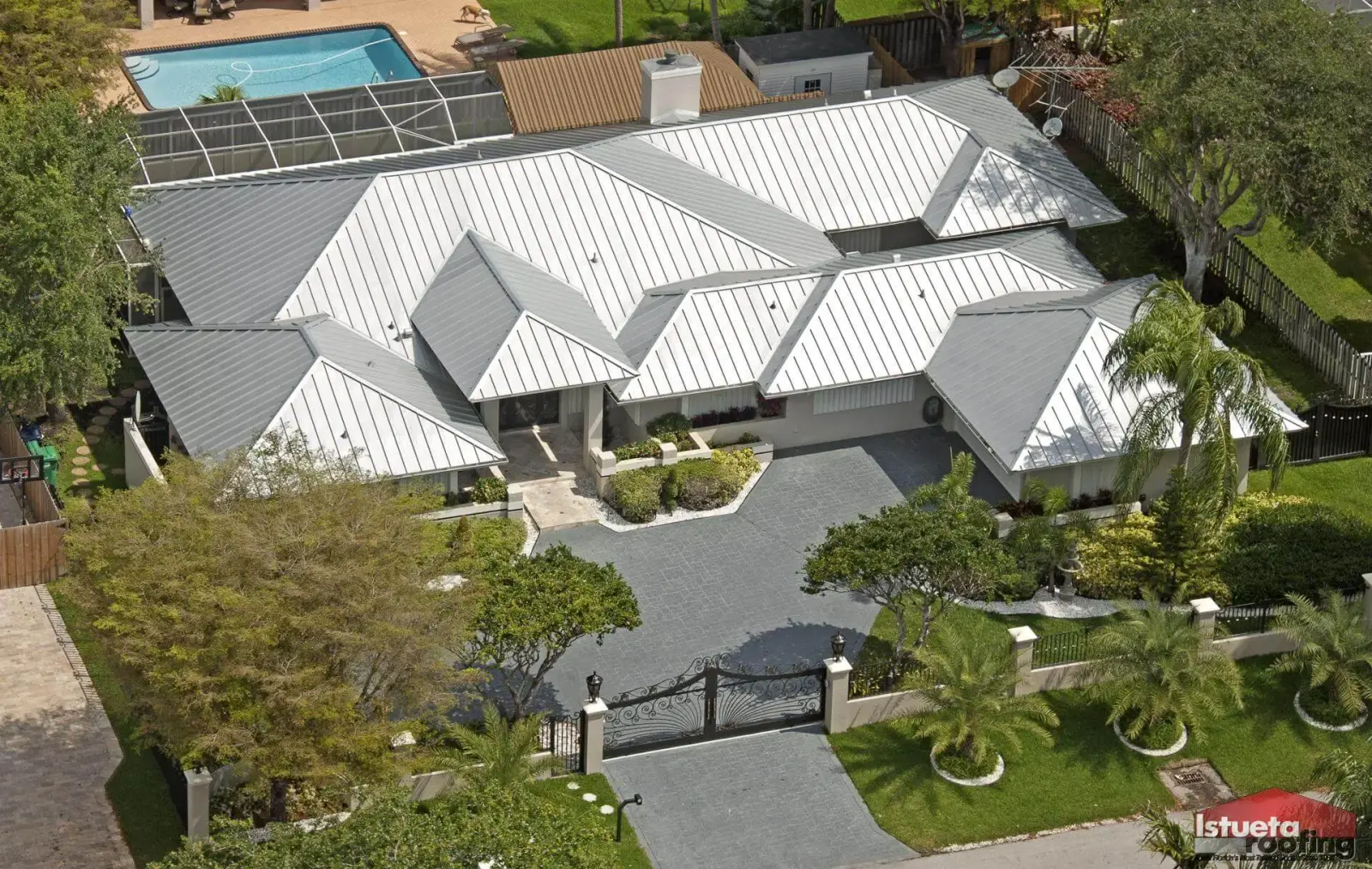
Galvalume roofing in Pinecrest, 8 to 12 miles inland from the coast, typically reaches 30+ years of service, with 24-gauge standing-seam systems carrying 25 to 40 year manufacturer coating warranties. The 55% aluminum, 43.4% zinc coating resists corrosion without the maintenance copper requires or the weight tile carries.
Galvalume roofing in Pinecrest typically reaches 30+ years of reliable service, with 24-gauge standing-seam systems carrying 25 to 40 year manufacturer coating warranties when installed 8 to 12 miles inland from the coast. The 55% aluminum, 43.4% zinc coating forms a protective barrier that resists corrosion better than galvanized steel, and concealed-fastener seams extend lifespan by eliminating exposed penetrations that accelerate weathering.
Salt air reaches this far but at lower concentrations than beachfront neighborhoods.
Galvalume roofing is steel coated with a zinc-aluminum alloy: 55% aluminum, 43.4% zinc, and 1.6% silicon. This combination resists corrosion in coastal environments where galvanized steel degrades faster.
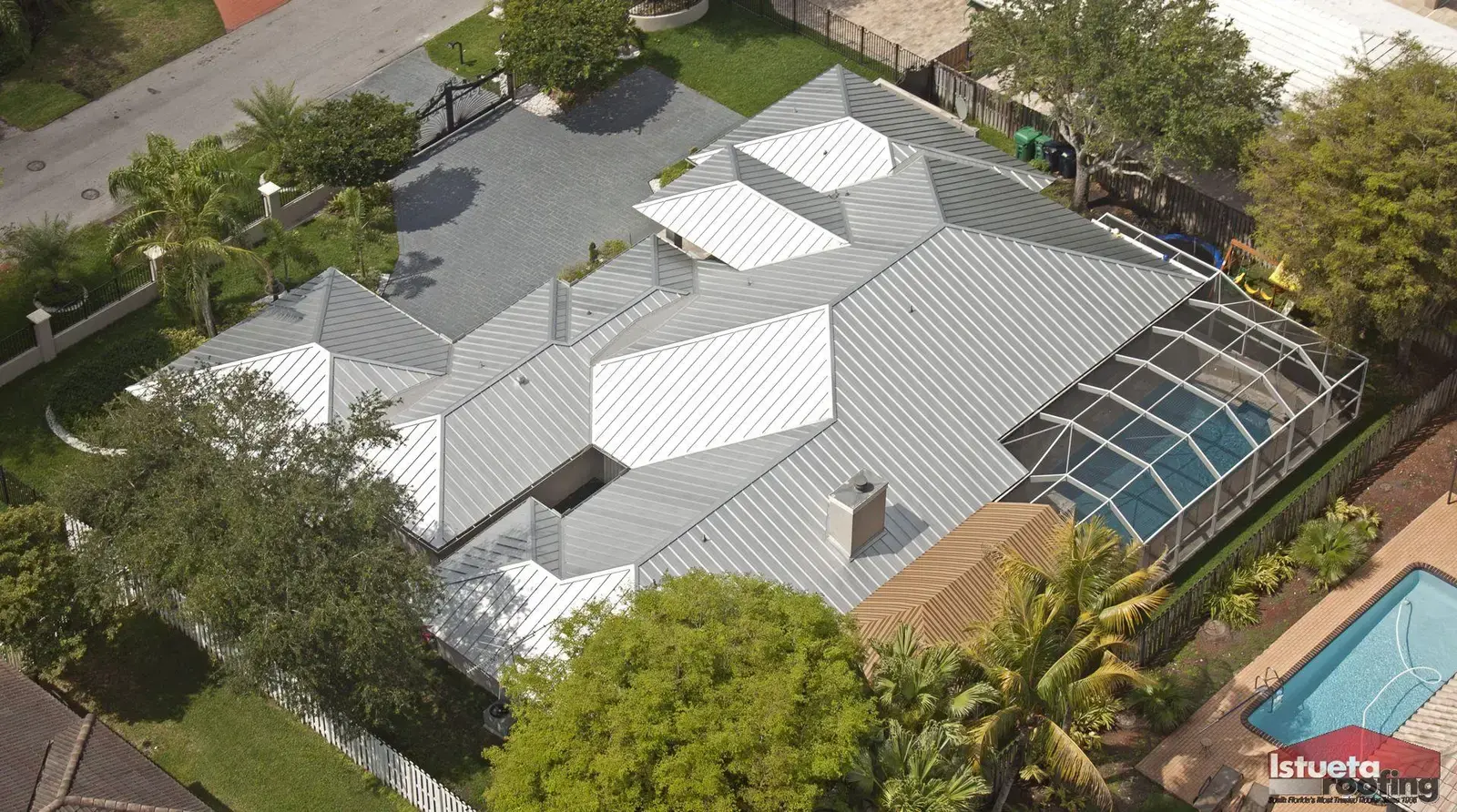
Standing-seam galvalume is the most common residential application in Pinecrest. Panels run vertically from ridge to eave with raised seams that interlock. Fasteners attach to the roof deck through concealed clips, not through the panel face. This keeps water out of the fastener holes.
R-panel and corrugated galvalume are lower-cost options for utility structures, sheds, and agricultural buildings. These profiles use exposed fasteners with neoprene washers. They perform well in non-coastal applications but require more maintenance near saltwater.
Galvalume works on low-slope and steep-slope roofs. Minimum pitch is typically 3:12 for standing-seam systems. Flatter pitches require additional underlayment and seam-sealing to prevent water intrusion.
Pinecrest sits 8 to 12 miles inland from the coast. Salt air reaches this far but at lower concentrations than beachfront neighborhoods. Galvalume's aluminum-zinc coating handles this exposure without the rapid degradation galvanized steel shows.
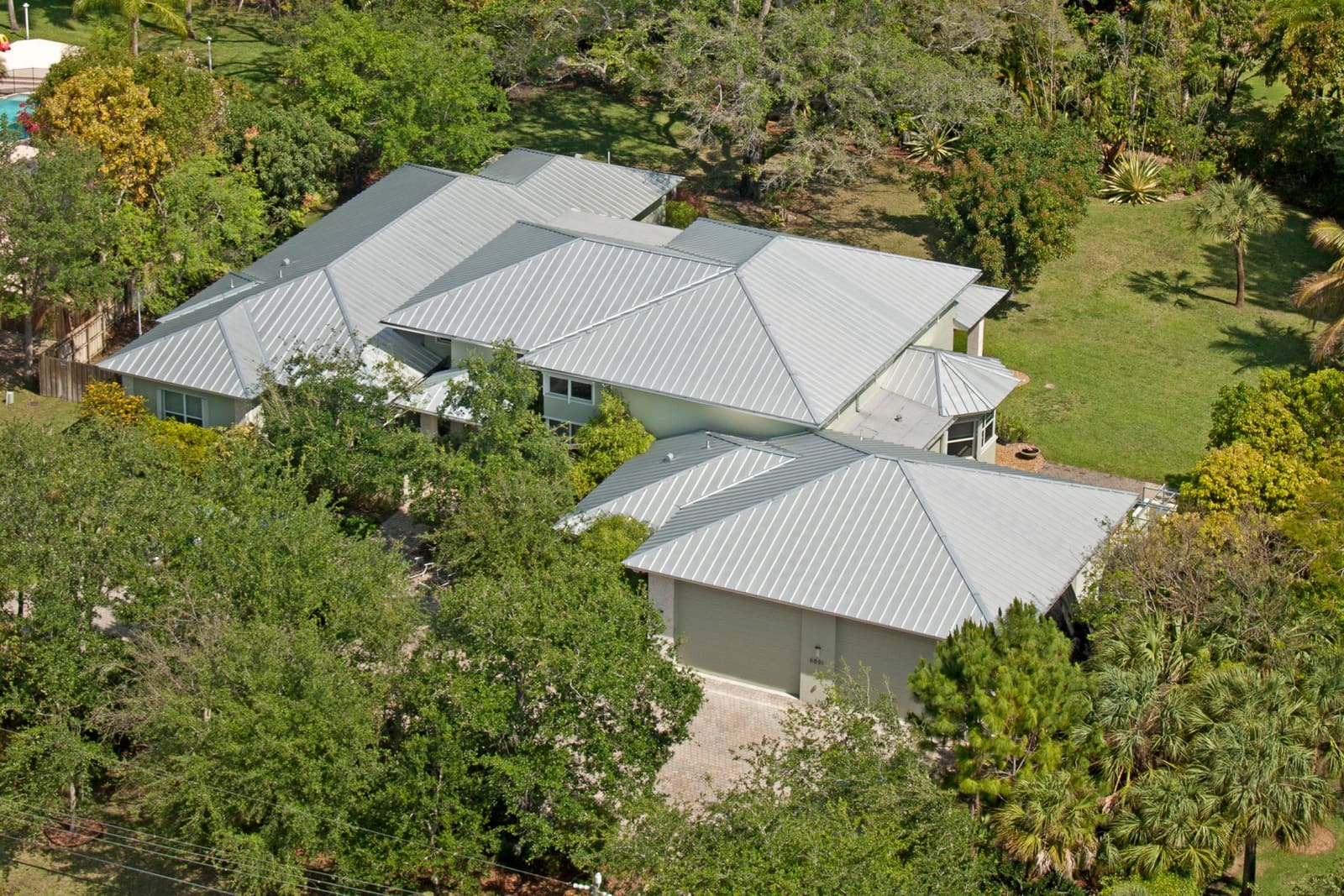
South Florida operates under the High-Velocity Hurricane Zone (HVHZ) building code. Standing-seam galvalume systems with concealed clips meet Miami-Dade NOA requirements for wind uplift. Panels tested to 200+ mph uplift are available from multiple manufacturers.
Pinecrest's tree canopy creates shade and organic debris. Galvalume does not support algae growth the way asphalt shingles do. The metal surface sheds leaves and does not trap moisture under debris.
The neighborhood's architectural character ranges from mid-century modern to contemporary. Galvalume's clean lines and neutral finish fit both styles without the patina copper develops or the color fade painted metal shows over time.
The coating on galvalume does more than sit as a barrier; it repairs small breaches. When a cut edge or a scratch exposes the steel, the aluminum in the AZ-55 coating oxidizes to seal the spot while the zinc sacrifices itself galvanically to protect the surrounding steel. That two-part chemistry is why galvalume holds up under Pinecrest's constant canopy debris and shade-held moisture where a plain galvanized panel would rust at every nick.
Galvalume also earns its place here through heat and paperwork. A white or light PVDF finish reflects roughly 60 to 70 percent of incoming solar radiation, which pulls attic temperatures down under the village's canopy-broken sun and can qualify the roof for cool-roof rebate programs. Because a standing-seam galvalume assembly holds Miami-Dade NOA wind-uplift approval, it also supports the wind-mitigation insurance credit that lowers the annual insurance cost, a real consideration in a village rebuilt to post-Andrew fastening standards after the 1992 storm.
The canopy sets galvalume's maintenance rhythm. Organic debris that sits in valleys and behind penetrations traps moisture against the coating, so we clear valleys and gutters on a twice-a-year cadence under Pinecrest's leaf load and touch up any deep scratch before it can reach the substrate. Kept clear, the standing-seam surface sheds leaves rather than holding them, which is the practical reason the concealed-clip profile outlasts an exposed-fastener panel on these shaded lots.
Installation begins with roof deck inspection. We verify the sheathing is sound, flat, and free of rot. Damaged sections are replaced before galvalume underlayment goes down.
We install a high-temperature synthetic underlayment rated for metal roofing. Standard felt paper degrades under galvalume panels in South Florida heat. The underlayment we use is rated to 250°F and includes a slip-resistant surface for safe panel placement.
A thermal break layer goes between the underlayment and the galvalume panels. This foam or fiberboard layer reduces heat transfer into the attic and prevents condensation on the underside of the metal. Without a thermal break, galvalume roofs can sweat in air-conditioned homes.
Galvalume panels are measured and cut to run from ridge to eave in single lengths. Seams align perpendicular to the eave line. We avoid horizontal seams that create water-trapping ledges.
Concealed clips attach the panels to the roof deck. The clips engage the panel seam and are screwed into the deck through the underlayment. The next panel snaps or crimps over the clip, hiding the fastener.
This system allows the galvalume to expand and contract with temperature changes without tearing at screw holes.
Flashing details are critical. We use galvalume or aluminum flashing at valleys, ridges, and penetrations. Mixing galvalume with copper or uncoated steel creates galvanic corrosion.
All metal components must be compatible.
We walk the completed galvalume roof to verify seam engagement, fastener placement, and flashing details. Panel alignment is checked with a straightedge. Any waviness or misalignment is corrected before the project closes.
| Attribute | Galvalume | Aluminum | Copper |
|---|---|---|---|
| Corrosion Resistance | High (zinc-aluminum coating) | Very High (self-healing oxide) | Very High (patina formation) |
| Weight | 1.2–1.5 psf | 0.5–0.7 psf | 1.5–2.0 psf |
| Lifespan (coastal) | 30+ years | 30+ years | 30+ years |
| Relative Cost | Economical | Mid-range | Premium |
| Maintenance | Low (inspect fasteners annually) | Very Low (no fastener exposure on standing-seam) | Low (patina develops naturally) |
| Appearance | Industrial gray (paintable) | Silver-gray (paintable) | Copper (patinas to green) |
| Thermal Expansion | Moderate (requires expansion joints) | High (requires expansion joints) | High (soldered seams accommodate movement) |
| Fire Rating | Class A | Class A | Class A |
Galvalume costs less than aluminum or copper while delivering comparable corrosion resistance in Pinecrest's inland-coastal environment. Aluminum is lighter and requires no coating maintenance. Copper lasts longer and develops a distinctive patina but carries a substantially higher installed cost.
Galvalume panel manufacturers offer material warranties covering coating integrity and substrate perforation. Warranty terms range from 25 to 40 years depending on coating thickness and panel profile. These warranties cover manufacturing defects and premature coating failure.
On the galvalume systems we install in Pinecrest, that coverage carries specific names. The McElroy Metal Galvalume Limited Warranty covers the AZ-55 substrate against perforation, the McElroy Metal Kynar 500 PVDF warranty covers the factory finish against fade, chalk, and peel, and the Sheffield Metals 40-Year Limited COOLR paint warranty applies when the system is specified with the AZ50 substrate option. Our own workmanship warranty covers the installation itself, so the coverage reads as workmanship plus substrate plus color rather than a single manufacturer line.
Workmanship warranties cover installation quality. Our workmanship warranty on galvalume installations runs concurrently with the manufacturer's material warranty, so you have coverage for both the panels and the installation through the warranty period.
Warranty claims require documentation. We photograph the roof deck, underlayment, galvalume panel installation, and flashing details during construction. This documentation supports warranty claims if issues arise and verifies that installation met manufacturer specifications.
We hold certifications from metal roofing manufacturers including PAC-CLAD, Englert, and Berridge. These certifications confirm that our installation methods meet manufacturer standards and that material warranties remain valid.
Warranty exclusions typically include damage from foot traffic, hail, windborne debris, and alterations made by others. Warranties also exclude corrosion caused by contact with incompatible metals or exposure to corrosive chemicals. Review the specific warranty document for your galvalume system to understand coverage limits.
We work with financing partners who specialize in home improvement projects. Galvalume roofing projects typically range from mid-five-figures to low-six-figures depending on roof size, panel profile, and complexity. Terms vary based on credit profile and project scope.
Financing subject to credit approval. See terms for details.
Longer term financing makes sense for galvalume because the roof lasts 30+ years. A 15-year loan on a roof of that service life means the financing is paid off while the roof is still in its first half of service life. This differs from asphalt shingles, where a 15-year loan often outlasts the roof.
Some financing programs offer deferred interest or reduced rates for energy efficient improvements. Galvalume's reflectivity qualifies for these programs in some cases. Ask about current program availability when you request an estimate.
Many Pinecrest homes were originally roofed in barrel or flat clay tile, which carries a structural load of 9 to 12 pounds per square foot. When tile reaches the end of its 30-plus-year service life, homeowners often weigh whether to recover with tile roofing in Pinecrest or transition to a lighter metal system. Galvalume at 1.2 to 1.5 pounds per square foot reduces dead load by roughly 85 percent, which can simplify framing decisions on 1960s and 1970s ranch homes whose rafters were sized for a single tile system and may not have margin for re-roofing without verification by a structural engineer.
For homeowners who want to keep the traditional Mediterranean aesthetic, formed galvalume tile-profile panels can mimic barrel tile shadow lines while preserving the weight advantage and 200+ mph NOA wind-uplift performance of a standing-seam assembly. We walk through both options during the consultation so the choice between authentic tile and metal-tile-profile reflects the home's structure and the owner's long-term plan.
Galvalume panel cost varies by gauge and coating weight. 24-gauge galvalume with AZ55 coating costs more than 26-gauge with AZ50 coating. The heavier gauge and thicker coating last longer but add material cost.
Roof pitch affects labor cost. Steeper roofs require additional safety equipment and take longer to install galvalume panels. Roofs with multiple valleys, hips, and penetrations require more flashing and custom cut panels, which increases labor hours.
Standing seam galvalume costs more than corrugated galvalume because of the concealed fastener system and the precision required for seam alignment. Flat seam galvalume costs the most because of the soldering labor involved.
Underlayment and thermal break layers add to material cost but are necessary for galvalume performance in South Florida. Skipping these layers to reduce cost creates condensation and heat transfer problems that shorten the roof's service life.
Removal and disposal of the existing roof is a separate line item. Galvalume can be installed over one layer of asphalt shingles in some cases, but this is not recommended in HVHZ areas where wind uplift is a concern. Full tear off to the deck is the standard approach.
For more information about galvalume roofing, see our galvalume roofing guide.
Schedule a no-pressure consultation. We walk your roof, review your options, and give you a detailed written proposal.