Tile Roofing · City of Coral Gables · ZIP 33133, 33134, 33143, 33144, 33146, 33156, 33158
Tile roofing in Coral Gables.
Spanish barrel, S-tile, and flat architectural clay on the Mediterranean revival homes of the original 1924 city plat. Filed under the City of Coral Gables with Board of Architects experience throughout.
What makes tile roofing the right choice for Coral Gables homes?
Tile is the authentic material of Coral Gables Mediterranean revival architecture, the spec the city was originally designed around, and the right intersection of HVHZ wind compliance, historic district review, and generational lifespan. A hand-laid clay tile roof carries 180+ mph uplift, lasts 30+ years, and satisfies the Board of Architects in the city's designated historic districts.
Why tile in Coral Gables
The original spec, still the right one.
George Merrick laid out the 1924 Coral Gables plat as a Mediterranean revival garden city. Ninety years of city architecture has held to that register: Spanish revival, Mission, Mediterranean, and the later additions in mid-century modern and contemporary that still respect the surrounding tile language.
Tile reads from the street as the city's signature material, in two-piece terracotta on the historic blocks and S-tile (Mission profile) on contemporary new builds and re-roofs. Flat architectural tile suits the mid-century inventory and the modern infill. The MMR Mediterranean and Country Club historic districts require Board of Architects review for any visible tile change, and the city palette guidance shapes the color decision before the order goes in.
What stays constant across profiles is the installation discipline. Hand-laid two-piece barrel where the architecture asks for it, and single-piece S-tile where the Mission silhouette is preferred.
316 stainless screws and copper hurricane clips at every penetration, Polyglass SA-V peel-and-stick underlayment with a current Miami-Dade NOA, and 16-oz hand-formed copper flashings at every valley and sidewall.
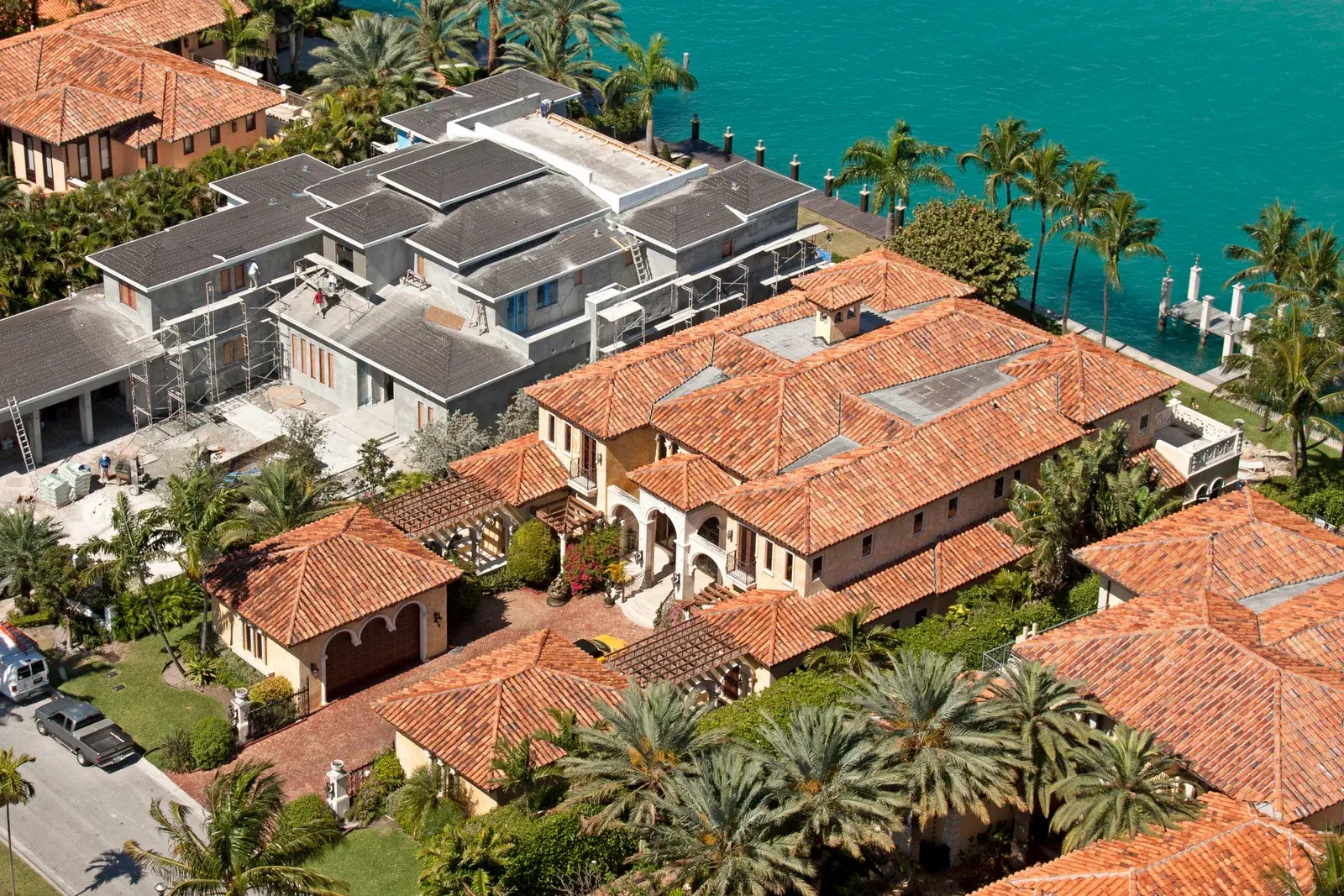
Hand-laid terracotta barrel tile across a row of waterfront estates.
Coral Gables Tile Specifications
What gets installed, and why.
The six numbers and credentials that define a Coral Gables tile re-roof. Verified against current NOA filings and manufacturer documentation.
Lifespan
30+ years
The clay itself is the longest-lived part of the system. The defining service interval is the peel-and-stick underlayment beneath, replaced once per generation (25 to 30 years).
Wind rating
180+ mph uplift
Exceeds the Miami-Dade HVHZ 175 mph minimum. Every Coral Gables tile we install is mechanically clipped per current NOA specification.
Material warranty
70-year Ludowici ColorFast warranty
The manufacturer's ColorFast color-stability warranty, available only through Elite Crown installers; we have held that status since 2009.
Workmanship
12-year workmanship
Our installation craft warranty runs in parallel with the manufacturer warranty. Family-owned since 1985 means the warranty signature is the same family across generations.
Investment
Scoped by tile, profile, and detailing
Range reflects tile selection (Ludowici, Verea, Redland), profile, copper detailing, and the structural complexity typical of Mediterranean revival homes. Most full tile re-roofs land within our $25,000 to $80,000 roof-replacement range.
Weight
750 to 900 lbs per square
Clay runs lighter (around 750 lbs); concrete runs heavier (around 900 lbs). Structural review confirms whether the existing framing can carry the spec.
What's Different About Coral Gables Tile
The four things only the city asks for.
Local note 1
Historic district approvals
The Coral Gables MMR Mediterranean and Country Club districts require Board of Architects review for any visible tile change. We submit the package: existing-conditions photos, proposed tile profile and color samples, the manufacturer NOA letter. We attend the hearing on your behalf.
Local note 2
Color matching to the city palette
The City asks that tile color match the architecturally appropriate Mediterranean revival palette. Sample approval typically lands before tear-off. We bring physical tile samples to the consultation so the decision is made in daylight, not from a brochure.
Local note 3
Structural carry on older homes
Many Coral Gables homes built before 1955 were framed for the original lighter Spanish barrel tile. A re-tile in concrete (around 900 lbs per square) may require reinforcement, while clay re-tile (around 750 lbs) typically does not. We confirm capacity before signing.
Local note 4
The tree canopy and the saw
Coral Gables operates a permitted urban canopy. We coordinate with your arborist and with city arboriculture before the boom truck lands, schedule loud saw work for weekday mornings, and never trim a city-maintained tree without written city consent.
Permitting and Historic District Overlay
Two reviews in parallel.
Every Coral Gables tile re-roof carries the standard Miami-Dade HVHZ wind permit from the City of Coral Gables Building Department, with the current Notice of Acceptance on the field tile, the underlayment, and the fastening pattern. Homes in the city's historic districts route through Board of Architects review for any visible exterior change before the building permit clears.
We file the BOA package directly: existing-conditions photos, proposed tile profile, color samples on physical tile, manufacturer NOA letter, and architectural elevations where the change is significant. We attend the hearing on your behalf. Most Coral Gables tile re-roofs we file are approved on first review.
Los muchachos que trabajaron en el techo son de mucha confianza, son unos muchachos muy nice y complacientes, todo me lo dejaron limpiecito y la verdad que quedó muy lindo mi techo. Aparte de que son muy honestos, esa compañía es una compañía muy honesta, muy firme y muy seria. Sinceramente se los recomiendo a cualquier persona.
Other Materials in Coral Gables
If tile isn't the right call.
Tile predominates, but Coral Gables wears more than one material. Metal, asphalt, and flat each have a defensible context within the city.
Tile installation discipline is identical across South Florida. The neighborhood code, review pattern, and architectural register shift across the footprint, but the craft is the same.
The Coral Gables Board of Architects review pattern shows up in different forms elsewhere. Coconut Grove routes through the City of Miami Historic Preservation Office; Old Grove cottages and bayfront Mediterraneans carry tile under similar canopy considerations. Pinecrest filing goes through the Village of Pinecrest Building Division for the Mediterranean estates along Old Cutler Road; oversized lots and mature canopy are the parallel. Miami Beach tile work concentrates on the estate islands (Star, Palm, Hibiscus, Sunset) where salt-air-resistant fastener metallurgy and 16-oz hand-formed copper flashings are non-negotiable; CCCL applies where the property fronts the ocean.
Frequently Asked
Coral Gables tile, answered.
It depends on whether the home is in a designated historic district. Homes in the MMR Mediterranean, Country Club, or Granada districts trigger Board of Architects review for any visible tile change. Homes outside those districts go through standard permitting. We confirm the district status at the initial consultation and file the appropriate package.
Clay tile is the original Mediterranean revival material: lighter (around 750 lbs per square), longer-lived, and the right authentic spec for pre-1955 homes. Concrete tile is heavier (around 900 lbs), less expensive on the front end, and acceptable on newer construction. Both meet HVHZ wind ratings; the choice usually comes down to architectural authenticity and structural carry.
A standard tile permit through the City of Coral Gables Building Department runs five to ten business days for non-historic-district homes. Historic-district properties add one to three weeks for Board of Architects review. We file the application with the current Miami-Dade NOA letters and attend the BOA hearing where applicable.
A like-for-like clay re-tile typically does not require reinforcement; the framing was already designed for the original tile weight. A switch from clay to concrete (or any structural retrofit) needs a capacity review. We perform that review at no charge during the initial consultation and report the result before any contract is signed.
The Board of Architects approves color on a per-project basis against the Mediterranean revival palette: natural terracotta, blended terracotta with cream or weathered accents, and certain glazed finishes that read as period-appropriate. We bring physical sample tiles to the consultation and route the chosen sample through the city for approval before tear-off.
Yes. We hold Ludowici Elite Crown installer status (since 2009), the manufacturer's premier authorization. Elite Crown is required to access the 70-year Ludowici ColorFast warranty, the manufacturer's color-stability warranty on supported clay profiles. Many Coral Gables Mediterranean revival re-roofs we file specify Ludowici clay.
A properly installed clay tile roof in Coral Gables lasts 30+ years. The clay itself is the longest-lived part of the system; the underlayment beneath is the defining service interval, replaced once per generation (25 to 30 years on premium peel-and-stick membranes). The canopy and salt-tolerant air of inland Coral Gables are friendly to tile lifespan.
Begin
A Coral Gables tile roof, filed under the city.
We will be on your roof within ten business days. Bring us the original house photos and the historic-district status. We will handle the BOA package, the permit, and the work.