
A small roof leak rarely waits for business hours. It shows up during a storm, after high winds lift a shingle, or when a tenant calls about a stain spreading across a ceiling. Having a basic repair kit on hand lets a homeowner stop water intrusion before it reaches the roof deck and causes real damage.
This matters most in South Florida, where sudden rain and wind events are common and a delayed patch can mean a soaked attic by morning. This guide lays out exactly what belongs in that kit and when a repair calls for a licensed roofer instead.
Quick answer
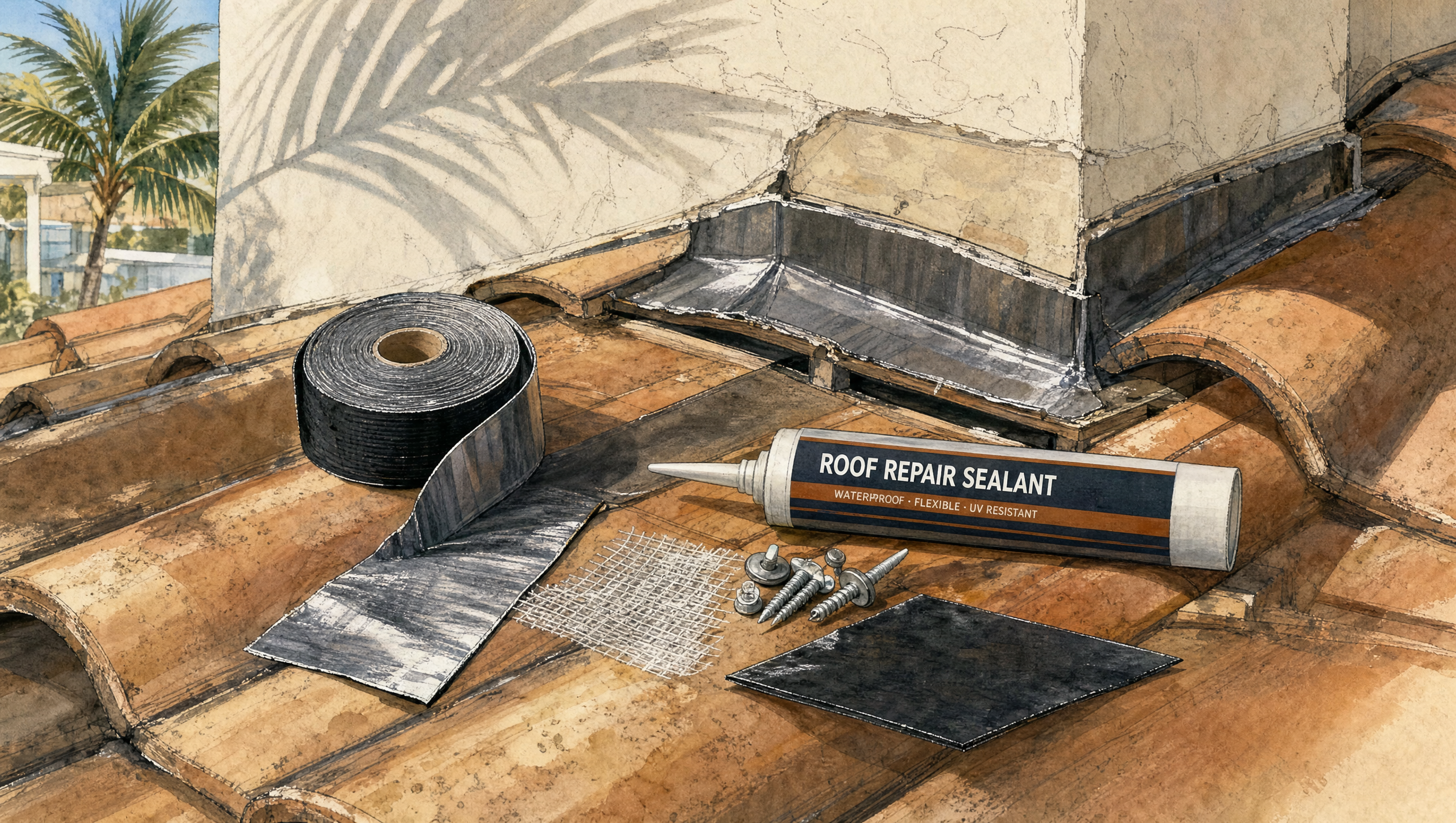
A basic roof repair kit should cover sealing, patching, and safety. That means roofing cement or sealant, a caulking gun, replacement shingles or a scrap of matching roofing material, roofing nails, a pry bar, a utility knife, and a wire brush for cleaning debris off the damaged area. Add a tarp with rope or bungee cords sized to cover the affected section, plus gloves and non-slip footwear for safety.
This kit is meant for small, temporary fixes, such as a lifted shingle or a minor leak, while you arrange a permanent repair. It is not a substitute for a full inspection. Deeper leaks, flashing failures, or storm damage need a trained roofer to find the actual cause and stop water from spreading underneath.
What you should know
A basic kit works as a stopgap, not a fix. Flashing seals joints where leaks start. Underlayment adds a water barrier beneath shingles.
Roofing cement bonds patches to the deck. A kit lets a homeowner slow a leak temporarily, but it does not replace inspection or repair by a licensed roofer.
How it works
Inspect the roof after a storm and locate the leak or damaged area first. Slide flashing under lifted shingles before sealing edges with roofing cement. Cover larger openings with a tarp until repairs can be made.
Coastal wind and rain call for materials rated to hold under repeated, harsh exposure.
How it compares
A homeowner has three practical options when a roof starts leaking. Each one solves a different problem.
| Option | What it solves | Limits |
|---|---|---|
| Roof repair kit | Slows an active leak, covers small punctures or lifted flashing until help arrives | No secondary water barrier (underlayment); not built for structural or wide-area damage |
| Full tarp-down | Buys more time on a larger opening, shields the roof deck during a storm | Needs secure anchoring; can fail in high wind if not fastened properly |
| Professional repair | Restores flashing, underlayment, and roofing material to a watertight standard | Costs more than a kit; requires scheduling a contractor |
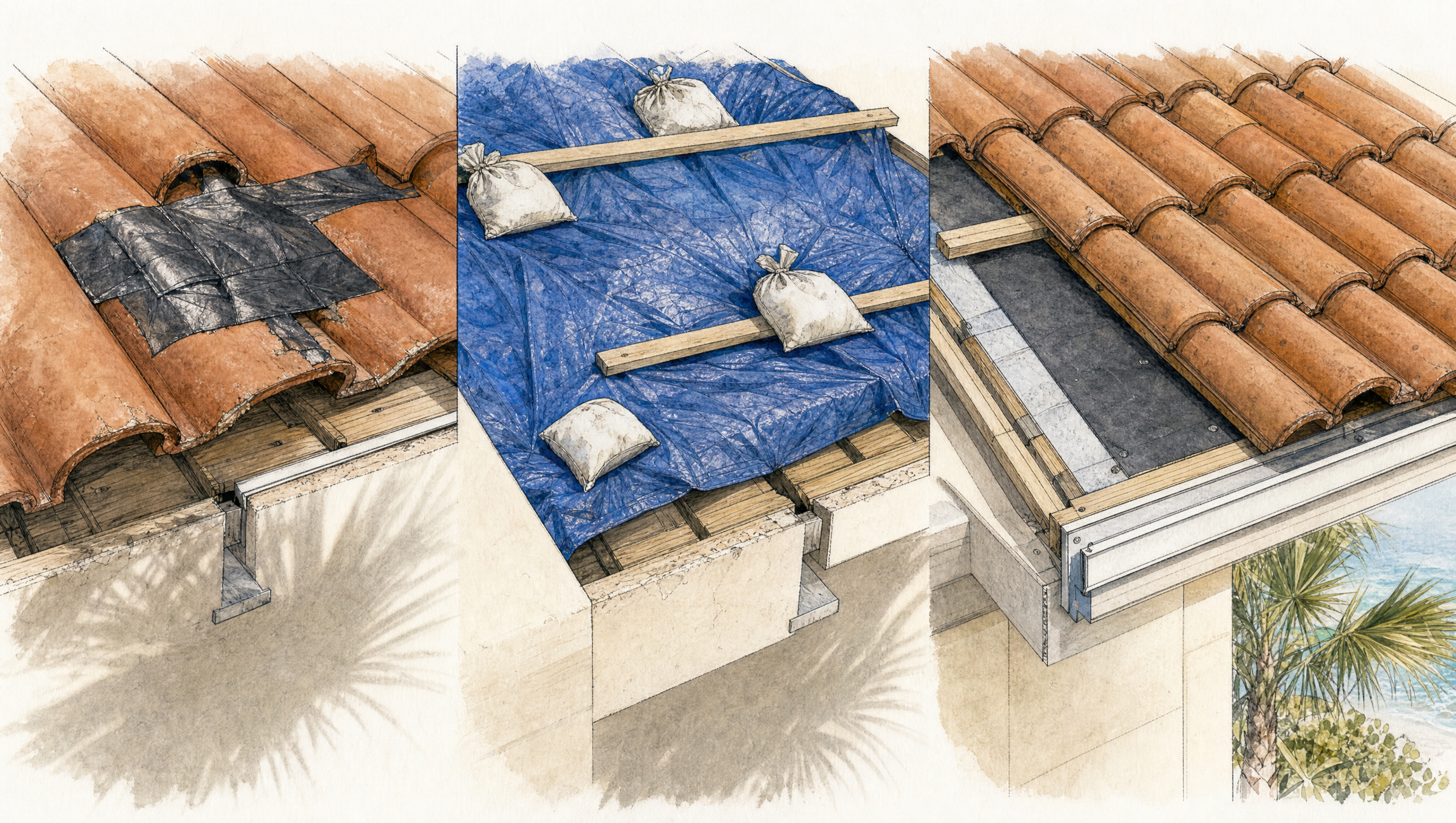
A repair kit is a bridge, not a fix. It buys time until a trained roofer can address the underlying cause and close the job out properly.
How to decide
Ask a roofer what caused the leak before you patch it. If flashing has pulled loose, granules are gone in patches, or the deck feels soft underfoot, a temporary repair will not hold. Small sealant fixes are fine to judge yourself.
Structural or recurring leaks call for a professional inspection.
In South Florida specifically
Miami's High Velocity Hurricane Zone (HVHZ) rules mean permanent repairs must use materials with Miami-Dade Notice of Acceptance (NOA), certifying wind resistance. Salt air corrodes exposed fasteners and flashing faster than inland climates allow. A repair kit helps you hold a leak until a licensed roofer can install code-compliant, NOA-rated materials correctly.
Related reading: 5 signs your roof fascia and soffits need replacement.
For homeowners ready to move forward, see our roof replacement services for installation specifics and quote next steps.