


Very pleased with the visit today with Sophia. She was very informative, professional and attentive.
3 weeks ago
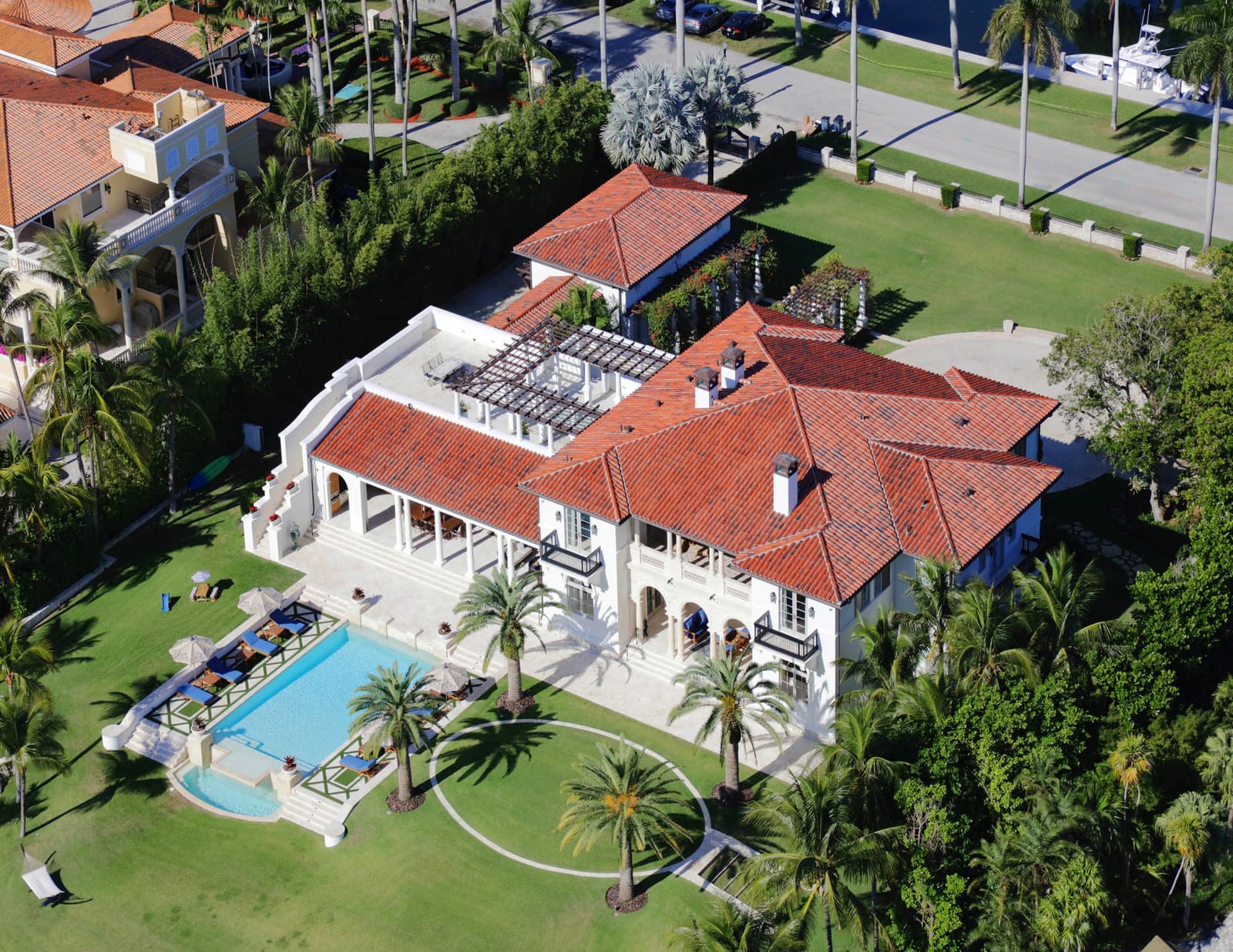
Typical tile roof lifespan in Miami: A tile roof lasts 30+ years in South Florida's coastal environment when properly installed and maintained. Both clay and concrete profiles resist salt-air corrosion and hurricane-force wind when fastened to the HVHZ code.
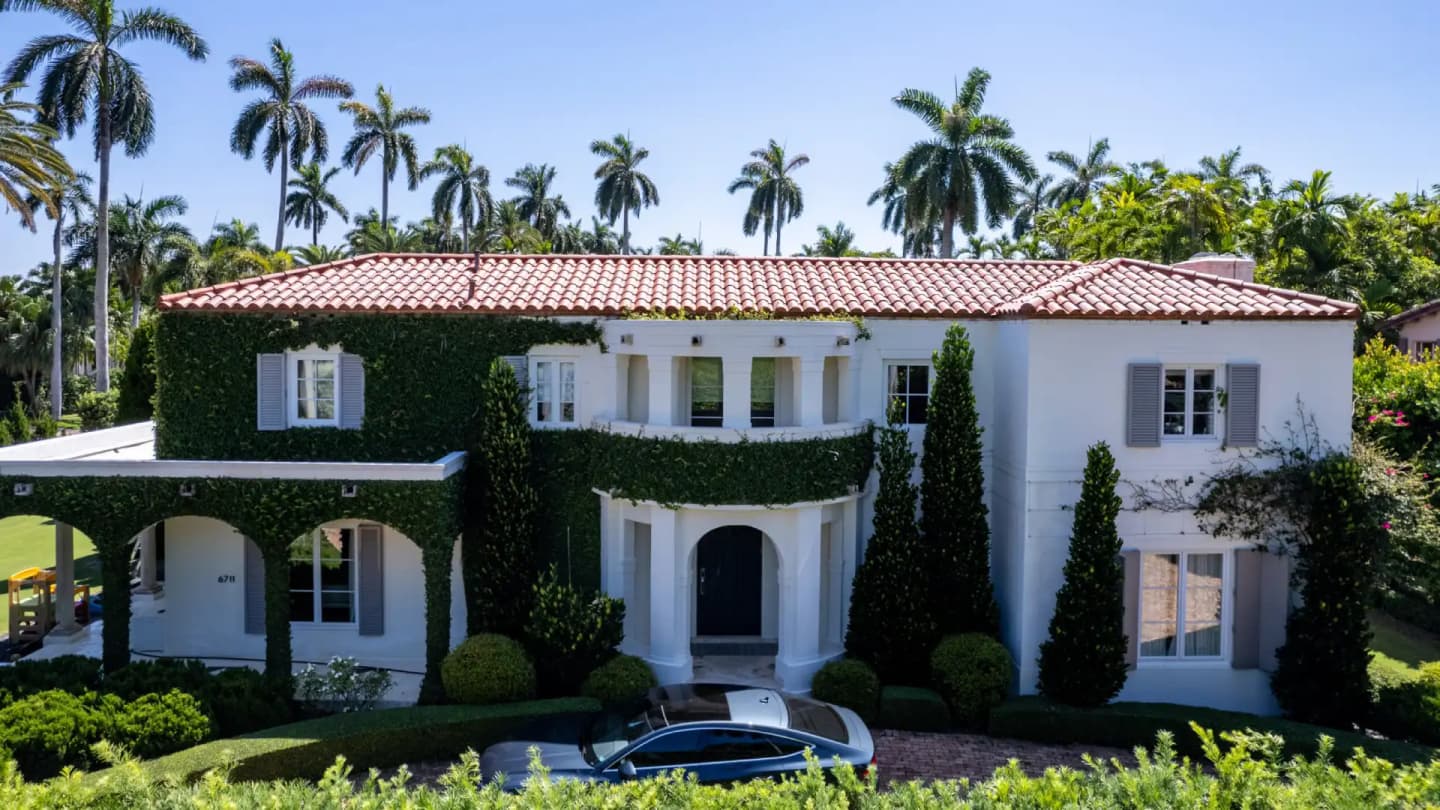
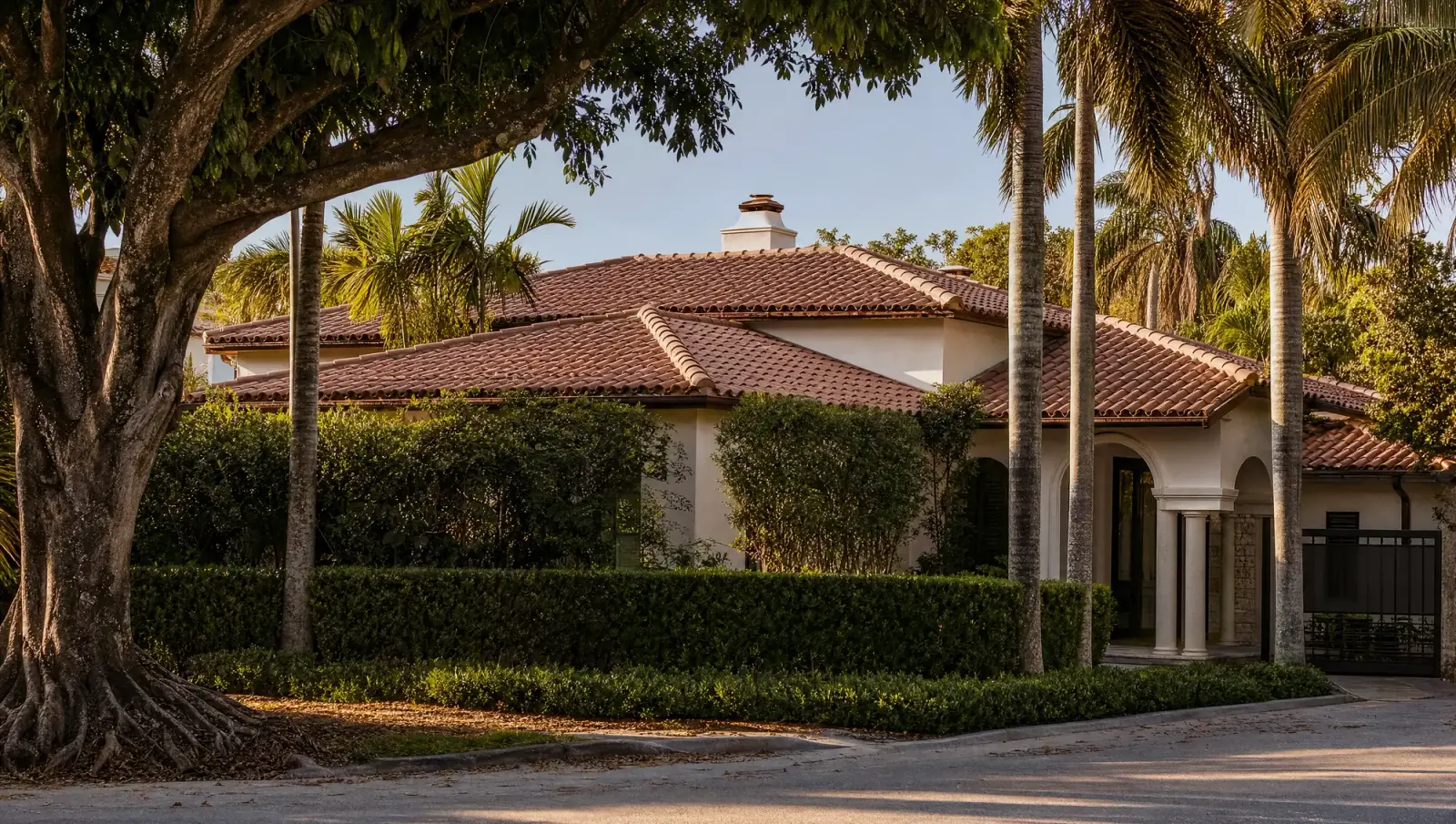
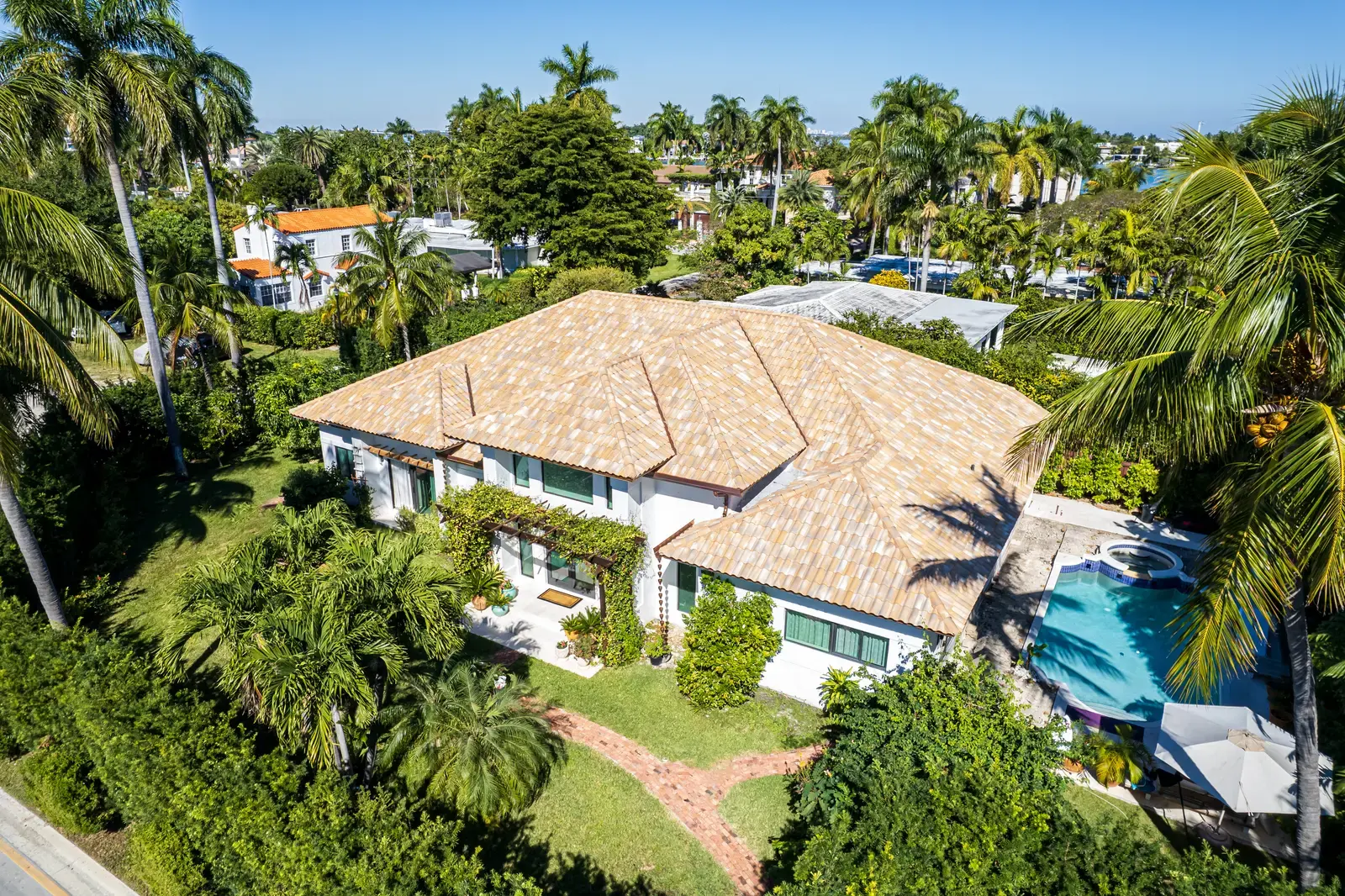
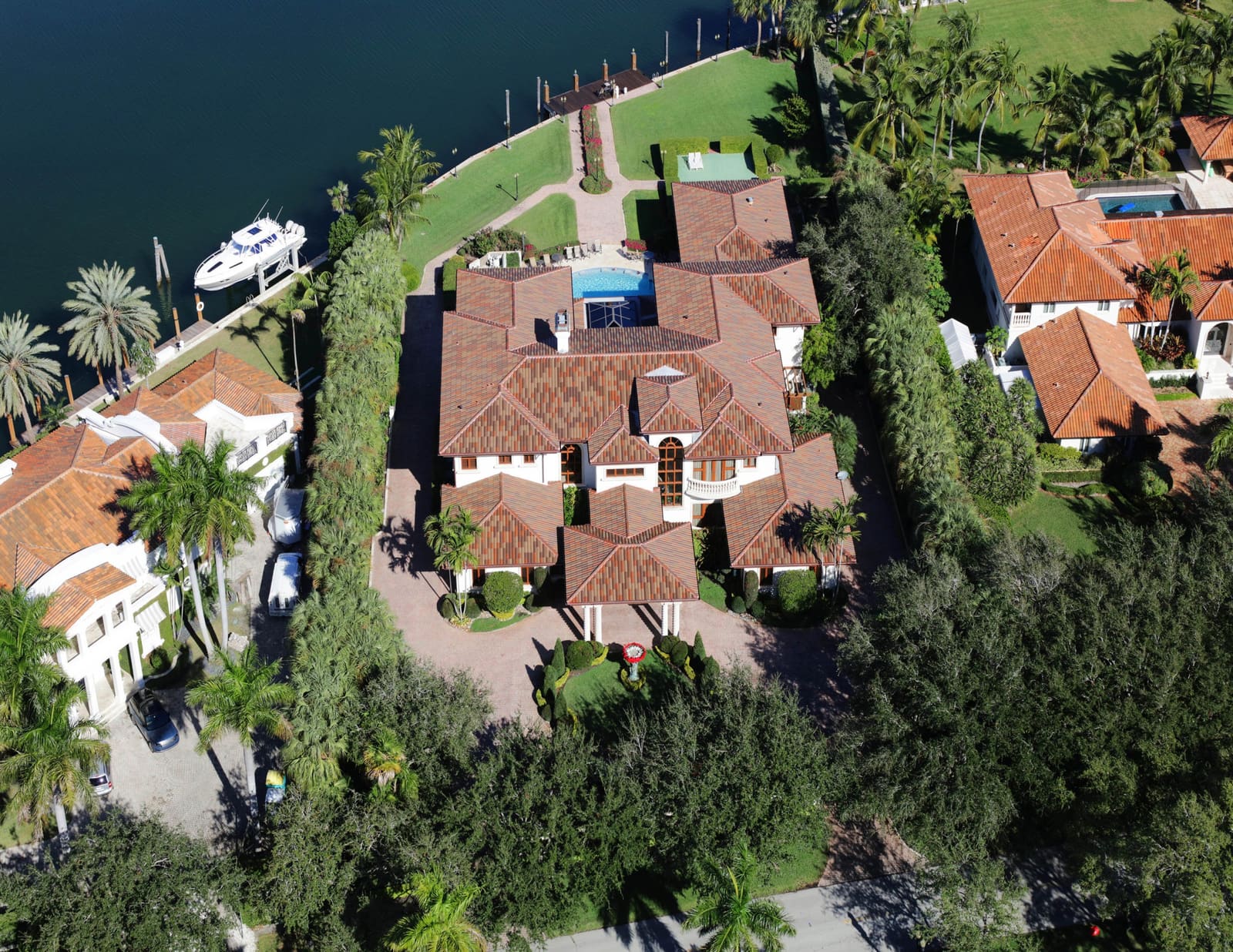
Tile roofing is the architectural default for luxury residential construction across Coral Gables, Coconut Grove, Pinecrest, and Miami Beach, and the broader Miami-Dade and Broward footprint we serve. The material resists salt-air corrosion, survives hurricane-force wind when properly fastened, and carries the visual weight Mediterranean-revival and contemporary coastal homes require.
We install two profiles (clay tile and concrete tile) each suited to a different architectural register and budget tier. Clay is the multi-generational material, the longest-lived tile we install under coastal exposure. Concrete shares the install discipline at a lower entry price, with proper underlayment maintenance.
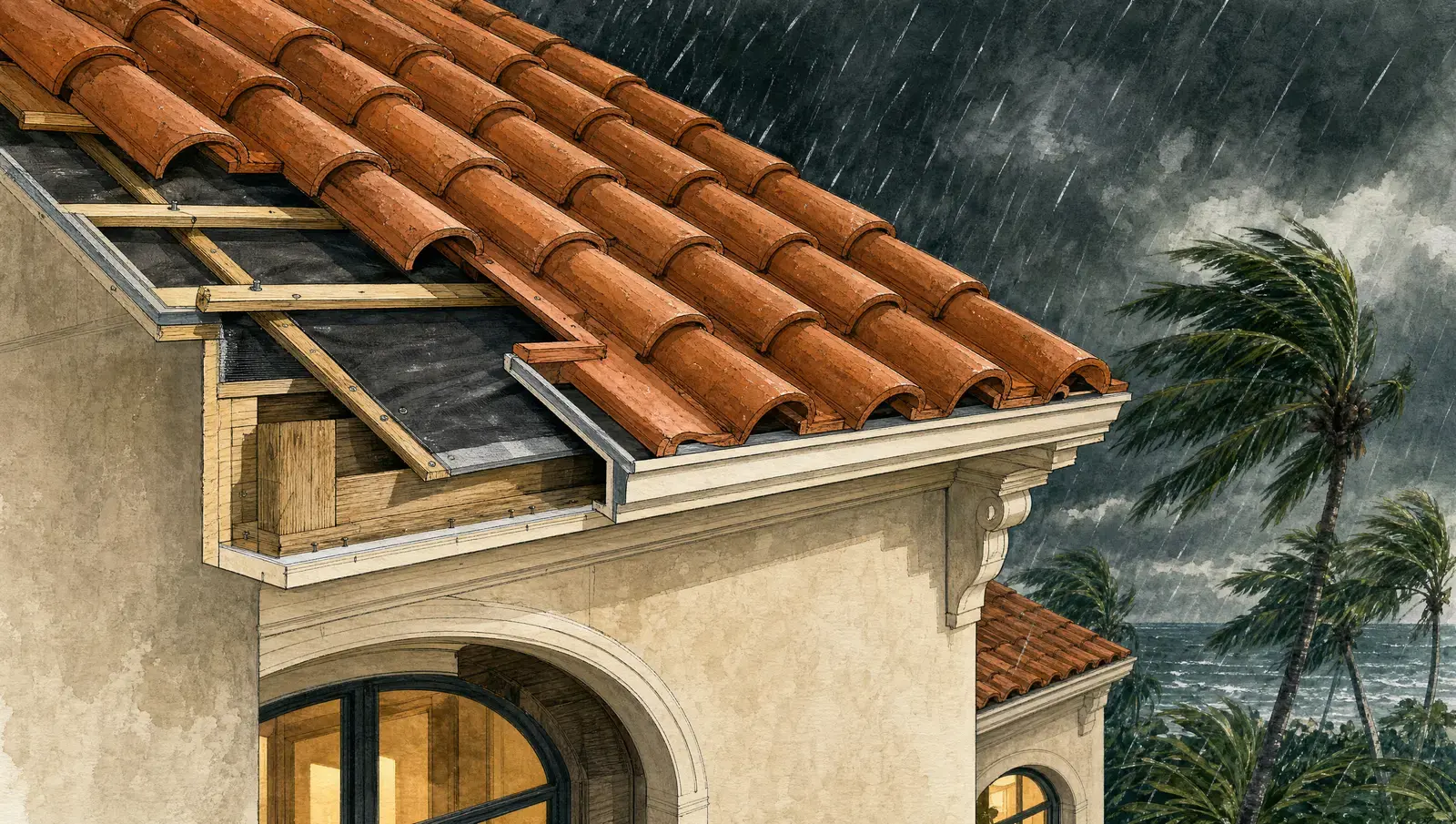
The assembly under the tile matters as much as the profile. We install with a wind-rated underlayment matched to the HVHZ code, and every fastener is concealed or mechanically anchored to the code uplift requirement.
Tile roofing at a glance:
Choose between clay and concrete tile roofing, each offering distinct architectural styles, performance characteristics, and investment levels.
A properly installed tile roof can provide 30+ years of reliable performance. Its lifespan depends on the quality of the clay or concrete tile, the complete roofing system beneath it, the quality of the installation, and ongoing maintenance. Both clay and concrete tile offer exceptional resistance to South Florida's salt-air environment and are engineered to meet the demanding requirements of Miami-Dade's High Velocity Hurricane Zone (HVHZ), making them one of the most durable roofing systems available for South Florida homes.
Choose between clay and concrete tile roofing, each offering distinct architectural styles, performance characteristics, and investment levels.
Choose from a wide selection of Spanish S, Barrel, Flat, Slate and Shake profiles from leading manufacturers, including Ludowici, Verea, Crown Roof Tiles, and Granada.
Visit our Miami showroom to compare tile materials, profiles, colors, textures, and finishes in person. Seeing the differences firsthand makes it easier to confidently choose the roofing system that best complements your home's architecture.
Tile roofing resists salt-air corrosion better than any other residential material at the wind ratings the HVHZ code requires. The profile carries the visual weight Mediterranean-revival and contemporary coastal architecture demand. The material is non-combustible, dimensionally stable under UV exposure, and survives hurricane-force wind when properly fastened.
The assembly under the tile matters as much as the profile. We install with a wind-rated underlayment matched to the HVHZ code, and every fastener is concealed or mechanically anchored to resist uplift. Improperly detailed tile fails first at the fastener line or the underlayment seam.
Properly detailed tile lets you forget about the roof for decades.
Istueta Roofing holds Ludowici Elite Crown Contractor status and Verea Authorized Applicator status. These manufacturer designations are awarded to contractors who demonstrate proven installation expertise, ongoing training, and consistent adherence to manufacturer installation standards.
As a Certified Applicator for the manufacturers we represent, including Ludowici, Verea, and Crown Roof Tiles, every roofing system is installed according to manufacturer specifications and industry best practices. Istueta Roofing also installs Granada clay tile and maintains active membership in the National Roofing Contractors Association (NRCA).
Documentation from the manufacturers we install:
Miami-Dade and Broward counties are part of Florida's High Velocity Hurricane Zone (HVHZ), where residential roofing systems must meet some of the nation's most demanding building standards. Every tile roofing system is installed in accordance with the Miami-Dade Notice of Acceptance (NOA) requirements for the selected roofing material, helping ensure long-term performance and protection in South Florida's climate.
A quality tile roof depends on more than the tile itself. The underlayment serves as a critical second layer of protection beneath the tile, helping protect your home if individual tiles become damaged or displaced during severe weather. Choosing the right underlayment, and installing it correctly, is just as important as selecting the tile itself.
Every tile roofing project is unique, and the investment depends on several factors. The size of your home, roof complexity, tile material, profile selection, underlayment system, and architectural details all influence the final cost. A personalized roof inspection is the best way to determine the right roofing system and provide an accurate proposal for your home.
| Factor | How It Affects Your Project |
|---|---|
| Home Size | Larger roofs require more materials and labor. |
| Roof Complexity | Valleys, dormers, skylights, chimneys, and multiple roof planes require additional craftsmanship. |
| Tile Material | Clay and concrete tile have different characteristics and investment levels. |
| Tile Profile | Some profiles require more labor and specialized installation methods. |
| Roofing System | The underlayment, flashings, ventilation, and accessories all contribute to long-term performance. |
Choosing a tile roof is about more than the initial investment. The right roofing system balances architectural style, long-term performance, and the specific needs of your home. A professional inspection helps determine the best solution based on your home's design, structure, and your long-term goals.
Choose from flexible financing options designed to fit your budget and project needs. Qualified applicants may choose from deferred interest, fixed monthly payments, and same-as-cash programs.
Financing subject to credit approval. See terms for details.
Clay and concrete tile roofing each offer distinct advantages in appearance, durability, and performance. Compare both materials to determine the best fit for your home.
Clay and concrete tile both work in South Florida's coastal environment. Both are 30+ year systems, and clay is the longer-lived of the two. Concrete needs proper underlayment maintenance.
Both profiles resist salt-air corrosion and hurricane-force wind when properly fastened.
Ludowici Elite Crown is a contractor certification for clay tile installation. It requires documented install discipline, ongoing training, and a proven installation track record on Ludowici-supplied material.
Istueta Roofing holds Elite Crown status.
Ludowici offers a manufacturer ColorFast warranty covering color stability under UV exposure on clay tile. The warranty is the manufacturer's, requires Elite Crown installation, and does not cover underlayment, fasteners, or flashing. Ask us for the current warranty term on the Ludowici profile you choose.
Clay tile is fired ceramic. Concrete tile is cast concrete. Clay lasts longer than concrete, and both are 30+ year systems.
Clay is lighter than concrete. Clay costs more than concrete, weighed against its longer service life. Both profiles resist salt-air corrosion and hurricane-force wind when properly fastened.
Tile roofs can be cleaned to remove algae, moss, and dirt buildup, which is common in South Florida's humidity. Pressure washing at the wrong angle or setting can crack tiles or strip the surface finish off concrete tile, so cleaning method matters as much as the fact that it's being done. Clay tile is more forgiving since its color runs through the whole tile, but both types should be walked and cleaned carefully to avoid breaking tiles underfoot.
Routine cleaning also gives a chance to spot cracked or slipped tiles before they turn into leaks.
Tile roofing costs more up front than an asphalt shingle roof, largely because of the weight of the material, the extra structural and installation work that comes with it, and the labor involved in setting individual tiles rather than rolling out sheets or panels. Clay tile, especially a product with a formal certification and color warranty like Ludowici, sits at the higher end of that range compared to concrete tile. The final number depends on the tile profile, the roof's pitch and complexity, and whether structural reinforcement is needed to carry the added weight.
We can walk through those variables and give you a project-specific figure.
Tile roofing is made from either clay or concrete, the two main materials used in the field. Clay tile is fired from natural clay and includes products like Ludowici, which carries an Elite Crown certification and a color warranty. Concrete tile is manufactured from cement, sand, and water and is generally less expensive than clay, though it differs in weight, porosity, and long-term appearance.
The right material for a given roof depends on the structure's load capacity, the architectural style of the home, and budget.
Tile is almost always removed rather than roofed over. Tile roofs rely on the underlayment and battens beneath the tiles to shed water, and that layer wears out long before the tiles themselves do, so a re-roof means pulling the tile, replacing the underlayment, and resetting the same tile or new tile on top. Tiles that survive removal in good condition can often be reused, which keeps costs down compared to buying an entirely new tile set.
Layering a new roof system directly over existing tile is not a practice we recommend or perform.
Clay and concrete tile roofing systems are built for long-term performance. While tile is one of the most durable roofing materials available, its lifespan ultimately depends on premium materials, proper installation, and regular maintenance. Keeping your roof clean, addressing minor issues promptly, and scheduling routine inspections can help maximize its service life.
Tile itself is not typically coated the way a metal or flat roof is, since clay and concrete tile already resist weathering on their own. What matters more over time is the underlayment beneath the tiles, flashing details, and any cracked or slipped tiles that let water in. If you're dealing with granule loss, chalking, or fading on a different roof type and want to know if coating is the right fix, see our roof coatings page.
Schedule a personalized consultation to explore the best roofing options for your home and receive a detailed written proposal.