
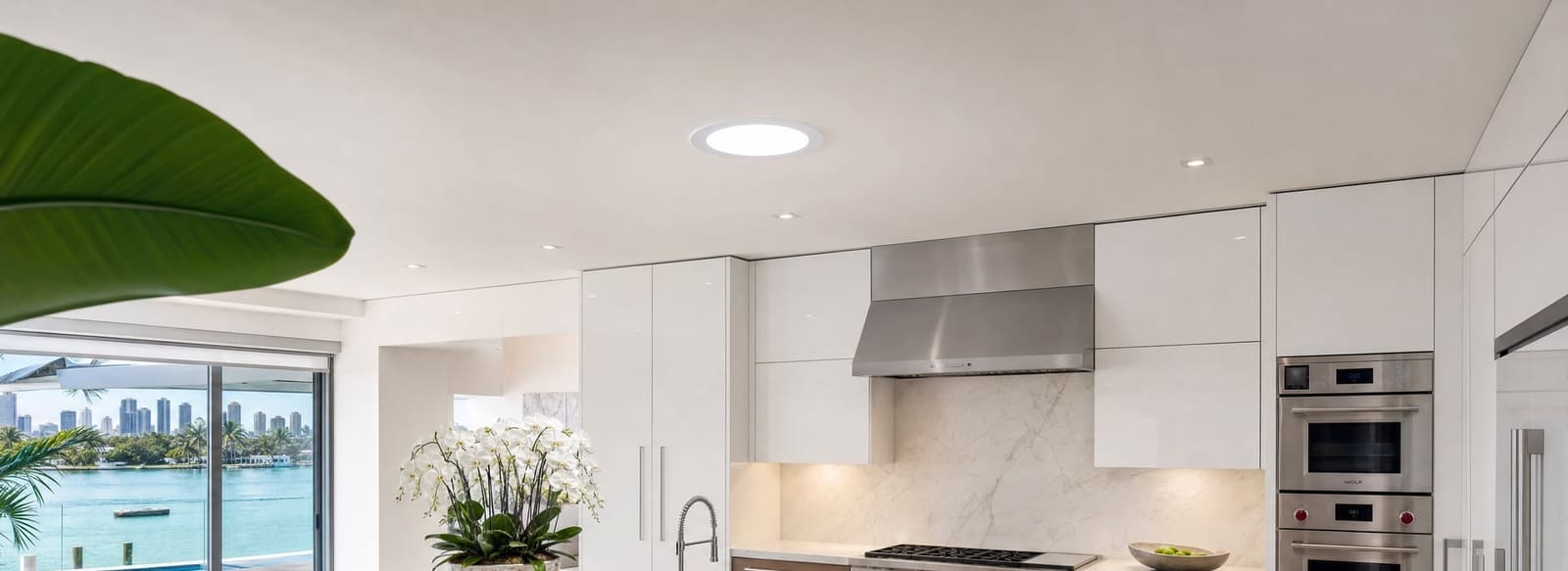
Traditional skylight installation,
HVHZ-flashed across South Florida.
Fixed, vented, curb-mounted, and deck-mounted skylights for Miami-Dade and Broward homes. Every unit carries a current Miami-Dade NOA; every flashing layer is detailed for the South Florida storm season. Family-owned since 1985.
What is traditional skylight installation?
Traditional skylight installation cuts a glazed opening through the roof deck, mounts a 4-inch minimum curb assembly anchored to the framing, integrates flashing in layers around the curb, and seats the glazing unit on the curb. A typical 1- or 2-unit project completes in 1 to 2 days. Miami-Dade requires a current Notice of Acceptance (NOA) on the unit, the fastening pattern, and the underlayment for every install in the High-Velocity Hurricane Zone. Istueta has detailed traditional skylight flashing across Miami-Dade and Broward since 1985.
Fixed, vented, curb-mounted, or deck-mounted.
The choice depends on the room (does it need ventilation), the roof (slope and material), and the architectural register. We carry all four; the consultation confirms which fits.
Fixed skylight
Non-operable glazed unit on a curb assembly. The simplest configuration: daylight passes through, no moving parts, no operators. Right for living rooms, primary bedrooms, kitchens where ventilation comes from elsewhere.
Vented skylight
Operable sash on a curb assembly. Manual cranks or electric operators open the unit for airflow. Right for upper-floor rooms, bathrooms, and kitchens where natural ventilation matters as much as daylight.
Curb-mounted
Glazing seats on a raised wood or metal curb 4 inches or more above the roof plane. The curb sheds water around the perimeter and is the standard install for low-slope and flat applications.
Deck-mounted
Glazing seats directly on the roof deck with low-profile flashing, no raised curb. Suits steep-slope shingle and metal roofs where a curb would read as visually heavy.
A 4-step sequence, typically 1 to 2 days.
Skylight work integrates roof framing, flashing, glazing, and interior finish. The sequence below is the standard install path; long light shafts, structural reinforcement, or multi-unit projects extend the timeline proportionally.
Site evaluation
Roof slope, framing capacity, interior layout, and ceiling depth all factor in. We measure the room from inside, walk the roof from outside, and confirm the path from roof opening to ceiling diffuser is workable before specifying the unit.
Permit + NOA filing
Miami-Dade requires a building permit for every skylight install. We file the permit with the current NOA documentation on the chosen unit, the curb attachment pattern, and the underlayment specification.
Roof opening + flashing
The deck opening is cut to the manufacturer specification, the curb is set and anchored to framing, and the flashing integrates with the surrounding roofing material. Flashing layers always run lower-under-upper to shed water.
Glazing + interior shaft
The glazing unit seats into the curb on a gasket or sealant bed. If the roof and ceiling planes are not parallel, an interior light shaft connects them; we coordinate drywall and finish with your interior trades.
The flashing layer is the leak prevention layer.
Most skylight leaks trace to flashing, not glazing. The curb assembly extends at least 4 inches above the surrounding roof plane on low-slope installs; the flashing integrates in layers (lower under upper) so water sheds outward at every course. For shingle roofs we use step flashing; for tile we field-fabricate pan flashing matched to the profile; for standing-seam metal we cut custom pans that integrate with the panel seam.
Flashing is where we focus quality control on every install. Manufacturer glazing-seal warranties run separately, typically 10 to 20 years depending on the product line, and are handled by the manufacturer; we document the flashing details at handoff.
For existing skylights past their service life, see skylight replacement. For interior rooms without a viable roof-to-ceiling path, see Solatube tubular daylighting.
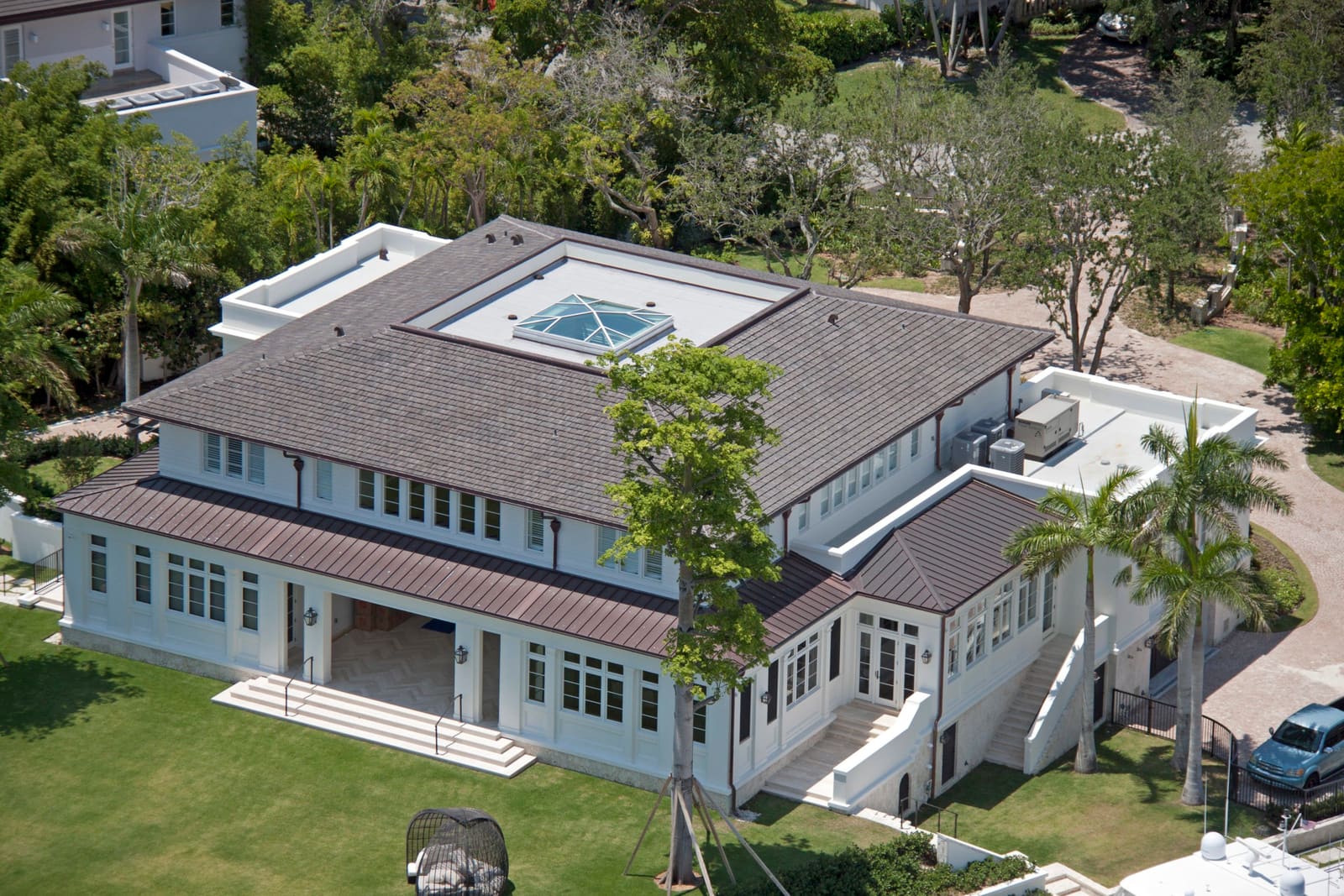
Skylight install answers,
before you ask.
Most single-unit installations complete in 1 to 2 days, depending on roof type, ceiling depth, and any interior light-shaft construction. Multi-unit projects extend proportionally. We confirm the schedule in the written estimate.
Tile, asphalt shingle, standing-seam metal, and most flat membrane systems all accept a properly flashed curb-mounted skylight. We evaluate slope, framing capacity, and roof condition during the consultation; some older or compromised roofs need targeted repair before the opening is cut.
Fixed skylights pass light only; venting skylights add manual or electric operators that open the sash for airflow. Bathrooms, kitchens, and upper-floor rooms often benefit from venting units; pure-daylighting installations in living rooms typically use fixed units to simplify weatherproofing.
Every traditional skylight we install carries a current Miami-Dade Notice of Acceptance (NOA) for the High-Velocity Hurricane Zone. Impact-rated laminated glazing and curb anchorage are specified per the NOA; we file the documentation at permit.
Flashing is the critical layer. Step flashing integrates with shingles; pan flashing matches tile profile; standing-seam roofs use custom-formed pans. The manufacturer glazing warranty covers the unit itself; we focus on getting the flashing integration right and document the details at handoff.
A traditional skylight is a glazed roof opening that pours direct daylight into a room from above. A Solatube is a tubular daylighting system that channels light through a reflective tube to a ceiling diffuser. Traditional units suit kitchens, living rooms, and primary bedrooms where direct daylight is wanted; Solatube fits interior rooms with no roof-to-ceiling path. See Solatube tubular daylighting for that route.
If the unit is past its 15-25 year service life, has visible fogging between panes, persistent leaks after a repair attempt, or yellowed glazing, replacement is the call rather than a new install. See our skylight replacement page for that workflow.
References: Miami-Dade NOA listings
See where a skylight actually lands.
We walk the roof, measure the room from inside, confirm the path from opening to ceiling, and write the estimate with line items separated. No charge for the consult.