

Clay tile roof
Typical roof lifespan in North Miami: Most residential roofs last 15+ years in this coastal exposure; standing-seam metal and high-end tile commonly reach 30+ years when properly detailed and maintained. Asphalt shingles and flat membrane systems typically reach 15+ years depending on substrate condition and ventilation.
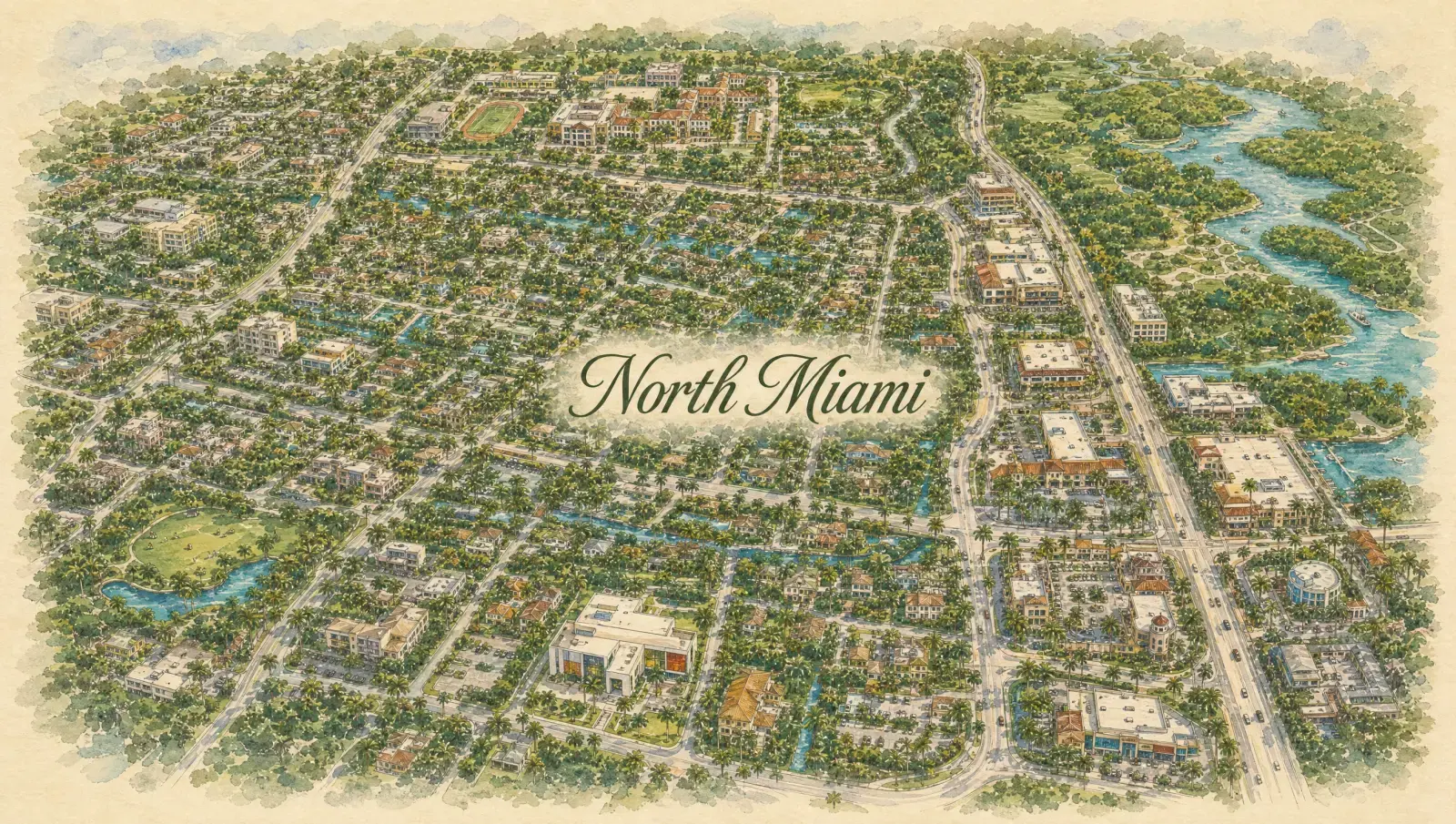
North Miami's building stock reflects its evolution from the Town of Arch Creek (incorporated 1926) to a city of 60,191 residents as of the 2020 census. The residential inventory includes post-war single-family homes, waterfront properties along Biscayne Bay, and newer construction near Florida International University's Biscayne Bay Campus. Roofline complexity varies with architectural register. Some homes carry flat or low-slope profiles, others show gabled forms typical of mid-century South Florida residential design.
Salt air from Biscayne Bay accelerates corrosion on metal fasteners and flashing. Tree canopy from mature palms and tropical landscaping deposits organic debris that holds moisture against roof surfaces. The city's location in Miami-Dade County places every roof under HVHZ permitting. Wind-uplift testing, Miami-Dade Notice of Acceptance documentation, and AHJ review for material and fastening systems.
Roofs in North Miami balance coastal exposure with the permitting discipline Miami-Dade County enforces. Material selection, fastener specification, and flashing detailing respond to both the bay-front environment and the code requirements that govern installation across the HVHZ footprint.
We've worked across North Miami since 1985, installing tile, metal, and flat membrane systems on homes from the Arch Creek corridor to the waterfront properties along Biscayne Bay. The work here requires attention to salt-air detailing, debris management under canopy, and the documentation Miami-Dade inspectors expect at every stage of the job.
See also service areas, Coral Gables, Pinecrest, and Coconut Grove.
Homes along Biscayne Bay face accelerated corrosion on fasteners, flashing, and metal roof panels. Stainless-steel fasteners, concealed-clip systems, and corrosion-resistant coatings extend material lifespan. Aluminum and galvalume perform well here when properly detailed.
Mature palms and tropical landscaping deposit fronds, seed pods, and organic matter that holds moisture against roof surfaces. Regular debris clearing and proper valley detailing prevent moisture accumulation and premature material degradation.
Every roof in North Miami requires wind-uplift testing documentation and Miami-Dade Notice of Acceptance approval. The permitting process includes plan review, material verification, and field inspection at multiple stages. Installation must match the approved NOA exactly.
Narrow driveways, limited street parking, and proximity to neighboring homes complicate material delivery and crane staging. We coordinate delivery timing, protect landscaping during the job, and work within the access constraints waterfront lots present.
Our work from nearby South Florida neighborhoods.
Clay tile roof

Metal roof

Clay tile roof

Metal roof
Yes. North Miami sits in Miami-Dade County's High Velocity Hurricane Zone. Every roofing system installed here must carry a Miami-Dade Notice of Acceptance certifying wind-uplift performance. The NOA documentation is reviewed during permitting and verified during field inspection.
Aluminum and galvalume standing-seam metal roofing perform well in salt-air environments when installed with stainless-steel fasteners and concealed-clip systems. Tile roofing also works when flashing and underlayment are detailed for coastal exposure. Material choice depends on architectural register, budget, and the specific exposure conditions at the property.
Most residential roof replacements take three to five days from tear-off to final inspection. Timeline depends on roof size, material type, weather, and permitting. We coordinate delivery, staging, and inspection scheduling to minimize disruption.
Yes. We prepare permit applications, submit Miami-Dade NOA documentation, coordinate plan review, and schedule inspections with the local building department. Permitting is included in our scope of work for every roof replacement and new-construction project.
We've been installing roofs across North Miami since 1985. If you're planning a replacement, repair, or new-construction project, we'll walk you through material options, permitting requirements, and what the job involves from start to finish.