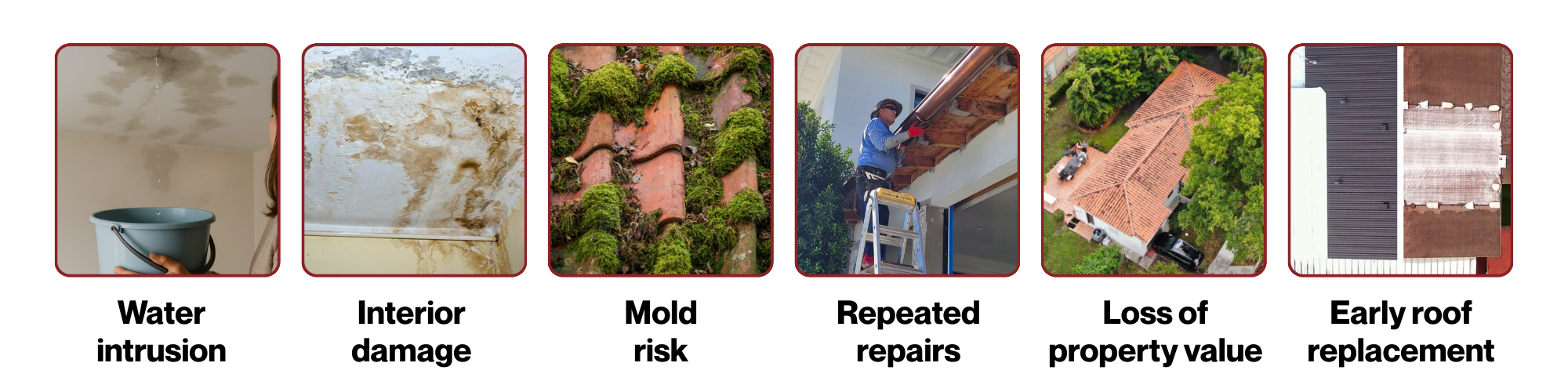
A leaking ceiling stain or a handful of missing shingles after a storm raises the same question for most South Florida homeowners: is this a repair job, or does the whole roof need to come off? The answer changes the bill by thousands of dollars and affects how the roof performs in the next hurricane season. Guessing wrong wastes money, either on spot repairs that fail again in a year or on a full tear-off the roof didn't yet need.
This post walks through how a licensed roofer weighs that decision, so you can ask the right questions before signing anything.
Quick answer
Repair your roof if the damage is localized (a handful of missing shingles, a small leak, isolated flashing failure) and the roof has years of service life left. Replace it if the damage is widespread, the roofing material is near the end of its lifespan, or repairs are becoming frequent and costly. As a rough guide, once a single repair approaches 30% or more of a full replacement's cost, or the roof is past about 75% of its expected service life, replacement usually makes better financial sense.
A new roof carries a longer warranty and resets the clock on the roof's service life. A licensed roofing contractor can inspect the roof and tell you which side of that line your situation falls on.
What you should know
Deciding between roof repair and roof replacement comes down to a few measurable factors: the age of the roof, the extent of the damage, and how that damage is distributed across the roof surface. A repair addresses a specific, contained problem: a cracked tile, a section of lifted shingles, a failed flashing seam around a chimney or vent pipe. Flashing is the metal or rubberized material installed at roof penetrations and edges to keep water from working its way underneath the roofing material.

When flashing fails or a small area of covering is damaged, a repair can resolve the issue without disturbing the rest of the roof.
Roof replacement becomes the right call when damage is widespread, when the underlying roof deck (the plywood or OSB layer beneath the roofing material) has been compromised by sustained moisture, or when the roof covering itself is nearing the end of its expected service life. A roof that has taken on damage in multiple, unrelated areas is often signaling that the material itself has degraded, not that a few isolated repairs will hold.
Cost is often the first question homeowners ask. Repairs generally start in a lower cost bracket, while full replacements run in a considerably wider range that widens with the square footage, the materials chosen, and the complexity of the structure. That gap is real, but it should not be the only factor.
A roof past its practical lifespan that keeps absorbing repair costs is usually costing more over time than a single, well-planned replacement.
This distinction matters most for South Florida homeowners because of the region's building code requirements and weather exposure, covered in more detail later in this article. Understanding the baseline difference between a contained repair and a full system replacement gives homeowners the vocabulary they need before a contractor ever sets foot on the roof.
How it works
A roofing decision starts with an inspection, not a guess. A licensed contractor climbs the roof, checks the attic for water staining or trapped moisture, and evaluates the condition of the underlayment (the water-resistant layer beneath the shingles or tiles), flashing, and roof deck. What that inspection finds determines which path makes sense.

If the damage is isolated, repair is usually the right call: a few cracked tiles from a storm, a section of lifted shingles, a flashing leak around a vent pipe. A focused roof repair removes the damaged section, checks the deck underneath for rot, and replaces only what failed. Repairs on a roof with sound underlayment and structure can start at a modest cost, since labor and material scope stay narrow.
The calculation changes when the underlayment has degraded across large areas, when multiple leaks show up in unrelated parts of the roof, or when the roof is old enough that repairing one section just shifts the failure point somewhere else next season. At that point, a full replacement (tear-off, deck inspection, new underlayment, new roofing material) becomes the more durable option. The investment typically runs well above that repair floor, scaling with square footage and material choice.
Age matters too. A roof past the midpoint of its expected service life often fails a cost-benefit test for repair, because a new roof carries a workmanship warranty of up to 12 years, while a repair is backed for a shorter term (Istueta warrants repair workmanship for one year). Teams like Istueta Roofing watch that math tip over the life of a roof, which is part of why the decision framework leans toward replacement once a roof shows systemic wear rather than a single point of failure.
What changes from house to house is mostly the extent and location of the damage, the age of the existing roof, and whether the deck itself is still structurally sound. Two homes with the same visible leak can need two different fixes, depending on what the inspection turns up underneath.
How it compares
| Factor | Roof Repair | Roof Replacement |
|---|---|---|
| Upfront cost | Pricing starts from the low end of the range | Runs a broader cost range depending on size and material |
| Best fit | Isolated leaks, damaged flashing, a few missing tiles or shingles on an otherwise sound roof | Widespread wear, multiple leak points, or a roof past its expected service life |
| Warranty coverage | 1-year workmanship warranty, limited to the repaired area | Workmanship warranty up to 12 years |
| Long-term value | Lower cost now, but repeated repairs add up on an aging roof | Higher cost now, less frequent intervention over the roof's remaining life |
This table is a starting point, not a final answer. In the end, the right path comes down to your roof's age, deck condition, and how much repair history it has already absorbed.
How to decide
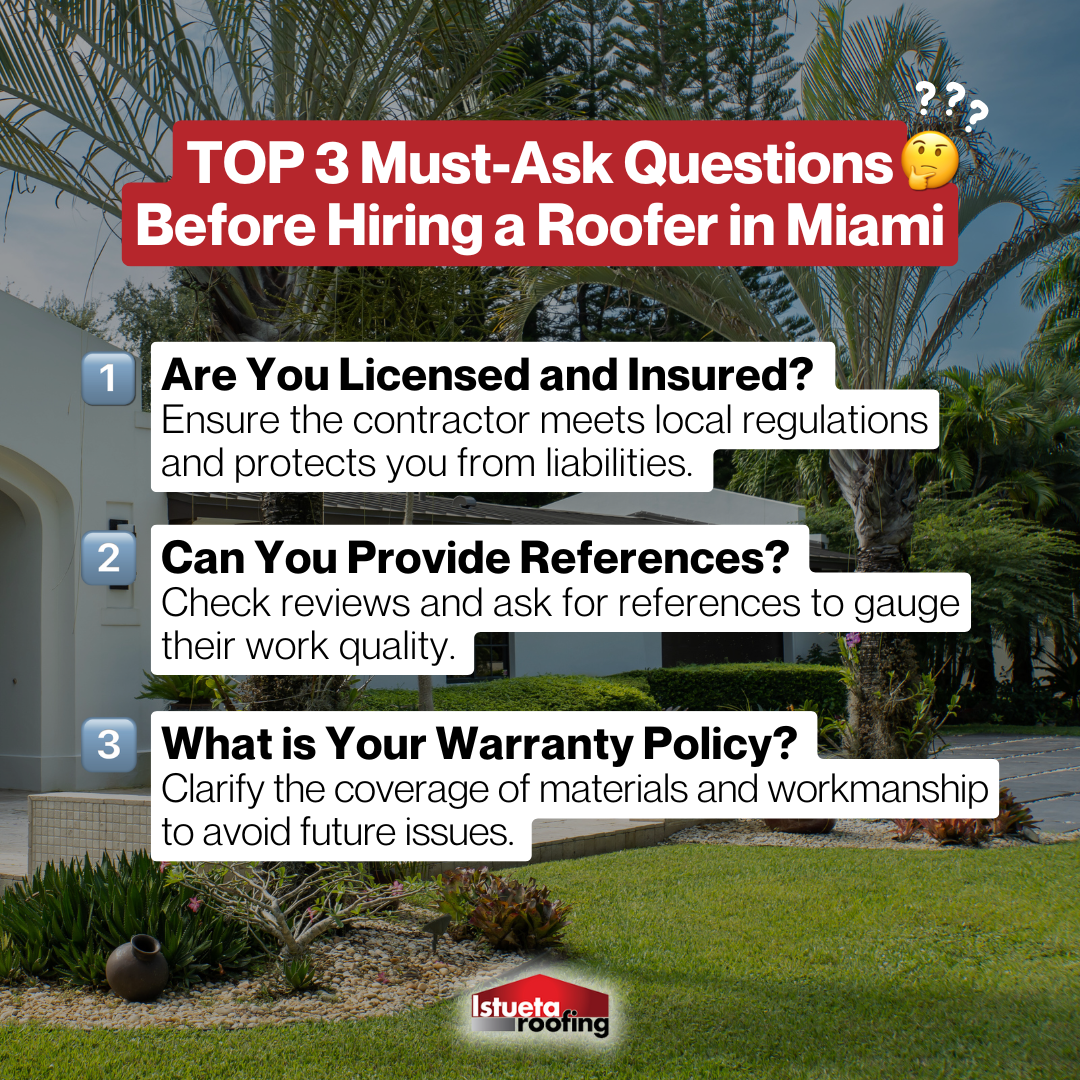
Start by asking a few direct questions and pay attention to how the contractor answers them, not just what they say. Ask what specifically is failing: is it a localized area of damaged shingles or flashing, or is the underlayment and decking compromised across the roof. Ask how old the roof is relative to its expected service life, and insist on a professional roof inspection before any work is quoted.
A contractor willing to get on the roof and photograph problem areas is giving you something you can evaluate yourself. One who only quotes a number over the phone is not.

Ask about warranty coverage on any proposed work, and get an answer in writing for what happens if a repair doesn't hold. That coverage window is a legitimate factor when a roof is old enough that repair only postpones a larger decision.
Recognize a few failure modes as red flags. A quote that changes significantly once work starts usually means the initial inspection was rushed or incomplete. Pressure to sign the same day, vague language about "we'll handle whatever we find," or an unwillingness to explain why repair versus replacement makes sense for your specific roof are all signs to get a second opinion.
Some parts of this decision are yours to make. You know your budget, how long you plan to stay in the property, and how much risk you're willing to carry through another storm season. Those are judgment calls no contractor should override.
Resale plans belong in that calculation too. If you expect to sell soon, the condition of the roof affects how the home shows and how buyers and their inspectors read it, so a documented recent replacement can be a selling point while an aging roof nearing the end of its life often becomes a negotiation item. If you're staying for the long haul, the math tilts the other way: a replacement you'll live under for a decade or more spreads its cost across all those years instead of stacking up repair bills on a roof that's already on its way out.
Other parts belong to a licensed professional. Whether the decking underneath is sound, whether the underlayment system has failed, and whether the existing roof still meets current code requirements are structural and code questions, not preference questions. Get that assessment from someone whose license is on the line for the answer, not just the sale.
Manufacturer warranties on materials per manufacturer terms. Specific coverage and exclusions documented in your signed proposal and contract.
In South Florida specifically
Miami-Dade and Broward counties sit inside the High Velocity Hurricane Zone (HVHZ), a designation that changes how repairs and replacements get approved and installed. Any roofing product used here must carry a Notice of Acceptance (NOA), Miami-Dade's product-testing approval confirming that a shingle, tile, or membrane has been tested to withstand the wind loads and pressure cycles specific to this region. A repair that spot repairs in non-approved material, or that ties into an aging system with materials no longer under a valid NOA, can create a compliance gap that surfaces during a permit inspection or an insurance claim review.
Coastal exposure adds a second layer to the calculation. Salt-laden air accelerates corrosion in fasteners, flashing, and metal edge components, even on properties several miles inland, because prevailing winds carry salt aerosol well past the immediate waterfront. Combined with sustained wind-driven rain during storm season, this environment shortens the practical service life of aging roofing systems compared to drier, inland climates.

A roof that might tolerate incremental repair elsewhere often shows more advanced granule loss, fastener back-out, or flashing deterioration here, from years of cumulative salt and wind exposure.
Permitting is the third factor. Miami-Dade and Broward require permits for most roofing work, and the scope of that permit (repair versus full replacement) determines which inspections apply and which code provisions govern the work, including underlayment type, fastening patterns, and edge metal specification. A roof that has already been repaired multiple times under separate permits can also complicate the record when a homeowner tries to sell or file an insurance claim, since insurers increasingly ask for a documented repair history tied to HVHZ compliance.
Given all this, the local answer to repair-versus-replacement leans more toward full replacement once a roof is past the midpoint of its expected service life, even if the immediate damage looks isolated. The regional cost gap between a targeted repair and a full replacement is real, but so is the code-compliance and insurability picture that comes with it.
Can maintenance postpone replacement?
Often, yes, for a time. Routine maintenance on a 12-month cadence catches loose fasteners, cracked sealant, and flashing wear before water intrusion starts. Addressing these small issues early keeps a repair-ready roof from sliding toward replacement years sooner than necessary.
Maintenance also protects the paperwork side of the decision. Most manufacturer warranties on modern asphalt, metal, and tile systems stay valid only with documented annual maintenance records. A maintained roof keeps more of its coverage intact while you weigh repair against replacement.
The limits matter too. Once damage is widespread, or a single repair approaches 30 percent of replacement cost, maintenance stops changing the math. A structured roof maintenance program buys time and preserves options. It does not rewind a roof that has reached the end of its service life.