Salt air along the Miami coast is hard on roofing materials. Asphalt shingles chalk and curl within a decade under Miami's UV load and humidity, while many metals corrode faster near the coast than manufacturers' spec sheets suggest inland. If you are weighing a reroof or new build and want a material that holds up to salt spray, wind-driven rain, and the hurricane-force gusts South Florida sees each season, copper deserves a closer look.
This post walks through how copper roofing performs in that environment, where it fits your budget and timeline, and what to check before you sign a contract.
Quick answer
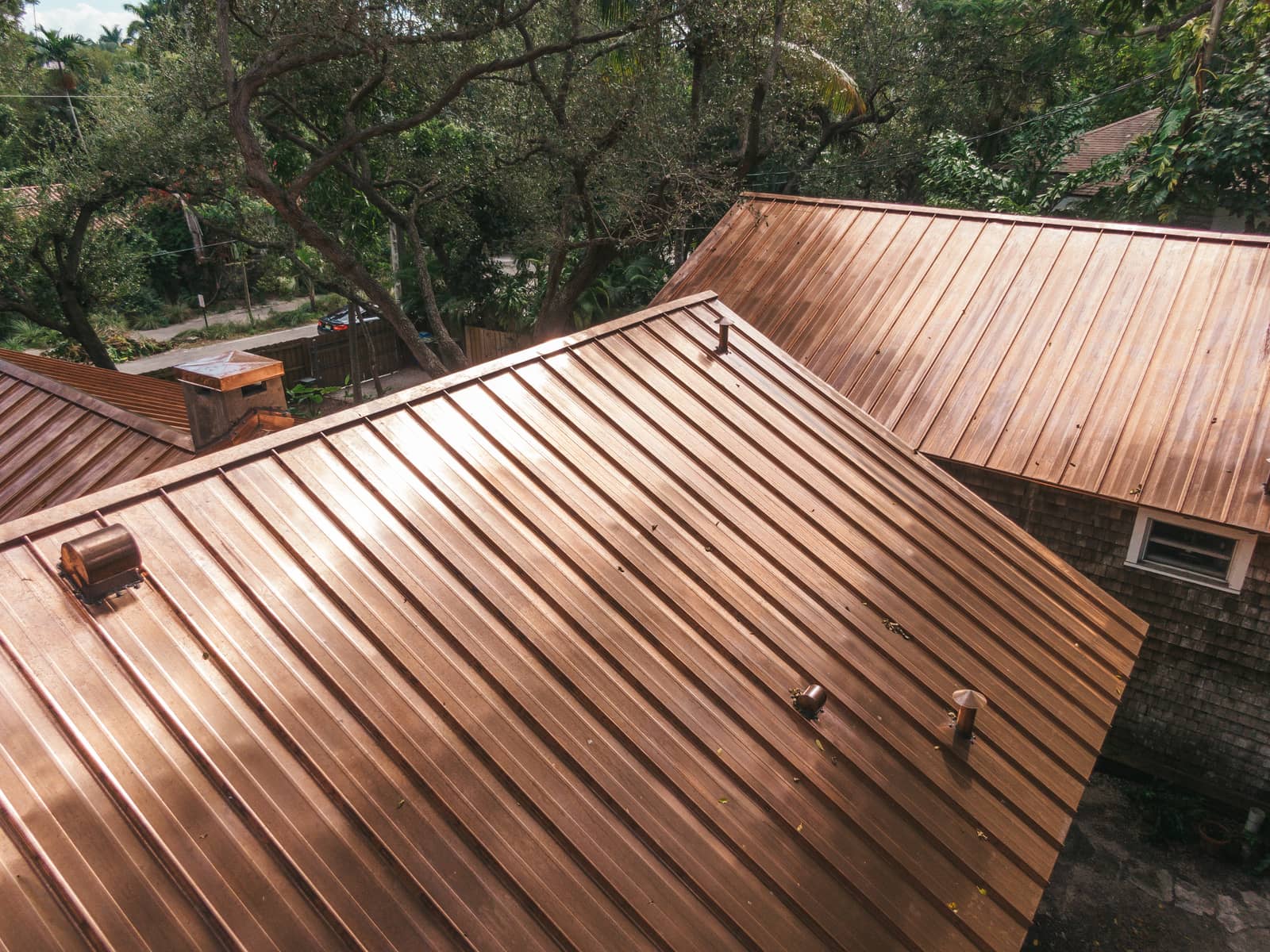
Copper roofing holds up in Miami's salt-laden coastal air because it forms a protective patina (a naturally occurring oxidized surface layer) that resists corrosion rather than succumbing to it. Painted metals can pit or rust once their coating breaks down. Copper's patina strengthens over time instead. In coastal exposure it typically develops within 2 to 7 years and keeps maturing, which makes copper well suited to South Florida's combination of humidity, salt spray, and intense UV exposure.
One qualifier matters: copper costs more upfront than aluminum or steel panels, so it makes the most sense for homeowners planning to stay long-term or prioritizing a High-Velocity Hurricane Zone (HVHZ) roof they won't need to revisit for decades. Proper installation by a manufacturer-certified applicator still matters for wind and water performance.
What you should know
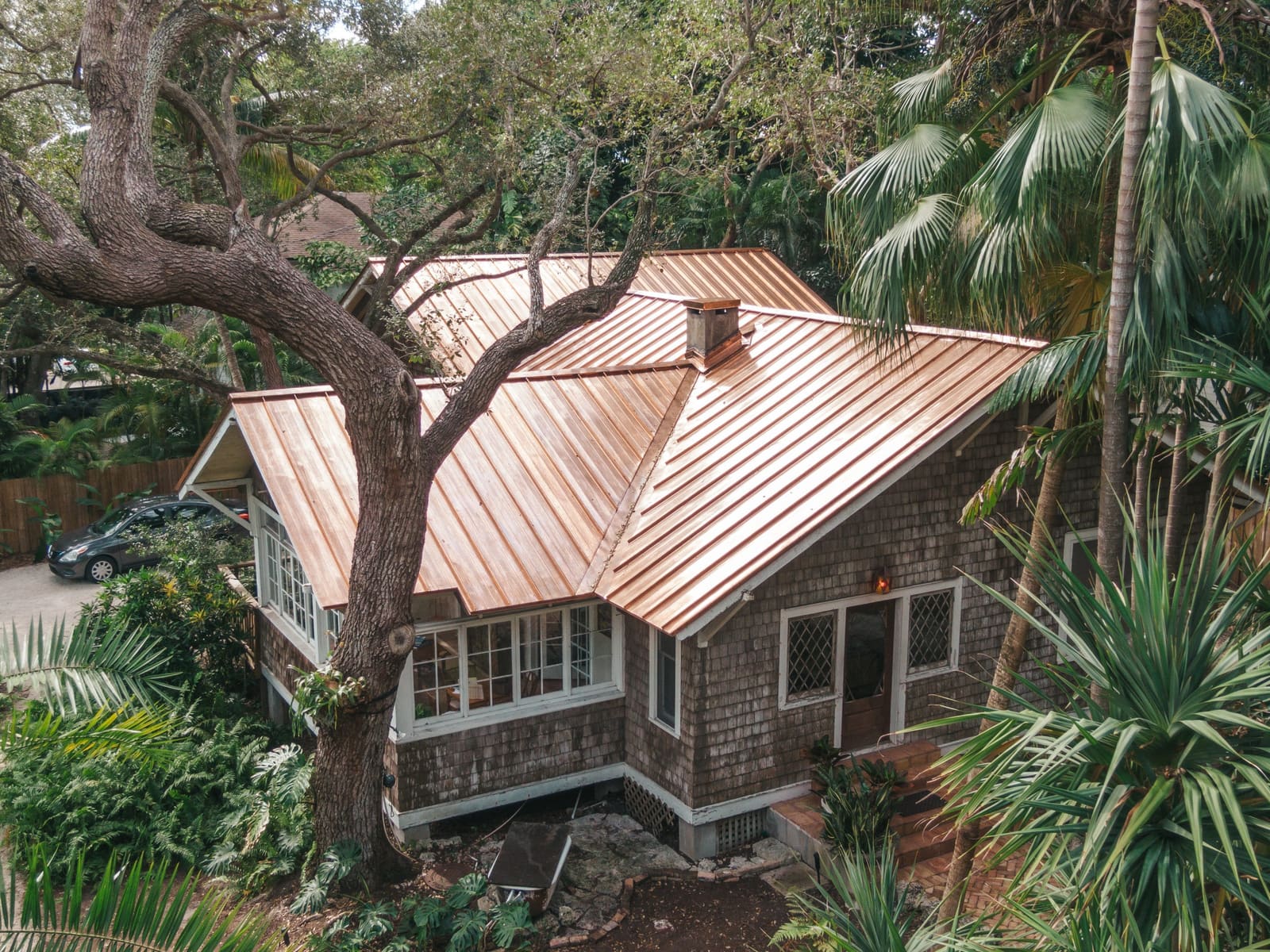
Copper roofing is a solid-metal roof system, typically installed as standing seam panels or interlocking shingles, that relies on the metal's own chemistry for weather resistance rather than a painted or coated finish. Unlike galvanized steel or aluminum, copper does not depend on a surface coating to resist corrosion. When exposed to air and moisture, it forms a patina (a thin oxide layer that changes color from bright copper to brown and eventually to a blue-green finish).
That patina is not a flaw. It is a protective layer that continues to shield the metal underneath for as long as the roof is in place, and minor surface scratches re-oxidize and re-seal over time rather than leaving exposed base metal vulnerable to salt attack.
This matters for coastal homes because salt-laden air accelerates corrosion in most common roofing metals, and that corrosion is what produces the signs your fascia and soffits need attention after years of coastal exposure. Copper behaves differently at exactly those failure points.
Homeowners should also understand that copper roofing is a specialty trade. Standing seam and shingle copper work requires soldering or mechanical seaming skills that differ from asphalt shingle or standard metal panel installation. Panel layout, expansion allowances, and underlayment choices all affect how the system performs over decades of thermal cycling and coastal humidity.
Our team's win in the Metal Roofing Alliance's Best Metal Roofing Project competition for Q1 2023 reflects the specialized craftsmanship this material demands, and it is worth confirming that any contractor bidding copper work has direct experience with the metal's specific handling requirements before committing to a project.
How it works
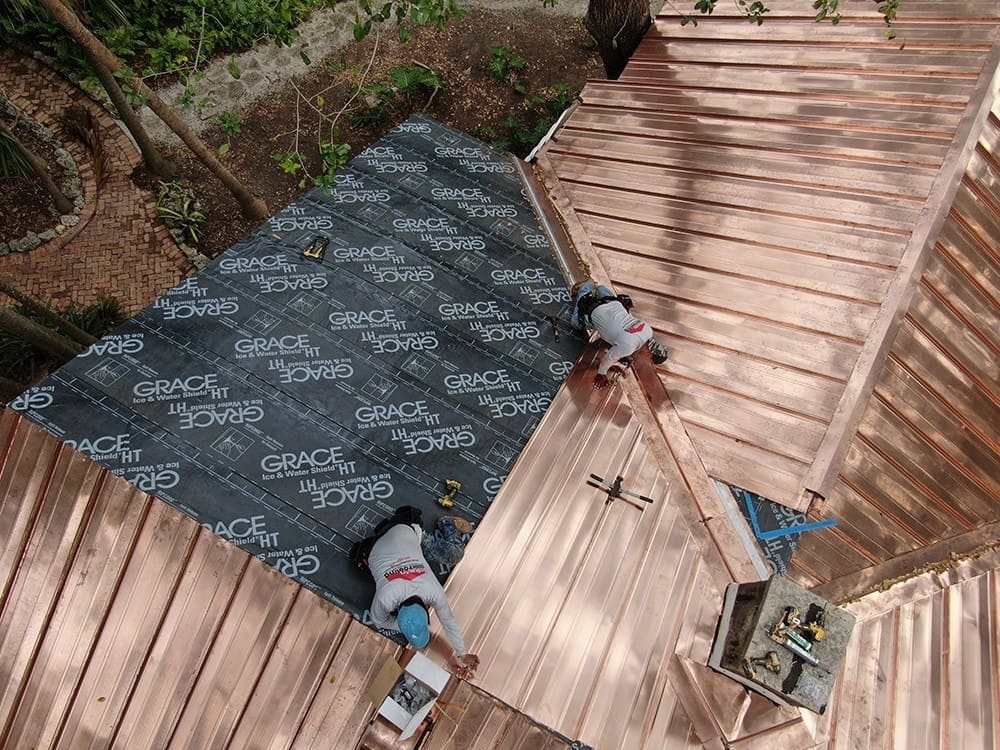
Copper roofing performs differently than painted metal because the protection is built into the material itself, not applied on top of it. Walking through the copper roof installation sequence shows why. A copper roof starts with a substrate check and underlayment suited to the panel or shingle profile being used.
Panels are then seamed, either with standing seams or soldered flat-lock joints, since the fastening method has to accommodate copper's expansion and contraction across Miami's temperature swings without stressing the seams. Flashing details at valleys, chimneys, and roof-to-wall transitions get extra attention, because these are the points where wind-driven rain during hurricane season finds its way in if the metalwork is loose or undersized.
Fastener choice is not incidental. Copper reacts galvanically with dissimilar metals, so clips, cleats, and nails have to be copper, brass, or stainless steel; ordinary galvanized fasteners corrode against copper and create leak paths within a few seasons. Underlayment selection follows the same logic, with high-temperature synthetic or peel-and-stick membranes chosen to handle both roof deck heat and the slight movement copper panels undergo as they cycle through daily temperature swings.
What changes from one property to another is mostly geometry and exposure. A steep-slope residential roof close to the water sheds salt spray differently than a low-slope commercial section set back from the coast, so fastener spacing, panel gauge, and flashing detail get adjusted case by case. Our work as a manufacturers-certified applicator means these installations follow documented specifications for the copper and metal systems involved, rather than improvised field judgment.
That consistency helps the finished roof hold up under both salt exposure and the wind loads common in this region.
How it compares
Salt air and wind-driven rain narrow the field of roofing materials that hold up along the coast. Here is how copper stacks up against the other options homeowners in this market typically weigh.
| Material | Salt-air resistance | Typical lifespan | Maintenance |
|---|---|---|---|
| Copper | Excellent; forms a stable patina that protects the metal beneath | Longest | Minimal once patina develops |
| Aluminum/steel panel | Good, but coatings can chip and expose base metal to corrosion | Moderate | Periodic coating inspection |
| Asphalt shingle | Poor; granules erode faster in salt spray and UV | Shortest | Frequent inspection and patching |
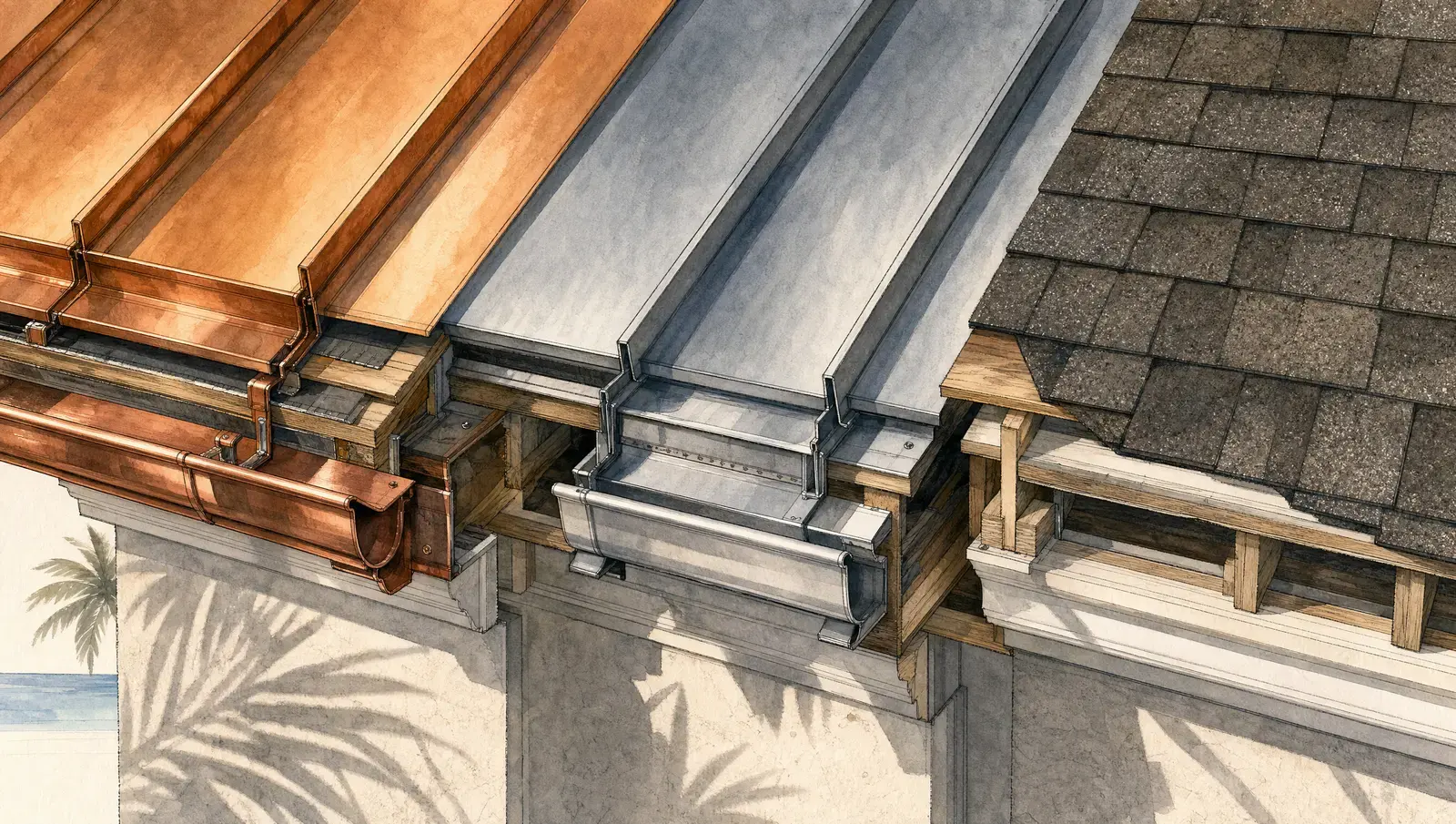
Copper's advantage is that its protective layer is the metal itself, not a coating. That removes the failure point that shortens the life of coated panels and shingles near the ocean, which is why it leads on typical lifespan of metal roofing among coastal options.
How to decide
Planning a successful roofing project starts with choosing the right installer, because copper is not a product you want a generalist metal roofer learning on your roof. Ask any contractor you interview how many copper installations they have completed in the last few years, and ask to see them.
A crew that mostly installs asphalt shingles or standard steel panels may understand roofing broadly but miss the details specific to copper, such as expansion joints, fastener compatibility, and how the metal needs to float against dissimilar materials to avoid galvanic corrosion.
Weigh the manufacturer authorization a firm like Istueta Roofing carries for the metal roofing systems it installs, not just its sales volume. Ask what warranty covers the workmanship, separate from the material itself, and get the terms in writing rather than taking a verbal assurance.
Knowing the warning signs a roof needs replacement helps you read a copper bid critically. A quote that seems low for copper often means thinner gauge metal, incorrect fastener choices, or a crew unfamiliar with soldering seams properly, all of which shorten the roof's life. Vague answers about flashing details or underlayment are a signal to keep asking questions.
Your judgment matters most on fit: whether the look, the cost, and the long ownership horizon make sense for your house and your plans. The technical execution, seam construction, fastening, flashing integration, belongs to the professional. A homeowner should be able to explain why they chose copper.
They should not have to explain how to install it.
In South Florida specifically
Miami sits inside the High-Velocity Hurricane Zone (HVHZ), a code overlay that governs construction anywhere wind speeds and storm exposure demand stricter product testing than the rest of Florida. Roofing materials installed here need a Miami-Dade Notice of Acceptance (NOA), documentation that a specific product and installation method has been tested to withstand wind-borne debris and uplift pressures typical of the region. Copper systems used on HVHZ projects have to carry this approval before a permit is issued, so the fastening pattern, seam type, and underlayment all matter, not just the metal itself.
Salt air is the other variable that changes the calculus. Coastal humidity and airborne chloride accelerate corrosion on many roofing materials, especially uncoated steel and lower-grade aluminum, more aggressively than in inland markets. In a barrier-island or near-shore setting, copper's self-protecting quality matters more than it does inland, where wind and salt exposure are less constant.
Wind load is compounded by proximity to open water, so roof geometry, fastening spacing, and flashing details all get reviewed more closely during permitting in Miami-Dade and Broward than in most other Florida counties. A contractor working in this market should be comfortable navigating that review process, not just installing the material. Our three decades roofing Miami homes include an industry award for copper installation, and we maintain manufacturer certification for copper and metal systems, which reflects the kind of documentation HVHZ permitting expects from a qualified applicator.