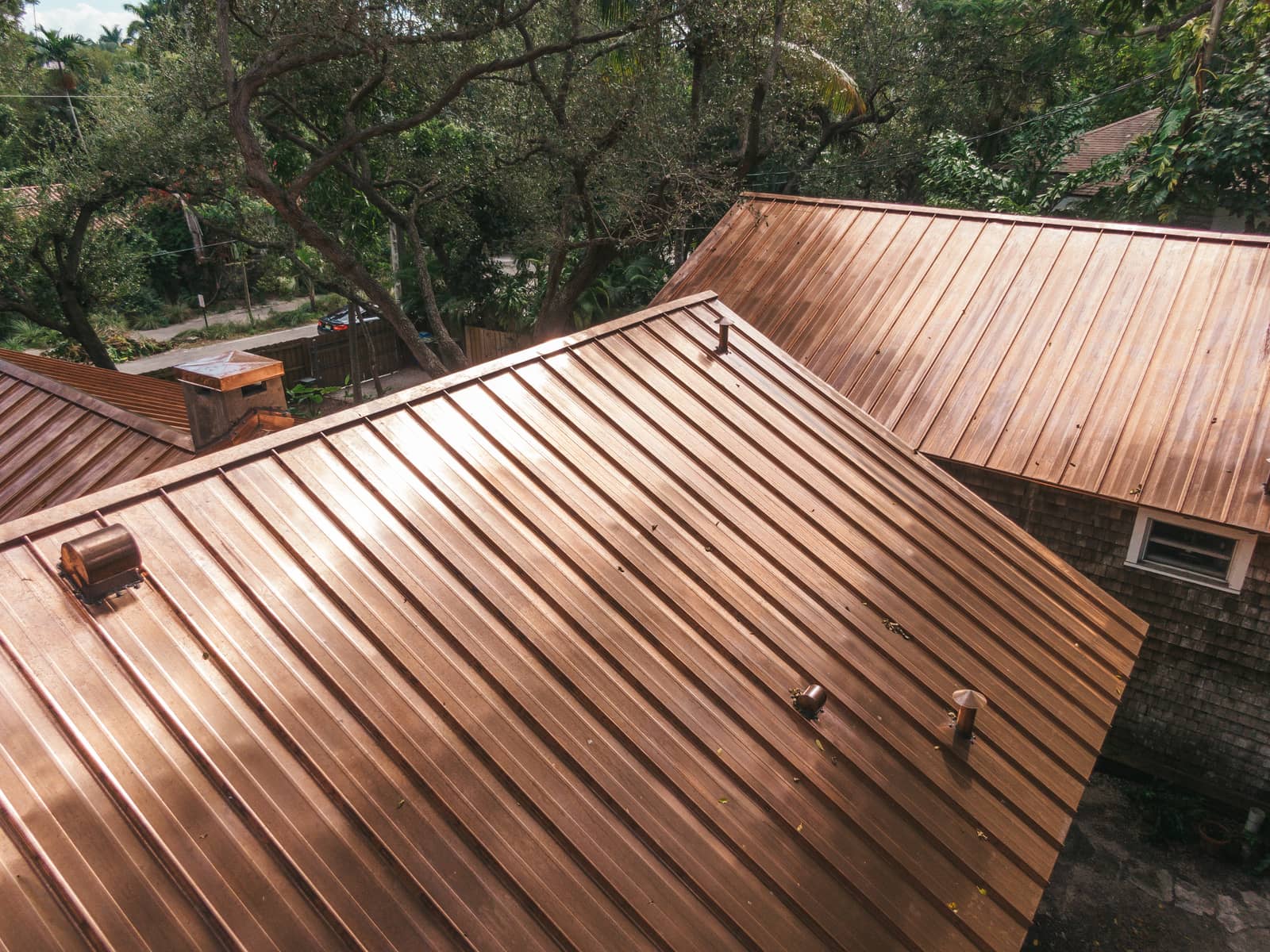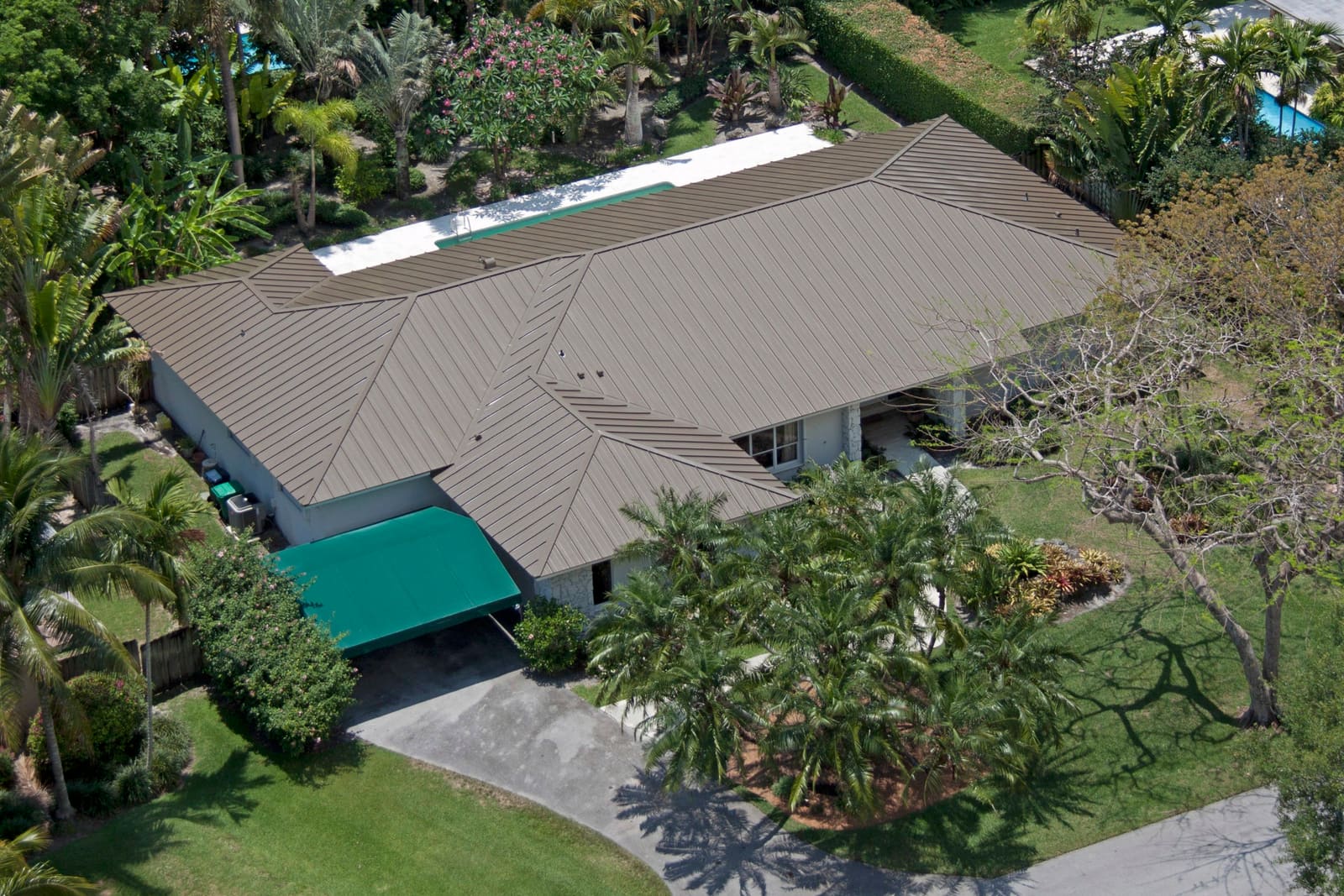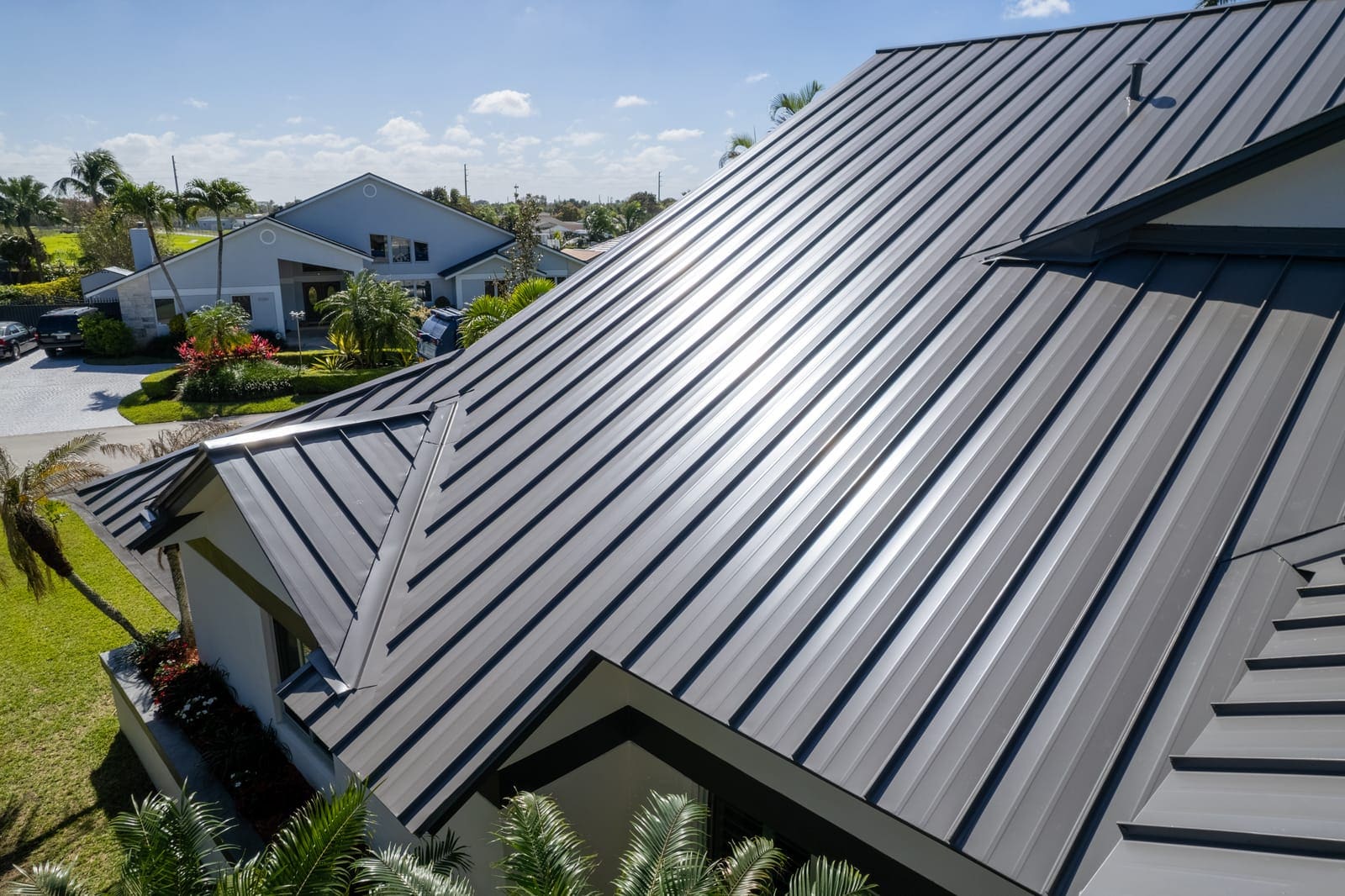

Miami's salt air, hurricane winds, and relentless UV exposure wear out lesser roofing materials years ahead of schedule. Homeowners in coastal neighborhoods from Coral Gables to Key Biscayne face a recurring choice: replace asphalt shingles again and again or invest in a roof that outlasts the mortgage. Copper roofing has protected South Florida homes for generations because it resists corrosion, survives 150-mph wind events, and requires almost no maintenance.
This post explains why architects and builders specify custom copper roofing services for high-value coastal properties, what installation details matter in HVHZ zones, and how copper performs against aluminum and standing-seam steel in salt-fog environments.
Quick answer
Miami homeowners choose copper roofing for its exceptional longevity in saltwater environments, natural resistance to corrosion, and ability to meet High Velocity Hurricane Zone (HVHZ) building codes without additional protective coatings. Copper develops a protective patina that shields the base metal from coastal humidity and salt spray, typically lasting 60 to 100 years with minimal maintenance. The material's natural antimicrobial properties prevent algae and mold growth common on South Florida roofs, while its Class A fire rating and wind uplift performance satisfy Miami-Dade County's stringent structural requirements.
Unlike painted steel or aluminum that require recoating every 15 to 20 years, custom copper roofing services eliminate ongoing finish maintenance. The patina layer self-renews and thickens over time. Copper's thermal expansion coefficient allows standing-seam panels to move freely during Miami's daily temperature swings without fastener fatigue, a critical advantage in climates where roof surfaces reach 160°F under summer sun.
What you should know
Copper roofing consists of standing-seam panels or individual shingles fabricated from 16-ounce or 20-ounce copper sheet (measured in ounces per square foot). The material arrives mill-finished in a bright metallic state, then develops a brown patina within months and the characteristic green verdigris over 15 to 25 years depending on atmospheric exposure. In coastal South Florida, salt air accelerates this oxidation timeline to 18 to 24 months for homes within two miles of the Atlantic or Biscayne Bay.
Installation requires specialized tools and training. Panels interlock with concealed fasteners, allowing thermal expansion and contraction across temperature swings. Soldered seams create watertight joints at ridges, valleys, and penetrations.

Underlayment must be synthetic (never felt, which reacts chemically with copper) and all fasteners, flashing, and trim must be copper or stainless steel to prevent galvanic corrosion.
Copper qualifies for Miami-Dade County's High Velocity Hurricane Zone (HVHZ) product approvals when installed to manufacturer specifications. Our copper roofing services include NOA-compliant fastening schedules and wind-uplift testing documentation required for permitting in coastal municipalities.
16-ounce copper weighs roughly 1.2 pounds per square foot (installed), making it lighter than concrete tile but heavier than aluminum standing seam. Structural load calculations confirm compatibility with existing trusses before fabrication begins.
How it works
Copper roofing installation in Miami begins with structural assessment. A licensed contractor inspects the existing roof deck, verifies load capacity, and confirms compliance with Florida Building Code High Velocity Hurricane Zone (HVHZ) requirements. The deck must be sound, dry, and capable of supporting copper's weight (approximately 1.5 pounds per square foot for 16-ounce material).
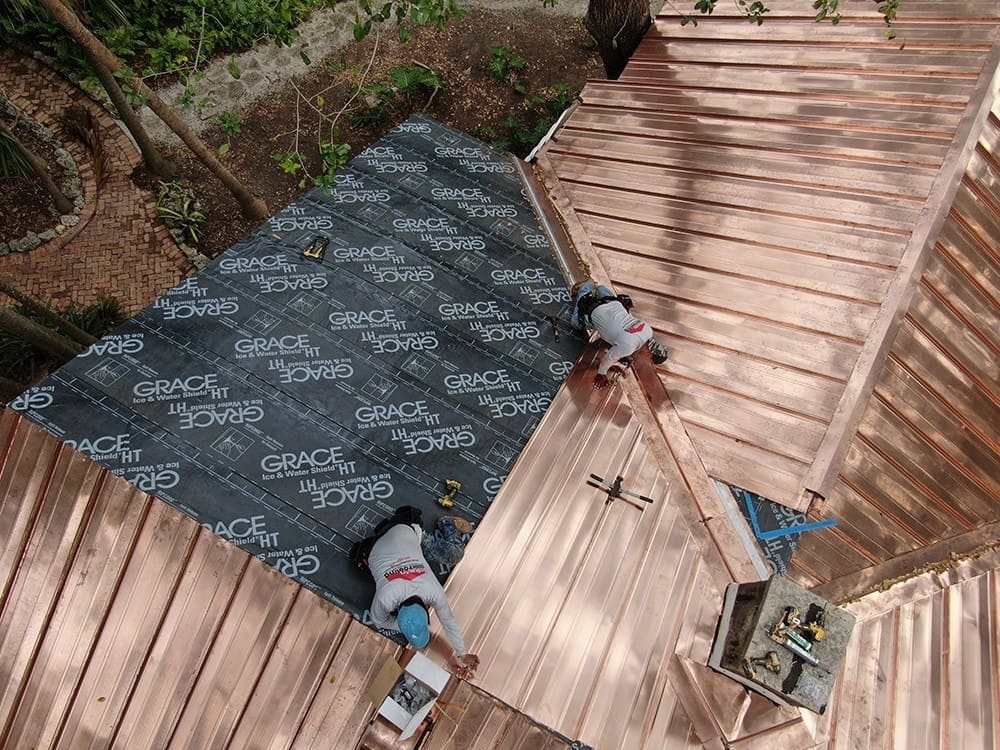
Next, the crew installs an underlayment barrier, typically a high-temperature synthetic membrane rated for metal roofing. This layer protects against moisture infiltration during tropical storms. In coastal applications, installers use stainless steel or copper fasteners exclusively; galvanized hardware corrodes rapidly in salt air.
Panel installation follows one of three methods. Standing seam systems use concealed clips that allow thermal expansion and contraction without fastener penetration. Batten seam profiles feature raised ribs over vertical joints, common on historic restorations.
Flat-lock seams create a traditional European aesthetic with interlocking edges soldered at each joint.
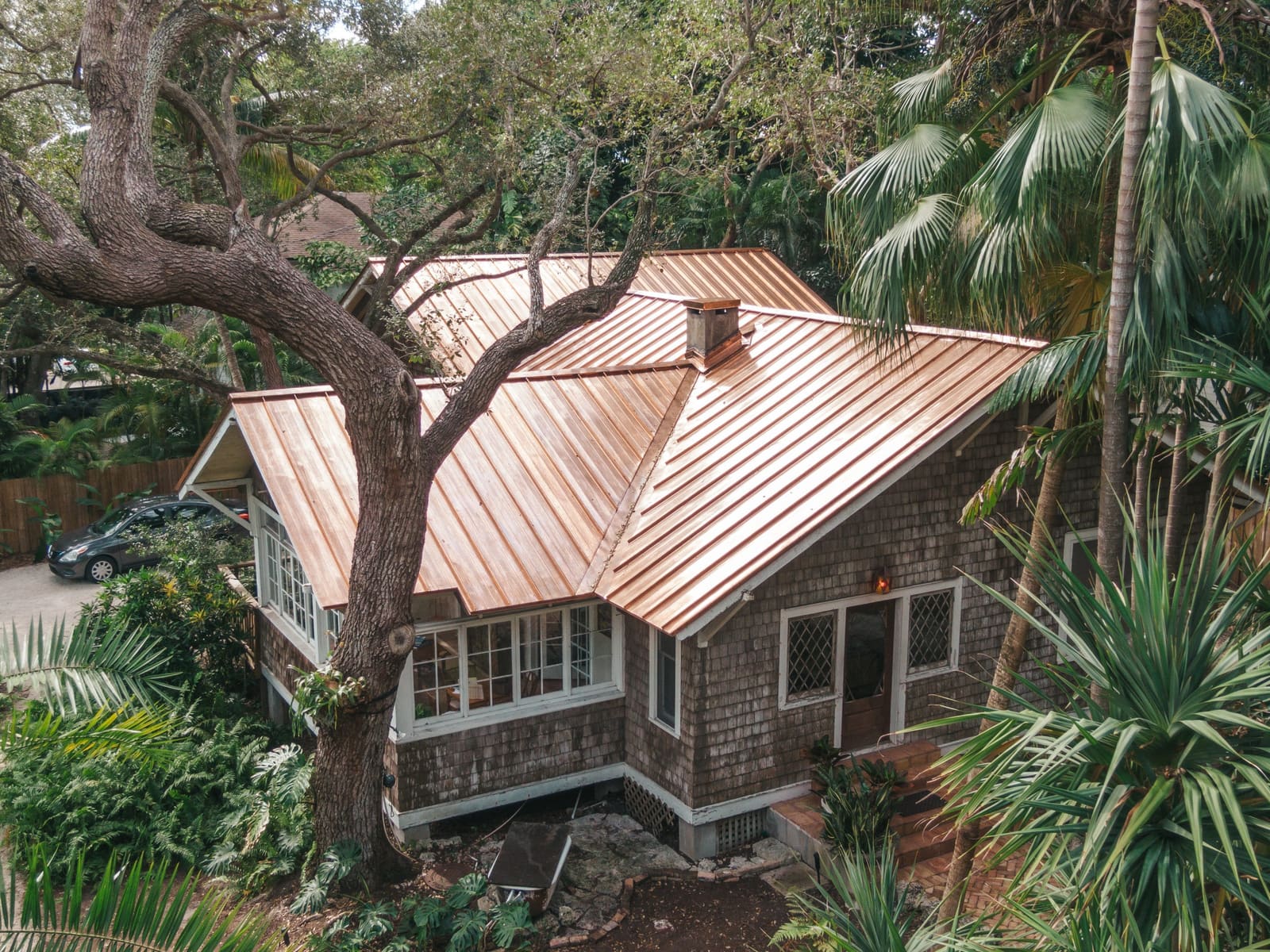
Flashing details around chimneys, skylights, and roof penetrations require hand-fabricated copper components. Installers solder all seams to create watertight transitions. Our custom copper roofing services include these site-specific fabrications, which distinguish professional installations from template approaches.
Final inspection verifies fastener spacing, seam integrity, and proper drainage slope. These factors matter in Miami's heavy rainfall climate.
How it compares
| Material | Lifespan (coastal) | Salt corrosion resistance | Maintenance interval | Installed cost per sq ft |
|---|---|---|---|---|
| Copper | 60–100+ years | Excellent (forms protective patina) | Minimal; inspect fasteners every 5–7 years | $18–$28 |
| Standing seam steel | 30–50 years | Moderate (requires intact coating) | Re-coat every 15–20 years in salt air | $9–$14 |
| Aluminum | 40–60 years | Good (naturally oxidizes) | Inspect fasteners every 3–5 years | $11–$17 |
| Asphalt shingle | 12–20 years | Poor (granule loss accelerates) | Replace every 12–18 years in HVHZ | $4–$7 |
Copper's upfront cost buys decades of service without re-coating or replacement cycles. For Miami homeowners planning long-term ownership, custom copper roofing services eliminate the recurring expense of shingle or steel roof replacements every generation.
How to decide
Before signing a contract, ask your installer how many copper roofs they have completed in high-velocity hurricane zones. Request photos of standing-seam installations at least five years old, ideally in coastal neighborhoods similar to yours. A contractor experienced with custom copper roofing services will walk you through fastener schedules, expansion-joint placement, and underlayment choices without hesitation.
Watch for three failure modes. First, visible fasteners on a standing-seam roof indicate shortcuts that compromise wind resistance and invite leaks. Second, soldered seams without adequate expansion provision will buckle as panels expand and contract in Miami's heat.
Third, dissimilar-metal contact (copper flashing against galvanized steel, for example) accelerates galvanic corrosion in salt air.
Your judgment matters most in aesthetic decisions: patina preference, seam profile, and architectural detailing around dormers or chimneys. Defer to the professional on structural questions like deck preparation, clip spacing for 180-mph wind loads, and compatibility between your copper system and existing drainage. Verify that the contractor holds manufacturer certifications and can document compliance with Florida Building Code amendments for your wind zone.
A qualified installer will provide both material and workmanship warranties in writing before you commit.
In South Florida specifically
South Florida's High Velocity Hurricane Zone (HVHZ) designation changes the copper roofing equation. Miami-Dade County requires a Notice of Acceptance (NOA) for all roofing products, which means copper panel systems must be tested and approved for wind speeds up to 180 mph. Standing-seam copper profiles with mechanically seamed clips typically meet these requirements, while decorative flat-seam installations may need additional engineering review.
Wind-driven rain presents a separate challenge. Copper's malleability allows fabricators to create continuous waterproof seams without relying on sealants that degrade under UV exposure. Our custom copper roofing services include concealed fastener systems engineered for Miami-Dade's wind and water infiltration protocols, ensuring compliance during permitting and performance during named storms.
Coastal salt air accelerates patina formation but does not compromise structural integrity. Copper develops its protective oxide layer within 18 to 24 months in marine environments, compared to 5 to 7 years inland. This accelerated patina enhances corrosion resistance, creating a self-renewing barrier against chloride exposure.
Homeowners within 500 feet of the Atlantic or Biscayne Bay see the characteristic verde finish develop faster, though the underlying metal remains unaffected for decades.
Local permitting typically adds 3 to 4 weeks to project timelines due to NOA verification, structural load calculations for the existing deck, and coordination with building officials familiar with metal roofing systems in hurricane zones.
Related reading: Blog, 9 considerations to keep in mind when buying a metal roof, 3 warning signs roof replacement, and 30 years as your preferred miami roofer and still going strong.